If you are hunting for bathroom tile ideas floor updates that feel current in 2026, I have good news – the best looks are also the most practical. In this article, I will walk through bathroom tile ideas neutral, bathroom tile ideas modern, and bathroom tile ideas for small bathrooms that hold up to real daily use. Which tile trends are worth copying, and which details make the difference between a pretty bathroom and a functional one?
Tile choices are not only about style – they shape how safe the room feels underfoot, how easy it is to clean, and how spacious the layout reads. I will break down seven design directions with clear, room-level examples so you can picture them in a guest bath, a master bath, or a compact apartment bathroom.
1. Bathroom Tile Ideas Floor Trends For 2026
In 2026, I am seeing bathroom tile ideas floor move toward high-performance surfaces that still look refined. Large-format porcelain is dominating because it reduces grout lines and gives even small bathrooms a calmer, more continuous base. I like pairing a slightly textured finish with a simple layout because it reads modern without looking cold. For a shower walk area, I prefer using a smaller format or a mosaic only where slope is needed, then letting the main floor tile stay consistent elsewhere. This is one of those bathroom tile ideas modern updates that improves both style and maintenance.
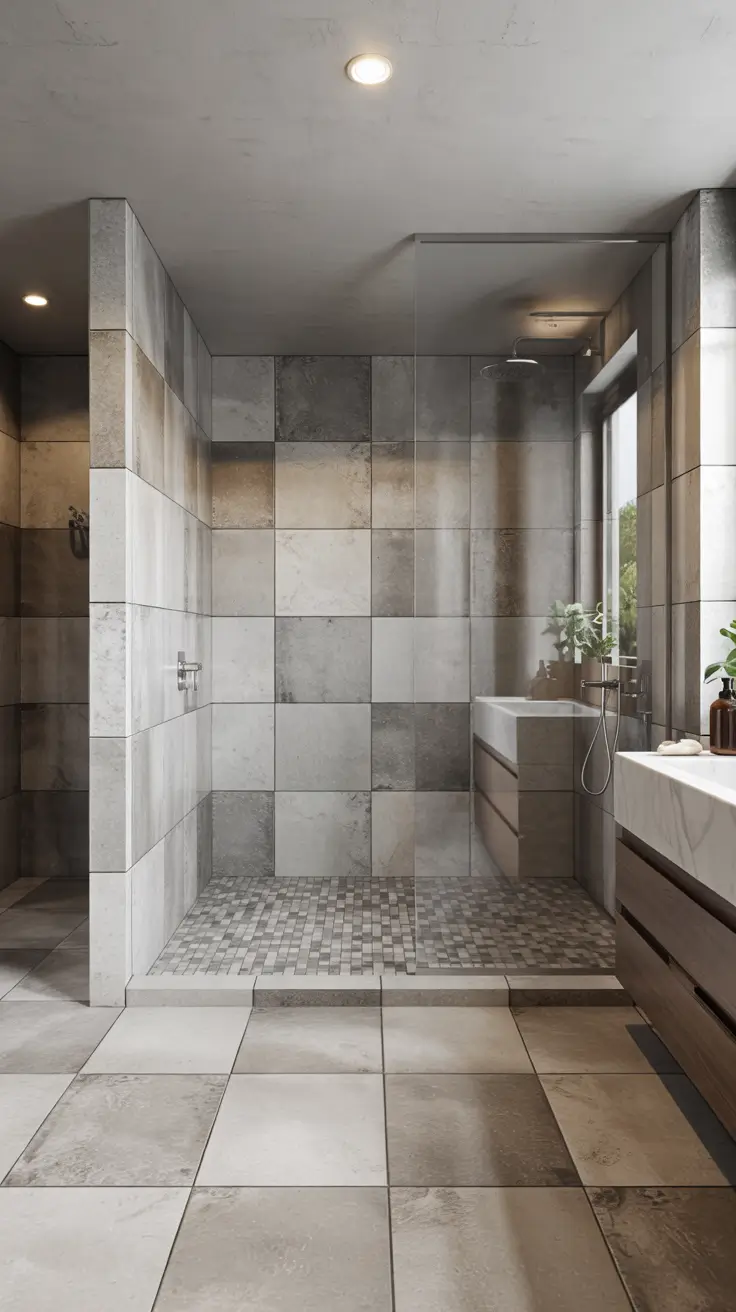
When I design around this trend, I start with the floor as the anchor and let wall choices support it. Porcelain that mimics limestone or soft concrete works especially well because it handles water and temperature shifts without drama. I often specify a matte finish for safety, then use a slightly darker grout so the floor stays sharp over time. If the room includes a tub, I keep the floor tone steady under the vanity and around the tub apron so the space feels larger. In floor and decor style showrooms and editorials, this grounded base is often what makes the whole bathroom feel expensive, even when the rest is simple.
My practical rule is to treat the floor like a long-term decision and the accents like the fun part. I have had the best results when I choose a slip-conscious tile for wet zones and avoid overly glossy finishes that show every mark. I also like to test tile samples under the bathroom lighting because warm bulbs can shift gray into beige, and cool bulbs can flatten warmer tones. If you want a subtle upgrade, I recommend using a coordinated trim or threshold detail that matches the tile body for a cleaner edge. That small move is quietly “2026” and prevents the floor from looking chopped up.
2. Bathroom Tile Ideas Neutral Color Palettes For Timeless Spaces
Bathroom tile ideas neutral are getting warmer and more layered in 2026, which is great if you want a space that feels calm but not bland. I lean into beige, warm gray, and soft greige because they flatter most skin tones and make a bathroom feel welcoming. The key is to build depth using texture rather than loud pattern, especially in small bathrooms where busy finishes can feel cramped. A neutral palette also gives you flexibility to change paint, towels, or decor without fighting the tile. If you are planning a Neutral inspiration master bath, this approach is one of the safest long-term bets.
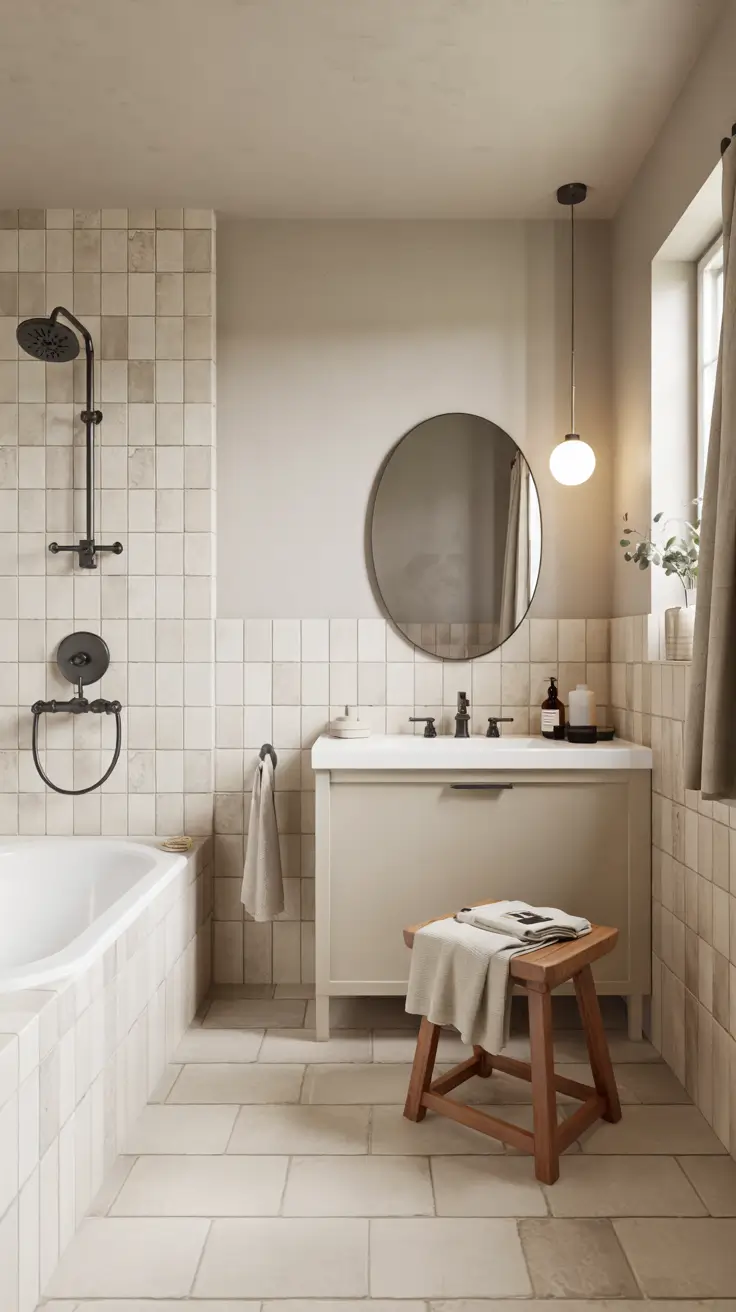
To make neutrals feel intentional, I mix finishes and shapes while keeping the color family tight. For example, I might use a large porcelain tile on the floor and a ceramic wall tile with gentle variation to keep the room from feeling flat. A white vanity, a warm wood stool, and brushed metal hardware keep the palette balanced, and a simple mirror helps bounce light. I like adding a subtle border or niche detail in the shower so the walls have a focal point without turning into a trend trap. Even a guest bath can feel elevated when the tile looks cohesive from floor to ceiling.
In my experience, neutral tile is most successful when it is paired with strong lighting and a few materials that add contrast. I often recommend layered lighting – a flattering overhead, a mirror light, and a soft night option – because neutrals look best when the room has depth of shadow. I also pay attention to grout selection since the wrong grout can make beige tiles look dingy or too busy. If you want a gentle designer move, I like a neutral wall tile stacked vertically to lift the ceiling line. It is understated, but it makes the room feel taller and more tailored.
3. Bathroom Tile Ideas Modern Styles For Contemporary Homes
Bathroom tile ideas modern in 2026 are less about being flashy and more about being precise. Clean lines, quiet surfaces, and intentional contrast are the themes I keep coming back to. I see more people choosing dark accents, slimmer profiles, and tiles that create a crisp grid rather than a decorative pattern. This works beautifully in both large bathrooms and tight footprints because the orderliness calms the eye. When you combine modern tile with good storage, the bathroom feels like a true contemporary space instead of a photo-only idea.
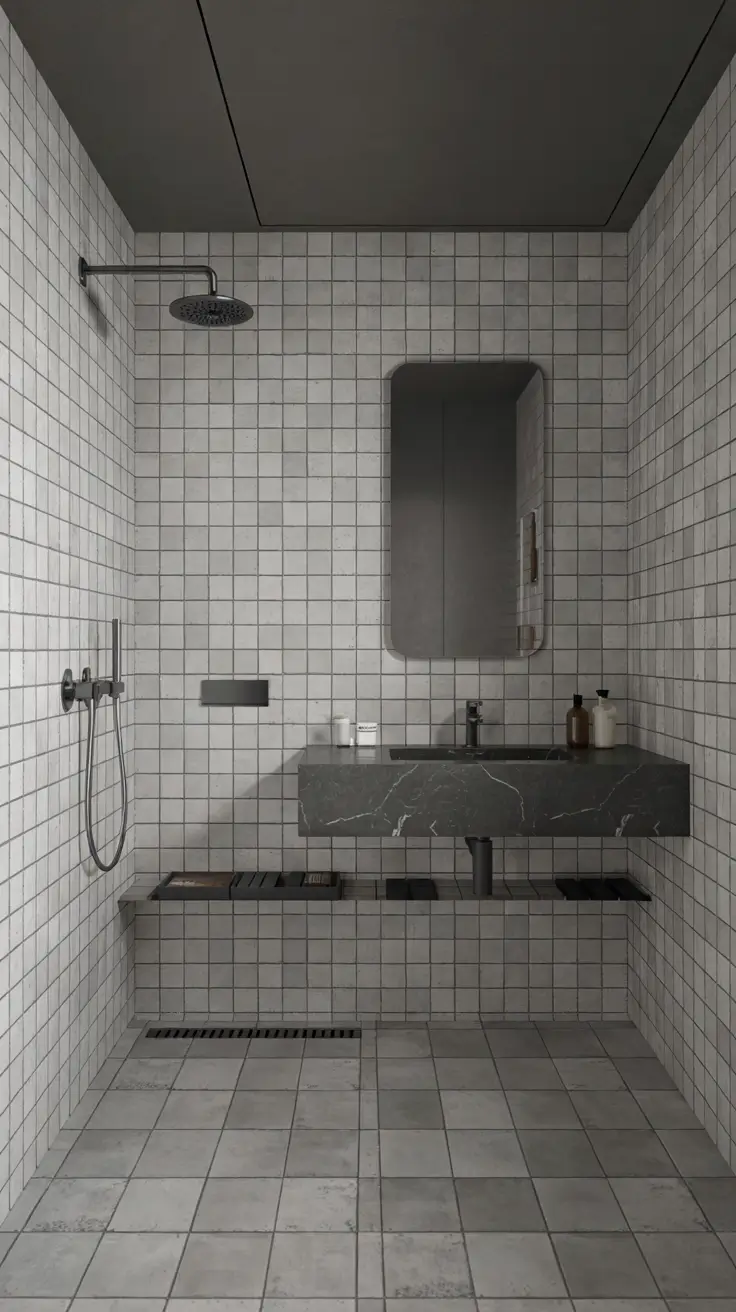
For a contemporary home, I like using a single wall tile throughout the wet zone, then repeating it behind the vanity so the bathroom reads as one volume. A white or light gray ceramic on the wall with a darker porcelain on the floor gives a clean contrast that is easy to live with. If you want a bolder look, I like a black and white scheme where the tile is simple and the fixtures carry the drama. A floating vanity, a thin-framed mirror, and minimal open shelving keep the room from feeling heavy. I also like hiding practical items in drawers so the tile can do the visual work without competing clutter.
My advice is to decide what “modern” means for your daily routine, not just your mood board. I have learned that the most modern-looking bathrooms are the ones that stay visually quiet, which requires planning for towels, toiletries, and cleaning supplies. I often recommend choosing one hero surface – either a statement wall tile or a statement floor – and keeping the rest supportive. If you want the space to feel more architectural, consider aligning grout lines across the floor and walls for a continuous grid. It is a detail that takes a bit of planning, but it makes the final result look intentional and high-end.
4. Bathroom Tile Ideas With Tub For Relaxing Bathrooms
Bathroom tile ideas with tub are shifting toward spa-like surrounds that feel cozy instead of clinical. In 2026, I see more tubs framed by warm neutrals, soft stone looks, and gentle textures that make the bath feel like a retreat. A tub zone is also where tile can add comfort visually, especially if the rest of the room is simple. Even in small bathrooms, a carefully designed tub surround makes the space feel curated rather than cramped. This is one of my favorite areas to add personality without sacrificing function.
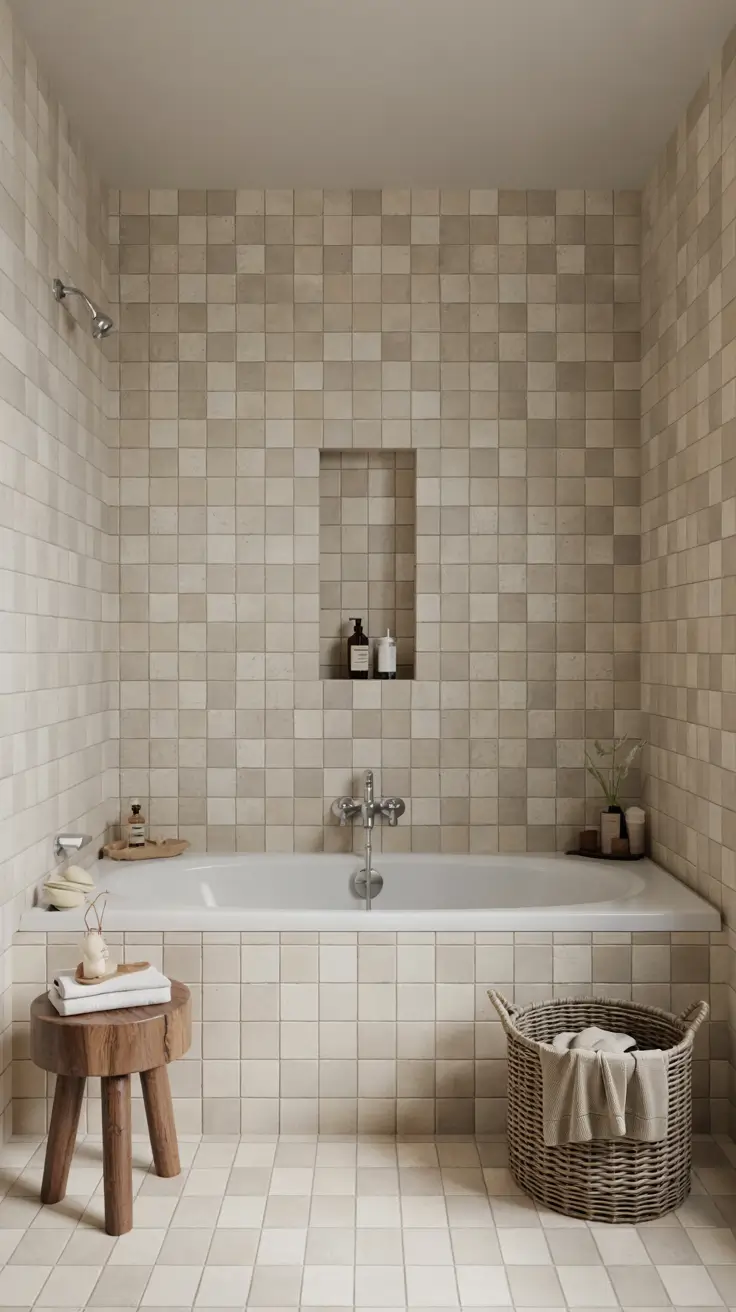
When I plan a tub area, I focus on the tub surround first, then build outward. I like porcelain on the tub deck or apron for durability, and ceramic on the walls if I want a softer finish or a handcrafted look. A ledge for candles or bath products is practical, but I keep it shallow so it does not collect clutter. If the tub is combined with a shower, I pay special attention to transitions and waterproofing details so the tile stays tight and clean over time. Small upgrades like a recessed niche and a matching drain cover make the whole tub zone feel more finished.
I have found that the most relaxing tub bathrooms balance softness with structure. I like adding a warm wood accent, a small stool, or a woven basket so the room does not feel overly hard-surfaced. I also prefer lighting that can dim, because tile can look too stark under harsh overhead light. If you want to make the tub feel like the centerpiece, I recommend keeping the rest of the room quieter and letting the tub wall carry a subtle pattern or texture. That way, the bath area feels special without turning the whole room into visual noise.
5. Bathroom Tile Ideas Wall Designs That Elevate Interiors
Bathroom tile ideas wall updates for 2026 are all about using height, proportion, and placement to shape the room. A great wall design can make small bathrooms feel taller, and it can make large bathrooms feel more architectural. I like wall tiles that bring in texture or a soft pattern, especially when the palette is neutral. Half-height applications are also returning, but they are cleaner and more intentional than older looks. If you plan it well, Shower tub surround half walls can add character while protecting the most splash-prone areas.
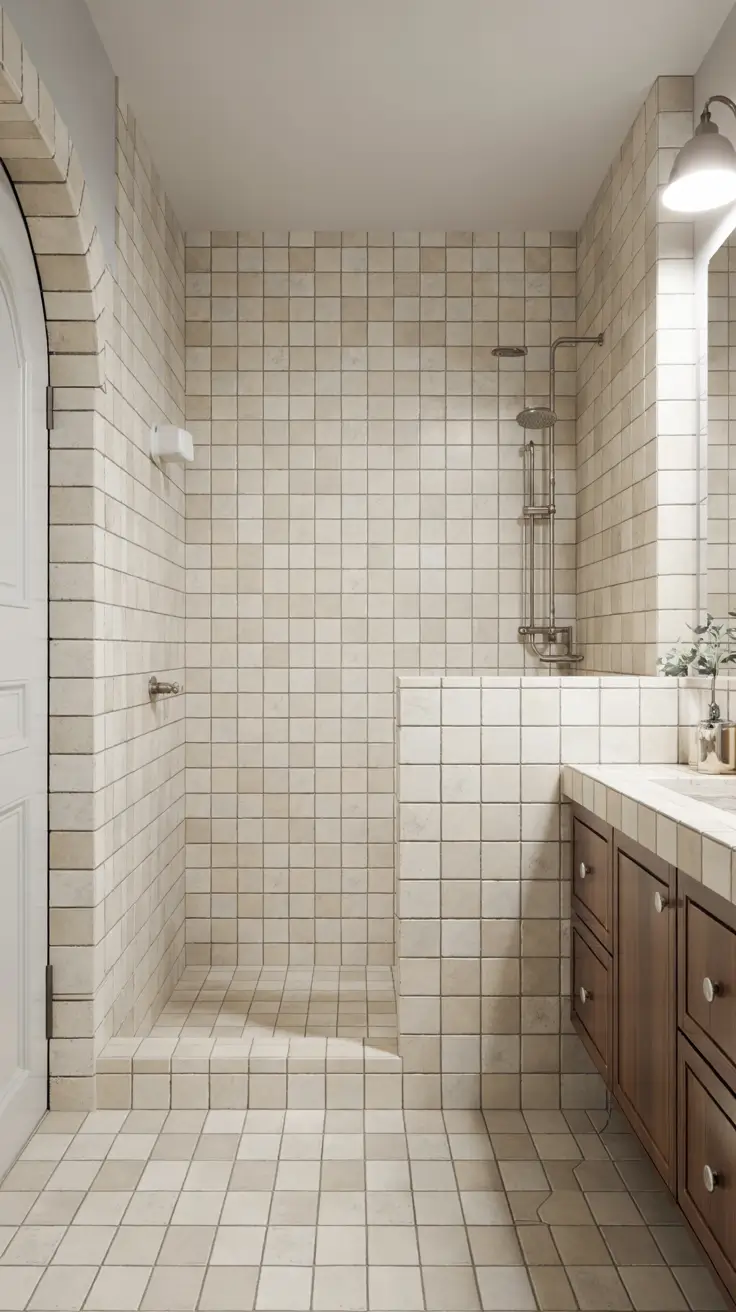
For wall design, I usually choose one main field tile and then decide how far it should go. In a compact bath, I often run tile up to the ceiling in the shower and stop at a half height elsewhere to keep the room airy. In a larger space, I might tile full height behind the vanity to create a strong focal plane and reduce paint maintenance. I like pairing a simple wall tile with a slightly more tactile floor tile so the surfaces complement each other. A framed mirror, a slim vanity light, and storage that stays flush to the wall keep the tile layout looking crisp.
My experience is that wall tile looks best when edges and endings are planned, not improvised. I recommend choosing a trim solution early, whether that is a matching bullnose, a metal edge, or a clean miter. I also like to plan niche placement around the tile grid so it does not land awkwardly across grout lines. If you want to take this section further, I would add a clear note on grout color strategy because it changes the entire read of a wall tile. A slightly blended grout makes the surface feel seamless, while a higher-contrast grout emphasizes geometry and feels more graphic.
6. Bathroom Tile Ideas Farmhouse Looks With Warm Character
Bathroom tile ideas farmhouse in 2026 feel warmer, softer, and more collected than the stark farmhouse trend of past years. I focus on rustic texture, gentle variation, and classic shapes that look like they belong in an older home but still feel fresh. This style works especially well in a guest bath because it feels welcoming and easy to maintain. I like mixing white wall tile with warmer floors, or using beige and warm gray to keep the room from feeling too bright. Farmhouse can also scale into large bathrooms when the materials feel authentic and not overly themed.
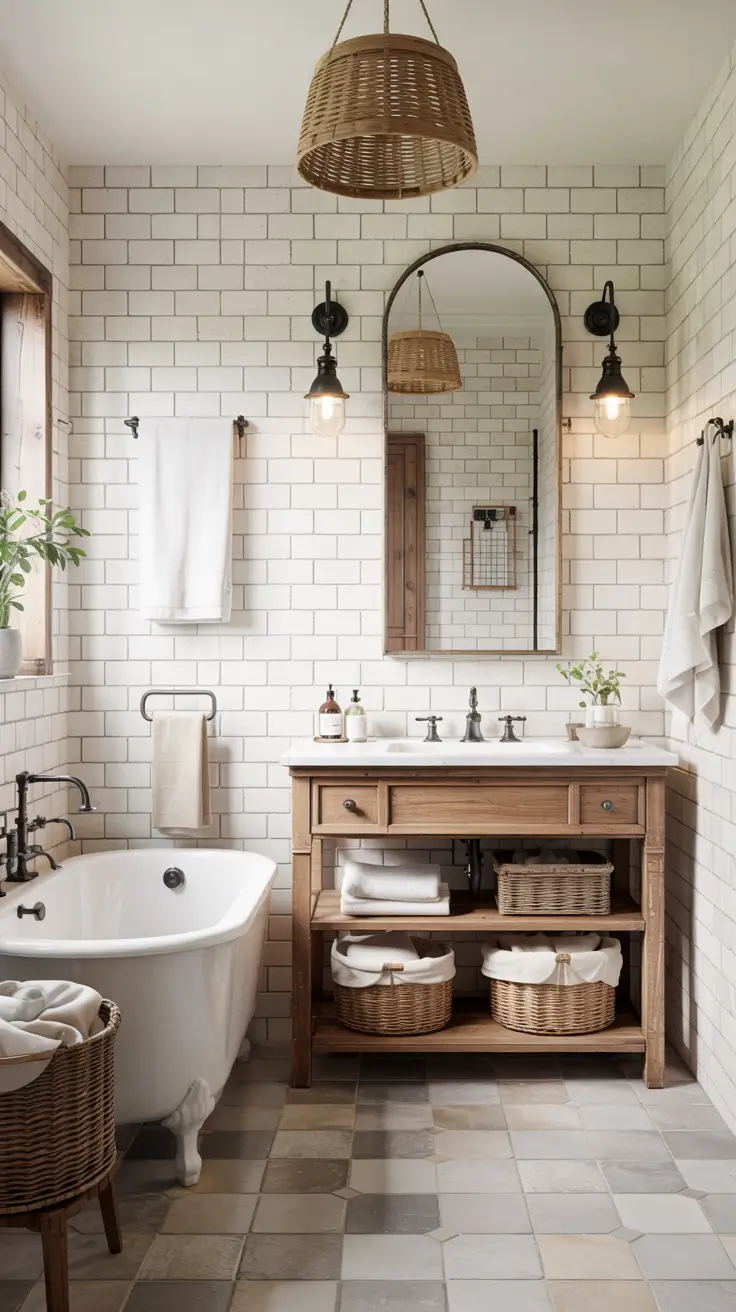
When I build a farmhouse bathroom, I typically start with a timeless wall tile like a simple ceramic subway tile, then add character through layout and details. A slightly imperfect surface, a soft crackle look, or a handmade feel adds warmth without needing heavy decor. For the floor, I like porcelain that resembles natural stone or aged cement, especially in darker tones that hide daily wear. Wood accents, a vintage-inspired mirror, and simple storage baskets support the look while staying practical. If you want a clean farmhouse twist, I like pairing warm tile with a modern vanity so the room does not lean costume-like.
My recommendation is to keep farmhouse grounded in material choices rather than signs, slogans, or overly literal decor. I have seen farmhouse bathrooms age best when the tile is classic and the accessories do the storytelling. I also like adding one element that feels inherited, like a vintage-style sconce or a framed print, because it makes the room feel personal. If you want to improve this section further, I would add a quick checklist for maintaining grout in lighter farmhouse walls, since white tile looks best when the grout stays crisp. A simple sealing and gentle cleaning routine keeps the farmhouse look charming instead of tired.
7. Bathroom Tile Ideas With Black Fixtures For Bold Contrast
Bathroom tile ideas with black fixtures are still strong in 2026, but the supporting tile is becoming calmer and more refined. Black hardware and faucets create instant structure, so I like pairing them with neutral tile that has a soft texture rather than a loud pattern. This is a great move for modern bathrooms, and it also works in small bathrooms because the black details create a clear visual outline. I often use this approach when a client wants contrast without committing to dark walls. When done well, it reads bold, clean, and intentionally designed.
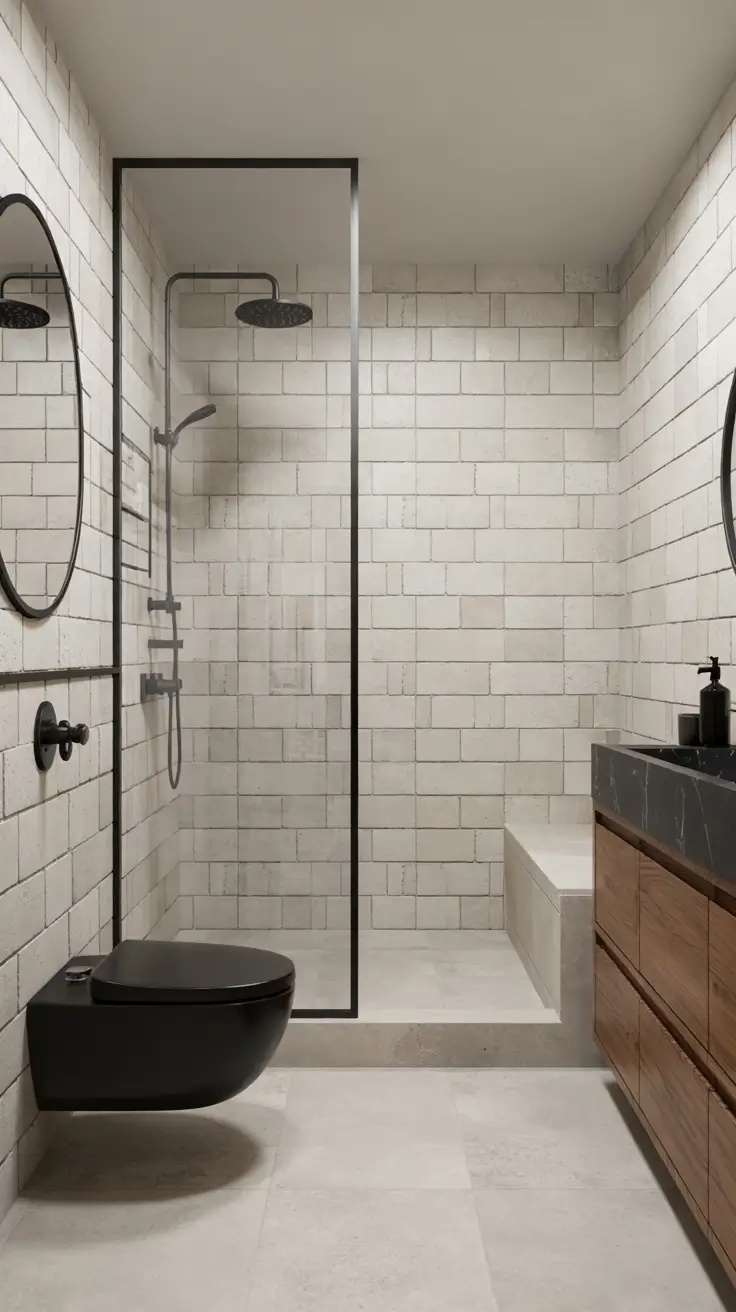
For the tile pairing, I like white or light gray wall tile with a matte finish, plus a floor tile that has a bit of grip and a slightly deeper tone. Black and white combinations work best when you limit the number of competing patterns, so I keep the tile shapes simple and let the fixtures be the statement. A black-framed shower screen, black hooks, and a black mirror frame create consistency. I also like adding one warm element, like a wood vanity or beige textiles, to keep the contrast from feeling harsh. If the bathroom includes a tub, black fixtures can outline the tub zone beautifully when the tile stays quiet and continuous.
In my experience, black fixtures look best when the bathroom lighting is flattering and the finishes are consistent. I avoid mixing too many metal tones because it can make the room feel accidental, especially if the tile already has variation. I also recommend choosing a grout that supports the wall tile – too dark can look busy, too white can be hard to keep perfect. If you want to extend this section, I would add guidance on balancing dark accents with reflective surfaces like mirrors and gloss highlights, since they keep the room from feeling visually heavy. That combination is what makes bold contrast feel modern rather than severe.
8. Bathroom Tile Ideas For Small Bathrooms That Maximize Space
In small bathrooms, I focus on tile choices that visually stretch the room and reduce clutter, because every line and seam is more noticeable. For “bathroom tile ideas for small bathrooms”, large-format floor tiles with a low-contrast grout can make the footprint look wider and calmer. I like running the same tile from the entry to the vanity and into the shower area when possible, because the continuous surface reads as more spacious. On the walls, I often choose a light, slightly reflective finish so it bounces light around without feeling glossy. Even when the palette is “bathroom tile ideas neutral”, the room can still feel layered by using subtle texture, like soft stone-look porcelain or a gentle linear pattern.
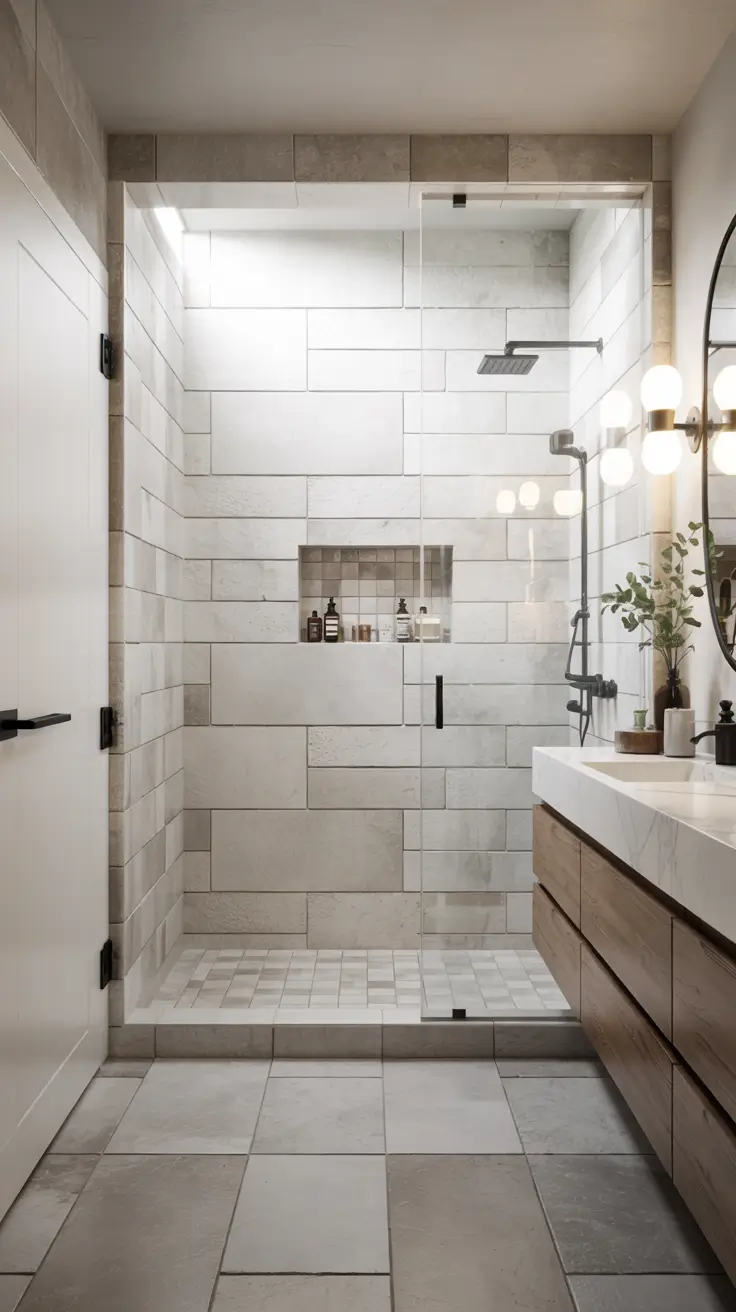
For the main surfaces, I usually start with “bathroom tile ideas floor” in porcelain that has a matte, slip-friendly finish, especially if the bathroom is used daily. A wall-hung vanity or a slim floating console helps expose more floor tile, which instantly makes the room feel bigger. I like a frameless glass shower panel because it keeps the wall tile visible and avoids chopping the space into segments. If storage is tight, a recessed niche tiled in the same material as the walls keeps toiletries organized without adding visual noise. Simple lighting, like a vertical sconce pair beside the mirror, makes the tile look more even and prevents harsh shadows.
From my experience, the biggest small-bath upgrade is deciding on one calm field tile and then repeating it confidently. Designers often recommend fewer material changes in small rooms, and I agree because too many transitions highlight every corner. I also find that going slightly larger with tile than you think is safe, like 12×24 or similar proportions, can reduce grout lines and make cleaning easier. When people worry that large tile will overwhelm, I remind them that grout lines are what visually crowd a small space. A restrained tile plan also leaves room for personality through paint, hardware, and textiles.
To complete this section, I would add a simple layout note showing where to keep the tile consistent and where a change is worth it, like a single accent inside a niche only. I would also include a short checklist for small bathrooms: slip rating for floors, grout color selection, and the best tile direction for elongating the room. If the bathroom has very little natural light, I would add guidance on choosing undertones in “bathroom tile ideas neutral” so the tile does not turn gray-green under LEDs. Finally, I would include one example of a guest bath versus a primary bath to clarify how much storage and durability should influence the tile plan.
9. Bathroom Tile Ideas Indian Inspired Patterns And Textures
When I work with “bathroom tile ideas indian” influence, I aim for pattern that feels crafted and warm, not theme-like. The most successful rooms use one statement surface, then balance it with calm supporting tiles so the space stays restful. I often choose patterned cement-look porcelain or hand-crafted ceramic motifs for the floor, then keep the walls simpler in a warm off-white. This approach still reads fresh for 2026 because the contrast between artisanal detail and clean architecture feels modern. If the bathroom is small, I prefer micro-patterns or tight repeats so the floor does not feel overly busy.
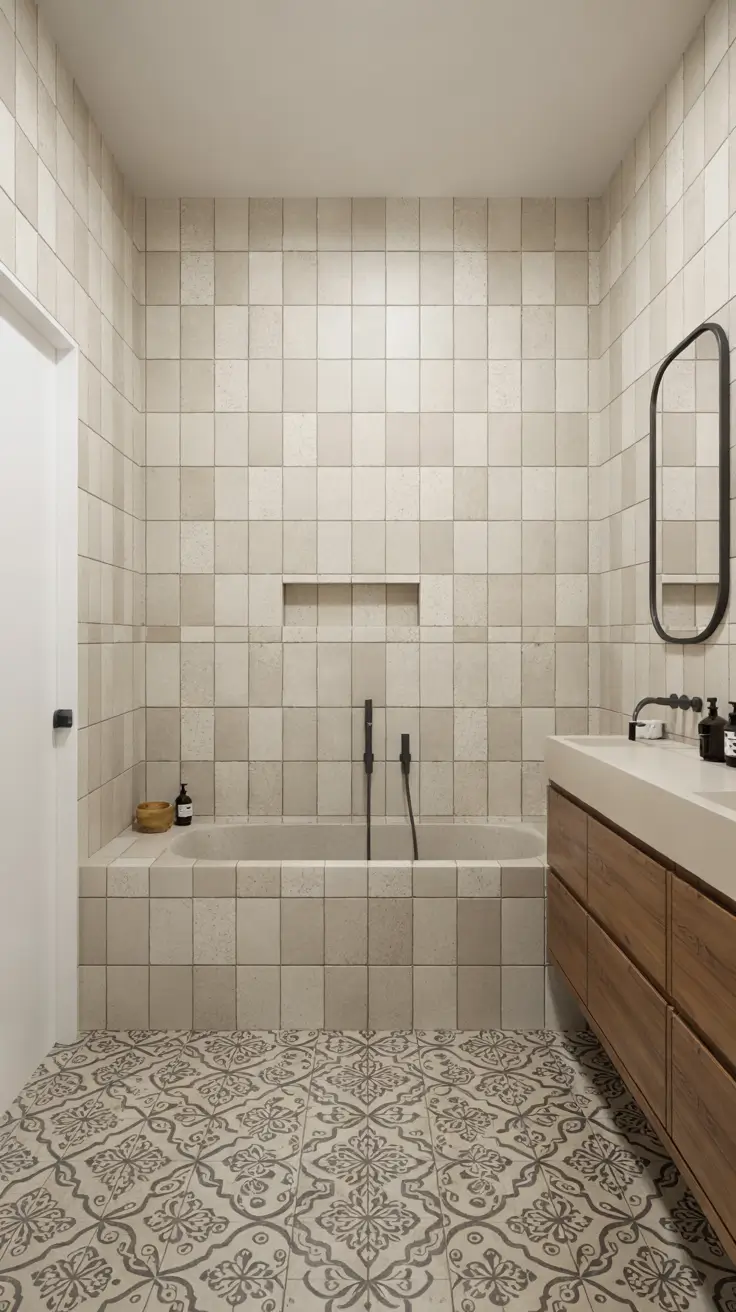
In these rooms, I like pairing a patterned floor with a minimal vanity, such as light oak or walnut with flat fronts and simple pulls. For the walls, I choose a lightly textured ceramic tile, sometimes with a handmade edge, because it complements pattern without competing. Brass or warm metal fixtures can work beautifully, but if you want a sharper look, “bathroom tile ideas with black fixtures” can frame the patterns and make them feel graphic. I also like a mirror with a thin frame and a soft, diffused light above it so the pattern reads clearly. A tub can fit this style too, and “bathroom tile ideas with tub” look especially good when the tub surround is calm and the floor carries the decorative weight.
I have found that the key is keeping the color story limited, like sand, ivory, terracotta, and a single deep accent such as indigo or green. Many designers emphasize that patterned tile needs breathing room, and I follow that by avoiding extra patterns in rugs, shower curtains, or busy countertops. If you want the room to feel more contemporary, I recommend choosing a pattern with a simplified geometry and using a grout color that blends. That way the floor still has character, but it does not shout. With the right balance, the room feels personal and sophisticated, not like a postcard.
To strengthen this section, I would add guidance on scale, explaining which pattern sizes work best for “Small bathrooms” versus larger layouts. I would also include advice on where to stop the pattern, such as keeping it on the floor and carrying a plain tile up the shower walls. If the bathroom includes a tub, I would add a note on protecting the pattern from constant splash zones by using porcelain rather than softer materials. Finally, I would add a short note on sealing and grout maintenance for patterned surfaces to keep them looking crisp.
10. Large Bathroom Tile Ideas For Spacious Interiors
In a larger room, I treat tile like architecture because big surfaces can handle bolder moves without feeling crowded. Large-format tile reduces grout lines, which makes walls look cleaner and more upscale, especially in a primary suite. For 2026, I see more homeowners leaning into slab-look porcelain and oversized stone visuals, which feel luxurious but practical. I often build the plan around “bathroom tile ideas modern” with calm tones, then add contrast through lighting and fixtures. A spacious layout also makes it easier to zone the room, using tile placement to define vanity, shower walk area, and tub moments.
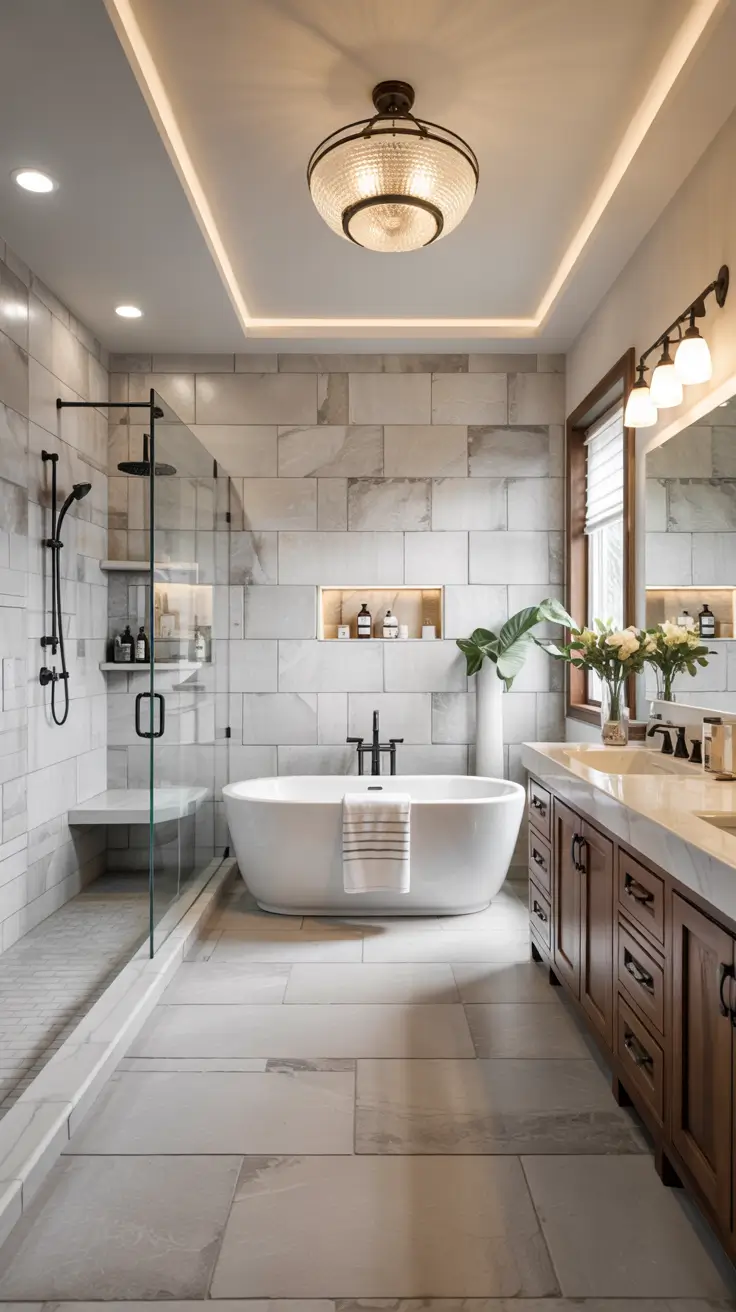
For the floor, I like large porcelain pieces in a matte finish, sometimes in a soft “Gray” or warm “Beige” depending on the lighting. On walls, I often extend the same tile behind the vanity and into the shower so the room feels intentional from every angle. If the room includes a freestanding tub, “bathroom tile ideas with tub” can look especially elegant when the tub sits on a continuous tile field with a simple wall backdrop. I also like adding a built-in bench in the shower and cladding it in the same tile for a seamless look. In a large room, I frequently include a statement light fixture and a long vanity with generous storage so the room feels balanced, not empty.
In my experience, large bathrooms can accidentally feel cold if the materials are too uniform or too gray. I like adding warmth through wood tones, linen textures, and a softer grout color that keeps the tile from looking grid-like. Many professionals recommend using fewer, larger materials in big rooms for a calm, high-end effect, and I agree because it keeps the space cohesive. I also recommend testing samples in morning and evening light because large tile surfaces reflect undertones more strongly. When the undertones are right, the room feels spa-like rather than stark.
To round out this section, I would add a clear example of how to mix one large wall tile with a smaller detail tile, such as a niche back or a thin mosaic strip, without overcomplicating the design. I would also add notes about expansion joints and proper substrate prep, because large tile requires more precision to avoid lippage. If the room is a “Neutral inspiration master bath”, I would include tips on layering neutrals through texture and sheen differences. Finally, I would add a short checklist for choosing tile thickness, rectified edges, and grout width for a refined finish.
11. Half Wall Bathroom Tile Ideas For Balanced Design
Half-wall tile is one of my favorite solutions because it protects the room where it needs it, while still leaving space for paint, wallpaper, or plaster above. It works well in “Guest” baths and family baths because it handles splash and cleaning without fully committing to floor-to-ceiling tile. For a balanced 2026 look, I like a simple field tile up to about 42-48 inches, then a calm upper wall finish that matches the tile undertone. This approach fits “bathroom tile ideas wall” while keeping the room from feeling boxed in. It is also a smart budget move because it concentrates the tile where it performs best.
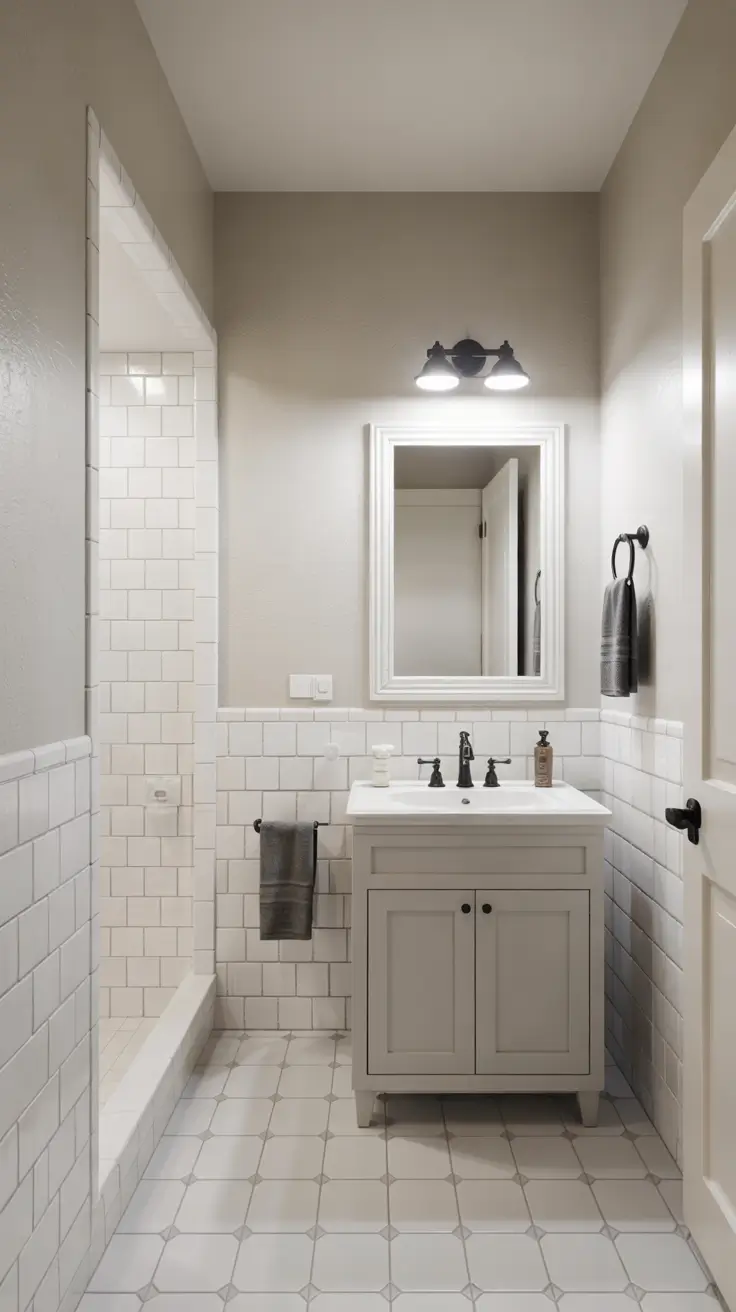
For the tiled portion, I often choose ceramic subway tile in a modern proportion, or a square tile with a slightly handmade surface for softness. A cap rail or a clean metal edge trim can finish the top line, and I usually match that trim to the faucet for consistency. Above the tile, I prefer moisture-resistant paint in a soft neutral, or a subtle wallpaper if ventilation is strong. If the goal is a bold contrast, “bathroom tile ideas with black fixtures” pair nicely with half-wall white tile and a deeper wall color above. I like grounding the design with a coordinated “bathroom tile ideas floor” choice, either the same tone as the wall tile or a complementary stone look.
I have seen half-wall designs look messy when the top edge height is random or when the tile line hits awkwardly across a window. I always measure so the tile line aligns with key elements, like the vanity backsplash height, window sill, or mirror base. Designers often emphasize alignment and repetition, and this is exactly where that advice pays off. When the line is intentional, the room feels tailored. I also like adding a small ledge at the transition if it fits the style, because it can hold decor without cluttering the vanity.
To make this section more complete, I would add a couple of height rules of thumb for different ceilings and vanity sizes. I would also add notes on waterproofing priorities, especially if the half-wall tile continues into a shower-adjacent area. If the bathroom leans “Traditional” or “Vintage”, I would include examples of using classic trim profiles or bullnose edges to match the era. Finally, I would add a short suggestion for grout color selection so the half-wall reads clean and not overly gridded.
12. Coastal Bathroom Tile Ideas With Light And Airy Vibes
Coastal bathrooms are less about obvious beach symbols and more about light, calm color, and breathable textures. For 2026, I approach coastal as a modern, relaxed palette that uses “White” and sand tones with hints of “Blue” or “Green” in a controlled way. This style pairs well with “bathroom tile ideas neutral” because the base can be warm and soft, while color comes in through a single tile surface or accessory. I often use tile to enhance natural light, choosing finishes that reflect gently rather than sparkle. The goal is a room that feels fresh year-round, not seasonal.
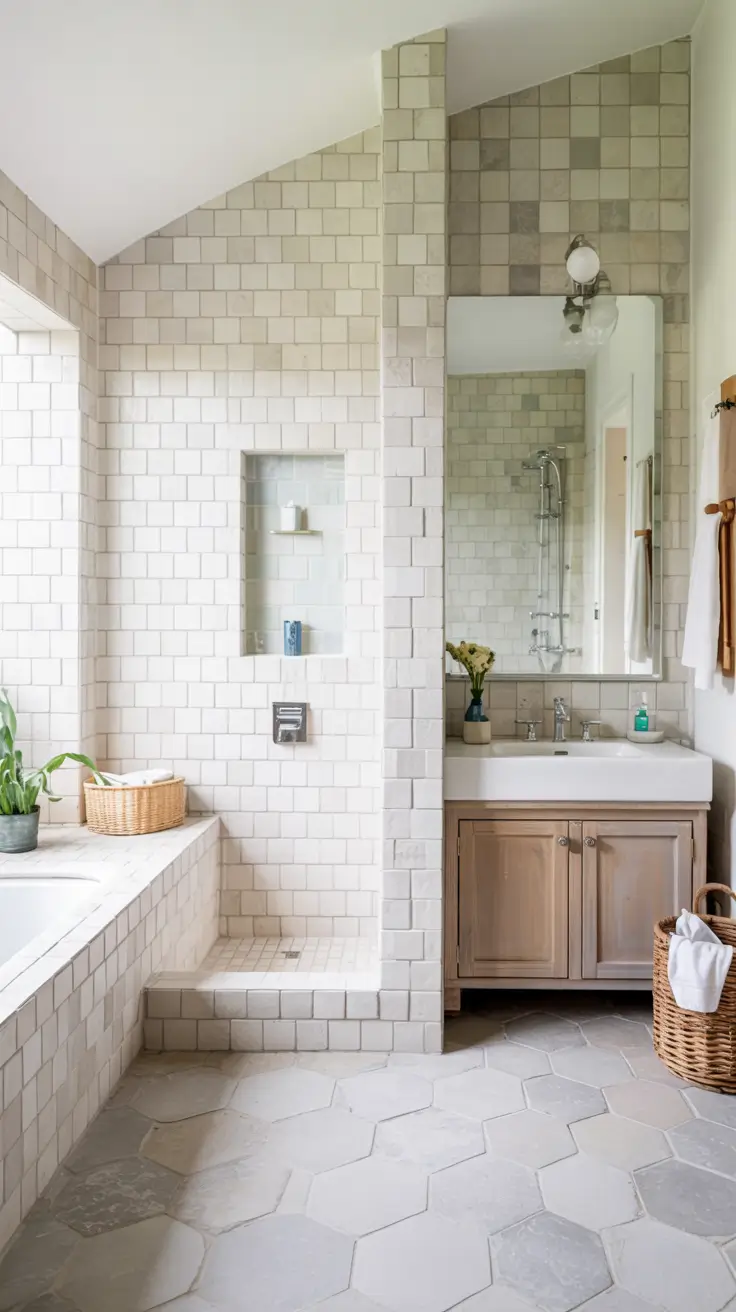
For the walls, I like a soft white ceramic tile with a subtle texture, such as a gentle ripple or a satin glaze that catches light. On the floor, a pale stone-look porcelain works well, especially in wet climates because it is durable and easy to clean. If the bathroom includes a tub, “bathroom tile ideas with tub” can feel coastal when the tub surround is a clean white tile and the floor brings in a sandy tone. I also like adding a light wood vanity, brushed nickel fixtures, and woven accents like a small stool or basket for warmth. A large mirror and layered lighting help the tile look bright even on cloudy days.
In my experience, coastal rooms fail when the blues are too saturated or when too many materials compete. I prefer muted sea-glass tones and I keep them to one main area, like a shower niche back or a single feature wall. Designers often recommend grounding airy schemes with a few darker notes, and I find that a thin charcoal grout line or a small black accent can add definition without breaking the calm. If you want a stronger contrast, you can introduce “bathroom tile ideas with black fixtures” and still keep it coastal by staying light on the tile surfaces. The balance of airy tile and crisp hardware feels modern and intentional.
To improve this section, I would add a recommended color pairing list, like warm white tile plus driftwood vanity plus muted blue-green accent tile. I would also add guidance on choosing finishes that resist water spots, because glossy coastal looks can show minerals quickly. If the bathroom is used by kids or as a “Guest” space, I would include advice on selecting a floor texture that hides sand and footprints. Finally, I would add a small note about integrating natural materials safely, like sealing wood or choosing wood-look porcelain in splash zones.
13. Porcelain Bathroom Tile Ideas For Durability And Style
Porcelain is one of the easiest ways to get a high-end look with real-life durability, which is why it stays popular year after year. For 2026, I see porcelain designs that mimic stone, concrete, and even fabric textures, giving a modern feel without high maintenance. This makes porcelain perfect for “bathroom tile ideas floor” where slip resistance and wear matter most. I also like it for showers because it handles moisture well and stays stable over time. If you want “bathroom tile ideas modern” with a practical edge, porcelain is usually my first recommendation.
On floors, I choose matte or lightly textured porcelain, often in warm neutrals for a calm base. On walls, porcelain slabs or large panels can create a clean, grout-minimized look, especially in a shower walk area. I like pairing porcelain with a simple vanity and streamlined storage, so the tile becomes the main visual texture. If the room includes a tub, porcelain is great for the tub deck and surround because it resists staining and cleans up easily. You can also bring in contrast with “bathroom tile ideas with black fixtures”, since porcelain surfaces look sharp next to black hardware and clear glass.
I have found that porcelain delivers the best value when you commit to a consistent look across the room. It is also forgiving for busy households, which is why I like it in shared bathrooms and high-traffic spaces. Many pros advise choosing rectified porcelain if you want tight grout lines and a crisp, contemporary finish, and that guidance usually holds up in real installs. I also recommend selecting a grout color that blends, because porcelain patterns can look more realistic when the grout does not create a grid. With good lighting, porcelain can look surprisingly close to natural stone.
To expand this section, I would add a short explanation of porcelain ratings, including slip resistance for floors and where polished finishes make sense. I would also add install notes, since large porcelain can require special handling and a flatter substrate. If the design is “Floor and decor” inspired, I would add tips on mixing affordable porcelain with one upgraded feature, like a textured wall tile behind the vanity. Finally, I would add a maintenance note about using pH-neutral cleaners to protect grout and keep the surface looking even.
14. Dark Bathroom Tile Ideas For Dramatic And Elegant Spaces
Dark tile can feel bold and sophisticated when it is planned with lighting and contrast in mind. For 2026, I like dark bathrooms that balance “Dark” surfaces with warm accents so the space feels inviting, not cave-like. This can still fit “bathroom tile ideas modern” when the lines are clean and the materials are simple. Dark tile also hides some daily wear, but it can show water spots depending on finish, so I choose textures carefully. When done well, dark tile elevates a room instantly and creates a boutique-hotel mood.
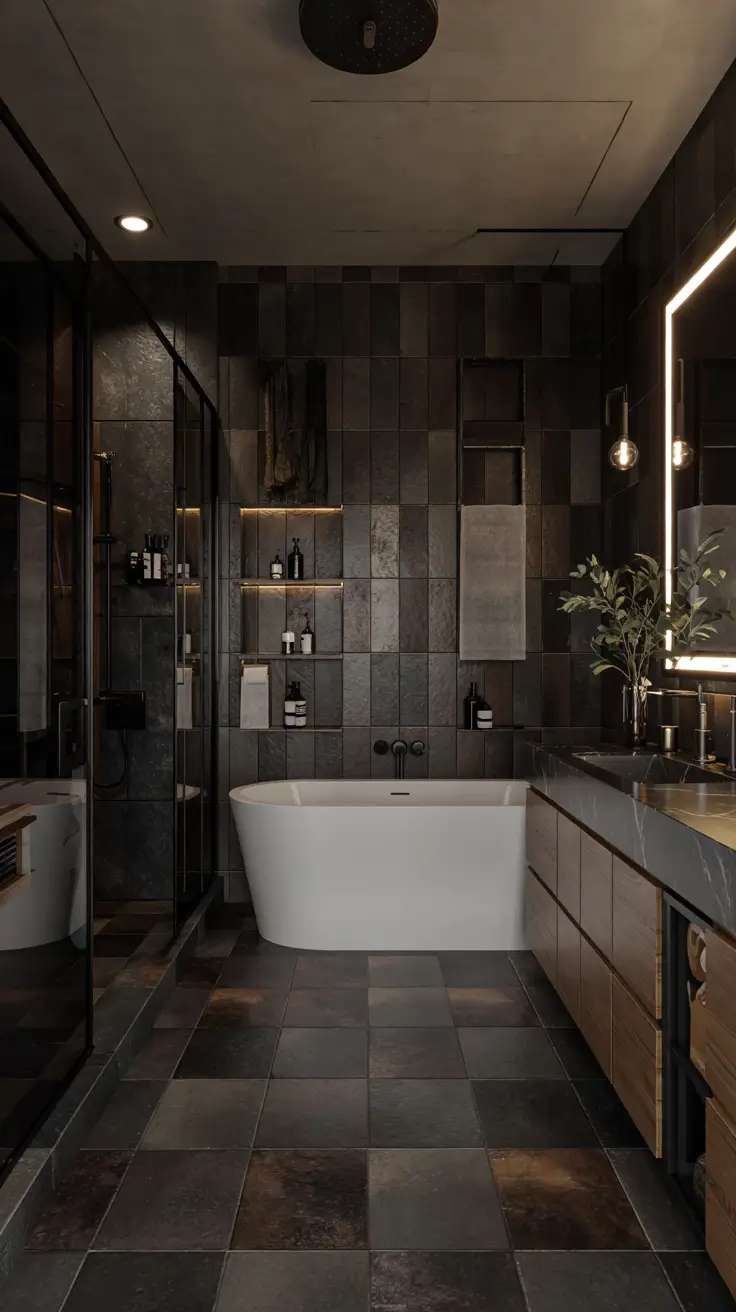
For walls, I often choose deep charcoal, inky blue, or dark green tile, sometimes in a satin finish to soften reflections. For the floor, I like a slightly lighter tone than the walls, or a stone-look porcelain with movement to keep the room from feeling flat. “Bathroom tile ideas with black fixtures” work naturally here, but I make sure something else contrasts, like a light vanity top, a bright mirror, or a pale ceiling. If there is a tub, “bathroom tile ideas with tub” can look striking with a white freestanding tub against a dark tiled wall. A glass shower enclosure helps keep the room open, and layered lighting is essential so the tile reads rich instead of dull.
In my experience, the success of dark tile is mostly about planning the light and the material mix before installation. Designers often recommend using more than one light source, and I agree because dark surfaces absorb light and can make a single ceiling fixture feel harsh. I also like adding warmth through wood vanity tones, brass details, or textured towels so the room feels comfortable. If you want a “Black and white” look, I prefer keeping the pattern minimal, like a dark field tile with a crisp white counter and simple white trim. That keeps the drama without visual chaos.
To complete this section, I would add a quick guide to choosing dark tile finishes that are easier to maintain, such as matte or textured surfaces that hide spots. I would also add advice on ventilation and mirror lighting so the room stays bright enough for daily routines. If the room is small, I would include a note on where to use dark tile strategically, like one wall or the shower zone, instead of every surface. Finally, I would add a small list of complementary colors and materials that prevent dark tile from feeling too heavy.
15. Neutral Inspiration Master Bath Tile Ideas
When I design a master bath around a neutral inspiration master bath concept, I start by choosing two to three tones that can carry the whole room without feeling flat. I usually combine warm beige with soft gray, then add a clean white to keep the space bright. This approach fits bathroom tile ideas neutral and gives the room an elevated, calm mood that does not date quickly. For 2026, I see more people wanting a spa feel that still looks modern, so I keep surfaces simple and let texture do the work. Large format porcelain on the floor helps the room feel larger and reduces grout lines, which also makes cleaning easier. If the room is Large, I still keep the palette restrained so the space feels intentional rather than empty.
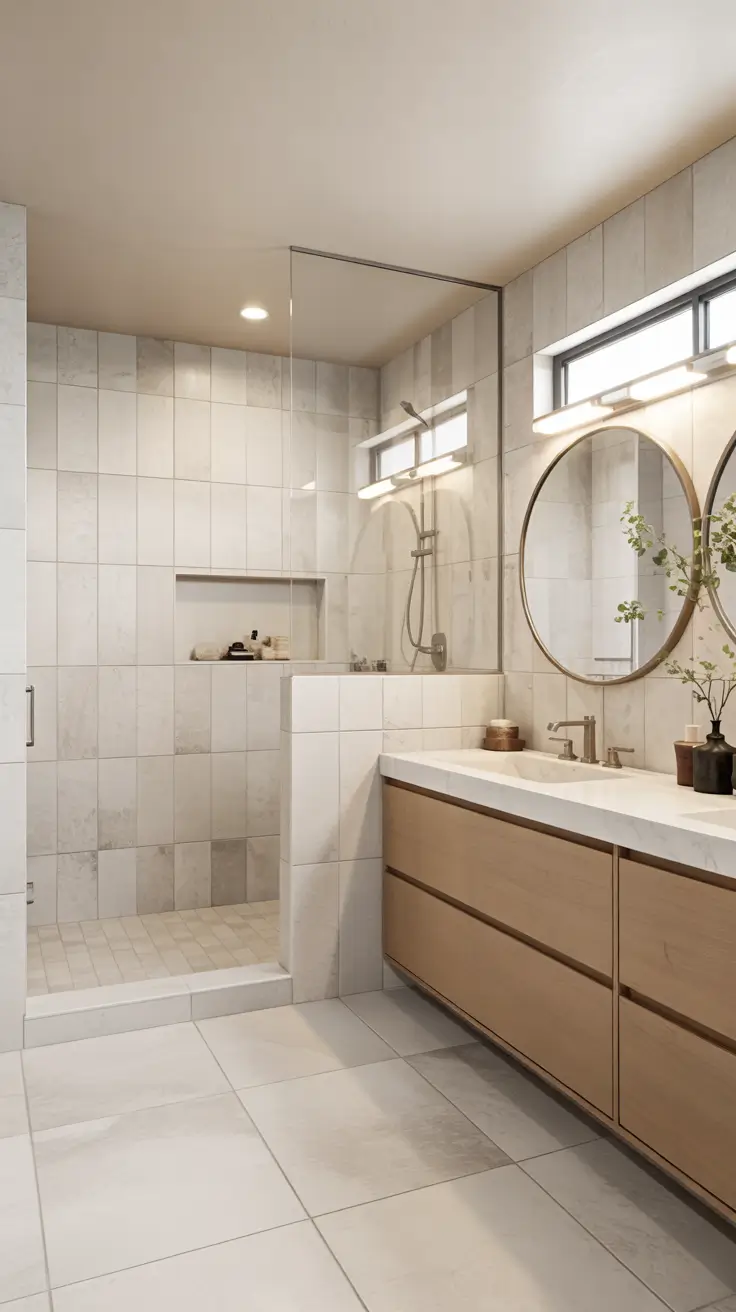
For the bathroom tile ideas floor, I like porcelain with a subtle stone look because it handles moisture, heat, and daily wear well. On the wall, I often add a matte ceramic in a slightly different tone to create depth without changing the color story. A floating vanity in light oak, a slim quartz countertop, and a frameless mirror keep the look modern while staying approachable. I also like a walk in shower with a simple niche lined in the same tile, so storage looks built-in rather than added later. For fixtures, I choose brushed nickel or soft black depending on the lighting, but I always test samples in the room to avoid a cold result.
In my experience, the easiest way to make neutral tile feel expensive is to control the grout color and the tile layout. I try to match grout closely to the tile so the surface reads as one calm plane, especially on walls. I also recommend mixing finishes carefully, like matte tile with a slightly reflective countertop, so the room does not look dusty. When clients want a little personality, I add it through towels, a small stool, and greenery instead of busy patterns. Neutral does not have to mean boring, it just needs one or two strong textures.
To complete this section, I would add a quick note on slip resistance for the floor and where I prefer a slightly more textured finish near the shower entry. I would also add one sentence on lighting temperature, because warm white light makes beige and gray look richer. Finally, I would include a reminder to order extra tile for future repairs, especially with large format runs.
16. Shower Tub Surround Tile Ideas With Half Wall Designs
Shower tub surround tile ideas with half walls are one of my favorite ways to add architecture to an everyday bathroom. A Half wall gives you a natural break point for materials, and it can make the tub area feel more like a built-in feature than a standard alcove. In 2026, I see this used a lot in transitional and modern spaces because it balances openness and privacy. It also solves practical issues like splash control while still letting light travel through the room. I consider this a strong option for bathroom tile ideas with tub because it frames the tub as a focal point without needing ornate trim. The look can lean traditional or modern depending on the tile scale and edge details.
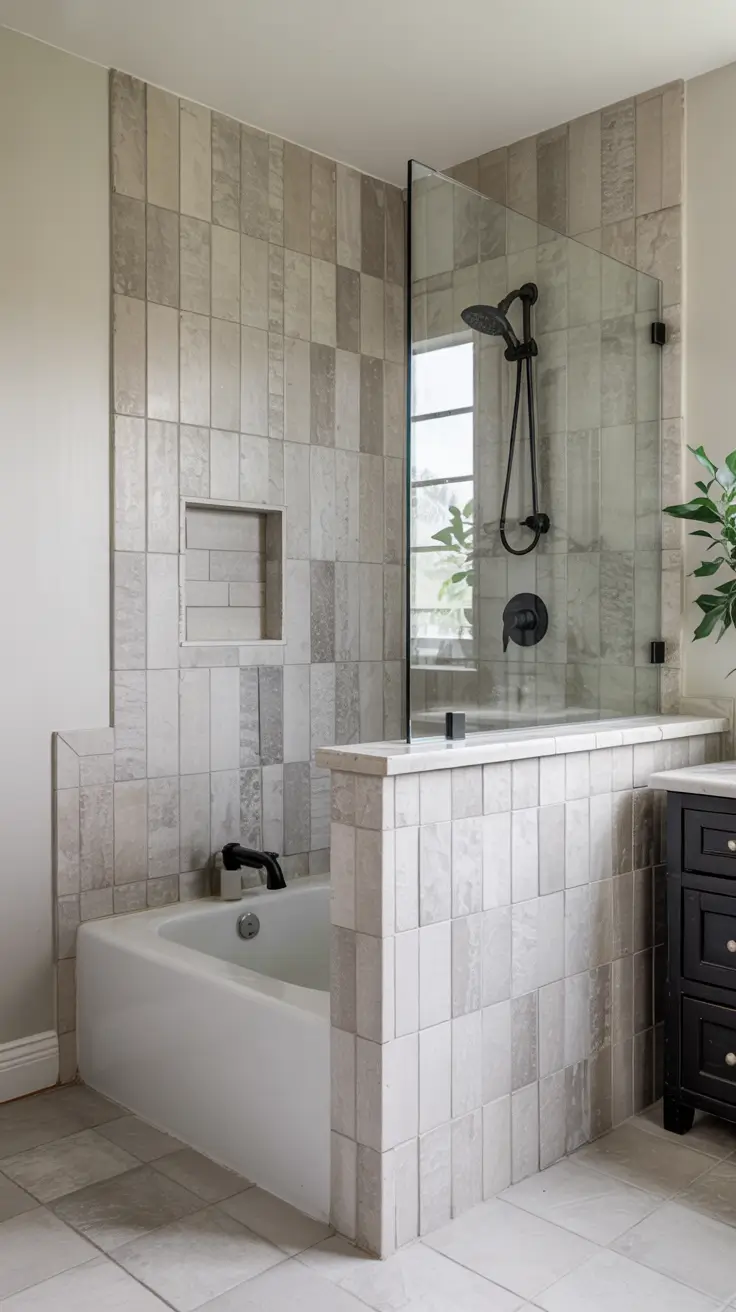
For the tub surround, I usually run porcelain or ceramic up the full wet zone and cap the half wall with a solid slab for durability. If I am aiming for a clean modern look, I use large vertical wall tile and a narrow niche that aligns with grout joints. If the homeowner wants bathroom tile ideas with black fixtures, I keep the tile calmer and use the black hardware as the contrast. A wall-mounted faucet, a simple tub filler, and a glass panel on the half wall keep the area easy to clean. I also like adding a recessed shelf at the tub end for candles, bath items, and a small plant, because it keeps the deck clear. When the bathroom is smaller, the half wall can double as a visual divider without closing the room off.
I have learned that the success of half walls comes down to proportions and waterproofing details. I keep the half wall height consistent with sight lines from the doorway so it looks intentional, not like a cut-off partition. I also avoid tiny mosaics on the vertical face unless there is a strong reason, because more grout means more maintenance. If you want a bit of pattern, I prefer a subtle ribbed tile or a calm stacked layout instead. This is one of those places where careful tile alignment makes the room feel custom even on a reasonable budget.
To strengthen this section, I would add a short guideline on how I choose the half wall cap thickness and the edge profile so it matches the rest of the bathroom. I would also add one paragraph on shower tub surround half walls drainage and slope at the top surface, because that detail prevents long-term water issues. Finally, I would include an example of pairing white tile with a darker cap for a clean black and white look.
17. Ceramic Bathroom Tile Ideas For Classic Appeal
Ceramic bathroom tile ideas are perfect when you want classic appeal with flexibility in color and shape. Ceramic still feels relevant in 2026 because it can read traditional, vintage, or modern depending on how you install it. I often use ceramic on bathroom tile ideas wall applications where the surface is not taking constant direct water like a shower floor. It is also a great way to introduce soft color, like Blue or Green, without the price jump of specialty materials. When clients want a warm, familiar bathroom, ceramic gives that comfort while still looking fresh. This section works well for both a master suite and a guest bath.
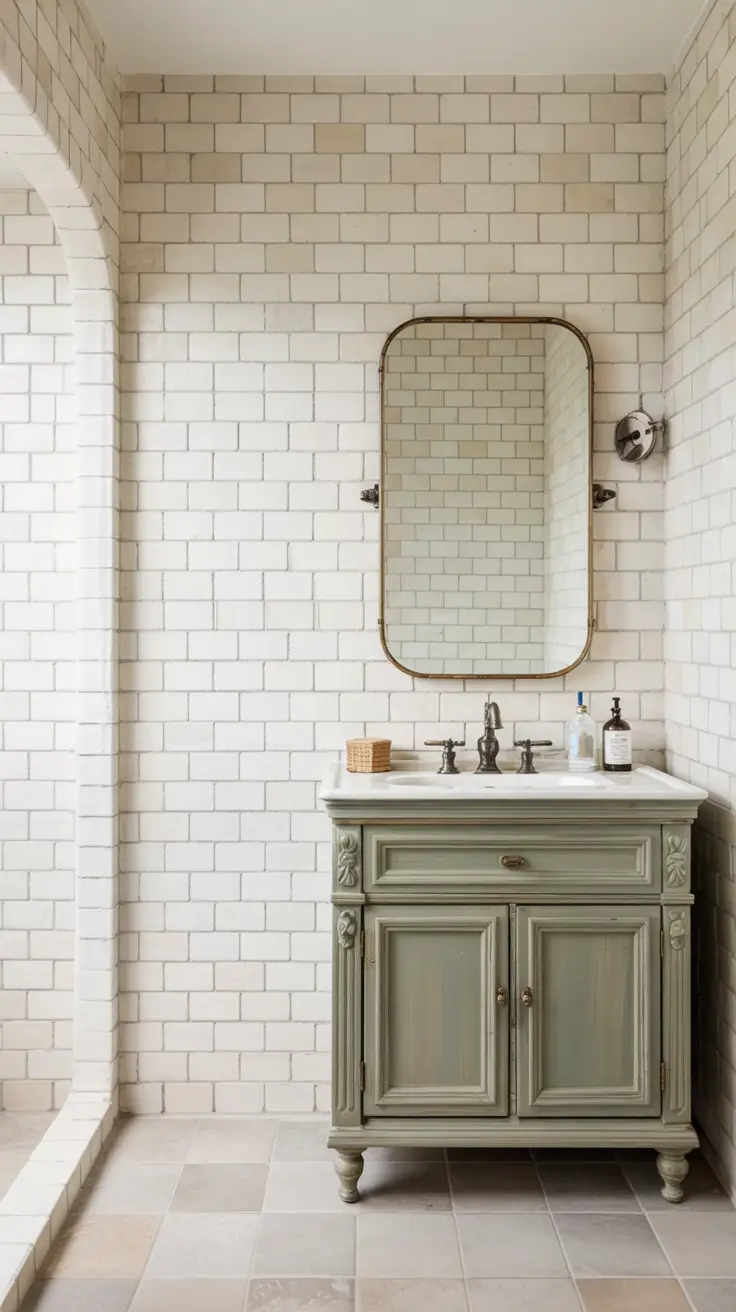
For a classic look, I like a simple white ceramic subway tile with a slightly handmade edge, installed in a clean stacked or offset pattern. If the bathroom leans Traditional, I add a small chair rail detail or a gentle vertical bead-style tile for texture. A painted vanity in muted green, a stone-look porcelain floor, and a warm brass mirror frame can make the room feel layered without clutter. If you want a more vintage direction, I use a soft beige wall tile and add a small patterned ceramic accent in a niche or behind the sink. I keep accessories minimal, like a linen shade, a small tray, and a framed print, so the tile remains the star.
When I want ceramic to look timeless instead of dated, I focus on scale and grout. Smaller tiles can feel busy unless the room is large enough or the color is very calm, so I balance them with simpler surfaces nearby. I also avoid high-contrast grout on classic ceramic unless the goal is a graphic statement, because it can overpower the room. In my own projects, a slightly warm grout with white ceramic is the easiest combination to keep looking clean. Ceramic is also forgiving, which makes it a practical choice if you want a polished result without a complicated install.
To round out this section, I would add a short note on where I do and do not use ceramic in wet zones, especially for shower floors. I would also add one paragraph on mixing ceramic walls with porcelain floors so the room feels cohesive. Finally, I would include a quick checklist of classic accessories that support the look without turning the space into a theme.
18. Walk In Shower Tile Ideas For Modern Bathrooms
Walk in shower tile ideas for modern bathrooms are all about clean surfaces, strong drainage planning, and a layout that feels open. In 2026, the most modern showers I see use fewer materials, larger tiles, and clear lines that reduce visual noise. This approach also supports bathroom tile ideas modern because it pairs well with minimal fixtures and simple storage. I like walk-in showers because they can make small bathrooms feel bigger and they improve everyday flow. The design gets even better when the shower tile and bathroom floor tile relate to each other in tone and texture. A glass panel instead of a full enclosure keeps the room bright and makes the shower feel integrated.
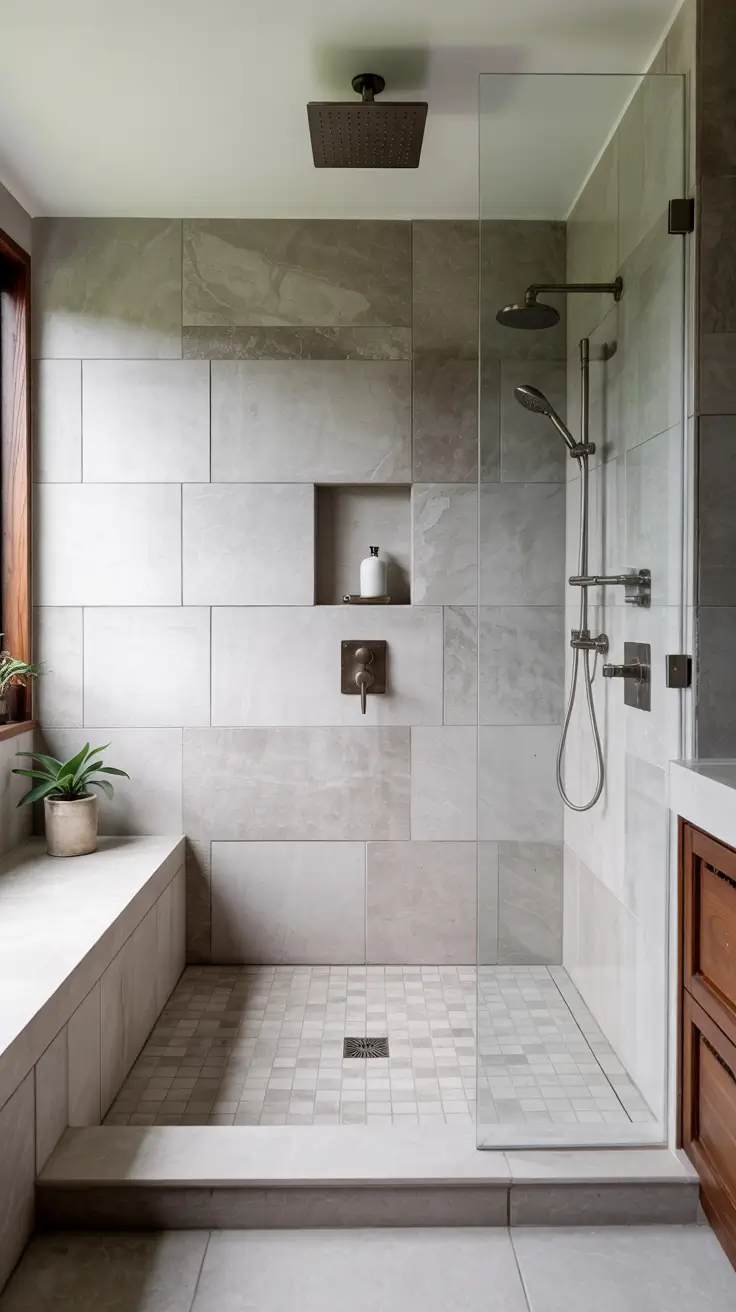
For the walls, I usually choose large format porcelain in a matte finish, then carry it to the ceiling if the bathroom is tall. On the shower floor, I use a smaller format or a textured porcelain so it is safer underfoot, especially in a shower walk zone where water is constant. A linear drain along the back wall supports a sleek layout and lets the tile run in one direction. I include a built-in bench if space allows, and I keep it the same tile as the walls so it looks seamless. For storage, a recessed niche with a simple stone shelf is the most practical, and it keeps bottles off the floor. If the fixtures are black, I like pairing them with a soft gray tile to keep contrast crisp but not harsh.
In my experience, modern walk-in showers look best when every line is intentional. I align niche edges with grout joints and I keep transitions minimal, because that is what makes the space feel high-end. I also prefer fewer grout lines on walls because it reduces maintenance and keeps the surface looking calmer over time. If you want personality, I add it through a single accent surface like a ribbed tile panel, not multiple patterns. The goal is a shower that feels calm at 7 a.m. and still looks sharp years later.
To improve this section, I would add a short paragraph on steam and ventilation planning, because modern showers often get used heavily. I would also add one note on selecting matte finishes that are easier to keep looking clean than glossy tile in hard water areas. Finally, I would include a suggestion for lighting placement that avoids shadows inside the shower.
19. White Bathroom Tile Ideas For Clean And Bright Spaces
White bathroom tile ideas stay popular because they make the room feel cleaner, brighter, and more spacious. In 2026, I see white used in more layered ways, like mixing a smooth white wall tile with a textured white floor or a slightly warmer white on one surface. This keeps the bathroom from feeling clinical while still giving that fresh, clean look. White also works across styles, from Rustic to Coastal to modern, depending on what you pair it with. It is one of the easiest foundations for both small bathrooms and larger master baths. If the lighting is limited, white tile is often the most effective way to bounce light around the room.
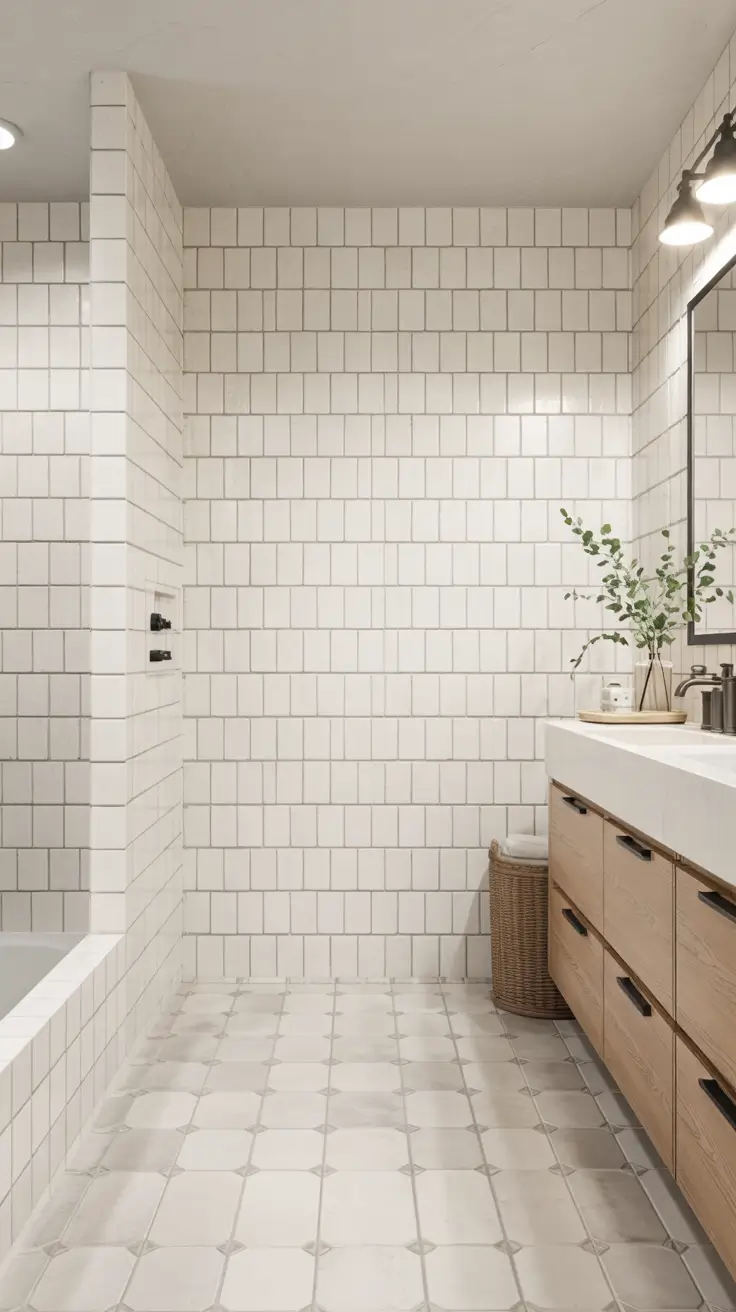
For walls, I like a white ceramic or porcelain with a satin finish, and I prefer a layout that adds interest through shape rather than color. A vertical stacked pattern can make ceilings feel higher, while a larger tile can make the wall feel calmer. For the bathroom tile ideas floor, I often go with white or off-white porcelain that has subtle texture so it is safer and hides water spots better. To avoid an all-white flat look, I add natural wood through a vanity, a stool, or open shelving, and I warm things up with brushed metal finishes. If you want a graphic edge, this is also the perfect base for bathroom tile ideas with black fixtures, because the contrast reads clean and modern. A simple black-framed shower panel and black hardware can make the whole space feel updated without changing the tile.
I have found that white tile succeeds when you plan maintenance from the start. I choose grout that is slightly darker than pure white so it stays looking consistent, especially on floors. I also like a slightly warmer white on walls if the bathroom has cool daylight, because it feels more comfortable. If you love a true crisp white, I balance it with warmer accessories like towels, a woven basket, and soft lighting. White is not just a safe choice, it is a flexible backdrop that lets you change the mood later.
To complete this section, I would add a quick note on finish selection, because glossy white can show water spots while matte can show soap residue, and the best choice depends on your habits. I would also add one paragraph on mixing white tile with stone-look porcelain so the room still has depth. Finally, I would include a short suggestion for a single accent element, like a small blue vanity or green plant, to prevent the room from feeling sterile.
20. Bathroom Tile Ideas For Small Bathrooms With Smart Layouts
Bathroom tile ideas for small bathrooms work best when the tile supports a smart layout instead of fighting it. In small bathrooms, every visual break matters, so I use tile to simplify the room and guide the eye. For 2026, I see more people choosing larger tiles even in small bathrooms because they reduce grout lines and make the space feel calmer. This is where bathroom tile ideas floor decisions can completely change how big the room feels. I also pay attention to how the tile aligns with the vanity, the toilet, and the shower entry, because awkward cuts make a room feel cramped. If your goal is function first, tile can quietly solve a lot of daily frustration.
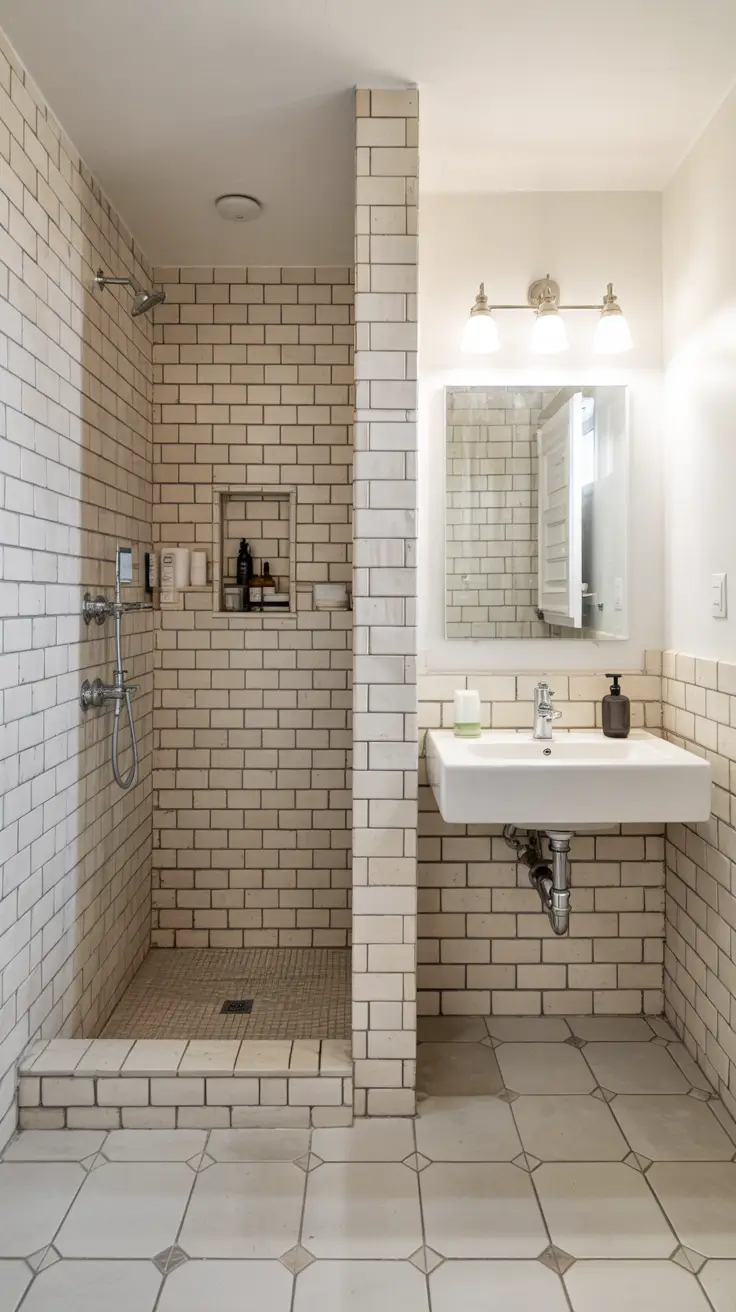
For the floor, porcelain is usually my first choice because it performs well and comes in many styles, from stone looks to subtle concrete looks. On the walls, I often keep it simple with a light neutral ceramic and add one feature wall only if it supports the room, not just decoration. If you want bathroom tile ideas wall impact without overwhelming the space, I recommend a vertical layout behind the vanity to add height. A floating vanity, a recessed medicine cabinet, and a wall-mounted sconce free up visual space and make the room easier to use. In a tiny shower, I keep the floor tile smaller for grip and I match the grout to reduce contrast. For color accents, a soft Blue or Green towel set can add life without making the tile feel busy.
In my own work, I get the best small-bath results by limiting the number of tile types and keeping transitions consistent. I prefer one main floor tile, one main wall tile, and one shower floor tile, and I keep them in the same family of tones. I also recommend planning storage early, because clutter is what makes small bathrooms feel smaller. A niche, a slim shelf, and hooks on the back of the door do more for daily comfort than another decorative tile. Smart tile choices make the room feel easier to live in, not just nicer to photograph.
To strengthen this section, I would add a short note on where I place the strongest tile pattern, if you want one, so it does not shorten the room. I would also add one paragraph on lighting and mirror sizing, because those choices amplify the effect of tile in small bathrooms. Finally, I would include a reminder to consider door swing and towel bar placement when planning tile cuts and trim.
21. Guest Bathroom Tile Ideas That Feel Welcoming
Guest bathroom tile ideas should feel welcoming, simple to maintain, and easy for anyone to understand when they walk in. I treat a guest bath like a small hotel bathroom – clear surfaces, reliable storage, and finishes that feel intentional. In 2026, I see guest bathrooms leaning into comfortable neutrals, gentle texture, and a hint of personality through color or hardware. This is a great place for bathroom tile ideas farmhouse touches, Coastal details, or a subtle rustic vibe without overdoing it. Guests notice cleanliness and comfort first, so I choose tile that stays looking good with minimal effort. Even in a smaller guest bath, the right tile can make the room feel generous.
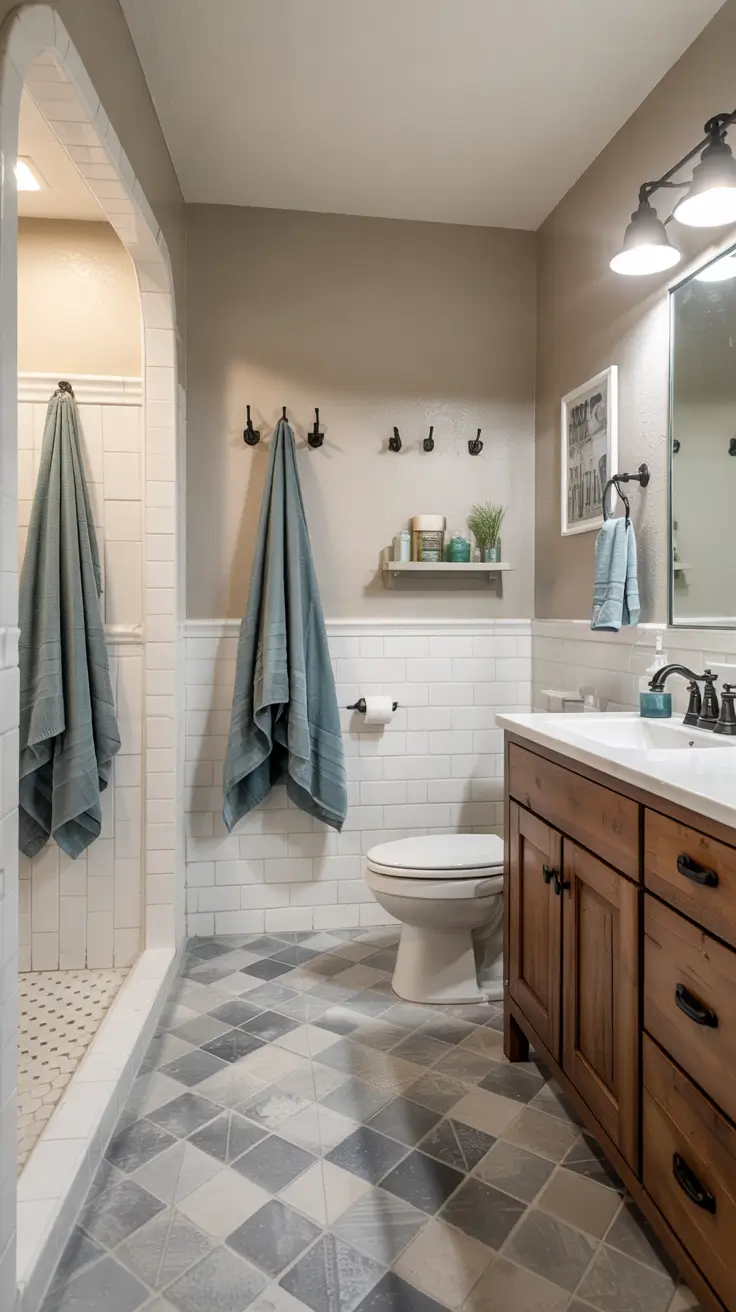
For a welcoming look, I often pair a warm gray or beige floor with a clean wall tile, then add one small feature like a patterned accent behind the sink. Porcelain on the floor is usually best for durability, and ceramic on the wall keeps the space softer. If you want a farmhouse direction, I use a simple white wall tile with a warm wood vanity and black hardware for a modern farmhouse balance, which supports bathroom tile ideas with black fixtures. If you prefer a Coastal feel, I add a light blue-green accent through paint or towels and keep the tile neutral so the room stays calm. For a more earthy look, I use darker floor tile with lighter walls, creating a dark-to-light gradient that feels grounded but still bright. If you like global influence, this is also a place where bathroom tile ideas indian patterns can work as a small accent panel, as long as the rest of the room stays quiet.
I have learned that guest bathrooms work best when you plan the experience, not just the finishes. I include a small shelf or tray for personal items, a hook for clothing, and lighting that is flattering. I also avoid overly trendy patterns on every surface because guests will see it more clearly than you expect. One strong detail, like a black and white accent strip or a small vintage-style patterned inset, is usually enough. When a guest bath is easy to use, it feels more luxurious, even if it is not large.
To finish this section, I would add a note on choosing trim pieces and transitions that look clean, because guests notice sloppy edges quickly. I would also add one paragraph on towel storage and a simple plant or artwork placement to make the room feel cared for. Finally, I would include a short reminder to keep spare tile and grout for touch-ups, since guest bathrooms often get used irregularly and problems show up later.
22. Gray Bathroom Tile Ideas For Subtle Elegance
Gray tile is my go-to when someone wants a room that feels polished but not loud, and it fits both Small bathrooms and Large spaces depending on the scale. I like using Porcelain for durability on the bathroom tile ideas floor because it handles water, cleaners, and daily wear without drama. For 2026, the most convincing gray looks have gentle variation, not flat cement color, so the room feels layered under different lighting. I usually balance gray with White elements to keep it bright, then add Dark accents only where they help define the layout. This approach reads calm and modern while still working for a Guest bath that needs to stay flexible.
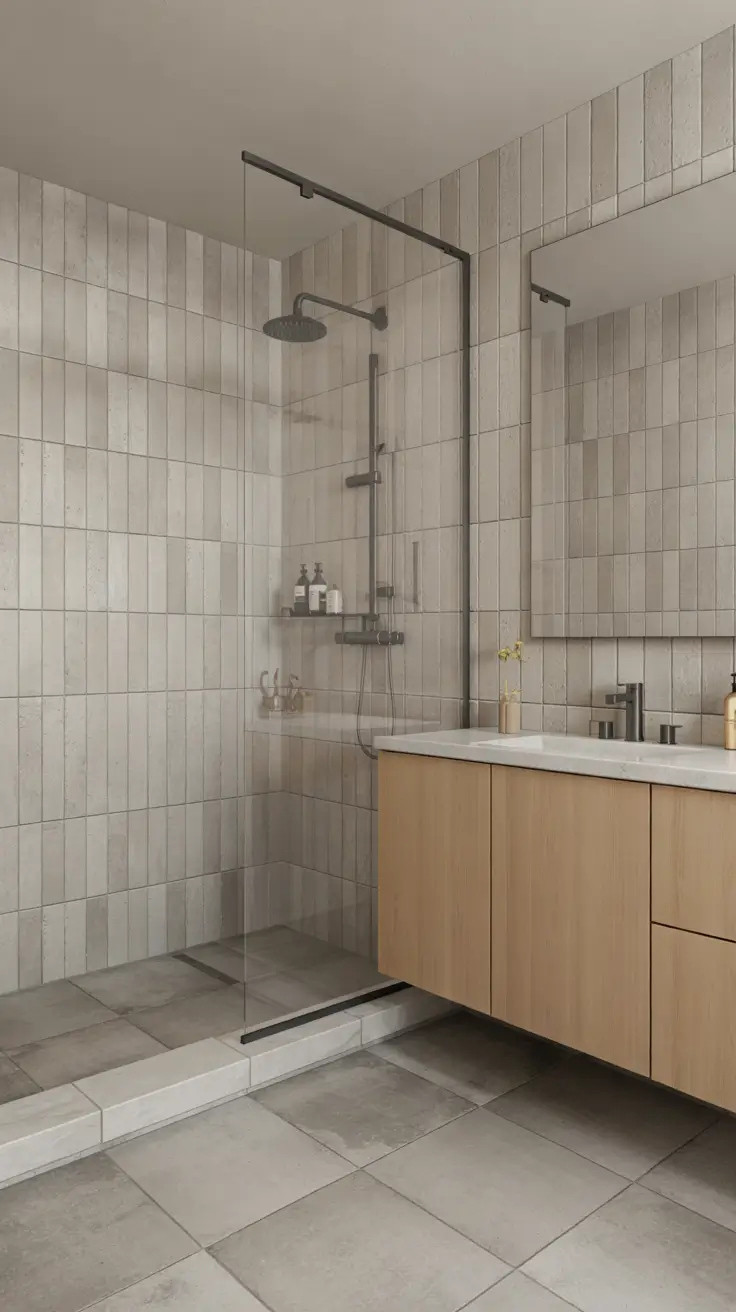
When I build a gray scheme, I often start with a larger-format floor tile and keep grout lines tight so the room looks more open. On the bathroom tile ideas wall, I like a stacked or vertical layout because it quietly elongates the space and looks clean behind a vanity. A floating vanity in light oak or walnut warms the gray and keeps the design from feeling cold, especially when paired with simple Ceramic accessories. If you like bathroom tile ideas with black fixtures, gray is the easiest backdrop because it makes matte black feel intentional rather than harsh. I finish with a frameless mirror, a slim sconce, and soft towels in Beige or off-white for contrast that still feels neutral.
In my experience, gray works best when you commit to one undertone, either warm greige or cool slate, and keep everything else consistent. Designers featured in Architectural Digest often emphasize layering texture in monochrome rooms, and I agree because it prevents the space from feeling flat. I like adding a ribbed glass shower panel, a fluted vanity front, or a lightly textured tile to bring depth without busy pattern. If the bathroom has little natural light, I avoid very Dark charcoal on all surfaces because it can feel heavy at night. Instead, I use darker gray on the floor and a lighter gray on the walls, then let lighting do the drama.
To complete this section, I would add guidance on grout color choices because grout can swing gray toward warm or cool instantly. I would also include a quick note on finish selection, since matte can hide water spots better than high gloss in daily use. If your layout includes a Shower walk area, I would add a reminder to use a slip-resistant finish on the floor. I would also add one styling tip for art and textiles, like choosing black frames or warm wood to keep the palette intentional.
23. Traditional Bathroom Tile Ideas With Timeless Patterns
Traditional bathrooms are returning in 2026, but with cleaner lines and better materials, which makes them feel fresh instead of old-fashioned. I like classic patterns because they give the room structure, especially when you are planning bathroom tile ideas wall that will not date quickly. A Traditional scheme often uses White, Gray, and Black and white details, but you can soften it with Beige paint or warmer metal finishes. I find that traditional looks are ideal for Guest bathrooms because they feel familiar and welcoming to most people. The key is choosing one main pattern and letting everything else stay quiet.
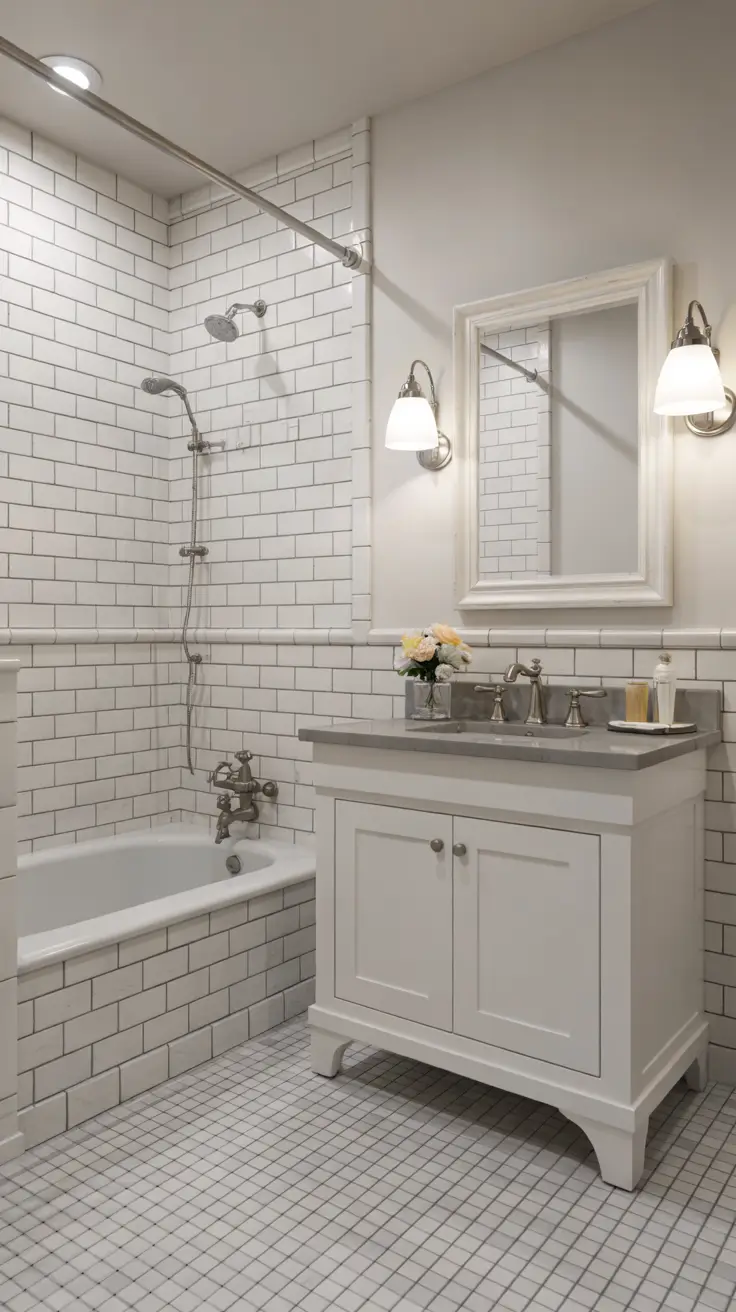
For the floor, I often use a small-scale mosaic or a hex pattern in Porcelain because it has grip and visually fits older-inspired rooms. On the walls, subway tile is still the anchor, but I prefer a slightly elongated format with a clean edge for a more current feel. I like a half-height application, which ties directly into Shower tub surround half walls when the bathroom includes a tub or shower-tub combo. For furniture, a vanity with inset doors, a stone-look counter, and a simple bridge faucet delivers the traditional mood without excess ornament. I finish with a framed mirror, a small sconce on each side, and a few vintage-inspired details like a ceramic tray or a glass apothecary jar.
I have found that traditional bathrooms look best when the materials feel authentic, even if the layout is modern. Better Homes and Gardens often highlights that classic rooms succeed when you repeat shapes and finishes, and I follow that by repeating the same metal finish across the faucet, shower trim, and lighting. I also pay attention to the tile edge profile, because a clean trim makes the installation look tailored. If the space is small, I keep the pattern on the floor and make the walls more uniform to avoid visual clutter. Traditional does not have to mean busy, it just needs a few strong cues and consistent proportions.
To strengthen this section, I would add a short note about choosing timeless colors for fixtures, especially if you want bathroom tile ideas with black fixtures long-term. I would also add a practical reminder about maintenance, like using a darker grout on floors in high-traffic homes. If the room includes a tub, I would add one paragraph on how to detail the surround so the tile lines align at corners and niches. I would also include a tip on selecting traditional lighting temperature, since warm light flatters classic finishes.
24. Rustic Bathroom Tile Ideas With Natural Charm
Rustic bathrooms in 2026 are less cabin-like and more refined, using natural textures and earthy color without looking rough. I like rustic tile ideas when someone wants warmth and character, especially in Small bathrooms that need visual interest without extra decor. Wood-look Porcelain is my favorite for bathroom tile ideas floor because it gives the feel of timber with the water resistance you actually need. On the bathroom tile ideas wall, I lean toward stone-look tile, handmade-look Ceramic, or subtle uneven surfaces that read organic. The goal is comfort and authenticity, not a themed look.
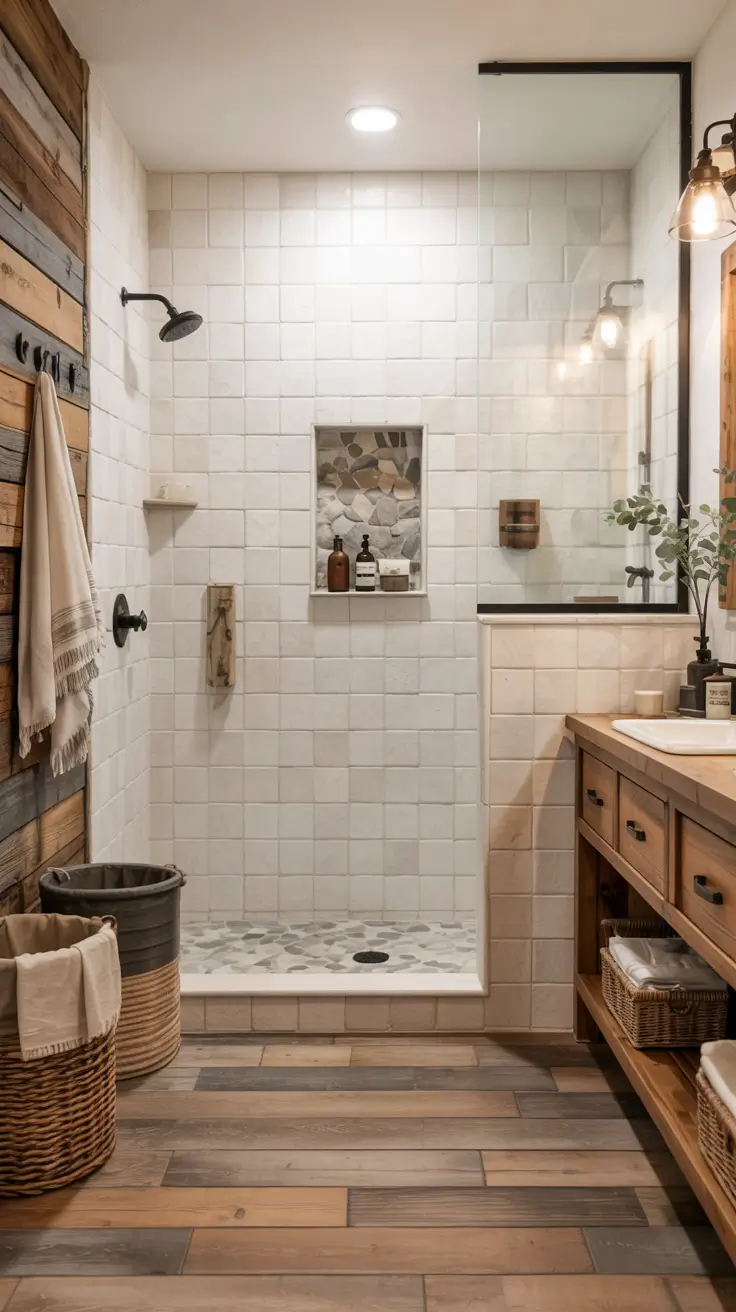
For the floor, wide plank wood-look Porcelain laid in a straight pattern makes the room feel grounded and spacious. On the walls, I often choose a warm White or soft Beige tile with a lightly textured face, then add a niche in a darker stone-look tile for contrast. A vanity in reclaimed-style wood or rift oak, paired with a simple counter, brings the rustic note without overpowering the tile. If the homeowner wants bathroom tile ideas with black fixtures, rustic is a great match because black reads like forged metal and pairs well with natural grain. I like adding a woven basket, a linen shower curtain, and a simple clay vase with greenery to complete the mood.
From my perspective, rustic works best when you edit it down and keep the palette calm, because too many textures can start to feel messy. I often take inspiration from designers who stress that natural materials need breathing room, meaning you should keep some surfaces quiet so the textured elements stand out. I also recommend choosing tile with a believable texture and moderate variation, because extreme contrast can look artificial once it covers a whole wall. If you have a Shower walk layout, rustic stone-look tile can be beautiful, but I always prioritize slip resistance and drainage details. Done well, rustic feels timeless and relaxing, like a small retreat inside the house.
To round out this section, I would add a note on sealing and cleaning, especially if you choose stone-look tile with deep texture. I would also add a suggestion for pairing rustic tile with warmer lighting and wood tones so the room does not turn gray or cold. If the bathroom includes a tub, I would add one idea for a tiled tub apron in the same wood-look Porcelain to tie everything together. I would also include one tip on mixing metals, since rustic can handle black, bronze, or brushed nickel if you keep it consistent.
25. Vintage Bathroom Tile Ideas With Retro Influence
Vintage-inspired bathrooms are trending again for 2026, but the best ones feel curated rather than like a replica. I like vintage tile when someone wants personality and a bit of fun while still keeping the room functional and easy to maintain. Classic vintage colors like Blue and Green are back, especially in glossy Ceramic on the walls that reflects light and makes the room feel brighter. For bathroom tile ideas for small bathrooms, vintage patterns can work beautifully if you keep the pattern in one zone and let the rest stay simple. The trick is to choose one retro element and make everything else quietly supportive.
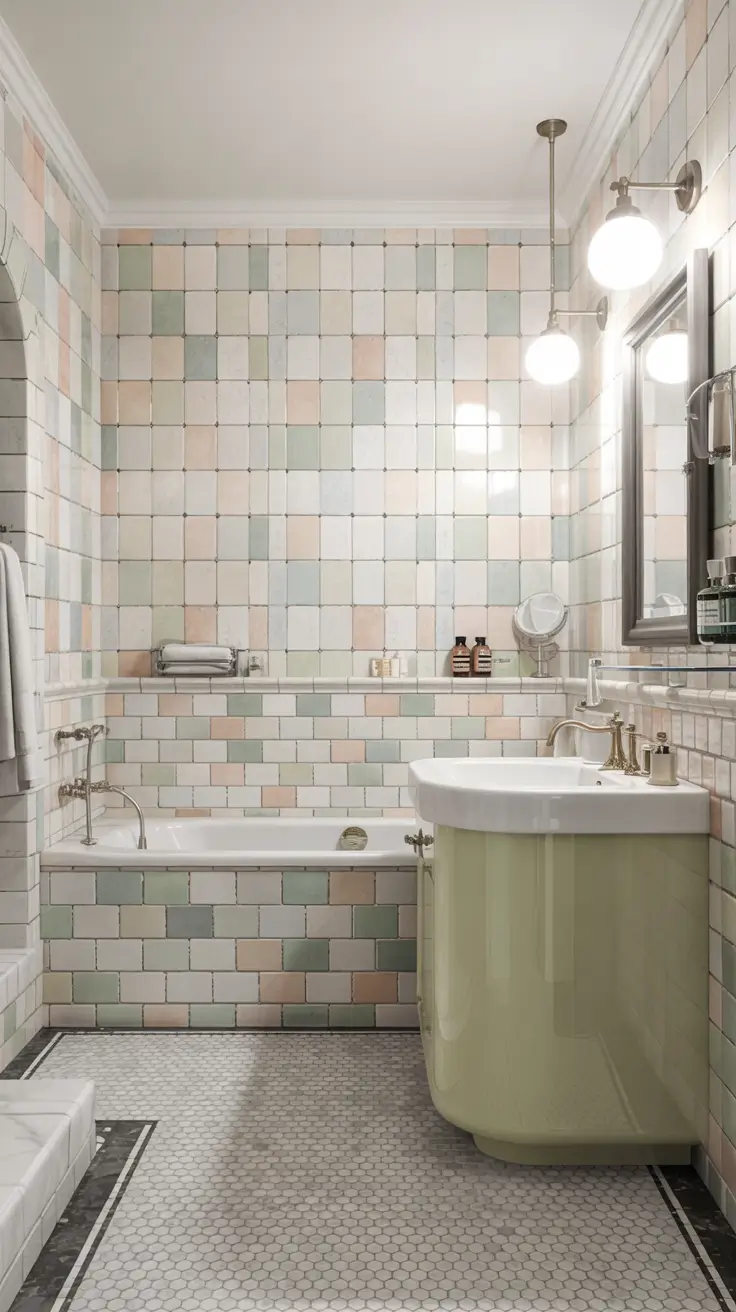
On bathroom tile ideas floor, I often use a small hex or penny mosaic in black and white, because it instantly signals vintage without needing extra decor. For the walls, I like a clean field tile in White or soft color, paired with a simple trim line at chair-rail height for that retro geometry. If the bathroom has a tub, this is where bathroom tile ideas with tub can shine, especially with a tiled surround that includes a thin contrasting stripe. A vanity with rounded corners or a furniture-style leg detail fits the theme, and I keep the hardware simple so it does not feel costume-like. Lighting matters a lot here, so I use globe sconces or a schoolhouse-style ceiling light to reinforce the era.
I have noticed that vintage bathrooms feel best when the color choices are slightly muted, not neon, because modern homes need the look to blend with today’s finishes. I also like mixing one glossy surface with one matte surface so the room does not feel like a mirror box. Interior design editors at House Beautiful often point out that retro spaces succeed when you balance nostalgia with clean modern lines, and that matches what I see in real renovations. If you want bathroom tile ideas with black fixtures in a vintage room, I suggest keeping the tile colors softer so black reads crisp rather than severe. This approach gives you a retro nod while still landing firmly in the modern era.
To make this section more complete, I would add a note on color-matching grout, because grout can change the entire feel of vintage tile. I would also add one suggestion for vintage accessories that do not clutter, like a simple tray, framed print, or a single plant. If your room is a Guest bath, I would add a tip about choosing easy-clean finishes since glossy tile can show water spots. I would also include a short guide on choosing the right scale of pattern for Small bathrooms so the design feels intentional.
26. Beige Bathroom Tile Ideas For Soft And Warm Interiors
Beige is back in a big way for 2026, and I like it because it creates warmth without the heaviness of darker tones. This is one of my favorite bathroom tile ideas neutral approaches because it feels welcoming and works with almost any style direction. Beige also photographs beautifully and looks consistent across daytime and evening lighting, which is not always true for gray. For bathroom tile ideas modern, beige works best when the tile has a refined surface, like a gentle stone look or a matte finish with subtle movement. It is also a strong choice for Neutral inspiration master bath designs that need to feel calm and elevated.
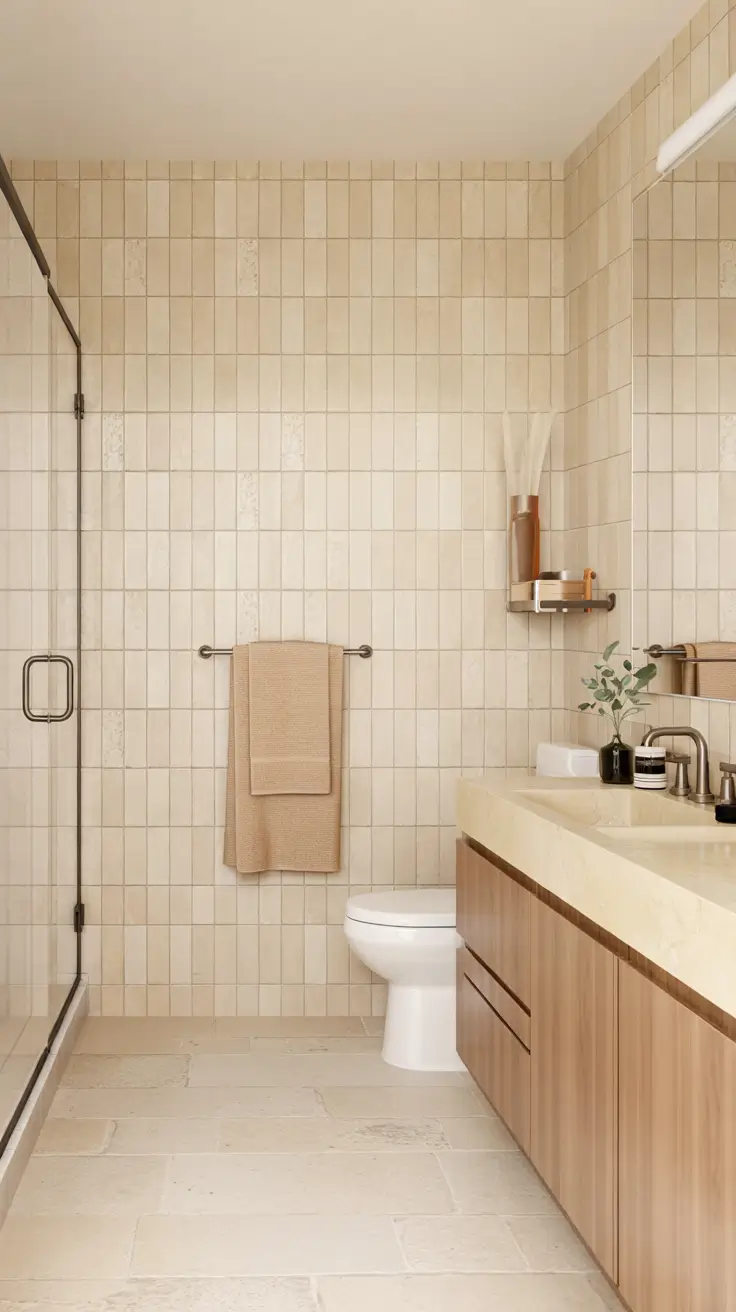
For bathroom tile ideas floor, I typically choose a larger-format Porcelain in a sand or oat tone to reduce grout lines and keep the space feeling open. On the bathroom tile ideas wall, I like a vertical layout or a softly textured tile that adds depth without pattern overload. A light wood vanity, creamy quartz counter, and warm brushed metal fixtures create a cohesive story that feels intentional rather than plain. If you prefer black accents, beige can still work, but I use black sparingly in mirrors or lighting so the room stays soft. I finish with layered towels in off-white, natural linen, and a small touch of Green through a plant or botanical print.
In my experience, beige bathrooms feel most modern when you add contrast through shape and texture rather than high-contrast colors. I often recommend mixing smooth tile with one tactile element, like a ribbed cabinet front or a plaster-look wall paint, to keep the room interesting. Many designers emphasize that neutral rooms should still have a focal point, and I agree because beige needs one strong moment to avoid feeling generic. That focal point can be a sculptural mirror, a statement sconce, or a feature wall in a slightly deeper Beige tone. When clients worry beige will look dated, I remind them that the installation details and lighting are what make it feel current.
To improve this section, I would add a short paragraph about selecting the right beige undertone so it does not clash with your flooring or vanity wood. I would also add a quick checklist for lighting temperature, because cooler bulbs can make beige look dull. If the bathroom includes a Shower walk zone, I would add guidance on choosing a slightly more textured floor tile for slip resistance. I would also include one note about accessorizing, like keeping containers and trays in stone, wood, or ceramic to stay consistent.
27. Black And White Bathroom Tile Ideas With Classic Contrast
Black and white bathrooms are timeless, and in 2026 they are showing up with cleaner layouts and better materials that feel crisp rather than busy. I like this look because it is easy to style, and it works in both Traditional and bathroom tile ideas modern directions depending on tile shape. The contrast also helps define zones, which is useful in Small bathrooms where you want the vanity, shower, and storage to feel organized. With Black and white tile, the biggest design decision is scale, because small mosaics feel vintage while large slabs feel contemporary. I always plan the full room view first so the contrast lands balanced, not chaotic.
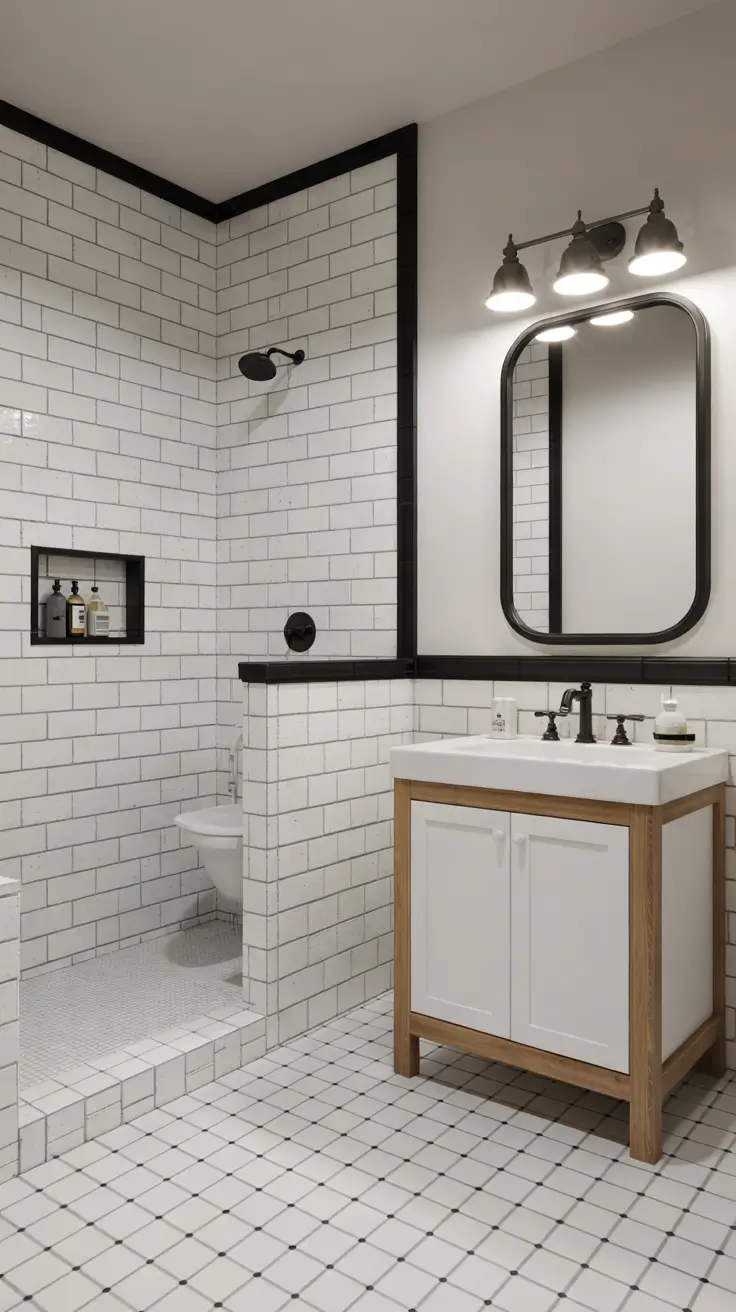
On bathroom tile ideas floor, a classic checker pattern in Porcelain is the most recognizable option, but I also like a small hex mosaic for better grip. For the bathroom tile ideas wall, I often use white field tile and bring black in as an accent stripe, niche backing, or a feature wall behind the vanity. If you want bathroom tile ideas with black fixtures, this is the perfect place for them, because the fixtures echo the black tile and look cohesive. I recommend a simple vanity in light wood or white, a clean-lined mirror, and minimal decor so the tile remains the star. Good lighting is critical, so I use bright, even vanity lighting and a ceiling fixture that fills the room without harsh shadows.
I have learned that black and white looks best when you limit the number of competing patterns, because too many shapes can feel visually noisy. I also pay attention to grout, since high-contrast grout can turn a calm design into a grid that dominates the room. Designers often advise using repetition to make contrast feel intentional, and I follow that by repeating black in three places, usually fixtures, a mirror frame, and one tile detail. If the bathroom includes a tub, black and white can frame it beautifully, especially with a simple surround and a defined edge detail. The result is classic, graphic, and easy to refresh with towels or art as trends change.
To expand this section, I would add a note on choosing matte versus glossy black tile, since glossy black can show water spots more easily. I would also add a practical tip for Small bathrooms, like keeping the walls mostly white to avoid making the room feel smaller. If you are doing a Shower tub surround half walls setup, I would add guidance on where to stop the tile line so it looks intentional and aligns with fixtures. I would also include a reminder to sample tile and grout together under your actual lighting before committing.
28. Neutral Bathroom Tile Ideas For Modern Living
Neutral does not mean boring in 2026, and this is where bathroom tile ideas neutral and bathroom tile ideas modern overlap in the best way. I like modern neutral bathrooms because they feel calm, they age well, and they can flex from minimalist to cozy with just a few styling changes. The key is mixing tones like Beige, warm White, and soft Gray so the room has depth without feeling busy. For bathroom tile ideas for small bathrooms, neutrals are especially helpful because they keep the room visually open. I treat neutral as a layered palette, not a single color choice.
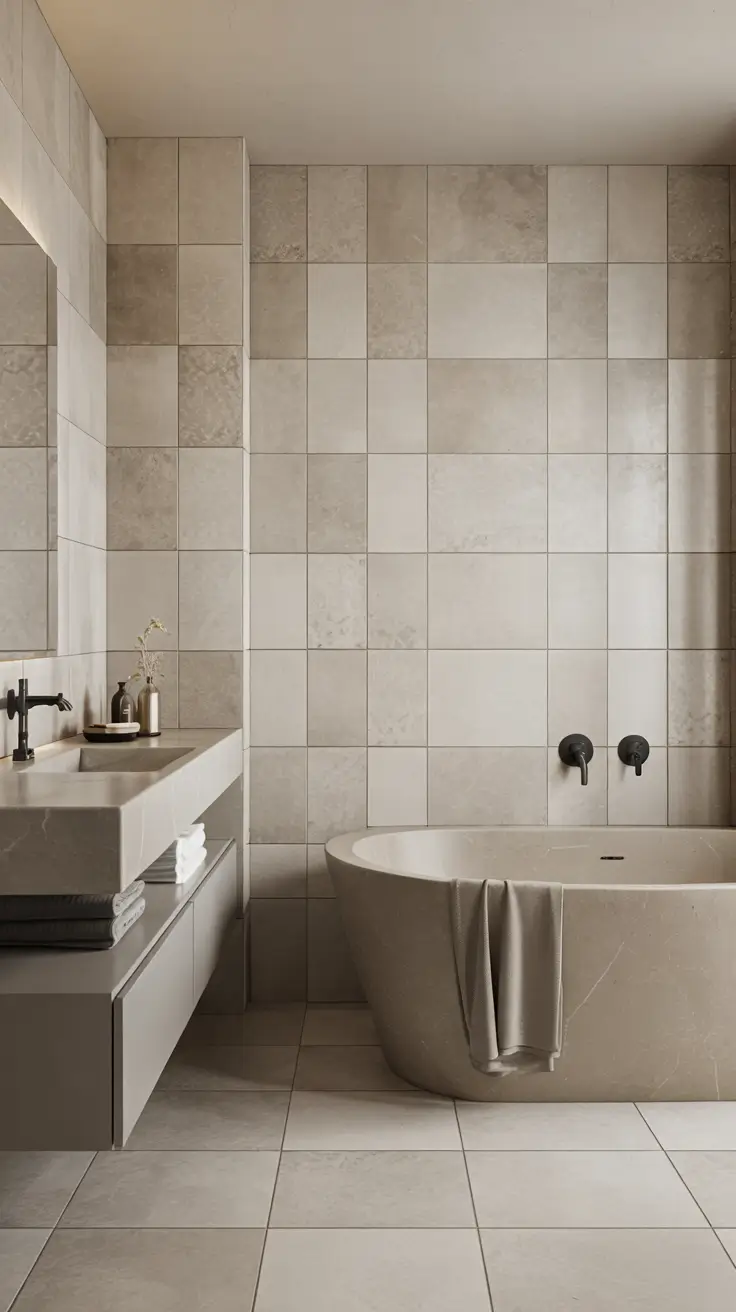
For bathroom tile ideas floor, I often choose a stone-look Porcelain in a warm greige, then pair it with a wall tile that has a slightly different texture or shape. On the bathroom tile ideas wall, vertical stacking, subtle ridges, or a micro-pattern can add sophistication while staying quiet. A floating vanity, integrated countertop, and hidden storage keep the room modern, and I like to add a single open shelf in wood to soften the look. If you want bathroom tile ideas with tub, a neutral surround is a great backdrop for a sculptural tub shape and clean hardware. I also like using Green or Blue accents through towels or artwork, because color pops look sharper against neutrals.
In my own projects, the modern neutral bathrooms that feel most luxurious are the ones with excellent lighting and thoughtful transitions. I take a cue from high-end features often shown in Architectural Digest, where the room feels seamless because materials align and edges are clean. I recommend planning where tile ends and paint begins, and using a crisp trim detail so it looks deliberate. If you want bathroom tile ideas with black fixtures, neutrals make black look graphic and high-end, but only if the undertones are consistent. I also think modern neutral bathrooms are the easiest to maintain visually, because they do not show design fatigue as quickly.
To finalize this section, I would add guidance on mixing warm and cool neutrals so the room does not feel mismatched. I would also add one paragraph about choosing tile sizes for different layouts, including Large rooms that can handle bigger formats and Small bathrooms that benefit from fewer grout lines. If the design includes a Shower walk area, I would add a note on continuity, like using the same floor tile inside the shower for a seamless look. I would also include a small styling tip, such as choosing two textures for towels and one natural accessory to keep the room from feeling sterile.
29. Modern Bathroom Tile Ideas With Sleek Finishes
When I design a modern bathroom for 2026, I start with sleek finishes that read clean from the doorway and hold up in daily use. Large-format porcelain on the walls reduces grout lines, which makes the whole space feel calmer and easier to maintain. I like pairing a matte wall tile with a slightly satin floor so the room has depth without looking shiny. If the bathroom has a shower walk layout, I keep the tile transitions minimal so your eye moves through the room smoothly. This approach works for large rooms, but it also makes small bathrooms feel less busy. To keep it warm, I bring in wood tones and soft lighting rather than adding more patterns.
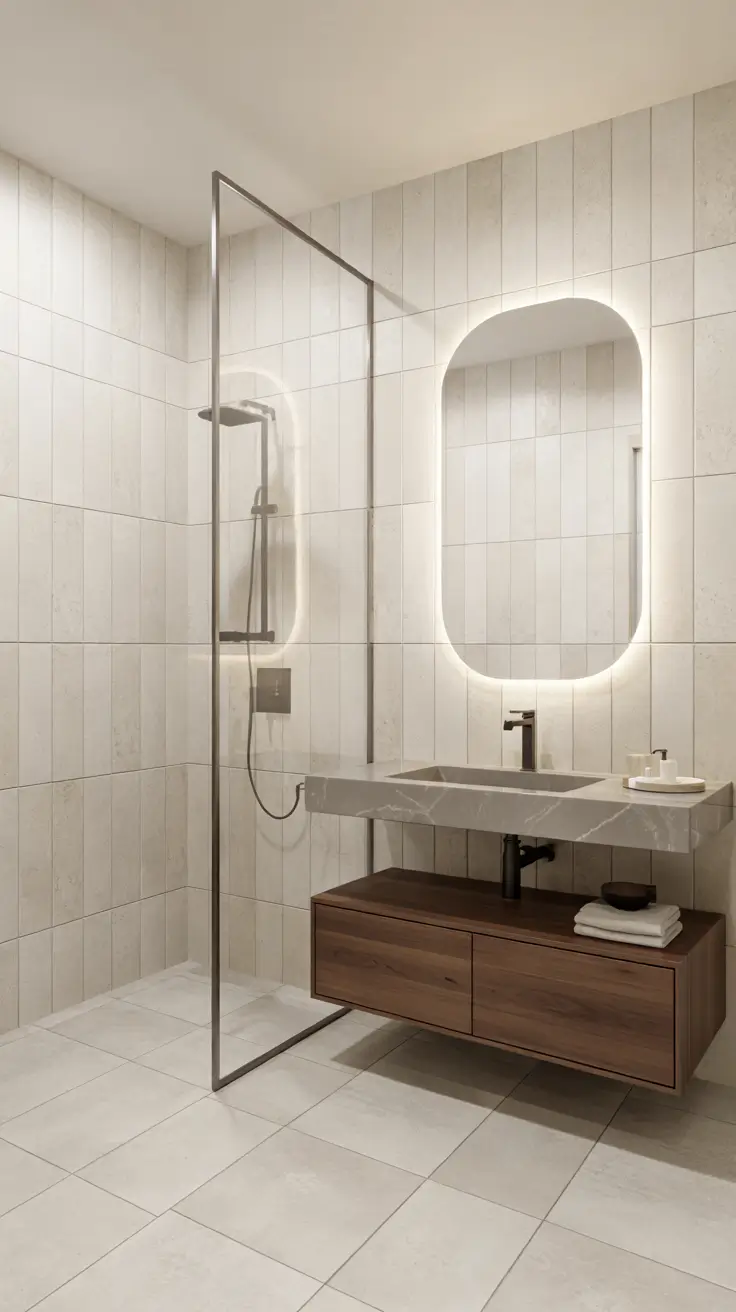
For furniture and fixtures, I lean into simple shapes that match the tile’s quiet geometry. A floating vanity with flat-panel fronts looks best here, especially in beige oak or walnut to balance the coolness of porcelain. I often choose a thin quartz countertop with an integrated or undermount sink so the vanity reads as one calm block. For a modern mirror, I prefer a large rounded-rectangle with subtle backlighting, because it softens the straight tile lines. I also like wall-mounted faucets when the wall tile is perfectly installed, since it makes cleaning easier and keeps the counter clear. If you want bathroom tile ideas with black fixtures, this is a great style for it because matte black looks crisp against white, gray, or neutral tile.
In my experience, the key to “sleek” is consistency in finishes, not perfection in minimalism. I have seen modern bathrooms fail when there are too many competing sheens, like glossy walls, glossy floors, and shiny metal all in one view. I prefer to pick one highlight finish, like brushed nickel or black, then keep everything else softer. I also recommend choosing grout that closely matches the tile, because contrast grout can make even expensive tile look busier than intended. If the room feels cold, I add warmth with towels, a wood stool, and one stone or ceramic accessory, not more tile variety. This way the tile stays the star, and the room still feels livable.
30. Floor And Decor Bathroom Tile Ideas For Trend Focused Homes
When people ask me how to get trend-forward tile without making the bathroom feel dated fast, I suggest treating the look like a wardrobe. Choose a classic base tile, then use a trend tile as an accent that can be updated later. Many Floor and decor bathroom tile ideas work best when the boldest choice is limited to one zone, like a shower wall or a half wall behind a vanity. For 2026, I see a lot of interest in textured ceramics, elongated subway formats, and stone-look porcelain that feels organic. I also like mixing a traditional neutral field tile with one “feature” tile so the room still feels grounded. This strategy is especially smart in small bathrooms where every surface is visible at once. Done well, you get a modern look without committing the entire room to a single statement.
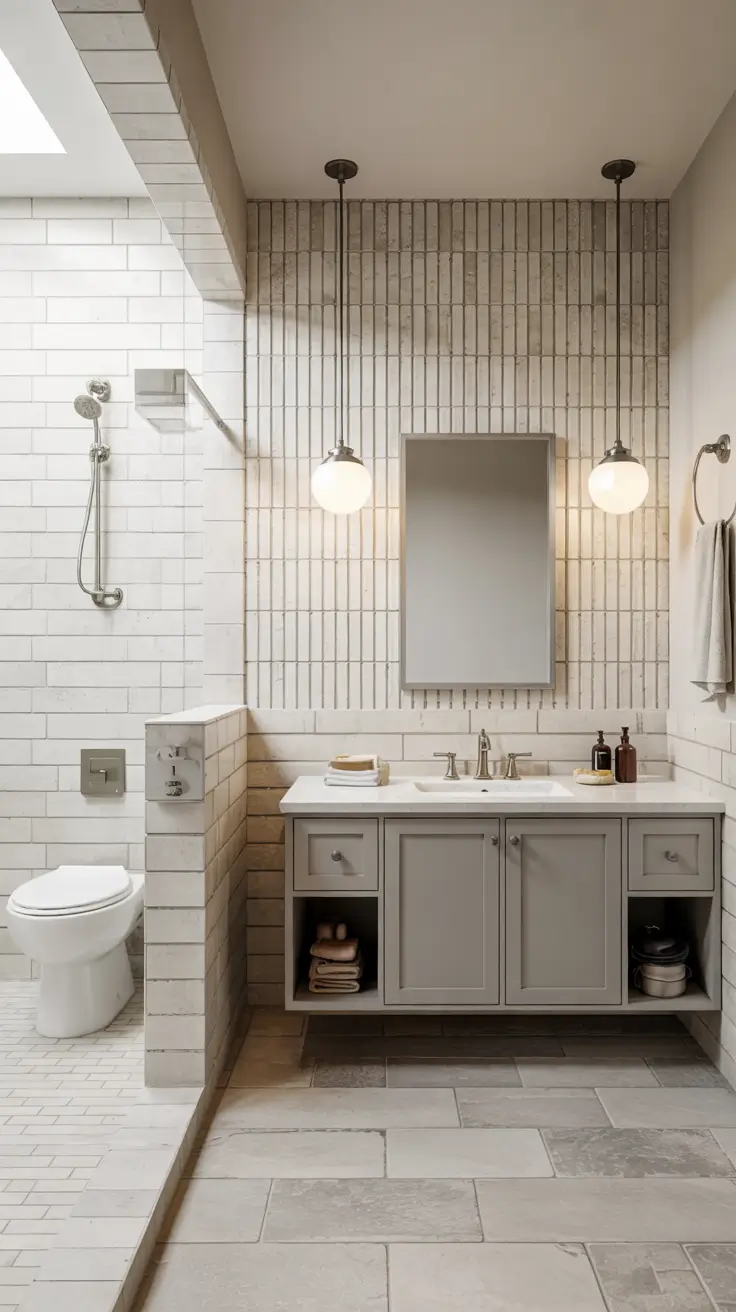
I usually build the room around one anchor decision, which is often the floor. For bathroom tile ideas floor, I like a porcelain with subtle movement that hides water spots and daily dust, especially in guest baths. Then I pick the wall tile based on the vanity style and lighting, because the wall reads as the bathroom’s background. If you have a bathroom tile ideas wall moment in mind, like a vertical stack tile, keep the vanity simpler so the room doesn’t feel crowded. I also recommend planning for storage early, because trend tile looks best when counters stay clear and the room feels intentionally styled. A tall linen cabinet or recessed niche can protect the design from everyday clutter. With trend-focused tile, good organization is the difference between “editorial” and “chaotic.”
My practical advice is to sample tile in the actual bathroom lighting, not just daylight. Warm LEDs can turn white tile creamy, and cool LEDs can make beige look gray, which changes the whole mood. I also like to photograph the samples on the floor and against the vanity finish, because cameras exaggerate contrast and help you notice what feels too busy. If you want to use a bold pattern, I keep it away from the tightest corners where cuts and grout lines can look messy. I also prioritize slip resistance on floors, because a trendy floor that is slippery becomes a daily problem. Trend-forward is great, but comfort and safety should still win.
31. Blue Bathroom Tile Ideas Inspired By Calm Interiors
Blue tile is one of my favorite ways to bring calm into a bathroom without making it feel bland. For 2026, I see blues that are slightly muted, like dusty coastal tones and inky navy, rather than bright primary shades. Coastal looks especially good when the tile has a soft handmade feel, even if it is porcelain that mimics ceramic texture. In small bathrooms, blue can visually “push back” the walls and create depth, which makes the room feel less tight. In a large master bath, deeper blue can add drama while still feeling restful. I like blue most when it is balanced with warm neutrals so it doesn’t feel cold. If you want a spa-like mood, blue is often the fastest way to get there.
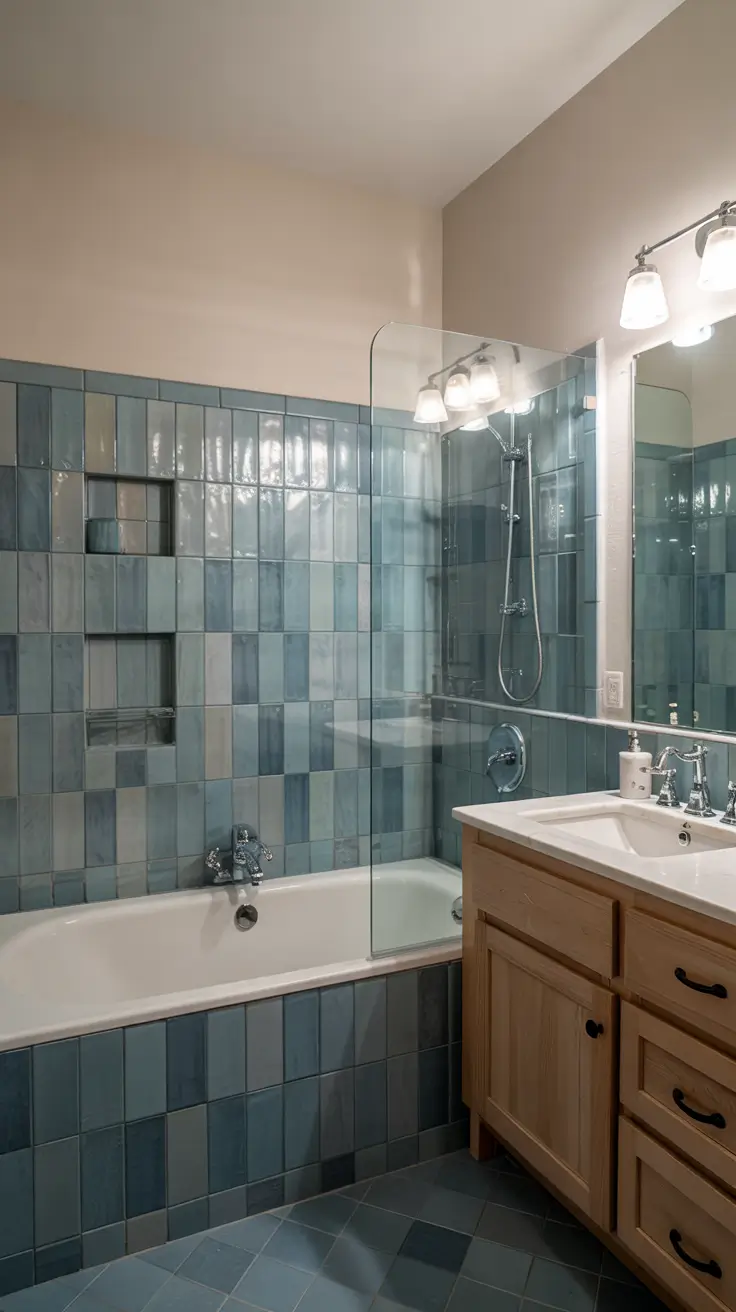
To style it, I choose materials that make the blue feel intentional. A white vanity or a light wood vanity keeps the room bright, and it pairs naturally with blue tile. If the tile is on the wall, I like a simple floor in light gray or beige so the blue reads as the feature. In a bathroom tile ideas with tub layout, a blue surround can frame the tub and make it feel like a focal point, especially with a ledge for candles and bath essentials. I also like brushed nickel or polished chrome with blue, because it keeps the look crisp and clean. If you prefer bathroom tile ideas with black fixtures, it can work with blue too, but I keep the blue more muted and add a white element to prevent the room from looking too heavy.
From what I have seen, the mistake with blue is trying to match every accessory to the tile. I prefer to keep towels and decor neutral, then add only one or two blue accents that echo the tile tone. I also recommend using warmer lighting than you think, because blue tile can look flat under overly cool LEDs. If you want more interest, I add texture through ribbed tile, fluted glass, or a woven shade rather than adding another color. Blue already carries a mood, so it does not need much extra styling. The calmer you keep the supporting choices, the more expensive the blue looks.
32. Green Bathroom Tile Ideas For Nature Inspired Spaces
Green tile works when you want a bathroom that feels connected to nature, but still clean and modern. For 2026, I like greens that feel mineral and earthy, like sage, olive, or deep forest. These shades pair beautifully with beige, warm white, and natural wood, which supports bathroom tile ideas neutral in a more organic way. In small bathrooms, I often use green on the shower wall only, because it adds depth without making the space feel enclosed. In a shower walk design, green tile can act like a visual “backdrop” that draws you inward. I also like green tile in rooms with a window, because daylight makes green feel alive rather than flat. Even in a guest bath, green can make the space feel more memorable without being loud.
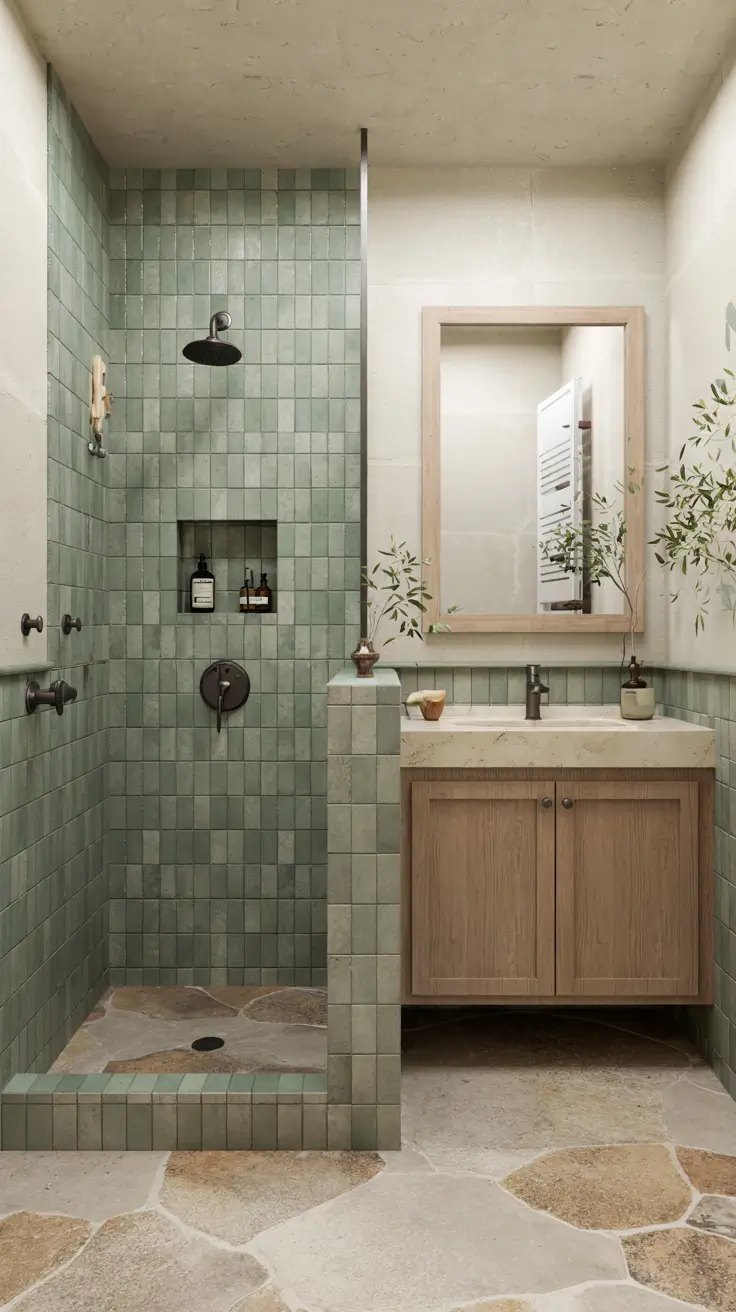
For the layout, I decide whether green is the hero or the supporting player. If green is the hero, I keep the floor simple, usually a porcelain stone-look in warm gray or light beige. If green is a supporting player, I might use it on a half wall behind the toilet or vanity, then paint the upper wall a soft white. For storage, I like a vanity with natural wood grain and simple hardware, because it keeps the nature theme believable. A framed mirror in oak or walnut helps, and I often add a small shelf for a plant or a ceramic vessel. If you are planning bathroom tile ideas with black fixtures, green and matte black can be striking together, especially with white grout kept to a minimum.
My experience is that green looks best when you repeat it once, subtly, somewhere else in the room. That repetition can be as simple as a green hand towel, a glass soap dispenser, or a small art print with botanical tones. I also recommend checking green tile samples at night, because some greens can shift toward gray under warm light. If the tile has strong variation, I dry-lay a few pieces so I understand how “busy” the wall will feel once installed. Nature-inspired does not have to mean rustic, and I often keep the lines modern so the green reads as sophisticated. When you balance green with clean shapes, the bathroom feels fresh for years.
33. Bathroom Tile Ideas For Farmhouse And Modern Mixes
A farmhouse and modern mix is popular because it feels welcoming, but still clean enough for current tastes. I approach bathroom tile ideas farmhouse by keeping the palette neutral and the shapes simple, then layering in a few rustic textures. White wall tile with a handmade look, paired with a warm wood vanity, creates that familiar farmhouse comfort. To modernize it, I use larger tiles or a more minimal layout, like vertical stacking instead of a classic offset pattern. This style is also great for small bathrooms because the neutral base keeps it open. When done carefully, you get a room that feels lived-in, not themed. The goal is warmth with restraint.
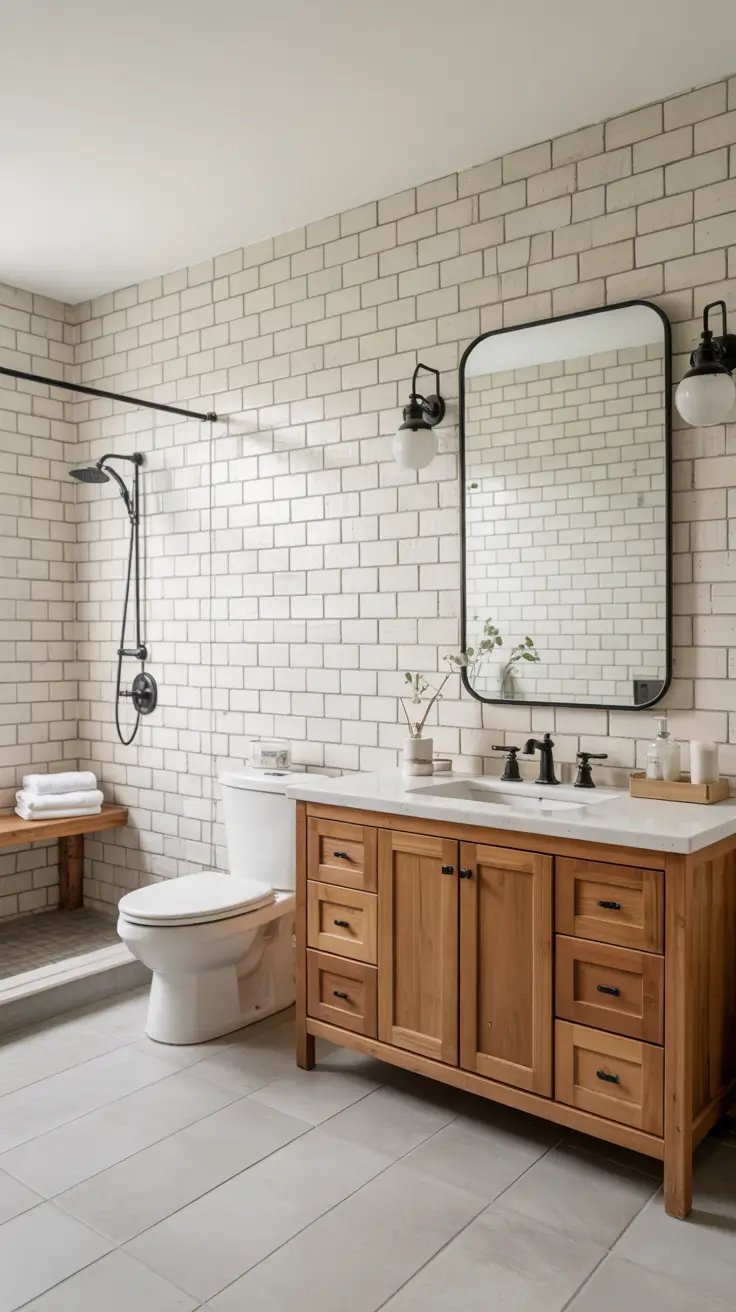
The furniture choices are where the mix becomes believable. I like a vanity with simple Shaker-style doors, but with a cleaner countertop edge and modern plumbing lines. For hardware, matte black can lean modern, while aged brass can lean farmhouse, and either can work depending on the tile tone. If you want bathroom tile ideas with black fixtures, keep the black consistent across faucet, shower trim, and mirror frame so it looks intentional. For lighting, I often choose a modern globe or a simple sconce rather than a lantern shape, because it updates the farmhouse elements. I also like adding a framed shower glass panel instead of a curtain, because that one upgrade instantly makes the bathroom feel more modern. On the floor, I often use a porcelain that mimics a soft stone, because it supports both styles.
My advice is to avoid mixing too many “farmhouse signals” in one room. If you have rustic wood, shiplap, and vintage signage all together, the tile can disappear and the room can feel dated. I keep it to one rustic texture, like a wood vanity or a simple open shelf, and let the tile do the rest. I also recommend choosing grout that does not create heavy contrast, because high-contrast grout can make farmhouse tile feel busier than you want. If you want a vintage touch, I prefer one vintage-inspired element, like a bridge faucet, rather than multiple. The mix works best when modern is the structure and farmhouse is the accent.
34. Bathroom Tile Ideas For Shower And Floor Combinations
When I plan shower and floor combinations, I focus on continuity and slip resistance first, then style. A smart pairing can make a bathroom feel larger because your eye moves through the room without harsh breaks. For 2026, I like using one porcelain collection for both surfaces, then changing the size or texture between floor and wall. This keeps the color consistent while giving the floor more grip and the walls a smoother finish. In small bathrooms, this approach reduces visual clutter, which is why it is one of my favorite bathroom tile ideas for small bathrooms. In large rooms, you can introduce a second tile, but I still keep it in the same color family. The more seamless the transitions, the more premium the bathroom feels.
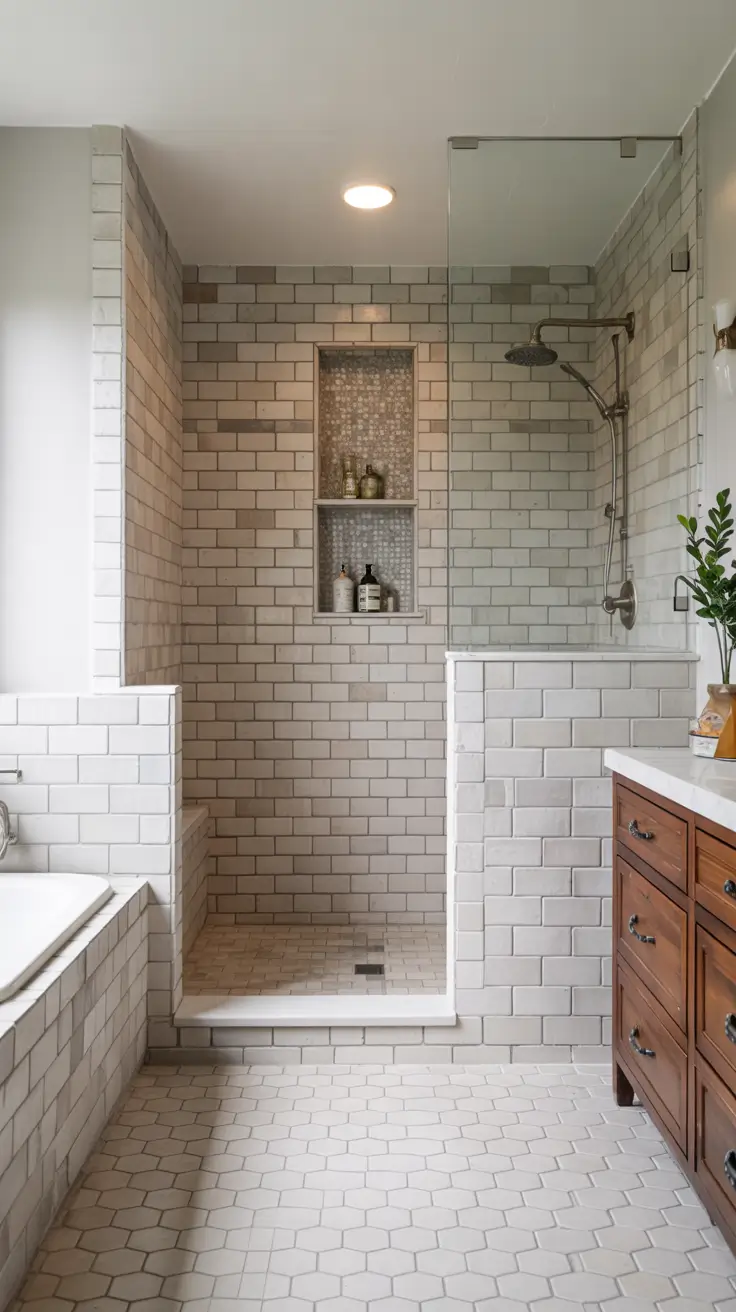
I usually start with the floor tile choice, because it affects safety and maintenance. For bathroom tile ideas floor, a matte porcelain with a fine texture is my default, especially near a shower walk entry. Then I decide if the shower will be a statement or a continuation. If the shower is the statement, I use a different tile on the back wall, like a vertical stack ceramic in a deeper tone. If the shower is the continuation, I keep the same wall tile inside and outside the shower so the room reads as one envelope. For shower tub surround half walls, I like to cap the half wall with stone or quartz and continue the same wall tile above it, so the detail looks finished. I also recommend a built-in niche that matches the main wall tile, because mismatched niche tile can look like an afterthought.
In real homes, the biggest issue I see is too many tile sizes and too many grout lines meeting at corners. I keep it simple: one floor tile size, one main wall tile size, and one accent at most. I also plan the layout so the shower curb and floor lines feel aligned, because small misalignments are surprisingly noticeable. If you want black and white, I keep the floor pattern subtle and let the shower wall carry the contrast, otherwise the room can feel dizzy. I also remind homeowners to choose grout and caulk colors early, because they are part of the design, not just construction details. A thoughtful combination makes the bathroom easier to clean and more comfortable to use every day.
35. Bathroom Tile Ideas 2026 Trends To Watch
For bathroom tile ideas 2026, I see trends that are less about loud patterns and more about texture, proportion, and calmer color. Large-format porcelain is still rising because it looks seamless and it is practical, especially on walls. I also see more interest in half-height tile applications that act like a built-in backsplash for the whole room, which is both stylish and functional. Neutral inspiration master bath designs are leaning warmer, with beige, cream, and greige replacing stark white in many spaces. Dark tile is also showing up more often, but usually balanced with lighter floors or lighter ceilings so the room does not feel closed in. Blue and green are staying popular, but in softer, more natural tones rather than bright colors. Overall, the trend is intentional simplicity with richer surfaces.
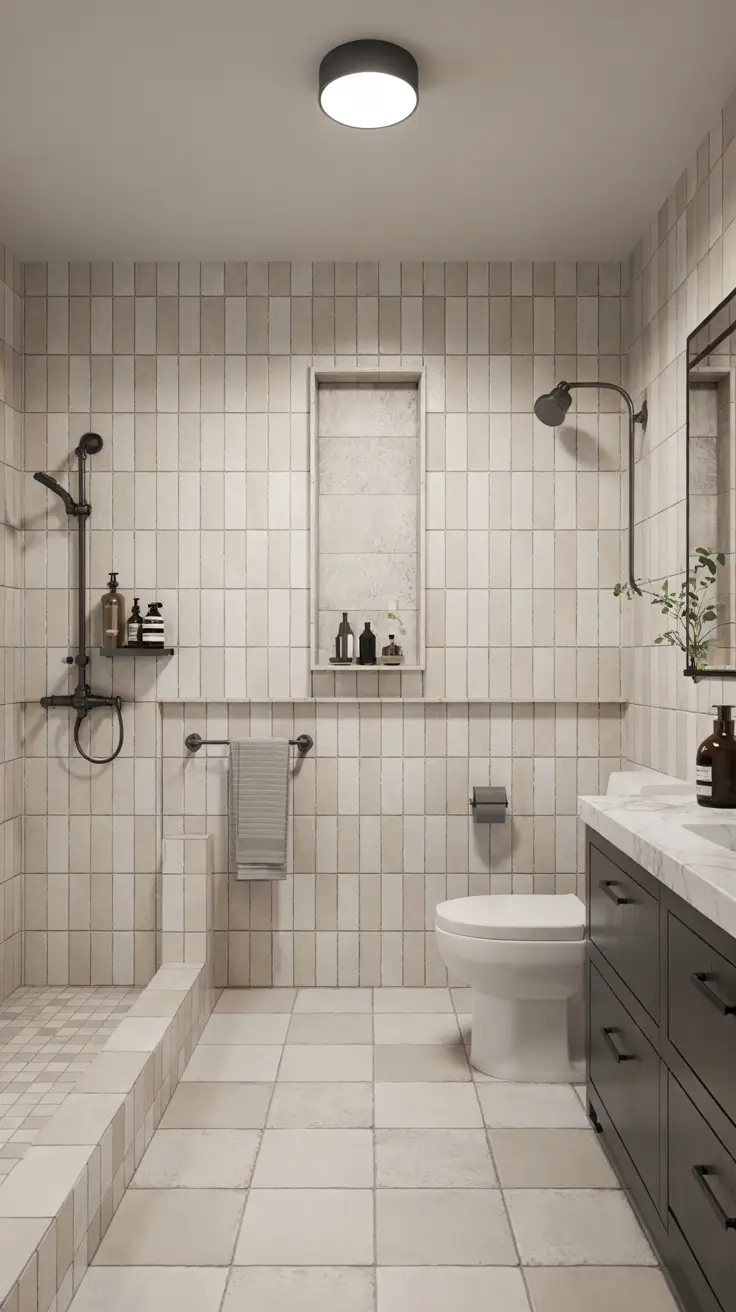
To apply these trends, I match the tile direction to the room’s architecture. Vertical layouts can make ceilings feel higher, while horizontal layouts can widen narrow small bathrooms. I also like mixed finishes within the same color, such as matte wall tile with a lightly textured ceramic accent, because it adds depth without adding another color. For fixtures, bathroom tile ideas with black fixtures continue to work well when the tile palette is warm neutral or stone-like, because black adds structure. If you want a more classic look, traditional shapes like subway tile still work, but I update them with a larger scale or a straighter stacked layout. For an Indian-inspired option, bathroom tile ideas indian can show up through patterned floor in a small zone, like a vanity area, while keeping the shower walls calm and modern. This keeps the reference tasteful and not overpowering.
My practical recommendation is to treat trends as a toolkit, not a rulebook. I choose one trend that genuinely improves daily life, like larger wall tile for easier cleaning, then I keep the rest timeless. If you love vintage, I suggest adding it through lighting or a mirror shape rather than committing every surface to a vintage pattern. If you love rustic, bring it in with wood texture and soft textiles, then keep the tile clean and structured. Trends are most successful when they support the way you live, not when they demand constant styling. When the tile, lighting, and storage work together, the bathroom looks current and stays comfortable.