Tiny kitchens are getting smarter in 2026, and I keep seeing the same question come up – how do you make a small space feel effortless without losing function? In this article, I will walk through tiny kitchen design ideas that actually work, from tiny kitchen designs for studios to layouts for compact houses. You will see how tiny kitchen design layout choices affect storage, cooking flow, lighting, and even how calm the room feels day to day. By the end, you will know which decisions matter most and how to apply them to your own space, whether you are planning a tiny kitchen design small apartments refresh or a new build.
1. Tiny Kitchen Design Ideas That Define Smart Living In 2026
In 2026, I approach a tiny kitchen design with the mindset that every surface must earn its place. I focus on a clean visual line, fewer transitions, and storage that hides the daily clutter without feeling heavy. When the room is small, the best results come from reducing friction, so I map where groceries land, where prep happens, and how dishes move to the sink. I also plan lighting early, because the wrong fixtures can make a compact room feel tight even if the layout is good. For smart living, I prioritize a layout that supports quick meals and real cooking, not just a pretty photo.
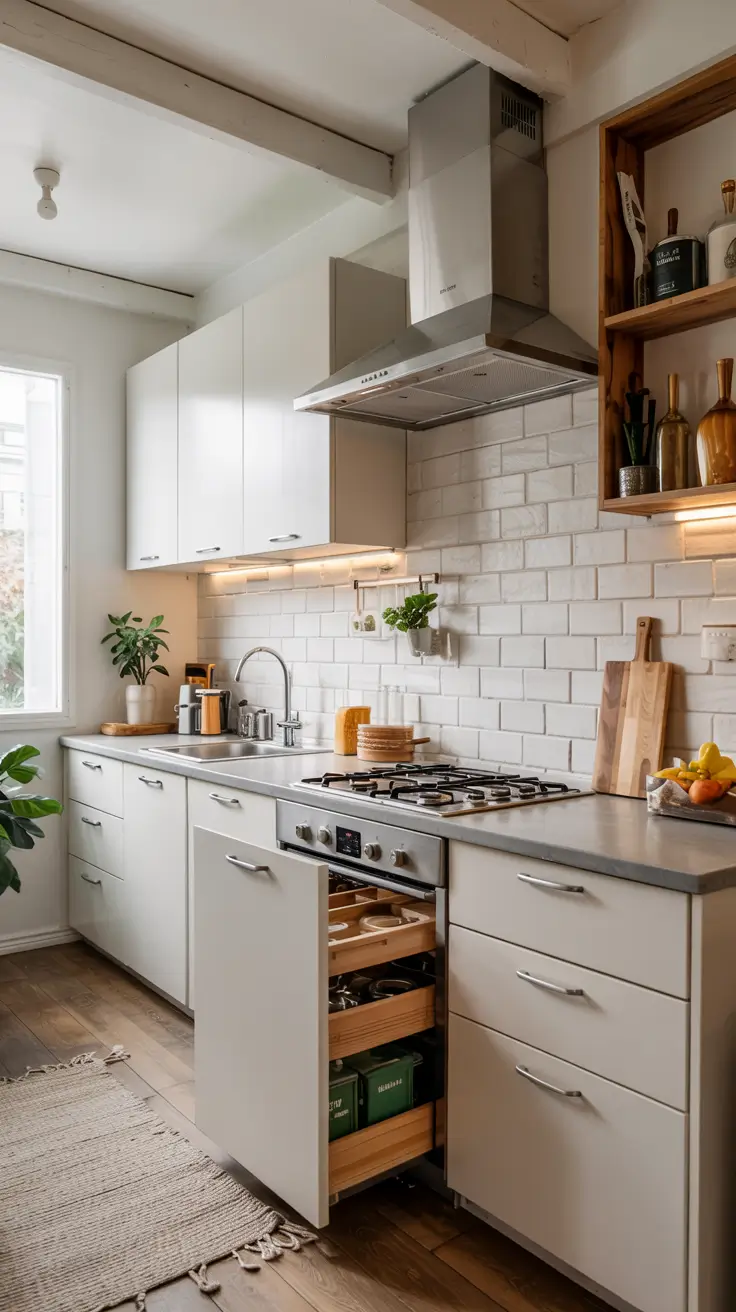
For furniture and features, I start with cabinetry that goes to the ceiling, because the upper band is valuable storage for rarely used items. I like slim, deep drawers instead of lower cabinets, since they make tiny kitchen design ideas counter space easier to manage by keeping tools accessible. A compact, high performance vent hood or integrated ventilation keeps the room comfortable without bulky shapes. If the plan allows it, I add a pull-out pantry, a narrow recycling drawer, and a dedicated landing zone near the fridge. For many tiny kitchen designs, the biggest upgrade is a single, uninterrupted worktop that supports prep, coffee, and serving.
From experience, the most reliable way to make a small kitchen feel premium is to control visual noise. I keep finishes consistent, limit open shelving to one short run, and choose hardware that blends into the cabinet face. I also avoid oversizing the sink, because a huge basin can steal the prep area you will miss every day. When I want the space to feel calmer, I use one strong texture, like fluted glass or rift oak, and keep the rest quiet. If you only do one thing, make the lighting layered, because it changes how spacious the room feels more than people expect.
What I would add to complete this section is a clear measurement check for your main work zone. I recommend you measure your longest counter run and identify a minimum uninterrupted prep span that you can protect. I would also add a shortlist of appliance widths that fit your region, because availability can shape the whole plan. Finally, I would include a quick storage audit so you know whether you need a pantry solution or just better drawer inserts.
2. Tiny Kitchen Designs Focused On Function Over Size
When I design for function first, I treat the kitchen like a tool, not a showroom. In a small footprint, the goal is to reduce steps between fridge, sink, and cooktop, and to create a simple rhythm that feels natural. I often sketch a basic flow and then test it with real tasks like washing produce, chopping, and plating. In 2026, I also see more people using flexible cooking setups, so a good design supports both fast weeknight meals and longer prep sessions. Function over size is how tiny kitchen designs stop feeling like a compromise.
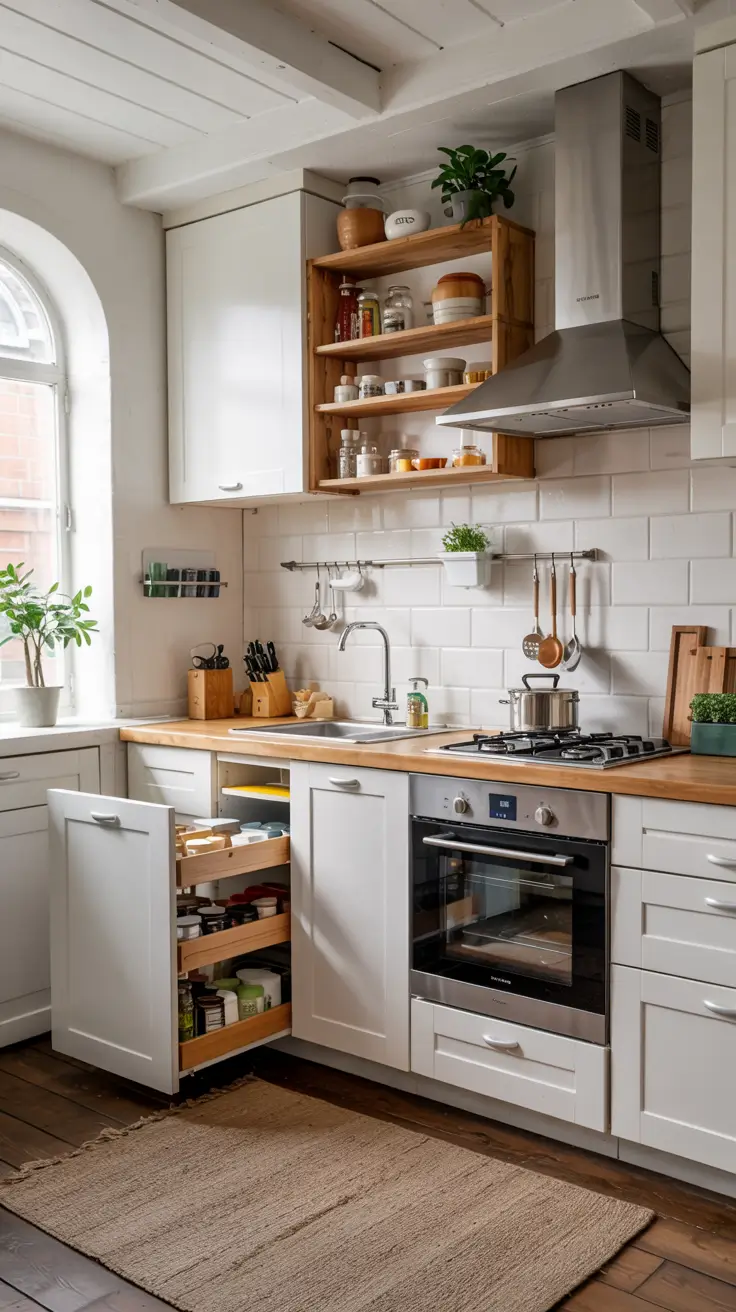
I like to anchor the room with a compact sink and a strong faucet, then build the storage around that core. A good cutting board that fits over the sink can temporarily expand your prep zone, which is a practical win for Ideas counter space. I also recommend drawer organizers, vertical tray storage, and a dedicated spice pull-out so you do not waste time hunting. If your home needs laundry nearby, I plan a slot for a Washing machine that does not block cabinet access or circulation. In Small apartments kitchenettes, integrated appliances and panel-ready fronts keep the room visually calm while still working hard.
In my own projects, the best functional upgrade is giving every category a home and keeping it close to where it is used. I keep oils and spices near the cooktop, knives and boards near the prep area, and cleaning supplies directly under the sink in a caddy. I also make sure there is at least one clear landing zone near the entry, because that is where bags and deliveries naturally land. If you cook often, I suggest prioritizing a better cooktop and ventilation over decorative features. A tiny kitchen can feel surprisingly spacious when daily routines are smooth.
To strengthen this section, I would add a simple checklist for zoning. I would also add guidance on choosing a compact appliance package that matches how you cook. Finally, I would include notes on sound control, because quiet dishwashers and soft-close hardware can make small spaces feel more comfortable.
3. Tiny Kitchen Design Layout Trends Shaping Modern Homes
This year, tiny kitchen design layout trends are less about flashy finishes and more about seamless planning. I see more continuous backsplashes, fewer upper cabinets on at least one wall, and more thoughtful lighting that highlights the work surface. Layout floor plans are also evolving to support hybrid living, where the kitchen shares space with dining and work zones. In modern homes, the kitchen is often visible from the main room, so the layout must look calm from multiple angles. In 2026, I treat the layout as the main design feature, because it decides how the entire home feels.
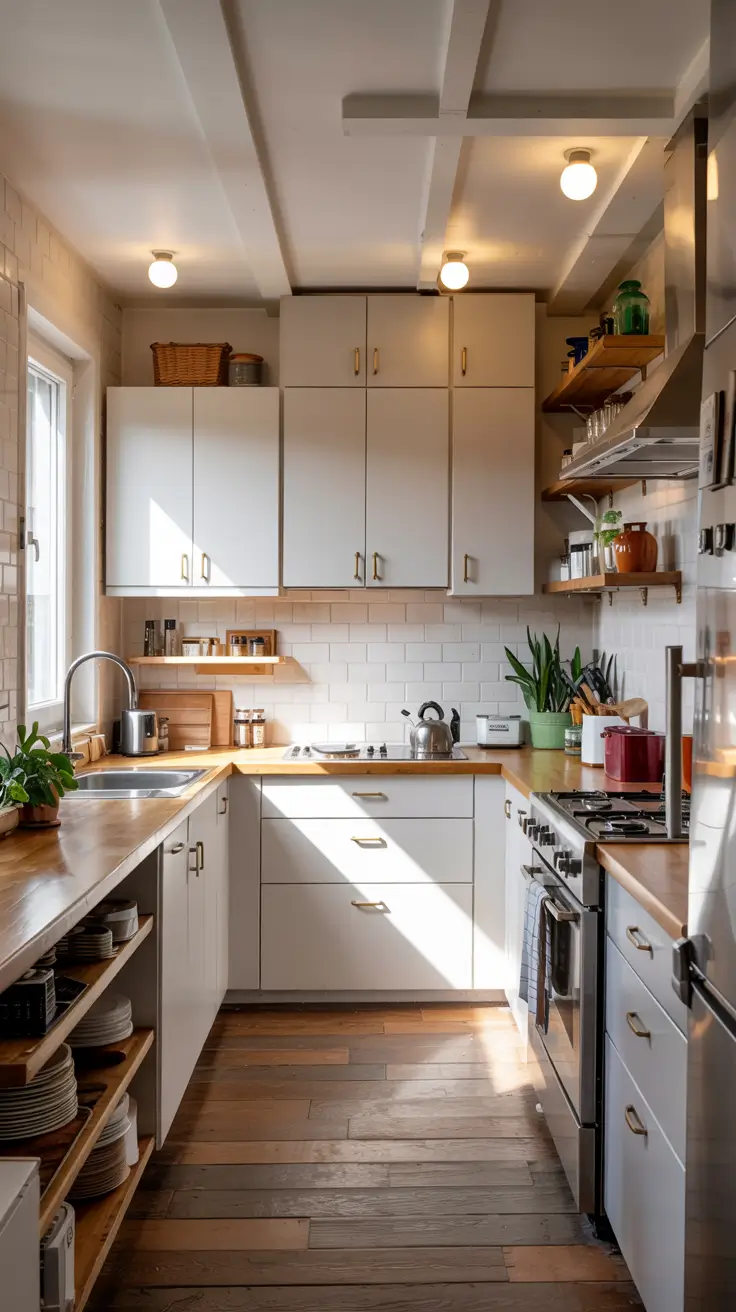
For the actual layout, I often start with a single wall or L shape depending on plumbing and window placement. If there is a Window above the sink, I keep the upper area lighter, using a simple shelf or slim cabinets so natural light stays dominant. I add toe-kick drawers or shallow base pull-outs to gain storage without crowding the room. If the kitchen opens to the living area, I like a short overhang for stools, but only when it does not block the main prep run. These choices support tiny kitchen design ideas layout that feel modern without being fragile.
I have learned that trends should only be used when they make the room easier to live in. For example, a minimal upper cabinet look is great, but only if you replace it with smart base storage and a real pantry plan. I also prefer fewer materials in small rooms, because too many finish changes make the layout feel broken up. When a client wants something Very modern, I keep the palette tight and let one detail, like a stone edge or textured tile, carry the style. The result is modern, but the kitchen still works on a busy day.
What I would add here is a quick comparison guide for the most common compact layouts. I would include when to choose a galley, when to choose an L, and when a single wall is truly best. I would also add a note on door swings and clearances, because small errors there can ruin an otherwise good plan.
4. Tiny Kitchen Design For Small Apartments With Maximum Efficiency
A tiny kitchen design small apartments plan succeeds when it respects real constraints like limited plumbing moves, shared walls, and tight circulation. I start by identifying what cannot change, then I optimize what can, like storage, lighting, and appliance sizes. Maximum efficiency means you can cook without constantly relocating items or bumping into doors. It also means the room supports the habits of apartment living, like quick breakfasts, delivery nights, and compact cleanup. In 2026, efficiency is also about reducing clutter so the kitchen looks good even when life is busy.
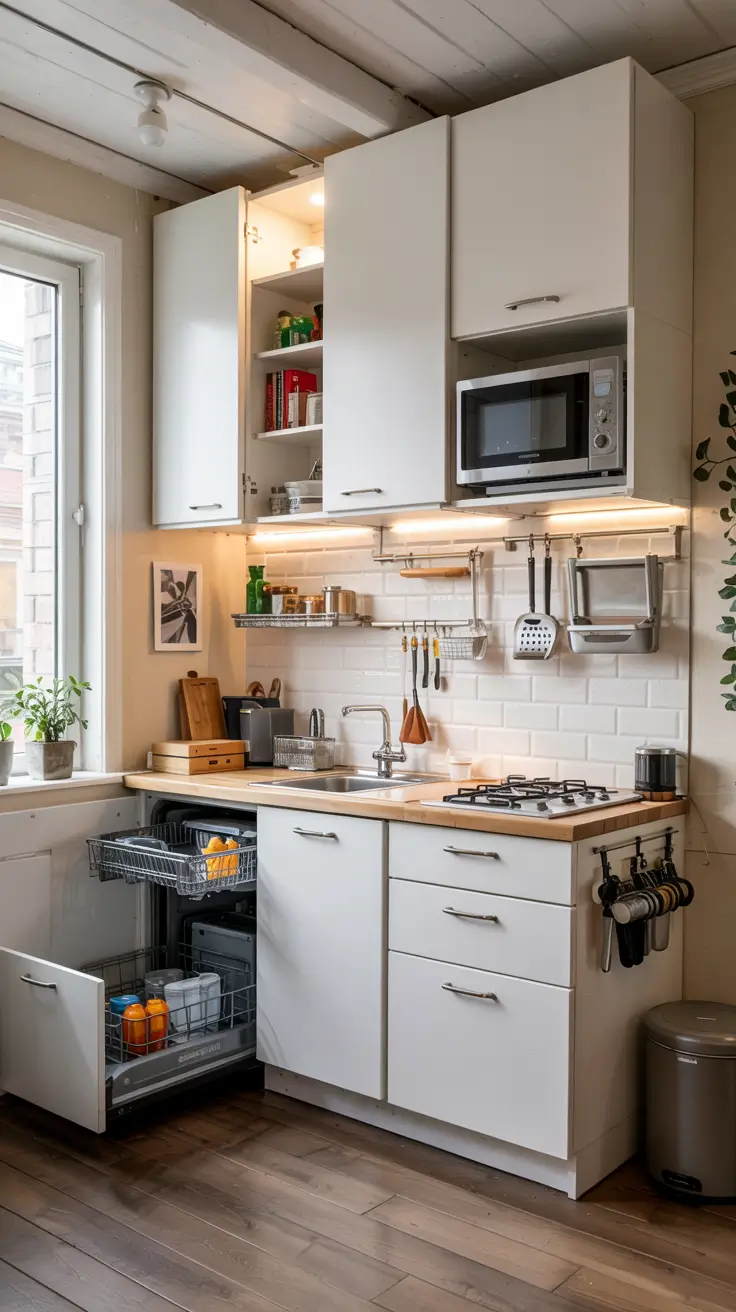
I like to use tall cabinets, narrow pull-outs, and drawer stacks to capture vertical space. For Small apartments space saving apartment setups, I add a fold-down or pull-out work surface that extends only when needed. If the entry is close, I build a small drop zone for keys and daily items so they do not land on the counter. I also consider under-cabinet lighting essential, because it makes small spaces feel larger and supports safe prep. When possible, I use a slim dishwasher drawer or an 18-inch model, since it often fits better than a full size unit.
From my perspective, the best apartment kitchens feel almost invisible when you are not cooking. I aim for clean cabinet fronts, consistent finishes, and a simple backsplash that is easy to wipe down. I also avoid oversized open shelving, because it becomes visual clutter fast in a small rental or condo. If you entertain even occasionally, I recommend prioritizing a clear serving zone and a spot for a coffee setup. When the layout supports your routines, the kitchen stops feeling small and starts feeling efficient.
To complete this section, I would add guidance on renter-friendly upgrades. I would also add a mini plan for maximizing outlet placement and charging zones, since small kitchens often lack power where you need it. Finally, I would include a strategy for trash, recycling, and compost, because that is where efficiency often breaks down.
5. Tiny Kitchen Design Ideas For Small Apartments And Studios
Studios demand a different approach because the kitchen is part of the main room, not a separate space. I focus on making the kitchen look intentional from the sofa, while still functioning like a real workspace. Tiny kitchen design small apartments and Small apartments studios often need visual quiet, so I reduce contrast and keep lines clean. I also think about smell and sound, because everything travels in a studio. In 2026, studio kitchens look more integrated, almost like furniture, and that is a trend I actually support.
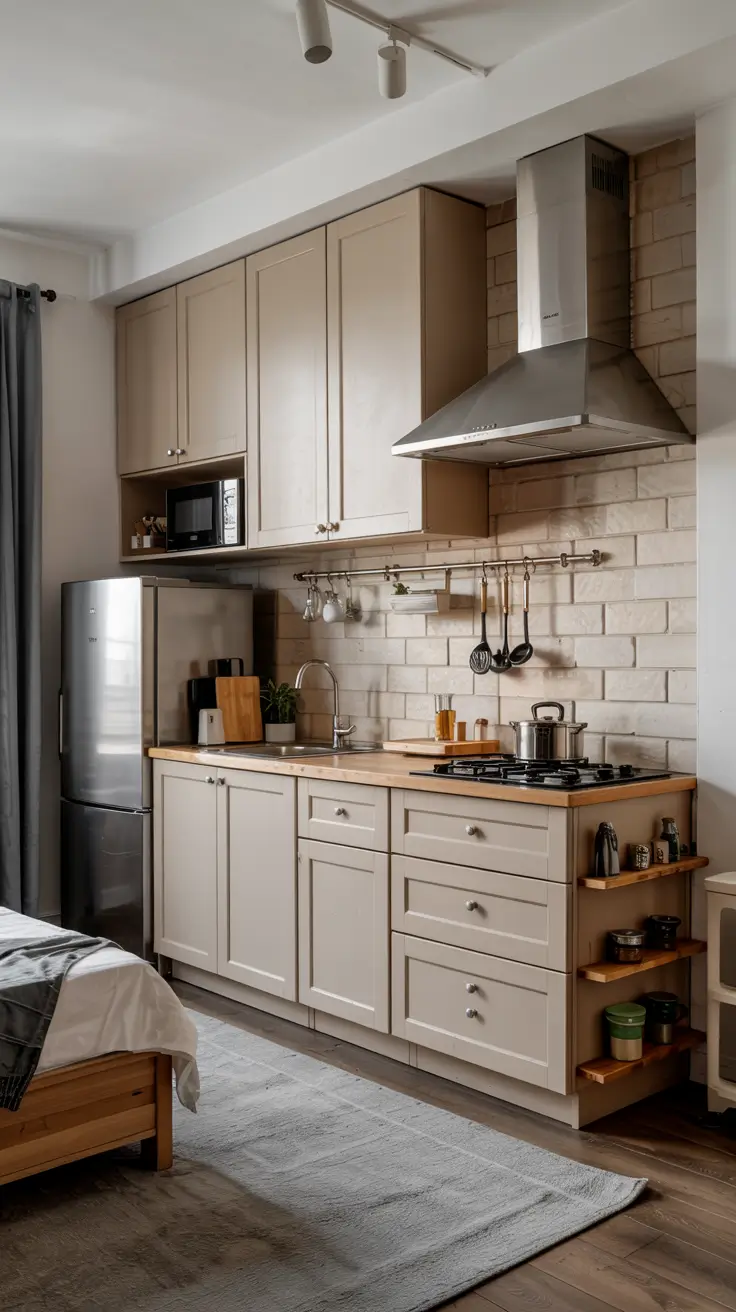
For design choices, I like to use integrated fronts, a compact hood, and a backsplash that matches the counter or wall color. In Small apartments space saving modern layouts, a slim island substitute like a rolling cart can add prep space without becoming permanent clutter. If you can fit it, tiny kitchen design with island concepts work best when the island is narrow, has storage, and keeps a clear walkway. I also add closed storage for small appliances, because studio life looks better when the counter is not crowded. If you need laundry nearby, I plan the Washing machine with doors or panels so it blends in.
In my own work, I treat studio kitchens like a set design where every detail is seen. I prefer warm, matte finishes that hide fingerprints and make the space feel calm at night. I also recommend choosing a consistent metal finish for faucet, pulls, and lighting so the room feels cohesive. For cooking comfort, I always plan at least one strong task light and one softer ambient fixture. A studio kitchen can feel upscale when it reads like a clean built-in wall rather than a collection of separate parts.
What I would add here is a small note on ventilation and air quality. I would also add advice on how to hide essentials like a microwave, bins, and cleaning supplies without losing access. Finally, I would include a layout tip for keeping the kitchen zone visually separated, using a change in lighting or a subtle material shift.
6. Tiny Kitchen Design L Shape Layouts For Compact Homes
I often choose tiny kitchen design l shape layouts when I want a natural workflow without needing a lot of square footage. The L shape creates a corner that can hold a sink, a cooktop, or storage, and it helps define the kitchen zone in open plans. For tiny kitchen design layout small houses, this is a strong option because it supports both cooking and casual dining nearby. I also like how an L shape can create a protected prep run that stays clear even when someone is passing through. In 2026, the best L shapes keep the corner efficient instead of wasting it.
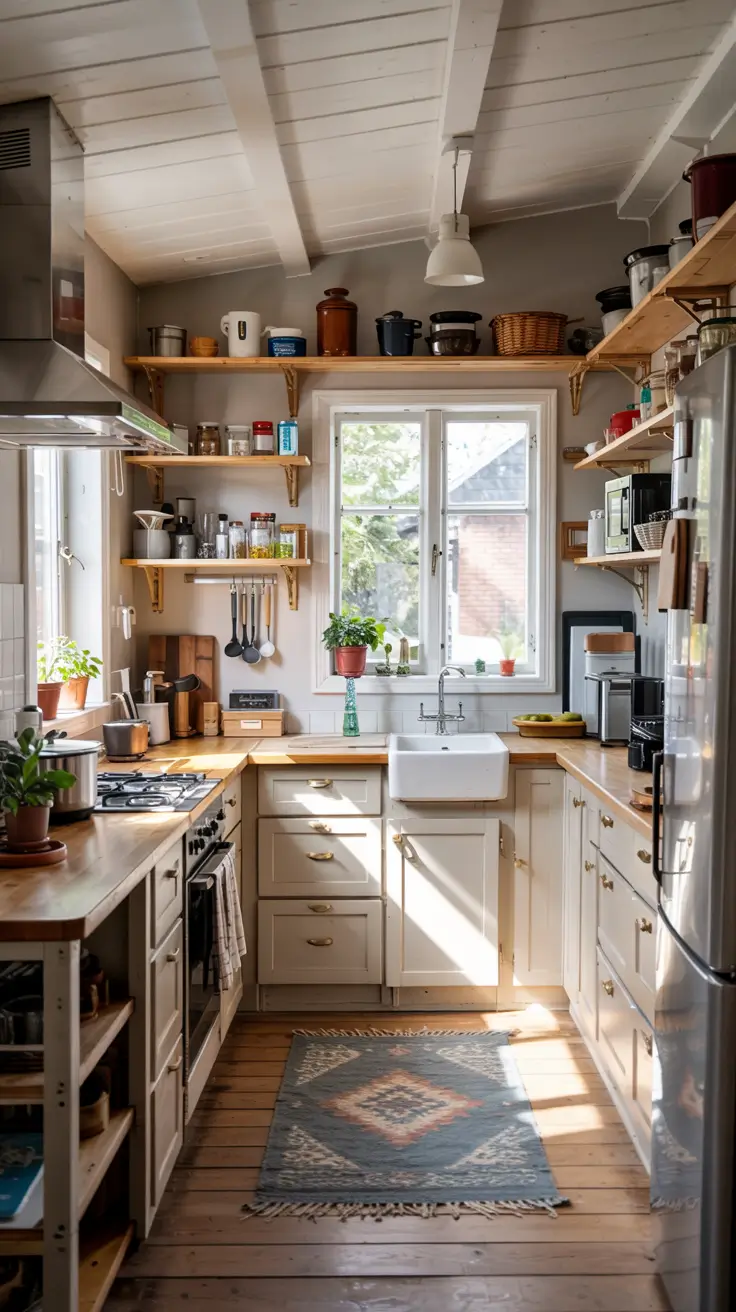
For the corner, I use a lazy susan, a corner drawer system, or a pull-out solution depending on budget and access needs. I keep the main prep area on the longer leg, and I place the fridge at the edge so it does not block movement. If there is a Window, I like the sink under it and I keep the upper cabinets minimal to let light do the work. The Shape of the L also allows a small dining nook, which is useful in Layout small houses where every zone needs to multitask. In many cases, the L shape is the easiest way to add meaningful counter space without adding square footage.
My advice is to protect the corner from becoming a dead zone. I avoid putting the main trash in the corner, and I avoid placing the most used drawers where they collide with doors. I also keep the cooktop away from the corner if possible, because it can feel cramped and reduce landing space. If you want the room to feel more open, I suggest using one leg of the L as a visual anchor with fewer uppers. This is one of those tiny kitchen design ideas layout decisions that improves both function and how the room feels.
To finish this section, I would add a clear example of corner storage options and when each one makes sense. I would also add recommended clearances for walkways and cabinet doors, because L shapes can feel tight if spacing is off. Finally, I would include a quick note on lighting the corner, since corners often end up shadowy.
7. Tiny Kitchen Design Single Wall Solutions That Save Space
Tiny kitchen design single wall planning is one of the most space-saving approaches, especially for studios, lofts, and narrow rooms. A Single wall layout keeps plumbing and electrical in a tight zone and frees the rest of the room for living. When I design a single wall kitchen, I focus on making the line feel elegant and continuous, like a built-in cabinet wall. This approach is common in Tiny kitchen design small apartments because it can look modern and calm without demanding a lot of square footage. In 2026, single wall kitchens are better than ever because storage accessories and compact appliances have improved.
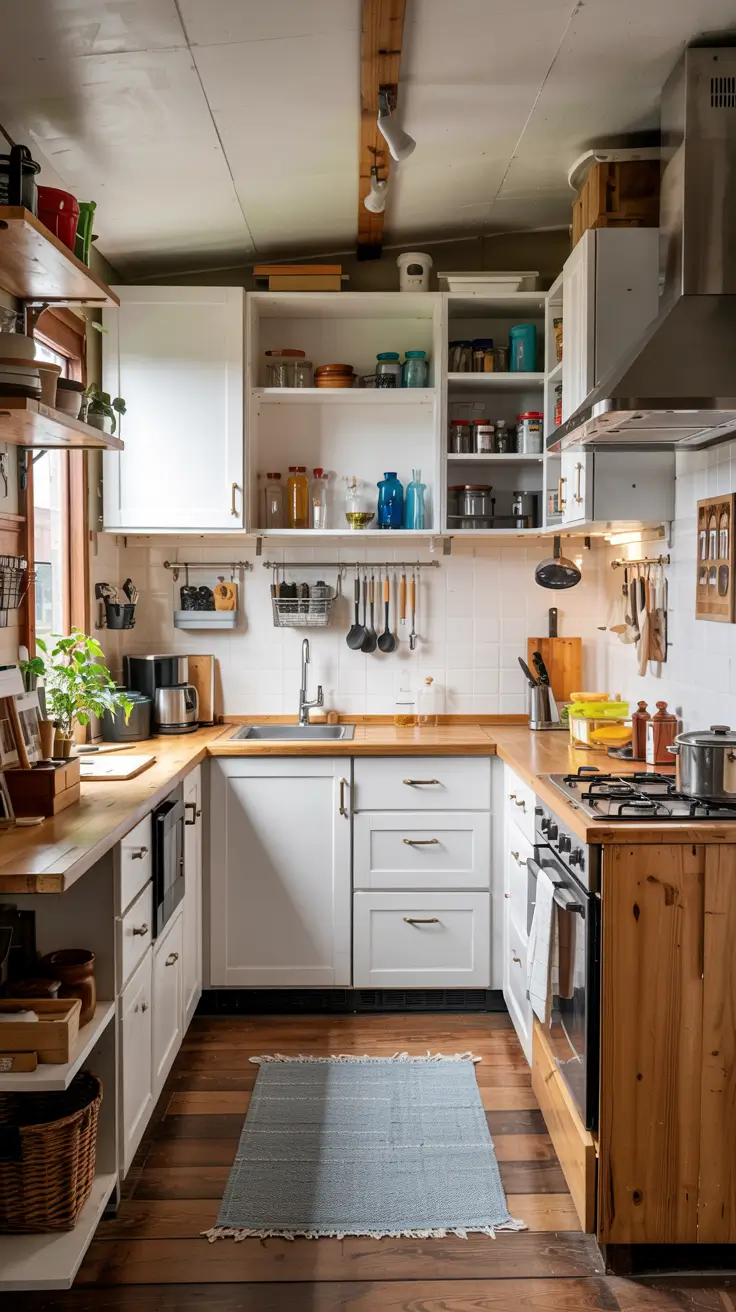
I build the wall in zones, usually fridge storage, prep sink, cook, then pantry, so daily tasks feel logical. I prioritize tall storage at one end and keep the middle run clear for the best Ideas layout and prep. For tiny kitchen design ideas counter space, I like to use a sink cover board, a slide-out worktop, or a narrow rolling cart that tucks under the counter. If space allows, I add a small table or peninsula opposite the wall, but only if it does not block circulation. The goal is to keep the Single wall line clean while still giving you enough working surface.
In my experience, the success of a single wall kitchen depends on two things: storage discipline and good lighting. I always add under-cabinet lighting and I choose a backsplash that is easy to clean because everything is concentrated in one area. I also recommend investing in drawer inserts so you do not lose time pulling items out of deep cabinets. If you want a tiny kitchen design minimalist look, this layout supports it well, as long as you keep the counter mostly clear. A single wall kitchen can feel surprisingly high-end when it reads as one intentional composition.
What I would add here is a simple set of measurements to check before committing to a single wall. I would also add guidance on choosing appliance sizes that keep the wall balanced. Finally, I would include a tip for hiding small appliances in an appliance garage or tall cabinet so the wall stays visually calm.
8. Tiny Kitchen Design Ideas Layout For Everyday Comfort
When I plan a tiny kitchen design layout for daily life, I start by protecting the walking path and keeping the busiest actions close together. I aim for a smooth triangle between the sink, cooktop, and fridge, even if the distances are short. I also pay attention to how doors open, because a tight corner can make a kitchen feel stressful. For tiny kitchen design small apartments, comfort comes from reducing micro annoyances like bumping into handles or crossing the room for basics. If the layout feels calm to move through, the entire home feels bigger.
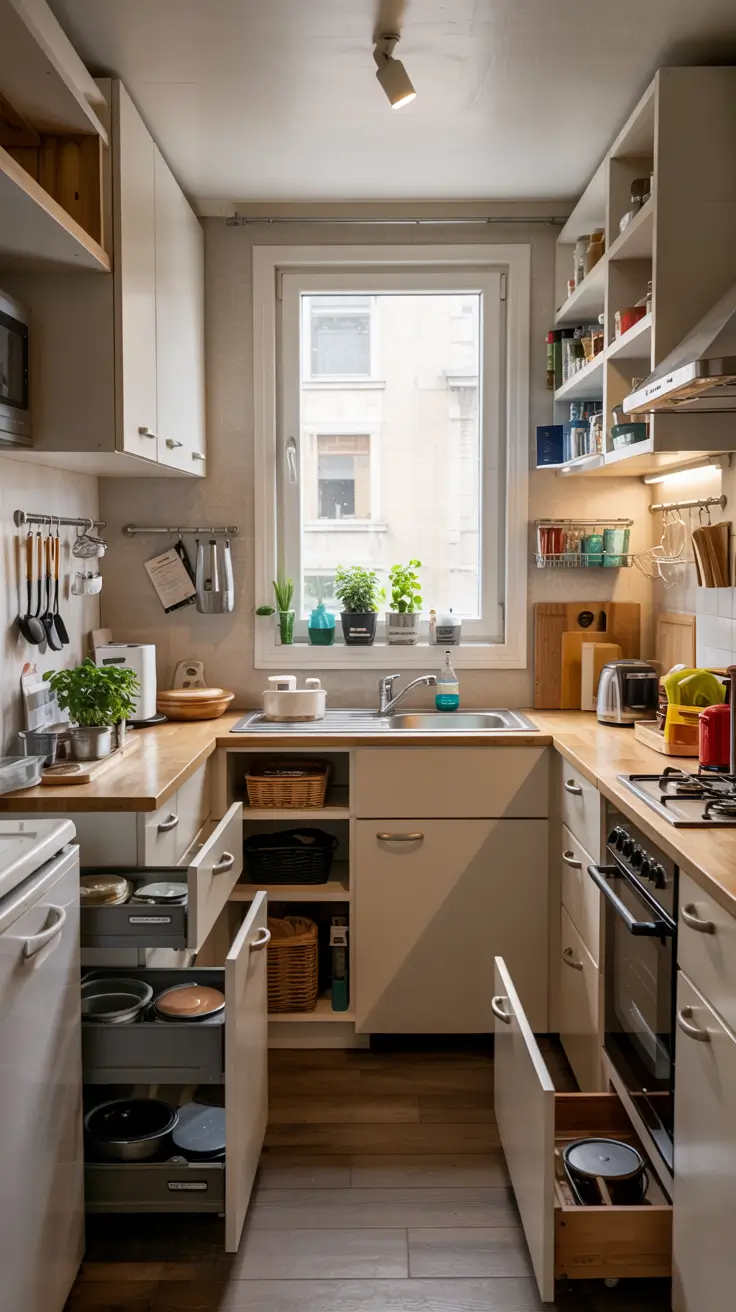
For furniture and features, I like base cabinets with deep drawers because they store more than lower shelves and are easier to access. I often include a slim pull-out pantry, even 15-20 cm wide, to organize oils, spices, and snacks vertically. For the table zone, a wall mounted drop leaf or a narrow peninsula gives you a spot to eat without blocking the aisle. If the kitchen has a window, I try to keep the sill area clear and use it for herbs or a small tray, since daylight makes the room feel open. I also select a simple faucet and a single basin sink, because they free up tiny kitchen design ideas counter space around the bowl.
In my experience, the layout feels best when you commit to fewer, stronger elements instead of many small ones. I have seen designers in US kitchen planning repeatedly recommend prioritizing clear circulation and landing space next to the sink and cooktop, because those are the areas you use every day. I follow that logic by adding a narrow landing shelf beside the cooktop if a full counter is not possible. I also keep the palette consistent so the eye does not stop at every cabinet line. The result is a kitchen that feels practical first, then beautiful.
What I would add to complete this section is a quick measurement check for your main aisle and your most used door swings. I also like to add a plan for where small appliances will live, so the counter stays usable. If you can, reserve one drawer for daily tools and one cabinet for bulky items, so storage feels predictable. I would also decide where trash and recycling will sit early, because that location affects everything. Finally, I would include a lighting plan that combines ceiling light plus under cabinet lighting for real comfort.
9. Tiny Kitchen Design Layout For Small Houses And Floor Plans
A tiny kitchen design layout small houses often has different needs than an apartment kitchenette because the kitchen may be the main hub of the home. I treat the kitchen as a connector between rooms, so I plan sightlines and traffic as carefully as storage. In many layout floor plans for small houses, the kitchen touches the entry or living area, which means clutter becomes visible quickly. I try to keep tall storage on one wall and the working run on another so the space feels balanced. The goal is to make the kitchen feel like a real room, not a leftover corridor.
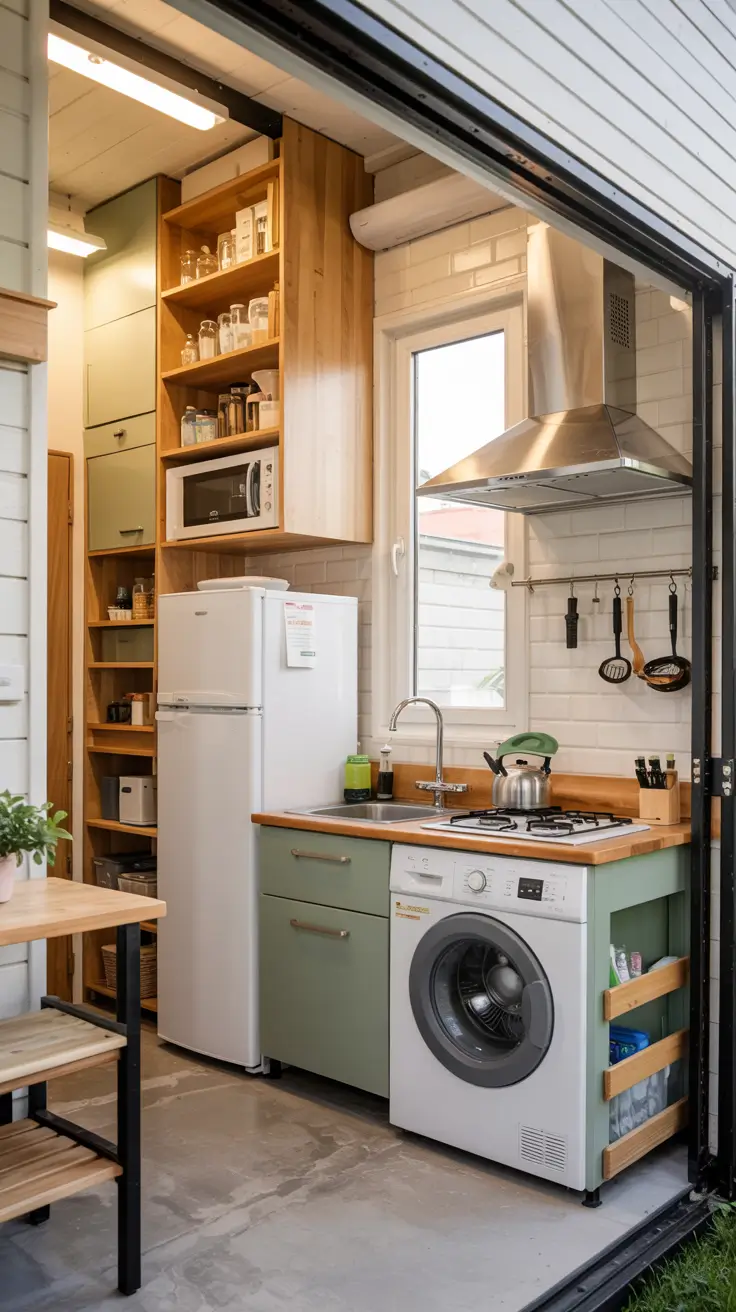
For the layout shape, an L is frequently the most flexible, and tiny kitchen design l shape works especially well when one leg can host the sink and the other can host the cooktop. I like to keep the refrigerator near the entrance side so groceries land quickly without crossing the workspace. A single wall section can still work if you add a tall pantry at one end and a small mobile cart for extra prep. If you need laundry nearby, I plan a discreet washing machine under the counter with a matching cabinet front, so the kitchen still looks cohesive. I also recommend shallow upper cabinets on the walkway side, because they hold plenty without making the room feel tight.
I have found that small house kitchens feel best when the plan supports more than one person without creating conflict. Many professionals talk about designing around how you actually cook, and I agree that floor plans should follow routines, not just symmetry. I often place the primary prep zone between sink and cooktop, even if it is only 60-90 cm, because that reduces steps. I also prefer fewer open shelves than most people expect, because daily dust and visual noise add up fast in small spaces. When the plan is simple, the kitchen stays pleasant even on busy days.
What I would add here is a clear checklist for choosing between an L shape, a galley, and a tiny kitchen design single wall option based on your wall lengths. I would also include guidance on where to place vents and outlets so the plan stays realistic. If you have a window, I would note whether the sink can align under it without blocking opening mechanisms. I would also add a note on door type, because pocket doors or sliding doors can unlock a lot of usable wall. Finally, I would include a small storage map showing where food, dishes, and cleaning supplies will live.
10. Tiny Kitchen Design With Island Concepts That Actually Work
A tiny kitchen design with island can work in 2026, but only if the island earns its footprint. I think of an island as a tool, not a luxury, because in a small kitchen it can either improve flow or destroy it. The island should create a clear prep surface, add storage, or define the kitchen zone in an open plan. I prioritize an island only when the walkway around it stays comfortable and the doors and drawers can open without collisions. If those conditions are not met, I choose a peninsula or a mobile island instead.
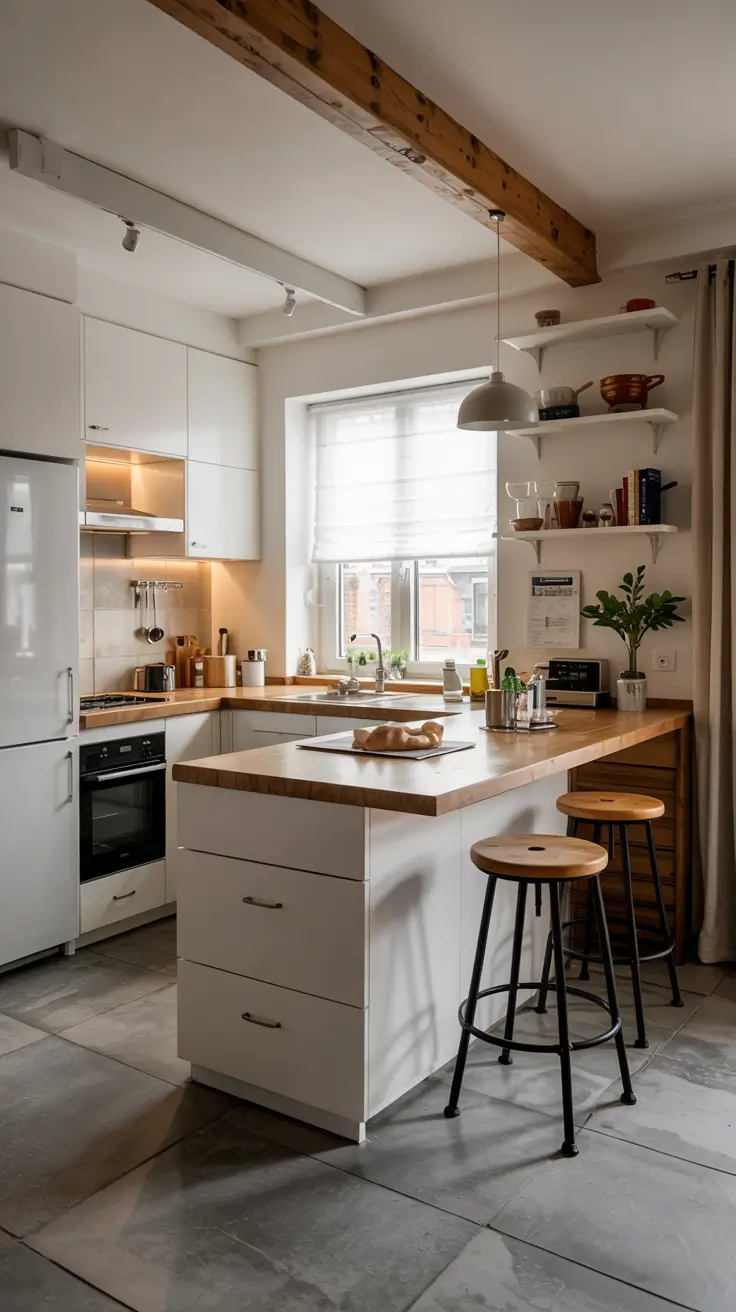
For features, I like a narrow island with drawers on the kitchen side and stools on the living side, so it doubles as a table. I often add an overhang just deep enough for knees, then keep the base slim to preserve circulation. A waterfall edge can look modern, but I usually choose a thin profile countertop and a durable surface to keep it light visually. If the client needs extra appliances, I integrate a microwave drawer or a small beverage fridge in the island, but only if ventilation is planned. I also build in a hidden outlet so a blender or laptop can plug in without cords across the main counter.
From my experience, the best island concept is the one that reduces clutter on the perimeter counters. When the island becomes the primary prep area, it supports tiny kitchen design ideas layout by separating messy work from the sink zone. I have also noticed that an island helps small apartments studios feel more like a real home, because it creates a defined kitchen boundary. I keep the styling minimal, like one tray and one small bowl, so the surface stays ready for cooking. When the island is treated as a daily workstation, it truly feels worth it.
What I would add here is a practical sizing rule for islands, including the minimum clearance you need on each side for safe movement. I would also include a note on lighting, because a pendant or slim track light can make the island feel intentional without taking visual space. If your kitchen is very narrow, I would add the alternative of a rolling island that can park under a counter lip. I would also plan where stools will tuck in, so seating does not block the aisle. Finally, I would add a reminder to leave a landing zone near the refrigerator even if the island is present.
11. Tiny Kitchen Design Minimalist Style For Clean Visual Space
Tiny kitchen design minimalist is one of my favorite approaches for small rooms because it reduces visual friction. In a tiny kitchen, every extra line, label, and object is amplified, so minimalism can make the space feel larger. I focus on flat cabinet fronts, consistent gaps, and a restrained palette so the eye travels smoothly. I also choose materials that look calm in daylight and artificial light, because small kitchens change mood quickly. Minimalist does not mean empty, it means every element has a job.
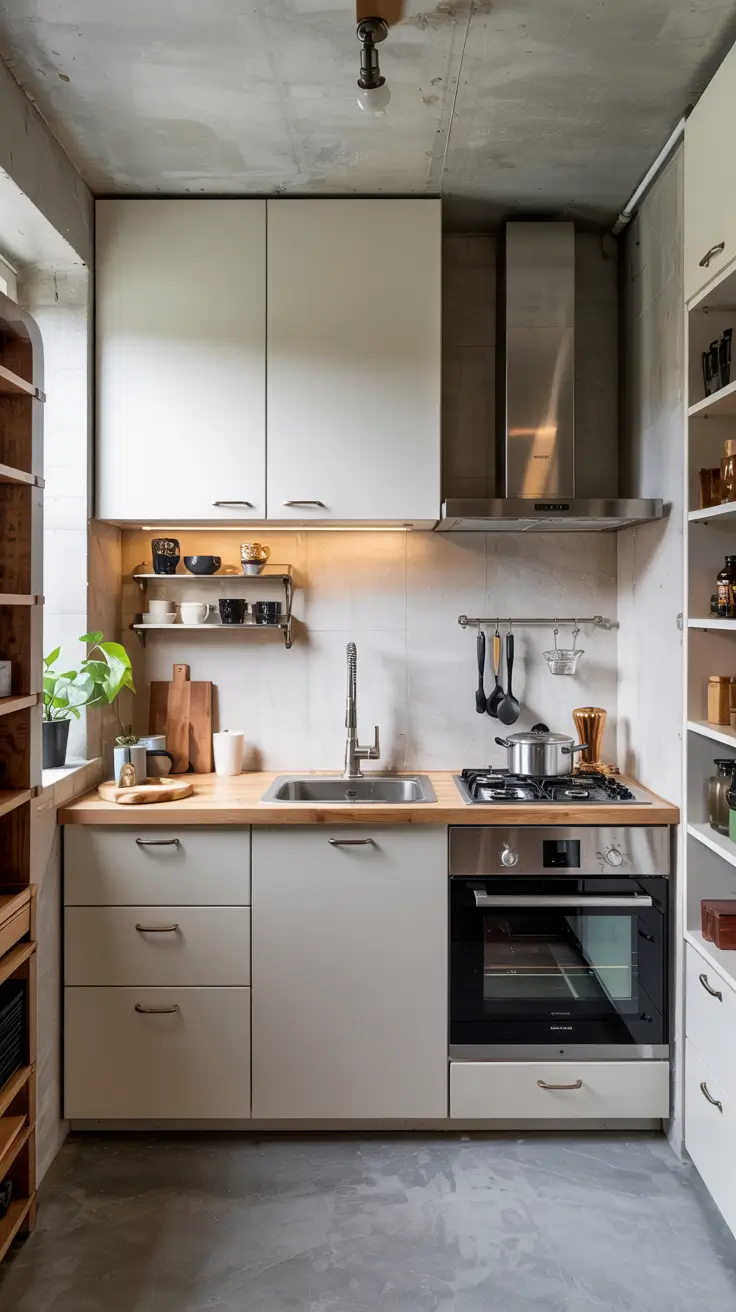
For furniture and finishes, I prefer handleless or slim pull hardware, plus a single countertop material carried up into a low backsplash. I usually select a compact undermount sink and a simple pull down faucet so the sink zone stays clean. If I add open shelving, I keep it to one short run near a window for everyday mugs or a plant, not a full wall. I also choose integrated appliances when possible, because a unified cabinet face makes the room feel like one surface. To protect tiny kitchen design ideas counter space, I like an appliance garage or a tall cabinet shelf where the toaster and coffee gear can hide.
In my work, minimalist kitchens perform best when storage is planned down to categories. I have learned that minimalism fails when the room looks clean in photos but lacks hidden space for real life. I treat the inside of drawers as part of the design, using dividers, vertical tray storage, and a dedicated cleaning caddy. I also keep lighting layered, because under cabinet lighting is what makes a minimalist countertop look crisp at night. The calm look is not an accident, it is the result of structure.
What I would add for this section is a plan for your daily countertop items, deciding what stays out and what gets stored. I would also add guidance on choosing a matte or satin finish that hides fingerprints, since glossy surfaces can feel busy in a small room. If you want a warmer minimalist look, I would add one natural material like light oak or textured ceramic. I would also include a suggestion for a single accent, like a black faucet or a stone shelf, to keep the space from feeling sterile. Finally, I would add a simple routine for resetting the kitchen in five minutes, because minimalism stays beautiful when it is easy to maintain.
12. Tiny Kitchen Design Indian Style With Modern Functionality
Tiny kitchen design indian style in 2026 can look modern while still supporting the way Indian cooking really happens. I plan for higher heat, stronger aromas, and frequent spice use, which means ventilation and easy cleaning become priorities. I also aim for a layout that keeps the cooking zone efficient, because multiple dishes are often prepared in a short window. I treat the stove wall as the hero wall, but I keep the finishes practical so the space stays fresh. The result should feel sleek and current, not themed or overly traditional.
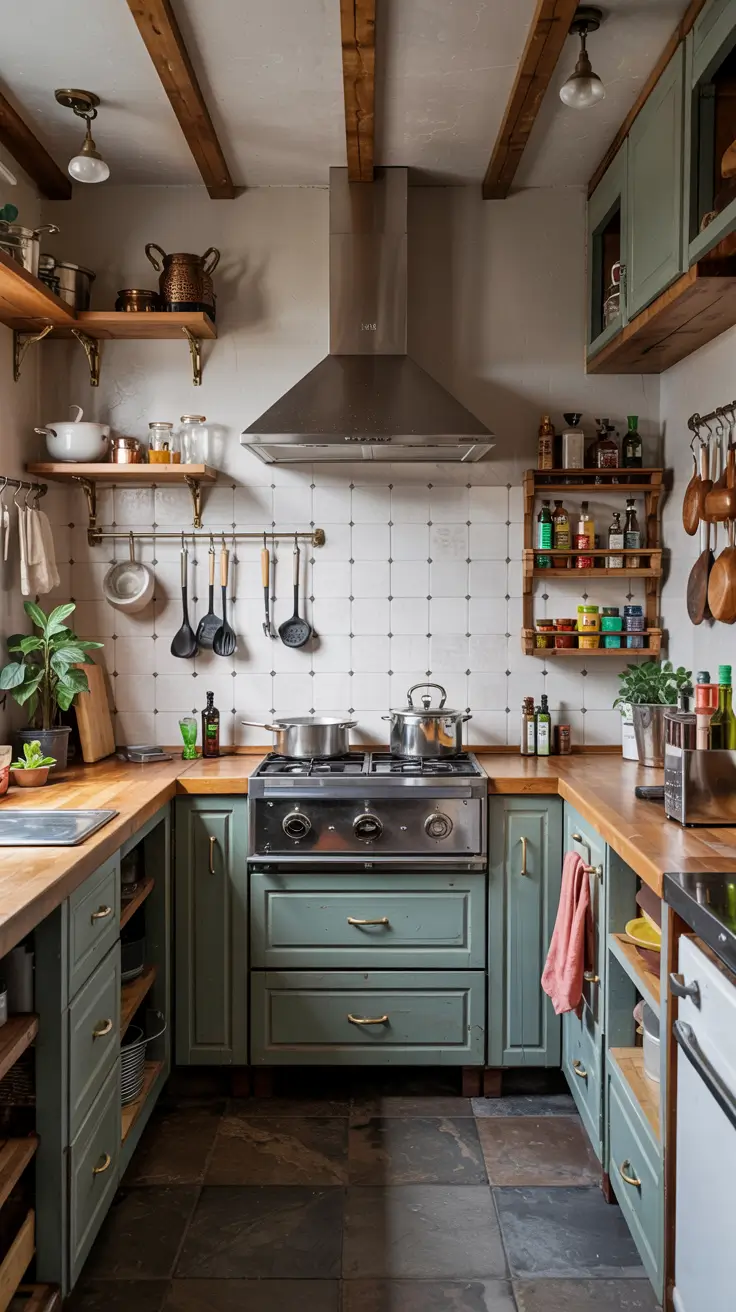
For materials and furniture, I like a durable countertop with a simple backsplash that can handle splatter, such as large format tile or a clean slab surface. I often include a dedicated spice drawer near the cooktop, plus a vertical pull-out for oils and sauces. If space allows, I add a small second prep surface for rolling or chopping, even if it is a pull-out board or a compact cart. Storage for pots and pressure cookers works best in deep drawers, and I label zones mentally, not visually, to keep the look minimal. If there is a window, I place it near the prep zone when possible, because daylight helps with detailed cooking tasks and keeps the room feeling open.
In my experience, the biggest upgrade for Indian style kitchens is powerful ventilation paired with a layout that reduces cross traffic. I plan a strong hood or an efficient chimney system and keep the cooktop away from the main walkway so heat and steam are not in the path. I also prefer easy wipe finishes and fewer grout lines, because cleaning time adds up in small kitchens. When the functional needs are respected, the style naturally feels modern because the space stays uncluttered. A kitchen that supports real cooking always looks better.
What I would add here is a more specific storage plan for dry goods, grains, and frequently used masalas so the counters stay clear. I would also add a suggestion for a compact water purifier placement, because it is common in many homes and needs a planned location. If the kitchen is in a studio, I would add advice on containing smells with ventilation and closed storage. I would also include a note on safe placement for hot cookware and tawa storage. Finally, I would add guidance on choosing lighting that renders colors accurately, which helps when cooking with spices.
13. Tiny Kitchen Design Indian Layouts For Urban Apartments
Tiny kitchen design indian layouts for city living often come down to making a tight footprint work harder without adding clutter. In urban apartments, the kitchen may be a narrow galley, a compact L, or a tiny kitchen design single wall, and each has different strengths. I focus on a workflow that keeps prep near the sink and cooking near the hood, with storage placed where it is reached most. Because many apartments have limited natural light, I plan bright finishes that still feel warm. The goal is to make the kitchen feel like a confident part of the home, not a compromise.
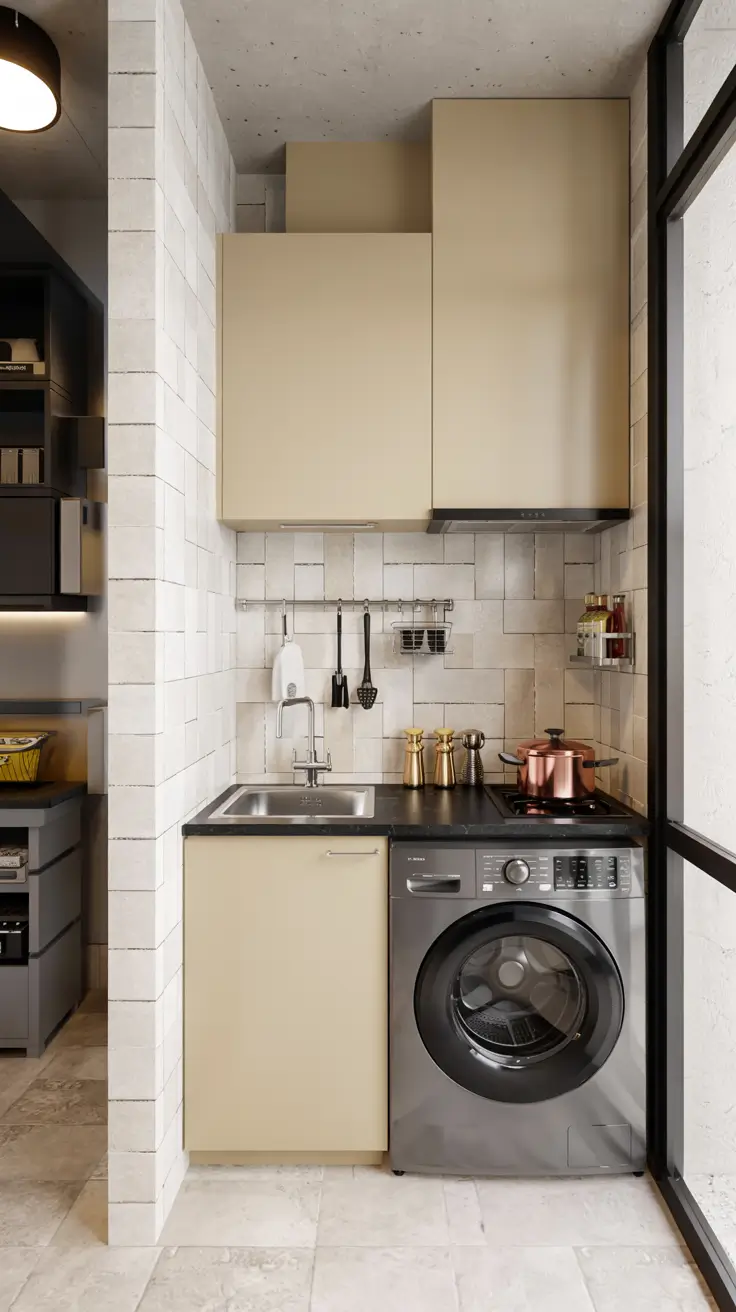
For small apartments kitchenettes, I like a single wall run with tall storage at one end and a small return counter if there is room. I often recommend a slim dishwasher drawer or a compact sink accessory set to improve efficiency without growing the footprint. When clients need a washing machine in the kitchen, I plan it under the counter and build a countertop that spans cleanly across, so it feels integrated. I also use magnetic rails or a shallow wall organizer for essentials, but I keep it limited so the wall does not become busy. For small apartments space saving modern solutions, I rely on full height cabinets, pull-outs, and drawers that keep items hidden.
I have noticed that city apartment kitchens feel best when you reduce the number of visible categories. That means fewer items on the counter, fewer mixed finishes, and fewer open containers. I like to keep frequently used spices in a closed drawer with dividers rather than a countertop carousel, because it protects tiny kitchen design ideas counter space. If the kitchen faces the living area, I treat the kitchen front like furniture, using consistent panels and simple hardware. When the apartment is small, visual quiet becomes a form of comfort.
What I would add here is a short plan for noise and ventilation, since apartments often share walls and odors travel quickly. I would also include guidance on where to place bins, because small kitchens can lose space fast if trash is not integrated. If you have a window, I would add advice on using it for light without crowding the sill with appliances. I would also include a note on choosing compact appliances with the right capacities for your routine. Finally, I would add a simple rule for keeping one clear counter zone always open, even on busy days.
14. Tiny Kitchen Design Ideas Counter Space Without Clutter
When people ask me for tiny kitchen design ideas counter space, they usually want room to prep without feeling like they must hide everything. I treat counter space as a system, not a single surface, because you can create usable landing zones through layout and storage. In tiny kitchens, even 30 cm of clear counter can be life changing if it sits in the right place. I aim to protect one primary prep zone, then I build habits and features that keep it clear. This approach works across tiny kitchen design l shape, galley, and tiny kitchen design single wall layouts.
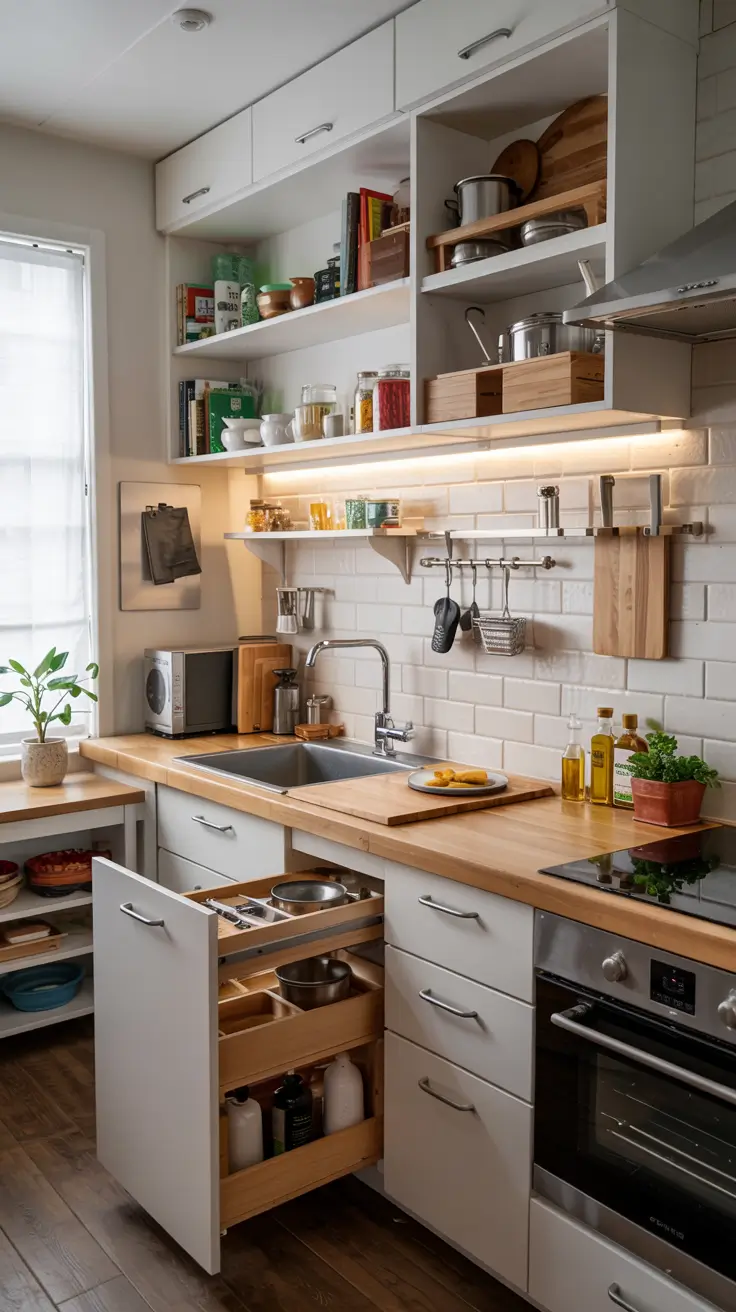
For practical features, I love a sink cover board that turns the sink into a temporary prep surface when needed. I also use slide-out cutting boards, pull-out shelves for small appliances, and wall mounted rails for paper towels and utensils. If you have a window, a slim shelf just below it can hold oils or salt without eating into your main prep area. I often recommend stacking solutions inside cabinets, like tiered spice shelves and vertical pan dividers, because clutter usually starts in storage and spills onto the counter. A compact cart can also help, but only if it parks neatly and does not block the aisle.
From my experience, the best way to keep counters clear is to decide what belongs on the counter and commit to it. I like to pick one everyday appliance, like a coffee machine, then store the rest in a cabinet zone that is easy to reach. I have seen many small kitchens improve instantly when people stop using the counter as long term storage for dry goods. I also prefer matching containers inside cabinets, because it reduces the time spent searching and reduces the urge to leave things out. A clear counter is not about perfection, it is about designing for quick reset.
What I would add to round out this section is a step by step audit of your countertop items, sorting them into daily, weekly, and occasional use. I would also add a recommendation for under cabinet lighting, because a well lit counter feels larger and more usable. If you cook often, I would add advice on placing a heat safe landing zone near the cooktop, even if it is a narrow stone or steel panel. I would also include guidance on outlet placement so cords do not steal surface area. Finally, I would add a simple storage rule that every countertop item must have a home behind a door or in a drawer.
15. Tiny Kitchen Design Ideas For Counter Space In Narrow Layouts
In a narrow kitchen, I focus on building uninterrupted work zones, because tiny kitchen design ideas counter space usually fail when the counter is chopped into tiny pieces. I like a galley or single-run plan where the main counter stays as long as possible, even if the appliances are compact. For 2026, I am seeing more thin-profile materials and streamlined edges that make a small run feel lighter. I also plan the walking lane first, so doors, drawers, and people do not collide during cooking. This approach works especially well for tiny kitchen design small apartments where every inch has to earn its keep.
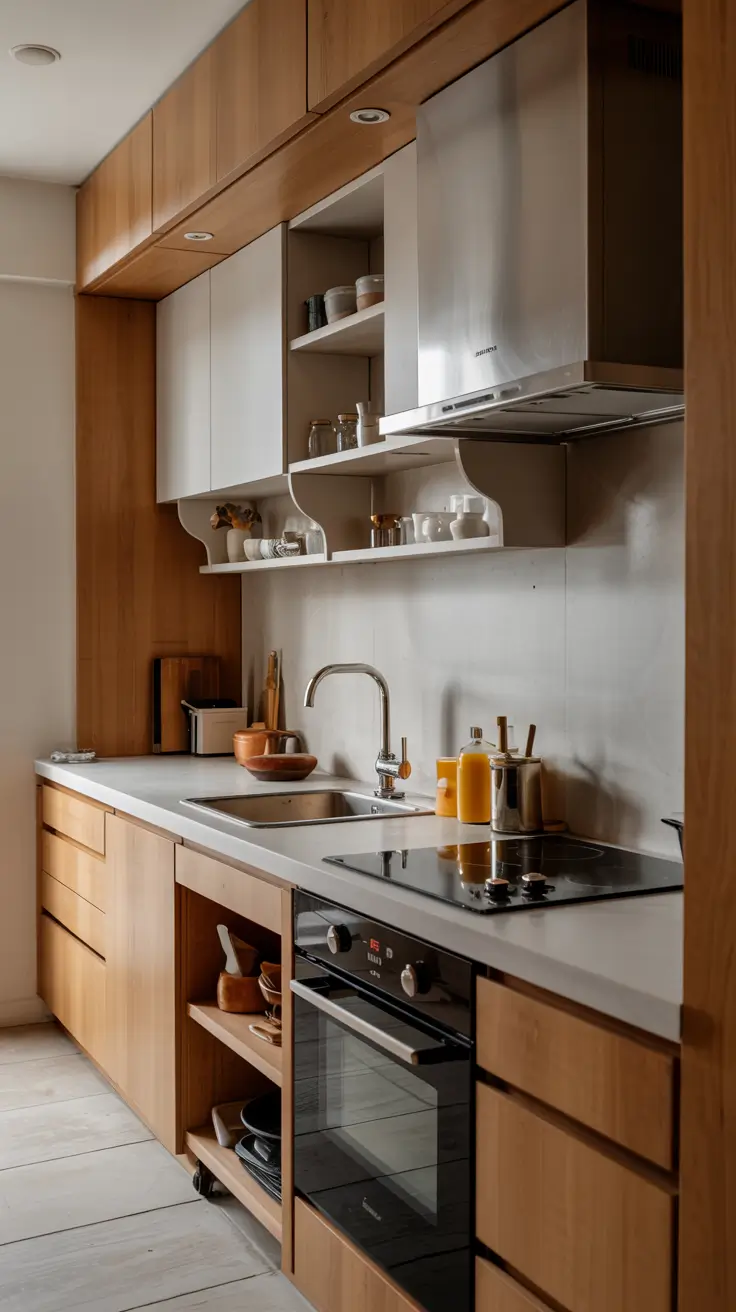
For the actual setup, I rely on a slim sink, an 18 inch dishwasher if needed, and a 24 inch range or induction cooktop to protect the prep area. I often specify a single-bowl sink and a tight faucet reach so the sink does not steal usable landing space. A pull-out cutting board, a covered sink grid, or a flush insert can give you a temporary prep surface without adding bulk. If there is room, I add a narrow rolling cart that docks under the counter overhang and becomes extra counter space only when you need it. Upper cabinets stay simple, and I prefer one open shelf section to keep the wall from feeling heavy.
In my experience, the biggest upgrade is treating the counter like a tool, not a decoration. I keep the main prep zone between sink and cooktop as clear as possible, then move storage for daily tools right above or below it. I also like a low-profile backsplash ledge for oils and spices so they do not live on the counter. When I design narrow kitchens, I aim for a calm visual line, because clutter feels twice as loud in a tight space. The result is a kitchen that looks modern and realistic, but also feels very workable on a weekday.
What I would add to complete this section is a lighting plan that protects the prep zone. Under-cabinet lighting, a bright ceiling fixture, and one accent light over the sink make the counter feel wider and safer to use. I would also include a clear measurement rule for the walking lane so the tiny kitchen design layout stays comfortable even with open drawers. Finally, I would add one example of how to store small appliances vertically, so the counter stays open but the tools are still easy to reach.
16. Tiny Kitchen Design Shape Choices That Improve Flow
When people ask me about shape, I start with how they move through the room, because tiny kitchen design layout problems often come from the wrong shape choice. In 2026, the most reliable shapes are single wall, galley, and tiny kitchen design l shape, depending on where the doorway and windows land. I treat the kitchen like a path with stations, not a box filled with cabinets. If your layout floor plans force you to cross the room to cook, the kitchen will always feel cramped. The right shape makes even tiny kitchen designs feel calm and intentional.
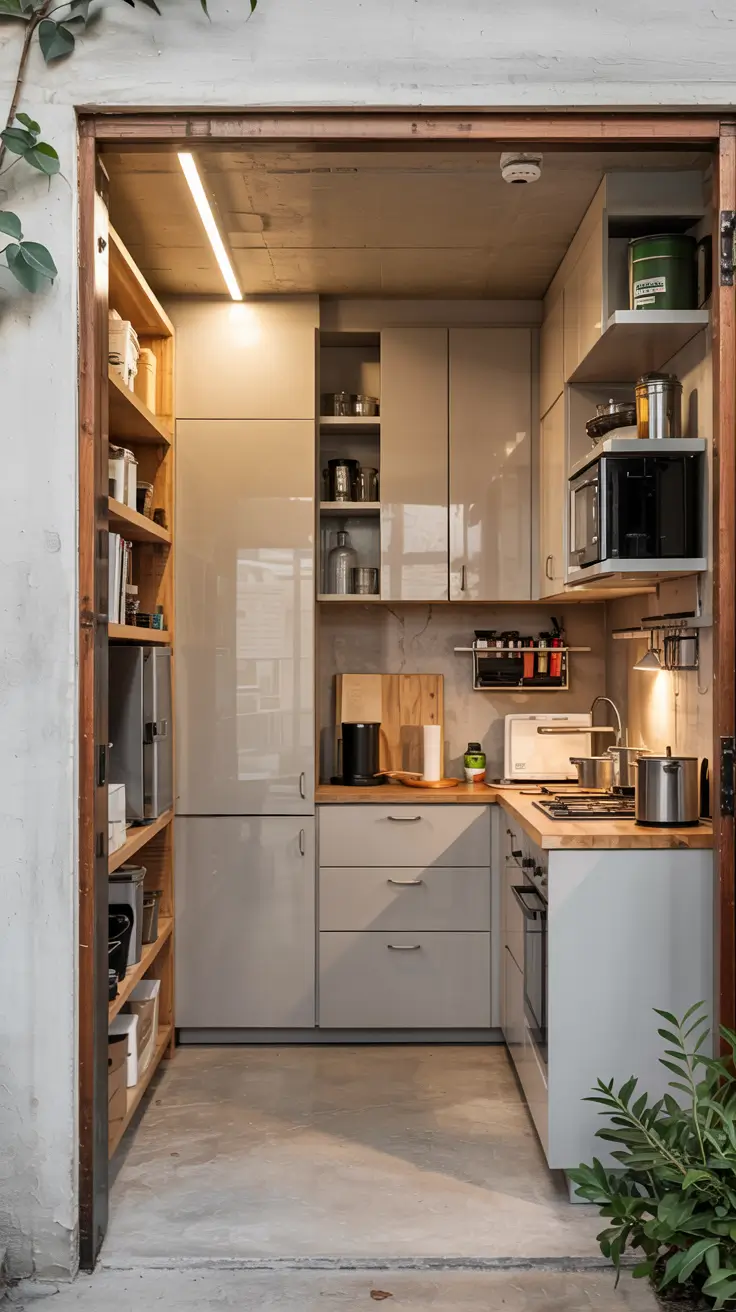
A single wall works best when the room is also your dining or living area, and it is the cleanest option for tiny kitchen design single wall in studios. An L-shape is my favorite when I can tuck the tall storage on one leg and keep the other leg for prep and serving. I use corner solutions only when they truly help, because complicated corners often waste more space than they save. For a galley, I keep one side shallow if possible, using 12 to 15 inch depth shelves for pantry items so the aisle stays open. I also like integrated handles and flat fronts, because they reduce visual noise and help movement feel smoother.
Personally, I choose the shape that reduces steps during the daily routine. If you make coffee, pack lunches, and cook dinner, you want the fridge, sink, and cooktop to feel like a short loop. I avoid placing the trash or recycling too far from the prep zone, because that adds constant back-and-forth. A good shape also supports cleaning, since tight corners and awkward gaps become dirt traps. When the flow works, the kitchen feels bigger than it is.
What is missing here is a quick decision guide tied to common room types. I would add a simple way to match shape to small apartments studios, for example single wall for open rooms, L-shape for corner rooms, and galley for corridor rooms. I would also add a note about door swings, because a poorly placed door can ruin an otherwise strong shape. Finally, I would include one line about where to put a microwave, since it often steals the best counter area if it is not planned early.
17. Tiny Kitchen Design Layout Floor Plans Explained Simply
When I explain tiny kitchen design layout to readers, I keep it simple: every layout floor plans should support three zones – storage, prep, and cooking – without blocking movement. Tiny kitchen design ideas layout succeed when each zone has a clear home and the walk path stays open. In 2026, I see more micro-apartment plans that use a straight run plus a small return, almost like a compact L, to create a landing spot. I also see more built-in appliance walls that keep the main counter uninterrupted. The goal is not perfection, it is a layout that feels natural every day.
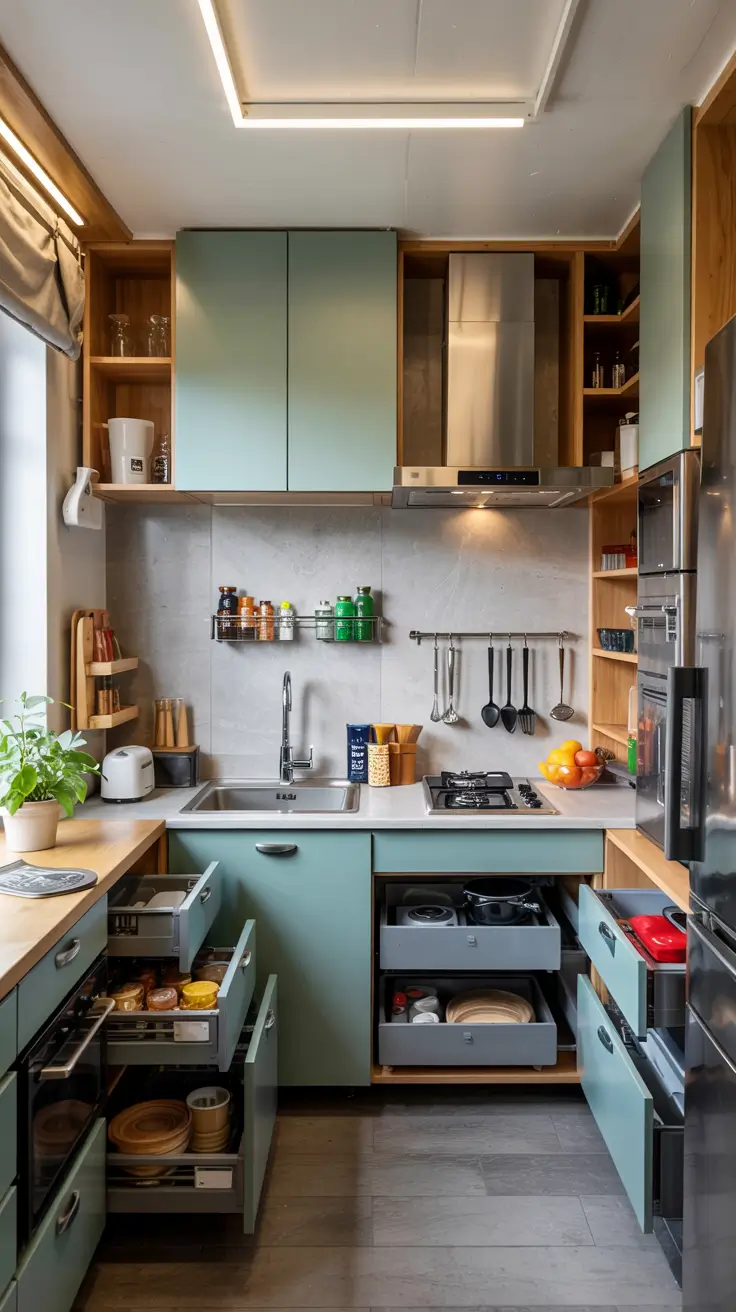
I start the plan with the longest continuous counter I can create, then place the sink and cooktop so there is real prep space between them. I keep the fridge at the edge of the kitchen zone, so it is accessible without walking into the cooking lane. For storage, I use full-height pantry pull-outs where possible, because they replace multiple upper cabinets and simplify access. I like a shallow cabinet for trays and cutting boards, and I always reserve one drawer for daily tools near the prep area. If the plan is very tight, I choose a two-burner cooktop and a combi oven to protect counter space.
In my own work, I treat the floor plan like a promise: if you draw it, you have to live it. I test it by imagining groceries coming in, a pot of pasta on the stove, and someone opening the fridge at the same time. If those moments feel stressful on paper, they will feel worse in real life. I also remind people that small kitchens need fewer “special” gadgets and more simple surfaces that stay clear. When you respect the plan, the room stays easy to use.
To strengthen this section, I would add a short list of minimum clearances for aisles and door swings, because those numbers protect comfort. I would also add a sample “layout small houses” scenario where the kitchen shares space with a mudroom or entry, since that is common. Finally, I would add a note about outlets and charging, because modern kitchens need power in the prep zone without cords running across the counter.
18. Tiny Kitchen Design For Small Apartments With Washing Machine
In many European-style small apartments, the washing machine ends up in the kitchen, and I treat that as a design constraint that can still look modern. A tiny kitchen design small apartments plan with laundry needs clean alignment, ventilation planning, and noise control. I prefer to place the washing machine at the end of the run, not in the center of the main prep zone. In 2026, built-in fronts and tall utility panels make this integration look more seamless than ever. With the right choices, it stops feeling like a compromise and starts feeling like a smart layout.
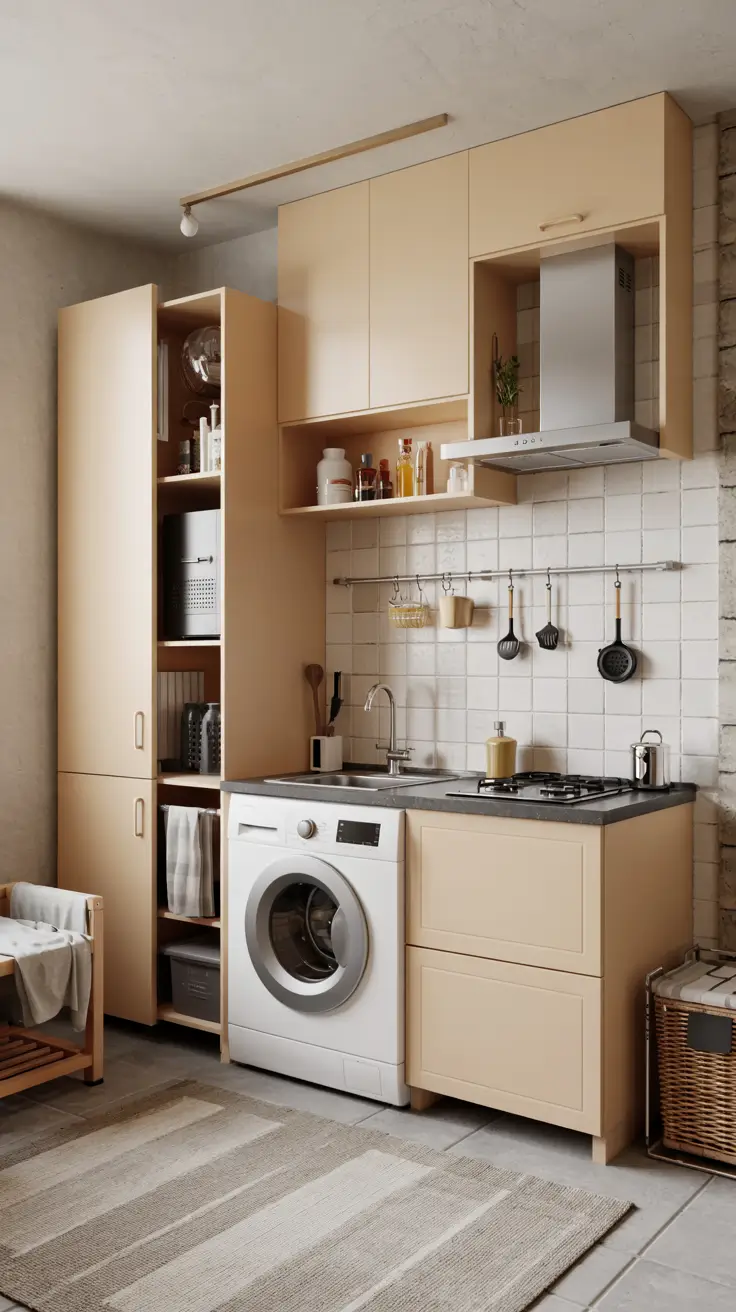
For the furniture and equipment, I like a washer under the counter with a matching cabinet front, plus a pull-out hamper or tilt-out bin nearby. If there is space, I add a tall broom closet for cleaning supplies, because laundry without storage gets messy fast. I use moisture-resistant finishes around the machine and keep a small air gap or vent detail so heat and humidity do not build up. A compact sink helps with hand-wash items, and I like a slim drying rail that folds down from a cabinet. If the kitchen is a tiny kitchen design single wall, I place the machine closer to the entry side, so it does not interfere with cooking.
From experience, the biggest win is planning the “laundry moments” so they do not collide with cooking. I make sure there is a clear spot to set a basket, and I avoid placing the oven directly next to the machine when possible. I also think about sound – a solid toe-kick, correct leveling, and a stable cabinet enclosure reduce vibration. When everything is planned, the kitchen still reads as a kitchen first, which matters for daily comfort. This is one of those “very practical” upgrades that makes small living easier.
To finish the section, I would add guidance on where to store detergents safely and neatly, especially if the kitchen is also your dining space. I would also add a simple idea for hiding hoses and shutoff access behind a removable panel. Finally, I would include a tip about choosing a quieter model and using anti-vibration pads, because that is often what makes the setup feel truly livable.
19. Tiny Kitchen Design For Small Apartments With Window Light
If a tiny kitchen has a window, I treat it as the main design feature, because light is the fastest way to make tiny kitchen designs feel open. A tiny kitchen design layout that places the sink or prep zone under the window usually feels more pleasant, even when the room is small. In 2026, I see more warm, soft neutrals paired with light wood tones to amplify daylight without looking stark. I also like keeping the upper cabinetry lighter or minimal near the window so the view and light stay clear. This is one of my favorite solutions for tiny kitchen design small apartments because it improves the feel without needing more square footage.
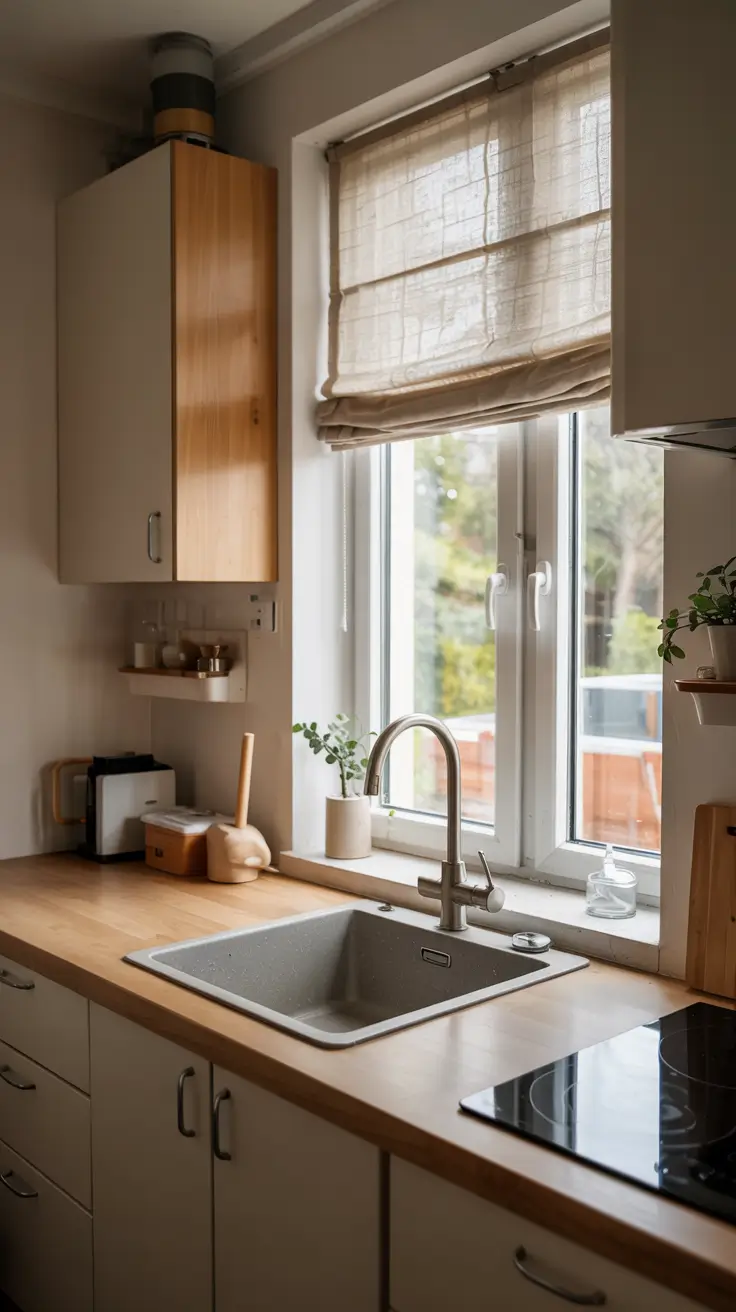
For furniture and details, I often use a low-profile faucet and a shallow sink so the window ledge remains usable. I like a simple roller shade or linen-style blind that filters glare but still lets light in. If the window is wide, I add a slim open shelf to one side for daily cups or plants, keeping the center open. Countertop materials with a gentle, matte finish reduce reflections and keep the room looking calm. I also like adding a small café table or a narrow fold-down ledge near the window if the room allows it.
In my opinion, daylight is not just visual – it changes how you use the space. People naturally gravitate to the brightest spot for prep, coffee, and quick meals, so putting your best surface near the window makes the kitchen more inviting. I also keep color contrast low in small rooms, because harsh contrast can chop the space into pieces. A little greenery by the window helps the room feel lived-in without creating clutter. This is a simple, professional trick that consistently makes small kitchens feel more “finished.”
What I would add here is a short note on artificial lighting that matches daylight. I would also add an example of how to handle radiators or baseboard heaters under windows in layout small houses. Finally, I would include one storage idea for keeping the window area clear, such as a dedicated “drop zone” drawer so items do not migrate onto the sill.
20. Small Apartments Kitchenettes Designed For Daily Use
A kitchenette should still function like a real kitchen, and I design it around daily habits, not occasional cooking. Small apartments kitchenettes work best when the basics are strong – clear prep space, smart storage, and appliances sized to the household. In 2026, I am seeing more kitchenette solutions that hide visual clutter behind tall panels, creating a clean wall that reads like built-in furniture. This approach is ideal for small apartments space saving apartment layouts where the kitchen shares space with the living area. When the kitchenette is planned well, it feels intentional instead of temporary.
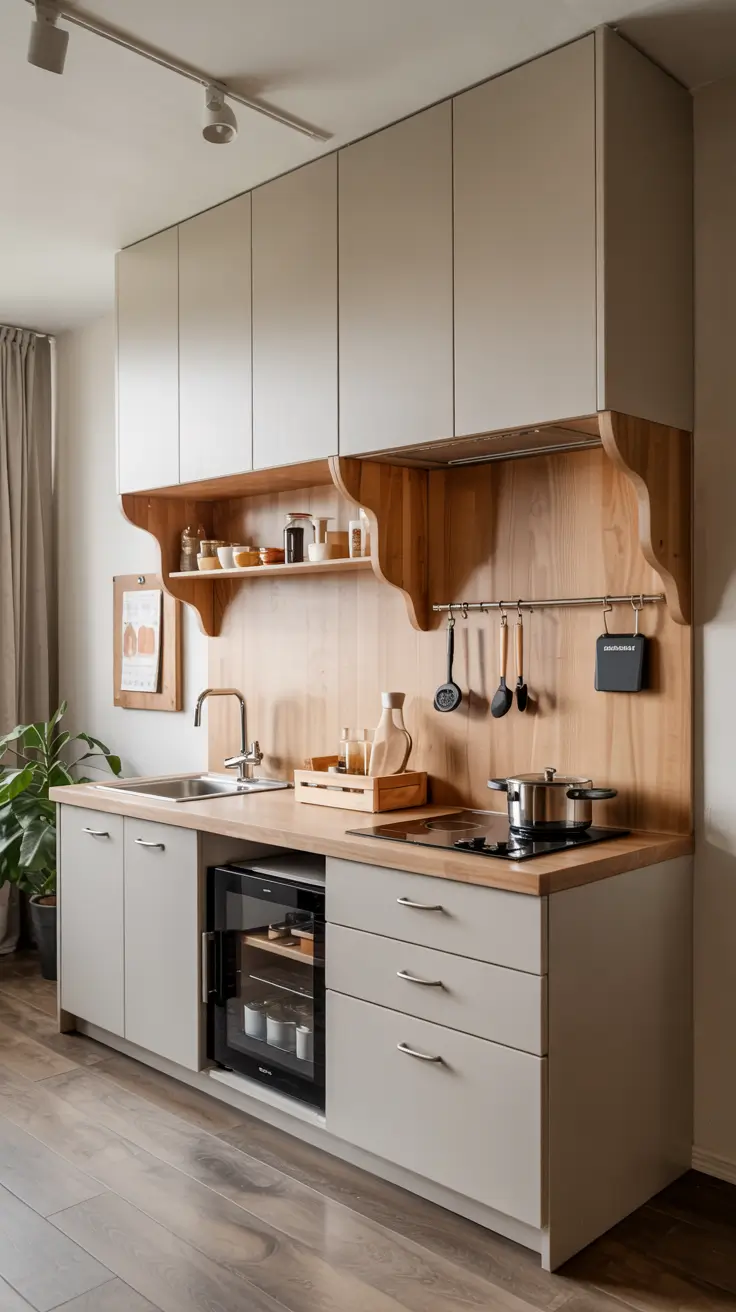
For the setup, I like a two-zone counter: one zone for prep near the sink, and one zone for serving or coffee. I often include an under-counter fridge drawer or a slim 24 inch fridge, plus a compact induction cooktop for safety and speed. Drawers usually outperform lower cabinets in tiny kitchen design ideas, so I specify deep drawers for pots and a top drawer with dividers for tools. I use a wall rail system for a few daily items, but I keep it minimal so it does not look busy. If there is no room for a full table, I add a fold-down wall desk that doubles as a dining ledge.
In my experience, a kitchenette becomes frustrating when it lacks one clear “landing” spot for everyday life. That might be a small counter section reserved for groceries, a coffee setup, or a cutting board station that stays out. I also recommend choosing one design language and sticking to it – one metal finish, one cabinet style, one countertop tone. This is how small apartments space saving modern kitchens avoid feeling chaotic. When the visual is calm, the room feels larger and easier to maintain.
To complete this section, I would add a simple checklist for minimum features, like a venting plan, trash location, and where to store dishes. I would also add a note on acoustics, since kitchenettes sit close to seating areas and noise matters. Finally, I would include one example of how to hide small appliances behind a tambour door or pocket door, which is a growing trend in modern compact kitchens.
21. Small Apartments Studios Kitchen Layout Ideas That Feel Open
Studios need the kitchen to blend in, and my favorite studio solutions treat the kitchen like furniture rather than a separate room. Small apartments studios do best with a clean tiny kitchen design single wall or a compact L that stays visually quiet. In 2026, I see more integrated panels, matching tall storage, and soft lighting that makes the kitchen read like part of the living space. The key is keeping sight lines open so the studio does not feel like one long utility corridor. A good “ideas layout” decision here is choosing fewer, better elements instead of many small ones.
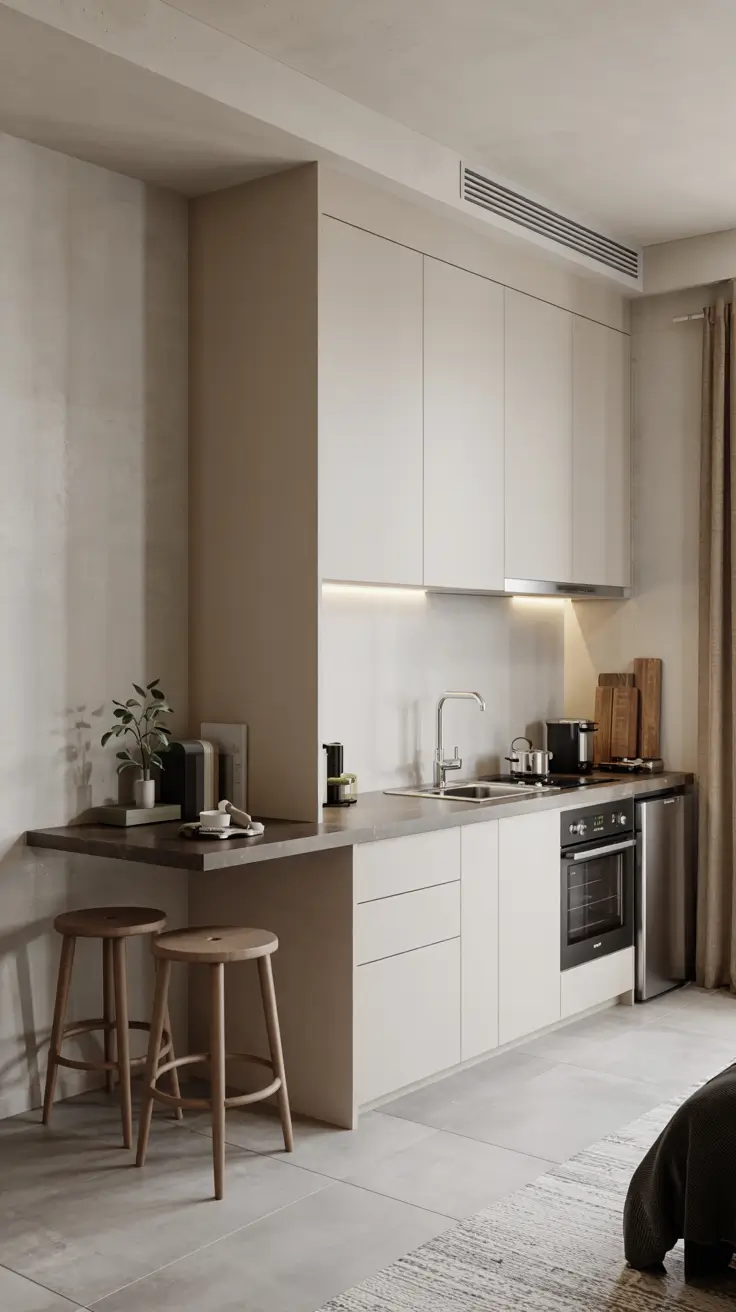
For furniture and layout, I often use a single wall with tall pantry storage at one end, then sink and cooktop centered, then a compact fridge at the other end. If possible, I add a shallow peninsula ledge that functions as a tiny dining spot without blocking flow, which echoes tiny kitchen design with island ideas in a studio-friendly way. I keep hardware minimal, use a consistent finish, and prefer handleless or slim pulls for a modern look. A small dining chair pair that tucks fully under the ledge makes a big difference in daily comfort. I also recommend closed storage for most items, because open shelves can look cluttered fast in a studio.
Personally, I judge studio kitchens by one question: can you relax in the room without thinking about chores? When the kitchen looks tidy even when it is in use, the whole studio feels calmer. I also like adding one soft element, like a textured runner or warm wood stool, so the space does not feel sterile. If you cook often, a stronger ventilation solution is worth it, even in a small space, because odor control protects comfort. Done well, the kitchen supports the studio lifestyle instead of dominating it.
To strengthen this section, I would add a suggestion for zoning with lighting, like a different ceiling fixture over the living area and under-cabinet lighting in the kitchen. I would also add a tip for hiding recycling and cleaning tools, since those are the first things that make a studio look messy. Finally, I would include a note about choosing reflective but not glossy finishes, since too much shine can feel harsh while a soft sheen can help the room feel brighter.
22. Small Apartments Space Saving Kitchen Design Essentials
In small apartments, I start with a simple rule: every surface must earn its place, and every pathway must stay clear. The most reliable tiny kitchen design layout for tight plans is the one that reduces walking loops and keeps prep, cooking, and cleanup within a few steps. I look for a clean sightline, often toward a window, because natural light instantly makes the room feel larger. I also plan storage vertically so I am not forced to widen the footprint just to hold basics. If the apartment is a studio, I treat the kitchen as part of the living area and choose finishes that feel intentional rather than purely utilitarian.
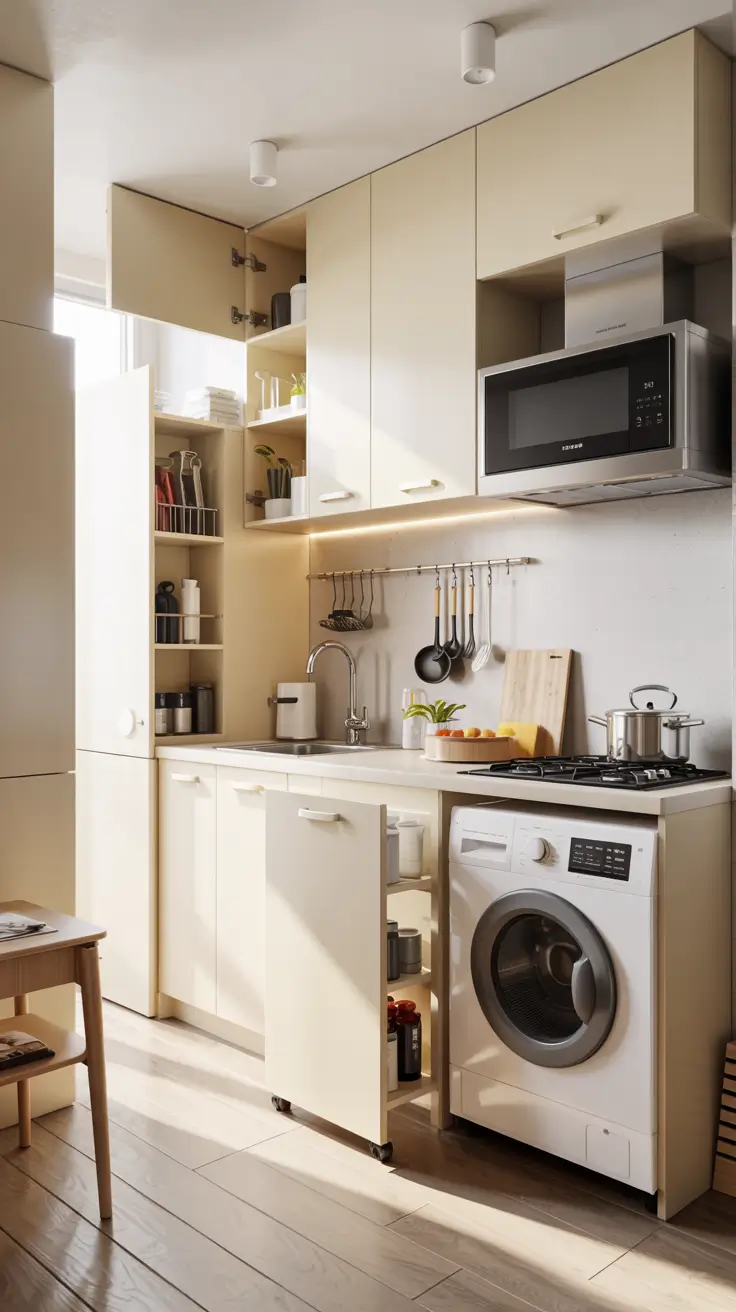
For essentials, I prioritize a compact sink, a two burner cooktop when possible, and a fridge sized to actual shopping habits, not idealized ones. I add slim pull out pantry storage, toe kick drawers for rarely used items, and a tall cabinet for cleaning tools so they do not float around the room. To improve tiny kitchen design ideas counter space, I like a narrow rolling cart that can tuck under an overhang and act as a prep station when needed. Under cabinet lighting is non negotiable for me because it improves safety and makes even modest materials look better. If laundry must live here, I plan a washing machine with cabinet fronts or a curtain panel so the kitchen still reads as a kitchen.
In my experience, the most common mistake is buying organizers before mapping what you actually store and how often you touch it. Designers often recommend grouping items by task, and I agree because it reduces clutter and makes daily cooking smoother. I have also learned to keep the backsplash simple in tiny rooms because too much pattern can visually chop the space. When I want personality, I bring it in through one open shelf with curated pieces and keep the rest closed. That mix keeps the room warm without turning it into visual noise.
What I would still add to complete this section is a quick checklist of measurements to verify before ordering anything, like aisle width, appliance door swing, and the exact clearance needed for pull outs. I would also include a short note on ventilation options for rentals, since many small apartments need recirculating hoods or discreet vent solutions.
23. Small Apartments Space Saving Apartment Kitchens For 2026
For 2026, I am seeing apartment kitchens lean toward calmer palettes, warmer metals, and surfaces that are easy to maintain. The best tiny kitchen design small apartments approach is not about cramming in features, it is about choosing a few upgrades that make the room feel custom. I often start with a light, warm neutral cabinet color and pair it with a countertop that has subtle movement so it looks rich but not busy. I also pay attention to reflectivity, since satin finishes can bounce light without showing every fingerprint. When a layout feels boxed in, I use glass, reeded panels, or open shelving in one spot to soften the block of cabinetry.
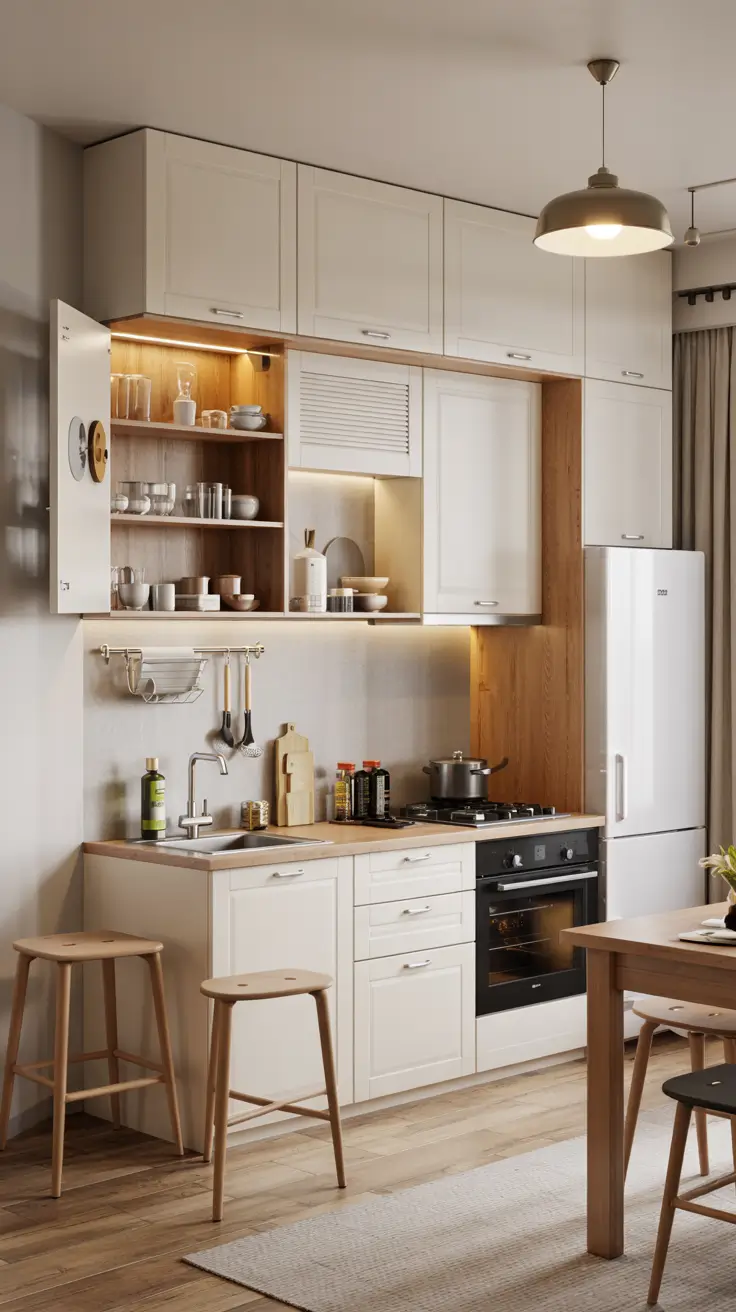
Furniture and fixtures matter a lot in small apartments studios, because the kitchen is always in view. I like slim bar stools with backs for comfort, and a wall mounted fold down table when a dining spot is needed without sacrificing circulation. For storage, I use full height cabinets and add interior fittings like tray dividers, tiered spice pull outs, and drawer organizers sized to the cookware you truly use. If the plan allows, a tiny kitchen design with island can work as a narrow peninsula island with storage below and seating on one side, rather than a freestanding block. I also like integrated appliance panels or at least coordinated finishes so the kitchen reads as a single composition.
My professional take is that trends are useful only when they solve a problem you actually have. A simple update like swapping to a deeper single bowl sink, adding a pull down faucet, and improving task lighting can make the space feel brand new. Many US kitchen editors frequently emphasize layered lighting and practical storage as the real luxury in compact kitchens, and that lines up with what I see on site. I would rather invest in good drawer slides and sturdy pulls than chase a decorative detail that will date quickly. In tiny rooms, quality hardware is the difference between daily ease and daily frustration.
What is missing here is a small set of example combinations, like warm white cabinets with light oak accents, or soft greige with brushed nickel, so readers can copy a full look confidently. I would also add a short note on choosing durable countertop edges for tight spaces where corners take more impact.
24. Small Apartments Space Saving Modern Kitchen Concepts
Modern does not have to mean cold, especially in a tiny kitchen design minimalist direction. In compact rooms, modern design is really about clean lines, controlled color, and fewer visual breaks. I aim for handle style that is simple, a backsplash that runs uninterrupted, and cabinetry that reaches the ceiling so the top does not become a clutter shelf. I also like using one consistent material language, such as matte cabinets with a quiet stone look counter. When the room needs warmth, I add it through wood tones, a textured runner, and warmer lighting temperature.
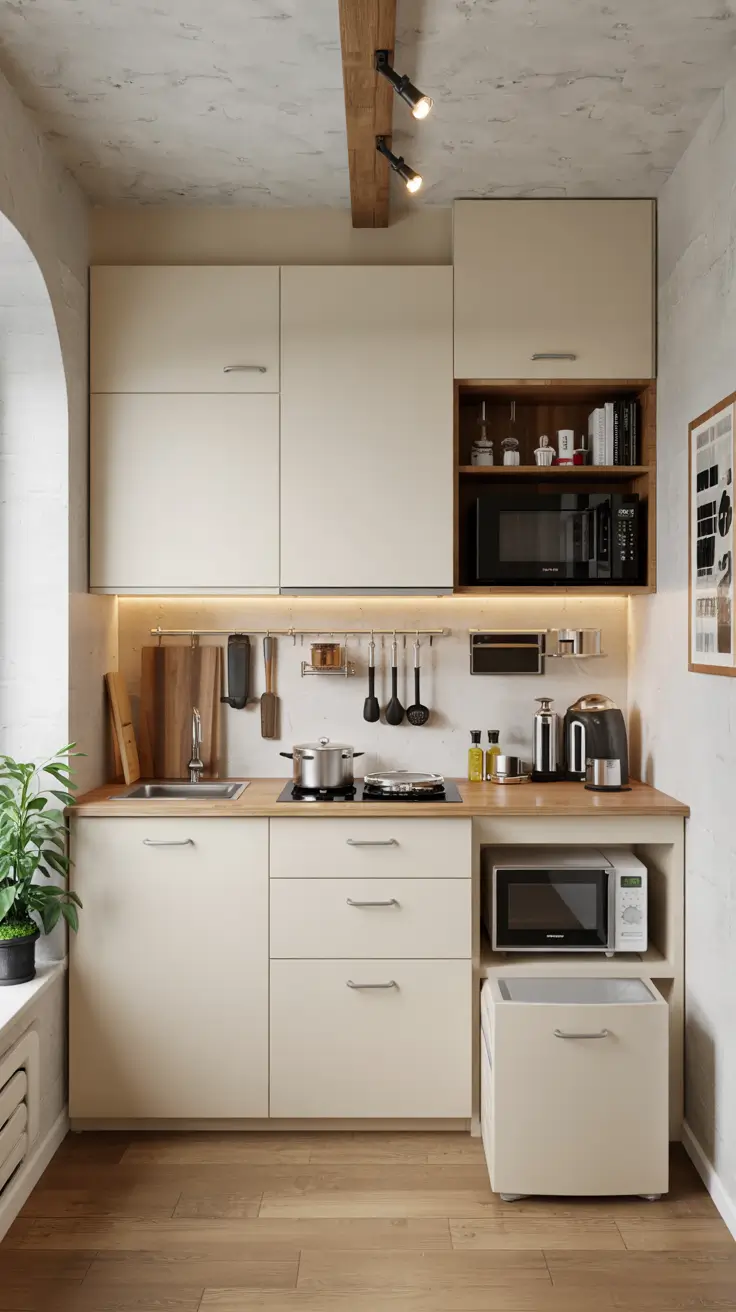
Modern concepts come alive when the pieces work together. I often use flat panel cabinets, integrated or slim profile pulls, and a single statement pendant that does not hang too low. For appliances, a compact induction cooktop and a built in microwave can free up counter space and keep the look streamlined. If there is a window, I keep the treatment minimal and avoid heavy fabric that steals light, using a simple roller shade instead. In small apartments kitchenettes, I also recommend a continuous rail or magnetic strip for tools, because it keeps the counter clear without looking messy.
From my own projects, the biggest modern upgrade is making storage invisible. A tall pantry with internal drawers hides a lot while staying easy to use, and a concealed trash pull out keeps the room looking tidy. I also like adding a shallow appliance garage, even a small one, to hide the kettle and toaster. This is where modern style supports practicality, because the room looks calmer and works better. If the budget is tight, I still push for a cohesive backsplash and good lighting because those two changes lift everything else.
To strengthen this section, I would add one example of a compact modern layout that includes laundry, like a stacked washer dryer behind doors with a countertop above. I would also add guidance on choosing matte finishes that can handle frequent cleaning without streaks.
25. Very Small Kitchen Design Layouts That Still Feel Spacious
Very small kitchen design layouts can feel generous if you control proportions and sightlines. I look at the layout floor plans first and decide where the eye should land, ideally on a bright wall, a window, or a clean focal point like a simple hood. I keep the countertop continuous where possible and avoid chopping it into short segments that feel busy. I also choose lighter upper cabinets or open shelves in one area to reduce the sense of weight. If a tiny kitchen design l shape is possible, it is often the best compromise between storage and openness.
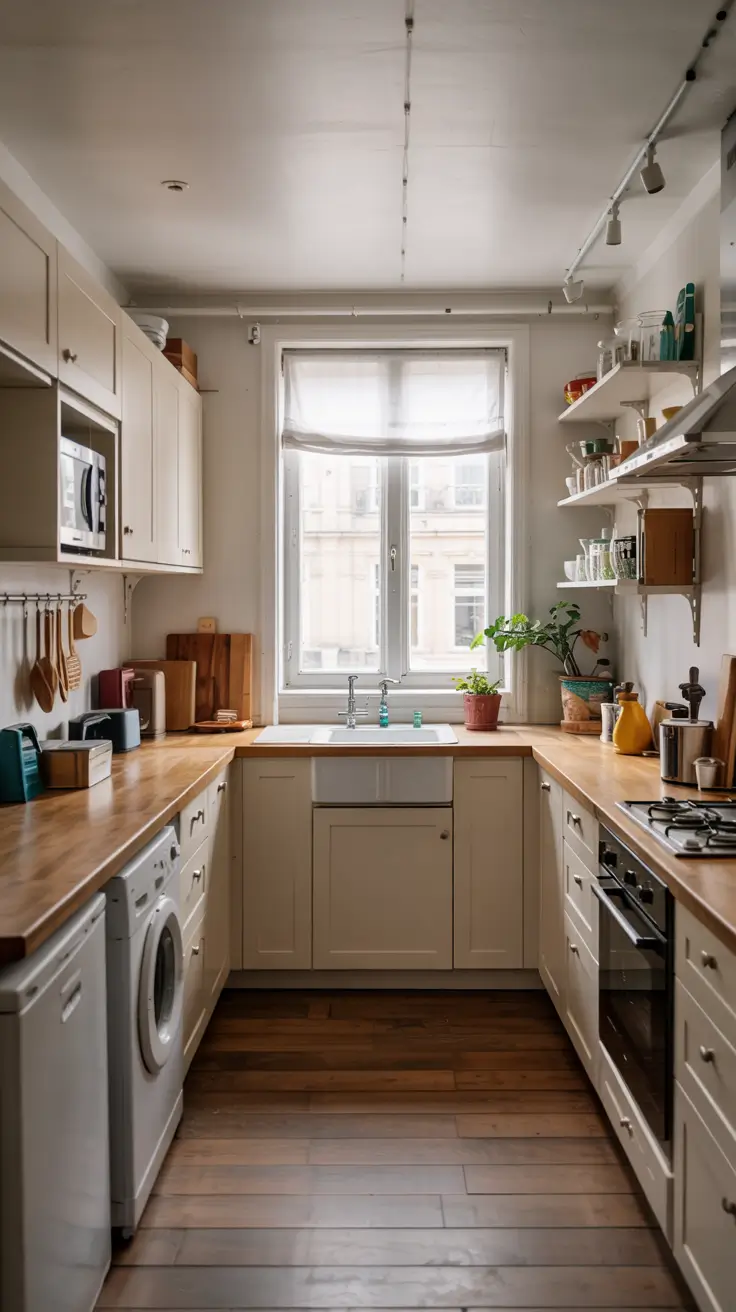
The furniture and details are what make the space feel breathable. I use a compact sink with an integrated drain board cover so it can become prep space when needed. I recommend a slimline dishwasher drawer if the household will truly use it, because it saves time without requiring a full width unit. For seating, I prefer a narrow banquette or wall mounted ledge rather than a table that blocks movement. If the kitchen must share space with a washing machine, I plan cabinetry panels and a countertop run above it so the room still reads as one built in zone.
In my experience, spaciousness comes from consistency, not from removing everything. I would rather keep enough closed storage to prevent clutter, then add one open element that feels curated. Designers often talk about the work triangle, but in very small rooms I focus more on a work line: fridge to sink to cooktop in a straight, short sequence. That approach reduces awkward turning and makes cooking feel smoother. I also find that mirrored or glossy finishes can help, but only in small doses so they do not create glare.
To round this out, I would add a short set of dimension guidelines, like the minimum comfortable clearance in front of the fridge and the best drawer depths for compact bases. I would also include a note on choosing light colored grout for a cleaner, more expansive look.
26. Single Wall Tiny Kitchen Design For Ultra Compact Spaces
A tiny kitchen design single wall plan is the most demanding because everything must fit into one linear run without feeling cramped. When I design a single wall kitchen, I treat it like a piece of furniture, not a scattered set of parts. The key is aligning the sink, cooktop, and prep zone so you are not constantly crossing the room. I also make sure the upper cabinets do not overwhelm the space by using a mix of closed storage and one lighter section. In ultra compact homes, I often pair this with a small mobile island or fold out surface to create flexible prep room.
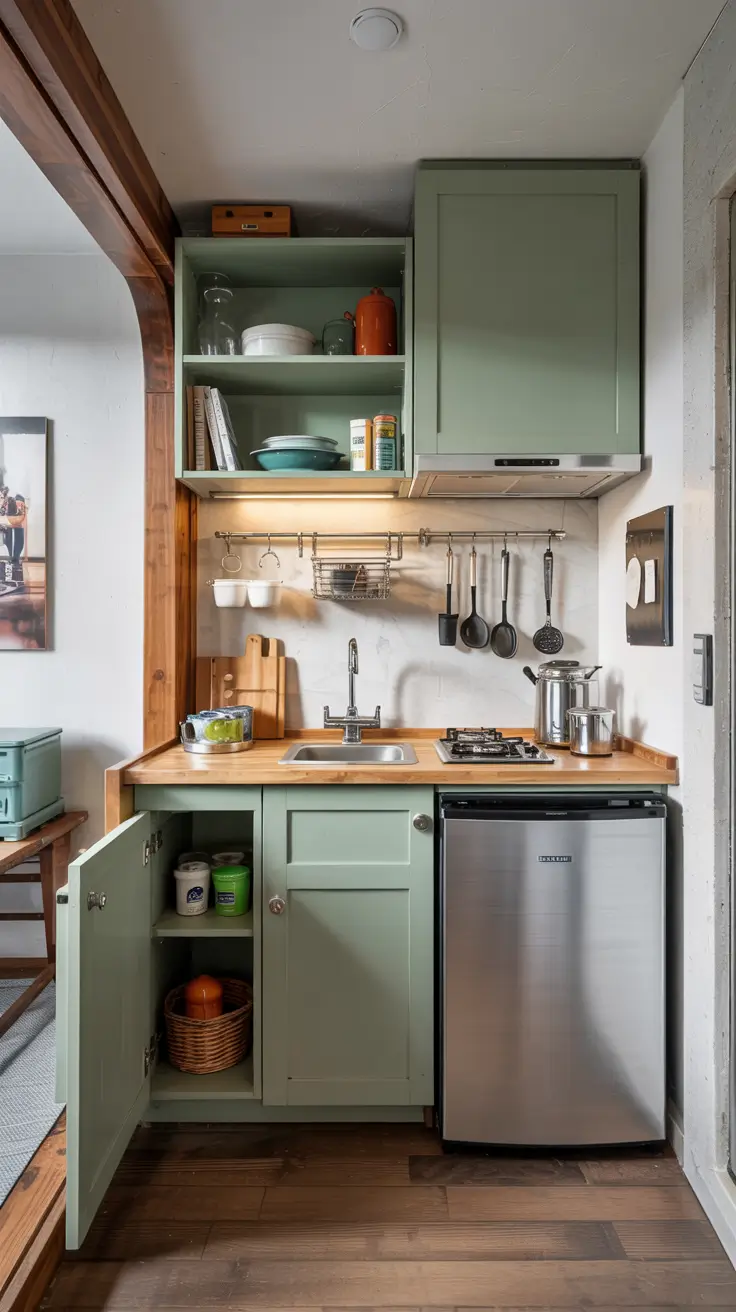
For the actual components, I select a compact sink, a two burner cooktop, and a slim fridge, then dedicate one uninterrupted stretch of counter as the main prep zone. I like putting the sink slightly off center so there is more usable counter on one side. A narrow tall cabinet can hold pantry items, brooms, and even a stacked microwave area, keeping the counter clear. If this is a rental, I use removable backsplash solutions and lighting upgrades that do not require heavy rewiring. In tiny kitchen design small apartments, even a 30 cm pull out can transform storage if it is placed near the cooking zone.
My advice is to invest in drawers over doors whenever possible, because drawers make a single wall setup far more efficient. I also recommend planning a landing spot for hot items, even if it is a small heat resistant board that stores vertically. For single wall kitchens, clutter is the enemy because it visually shrinks the whole room. I have seen dramatic improvements just by adding under cabinet lighting and switching to a single coordinated set of containers. Those changes are small, but the daily experience becomes calmer.
What I would add here is a quick example of a single wall layout that includes a washer, like a compact washing machine under the counter with a nearby pull out hamper. I would also add a note on choosing a venting solution, because single wall kitchens often sit in open plans where cooking odors travel.
27. Layout Focused Tiny Kitchen Design Ideas For Smart Storage
When the goal is smart storage, I start with the tiny kitchen design ideas layout before I choose any finishes. Storage only works when it matches the movement of the room: where you unload groceries, where you prep, and where you clean. I map these zones and then place storage types accordingly, like tall pantry near the entry and deep drawers near the cooktop. In layout small houses, I also watch for dead corners, because a poorly planned corner can waste a surprising amount of space. A good plan makes the kitchen feel intuitive, even when it is small.
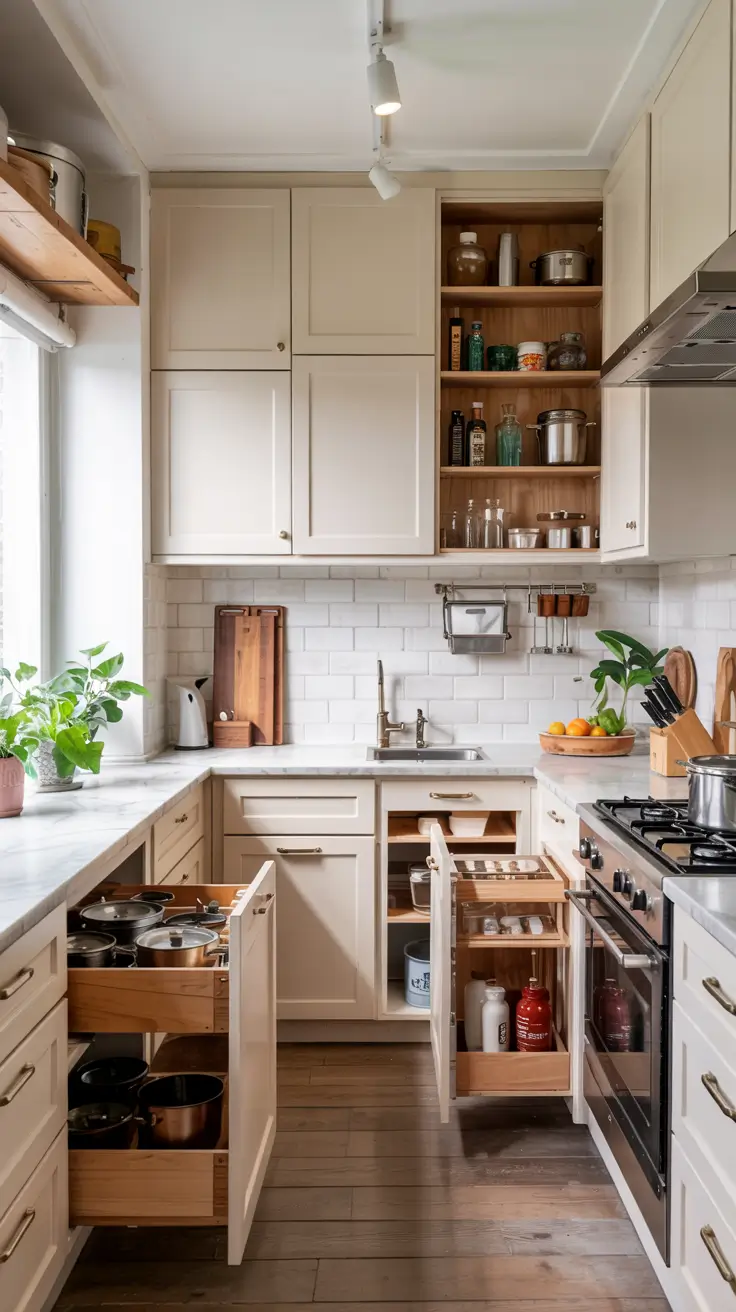
For specific storage choices, I love deep drawers for pots, a vertical tray slot for cutting boards, and pull out shelves for small appliances. I also use corner solutions only when they are truly accessible, otherwise a simple blind corner cabinet with a pull out can be better. To increase tiny kitchen design ideas counter space, I add a slim pull out work surface near the main prep area and use a sink cover when appropriate. In small apartments space saving, I rely on door mounted racks for wraps and spices, and I keep open shelves limited to prevent visual clutter. If the kitchen has a window, I sometimes build a shallow ledge below it for herbs or daily items without eating up counter depth.
From my perspective, the smartest storage is the kind you can keep tidy without extra effort. A drawer that is the right size for your pans beats an expensive organizer that forces awkward stacking. I also advise clients and friends to measure their most used items, because a lot of frustration comes from shelves that are just a little too short or too deep. Many designers emphasize vertical storage and full height cabinetry in compact kitchens, and it is good advice because it removes the need for extra furniture. When storage is right, the whole kitchen feels bigger because the counters stay clear.
To make this section more complete, I would add one sample zone map, like where to place everyday dishes versus occasional entertaining items. I would also add a short note on organizing for different cooking styles, such as daily cooking versus mostly reheating.
28. Tiny Kitchen Design Layout Ideas That Balance Style And Practicality
The best tiny kitchen design layout is the one that makes daily life easier while still feeling like a room you enjoy looking at. I aim for balance: enough style to feel intentional, and enough practicality to stay clean and functional. In 2026, I see more people mixing warm wood accents with simple cabinet fronts, which works well in small spaces because it adds depth without heavy ornament. I also like using one visually strong element, like a backsplash or a pendant, and keeping everything else quiet. That approach keeps the room modern and still personal.
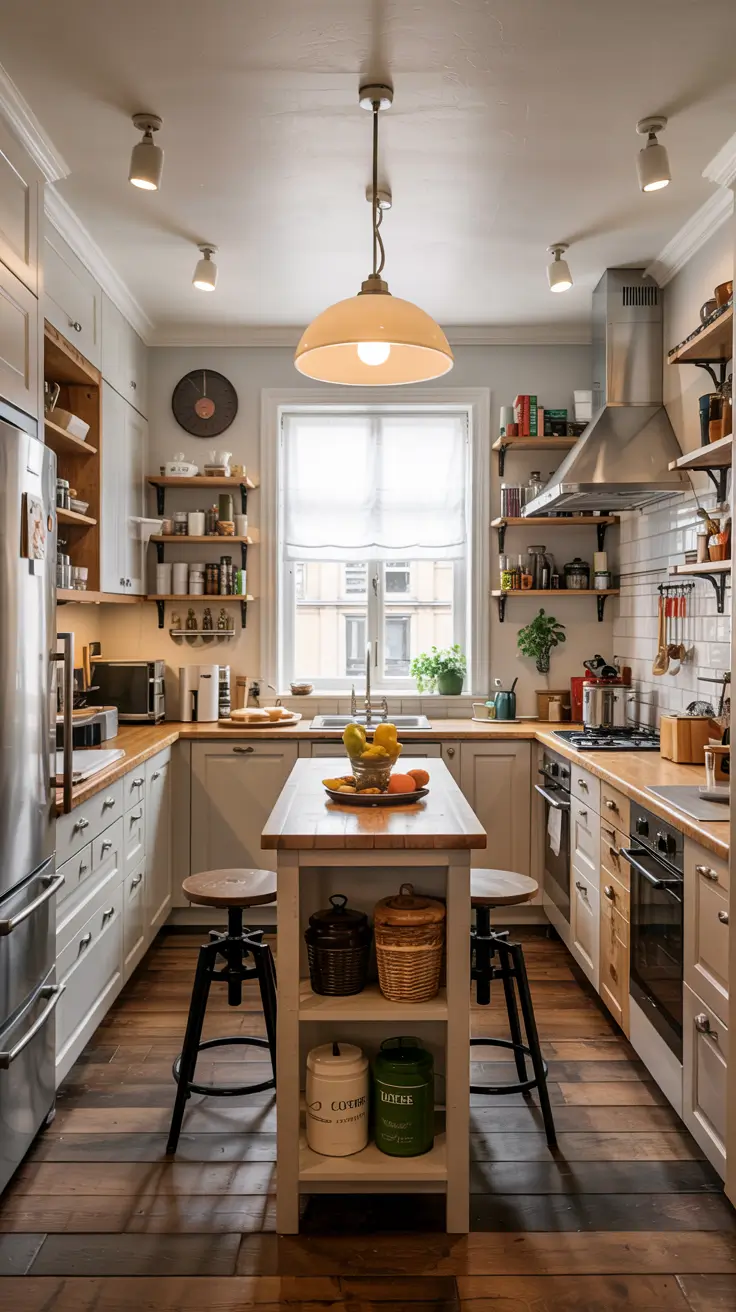
For layout ideas, I choose the best plan the space will allow: an L shape when there is a corner, a single wall when the footprint is narrow, or a slim peninsula when you need a little separation. If you have the room, a tiny kitchen design with island can be done as a narrow island with storage and a minimal overhang, but I only recommend it when it does not block traffic. I also consider a tiny kitchen design indian approach when spice storage and frequent stovetop cooking are priorities, adding a dedicated spice pull out and a stronger ventilation strategy. For materials, I pick durable counters, easy clean backsplashes, and flooring that can handle water, because practicality is part of long term style.
My own opinion is that the most stylish tiny kitchens are the ones that do not look overfilled. I prefer fewer decor items and more thoughtful functional pieces, like a beautiful cutting board, a simple utensil crock, and matching storage jars. If you want to experiment, change hardware or lighting first because those updates add personality without locking you into a permanent decision. I also think a consistent color temperature in lighting makes a small kitchen feel higher end instantly. When everything is cohesive, the kitchen feels designed, not improvised.
To strengthen this section, I would add a compact decision guide for choosing between L shape, single wall, and peninsula based on room width and door locations. I would also add one example of a cohesive palette that works in many homes, including paint color direction, countertop tone, and hardware finish.