Ready to refresh your kitchen for 2026 without wasting space or budget? In this guide, I will walk you through luxury pantry renovation ideas and pantry renovation and design ideas that make everyday cooking smoother, cleaner, and more organized. I will cover walk in pantry renovation ideas, corner pantry renovation ideas, pantry closet renovation ideas, and diy pantry renovation ideas, so you can choose what fits your home and routine.
1. Luxury Pantry Renovation Ideas For Modern Homes 2026
When I plan a luxury pantry, I start with a clean architectural look that still feels warm and livable. For 2026, I see modern pantries leaning into calm neutrals, soft wood tones, and a mix of closed storage with a few display zones. I like using full-height cabinetry to reduce visual clutter, then balancing it with open shelves for frequently used items. Lighting is not an afterthought here, it is the feature that makes everything look intentional and easy to use. I also prioritize a clear aisle so two people can move comfortably without bumping into doors or baskets. This approach makes the pantry feel like part of the kitchen, not a forgotten closet.
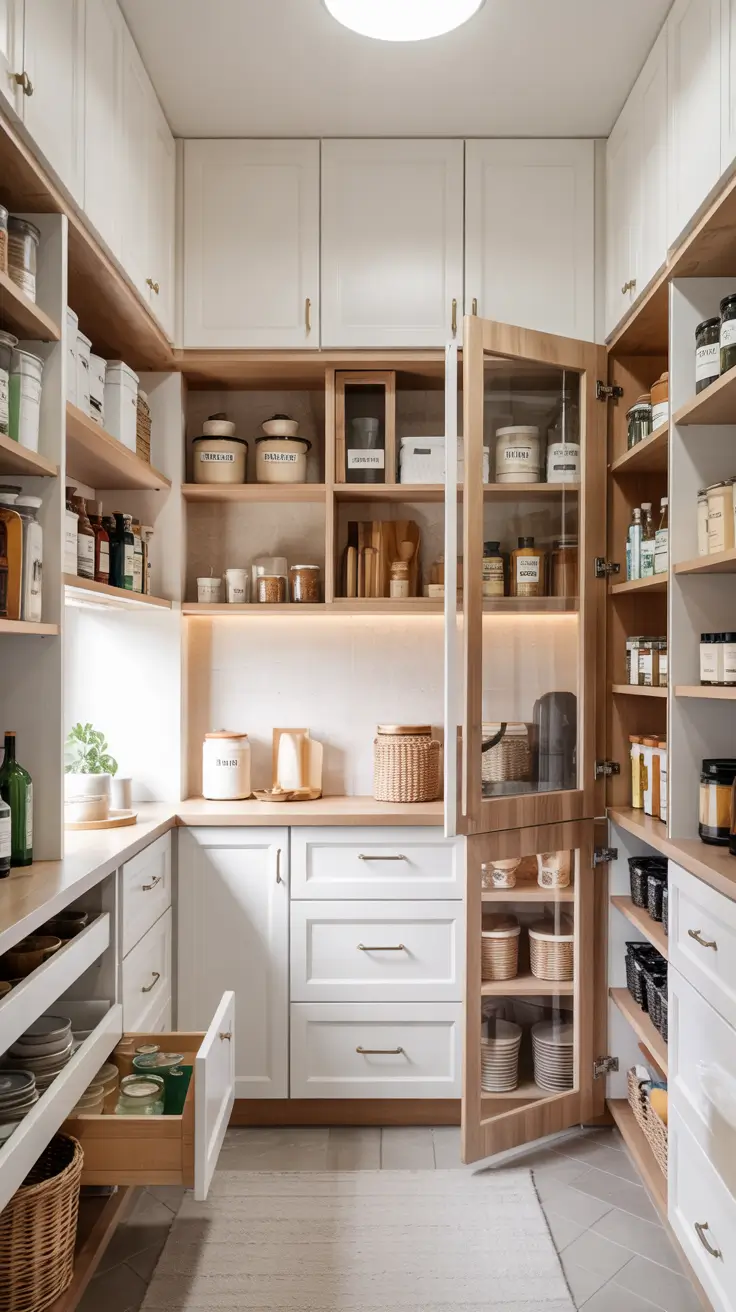
In the layout, I include tall pantry cabinets with adjustable shelves, deep drawers for snacks, and pull-out trays for small appliances. I prefer glass-front uppers for a limited section because they help you see what you have, but I keep most storage solid-front to stay tidy. A stone or quartz countertop inside the pantry is useful for decanting groceries, staging lunch items, or storing a coffee setup. I also like built-in bins for produce that does not need refrigeration, plus labeled containers that keep dry goods consistent. Soft-close hinges, integrated handles, and a durable floor surface make the space feel truly finished. These details are why luxury pantry renovation ideas tend to hold up better over time.
From experience, the biggest upgrade is how calm the kitchen feels when pantry storage is planned as a system. I recommend choosing one main container style and one label style before you organize, because mixing shapes and sizes wastes shelf space quickly. I also keep a small empty zone for overflow during holidays or big grocery runs, which prevents mess from spreading into the kitchen. Many kitchen designers also suggest placing everyday items between waist and eye level, so you are not constantly bending or reaching. That one habit makes the pantry feel easier to maintain week after week. It is a simple change that supports the luxury look without extra cost.
To round out this section, I would add a small plan for zones, like baking, breakfast, snacks, and appliances, so the design is matched by a practical routine. I would also include a quick note on choosing wipeable paint or wall protection behind open shelves. If the pantry is near a garage entry, I would add a drop zone shelf for bags and packages so clutter stops at the door. Finally, I would add a reminder to measure appliance heights if you plan to store mixers, air fryers, or espresso machines in the pantry.
2. Pantry Renovation And Design Ideas That Maximize Storage
When space is limited, I focus on pantry renovation and design ideas that capture every inch without making the room feel tight. I start by looking at the wall height, door swing, and corner angles to see where storage is being wasted. Vertical storage is the easiest win, especially when shelves go all the way to the ceiling and the top zone is used for rarely needed items. I also pay attention to depth, because overly deep shelves can turn into hiding spots for forgotten food. A well-planned pantry feels smaller visually but works harder in real life. The goal is to store more while keeping everything visible.
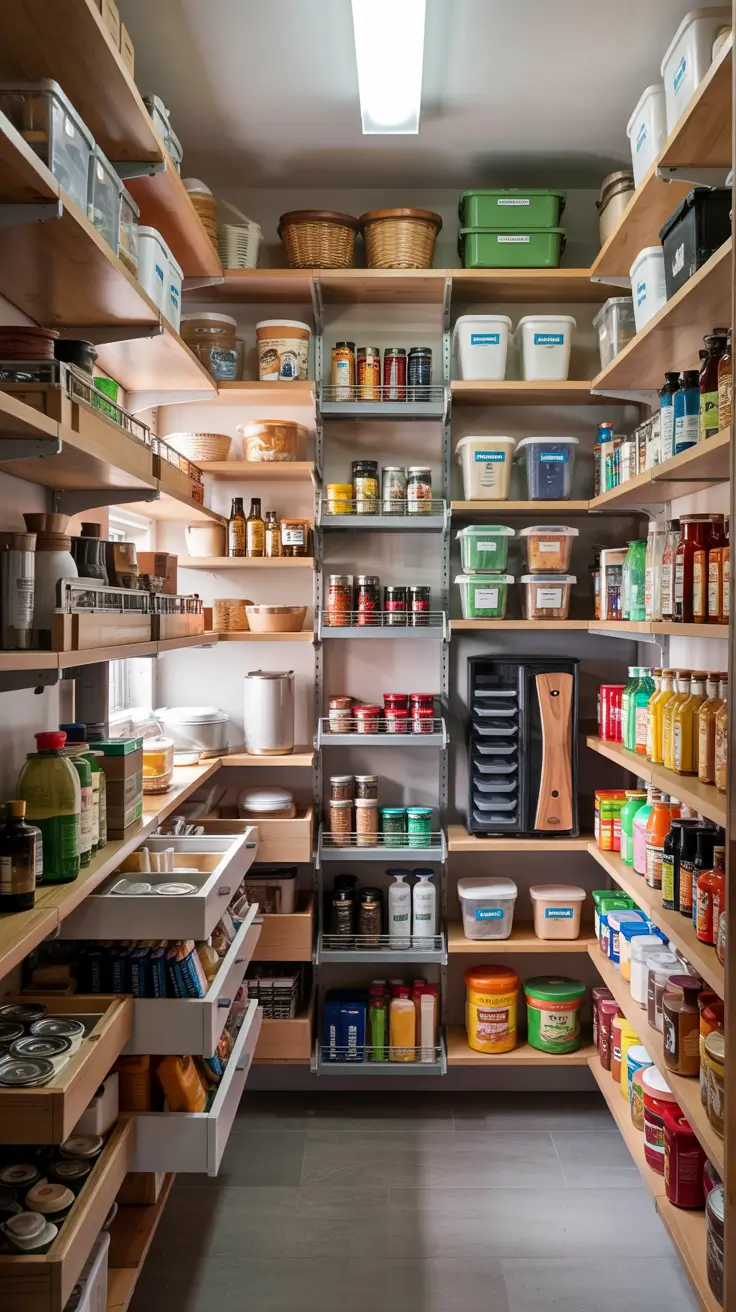
My favorite storage upgrades include pull-out pantry shelves, slim vertical racks for trays, and drawer-based storage for packaged items. I like using shallow drawers for snacks and packets because they prevent the messy pile effect. Door-mounted organizers can hold spices, wraps, and small jars, but I choose sturdy versions so they do not wobble over time. Clear bins make categories easy, and they help kids put things back in the right spot. If you have the width, a narrow rolling ladder can even be practical, but only if it does not block access. These choices are simple, but they are the backbone of the best pantry renovation ideas.
In my own projects, I find that the biggest mistake is overbuilding shelves without a plan for categories and container sizes. I advise measuring the height of cereal boxes, oils, and small appliances before installing fixed shelves. I also recommend leaving a little breathing room for items you buy in different sizes, like pasta or snack packs. Many organizing professionals emphasize that clear labeling and consistent container sizes reduce waste because you can see what needs restocking. When everything is visible, you shop smarter and throw away less. That is a design win that feels good beyond the pantry itself.
To strengthen this section, I would add a quick checklist for shelf depths, like shallow for cans and jars, medium for dry goods, and deep only where needed. I would also add an example of a zone map that matches a typical cooking routine. If the pantry includes a countertop, I would add suggestions for where to place outlets for small appliances. Finally, I would add a note about ventilation and heat sources, because storage near ovens or warm walls can shorten shelf life.
3. Walk In Pantry Renovation Ideas For Spacious Kitchens
With walk in pantry renovation ideas, I treat the pantry like a small room, not a storage cabinet. I start by deciding whether it should feel like an extension of the kitchen or a distinct space with its own personality. In 2026, I like walk-in pantries that use layered lighting, mixed materials, and a clean pathway that lets you turn and access everything easily. I keep the center open unless the pantry is wide enough for an island, because circulation matters more than squeezing in one extra shelf. When the pantry is comfortable to stand in, you naturally keep it organized. That comfort is a practical luxury.
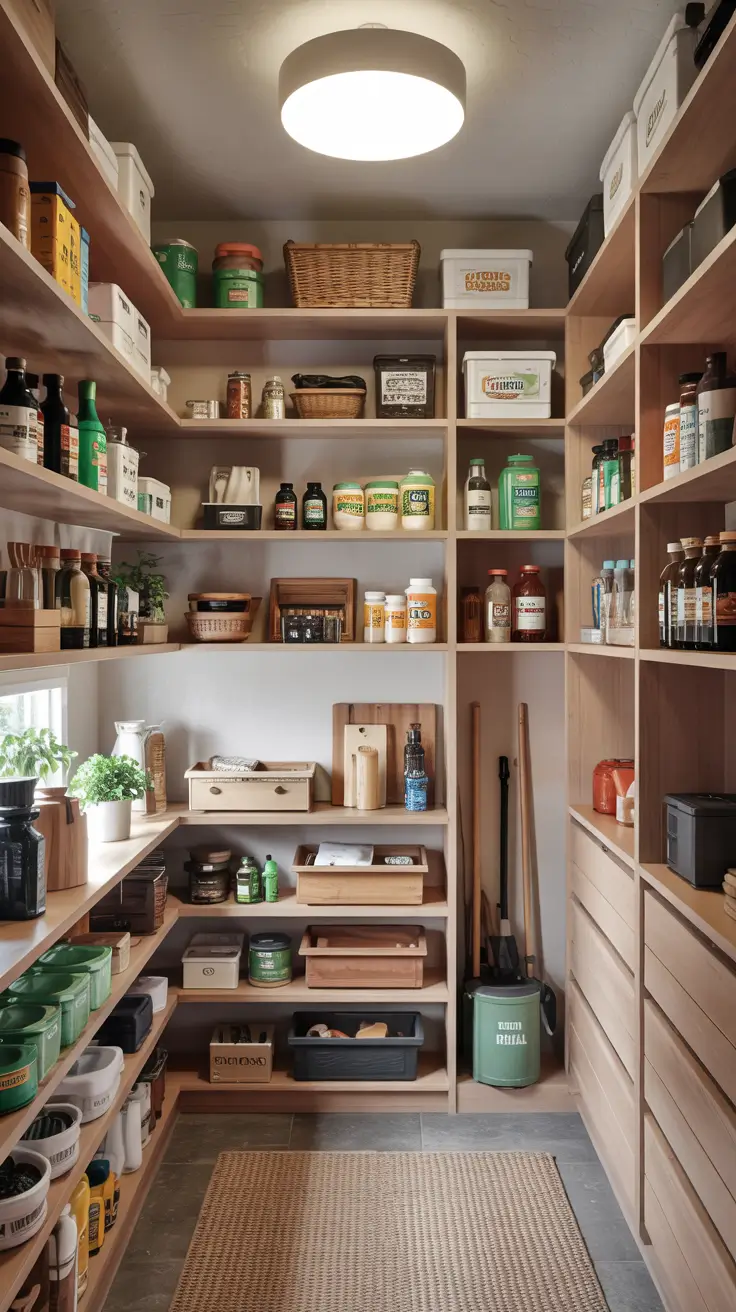
For furniture and built-ins, I like a U-shaped or galley layout with shelves on two or three sides. I often include a countertop zone for sorting groceries, packing lunches, or setting up a beverage station. Deep drawers are excellent for bulky snacks, pet food, or pantry staples that come in bags. If the space allows, I add a tall cabinet section for brooms, mops, and step stools so utility items are not floating around the kitchen. I also like adding a small stool or perch if the pantry doubles as a prep nook. These details make walk in spaces feel purposeful.
Personally, I find that walk in pantries work best when they are designed around how you enter and exit the space. I like placing the most-used items closest to the door, and backup stock further inside. If the pantry is used daily, I recommend a durable, easy-clean floor and wall paint that can handle scuffs. Many designers also recommend using warm white lighting rather than harsh cool lighting, because it keeps the pantry looking inviting and makes labels easier to read. A pantry you enjoy being in is the pantry you maintain. That is why walk in designs tend to stay neat longer.
To complete this section, I would add a note about door choice, like a pocket door or a door that opens out, to prevent traffic jams inside the pantry. I would also include a short guide to pantry lighting layers, like ceiling light, shelf lighting, and task lighting over the counter. If an island is included, I would add minimum clearance suggestions so movement stays comfortable. Finally, I would add a reminder to plan outlets if the pantry includes appliances like a microwave or coffee maker.
4. Corner Pantry Renovation Ideas For Small And Awkward Spaces
Corner pantry renovation ideas are all about turning difficult angles into easy access. I start by identifying what makes the corner awkward, like a narrow opening, deep shelves, or a door that blocks light. For 2026, I like corner pantries that feel built-in and intentional, rather than like a dark triangle of chaos. The key is access, because the corner is only useful if you can reach what is stored there without unloading half the shelf. I aim for solutions that bring items to you, not solutions that force you to crawl inside. When the corner becomes functional, the whole kitchen feels larger.
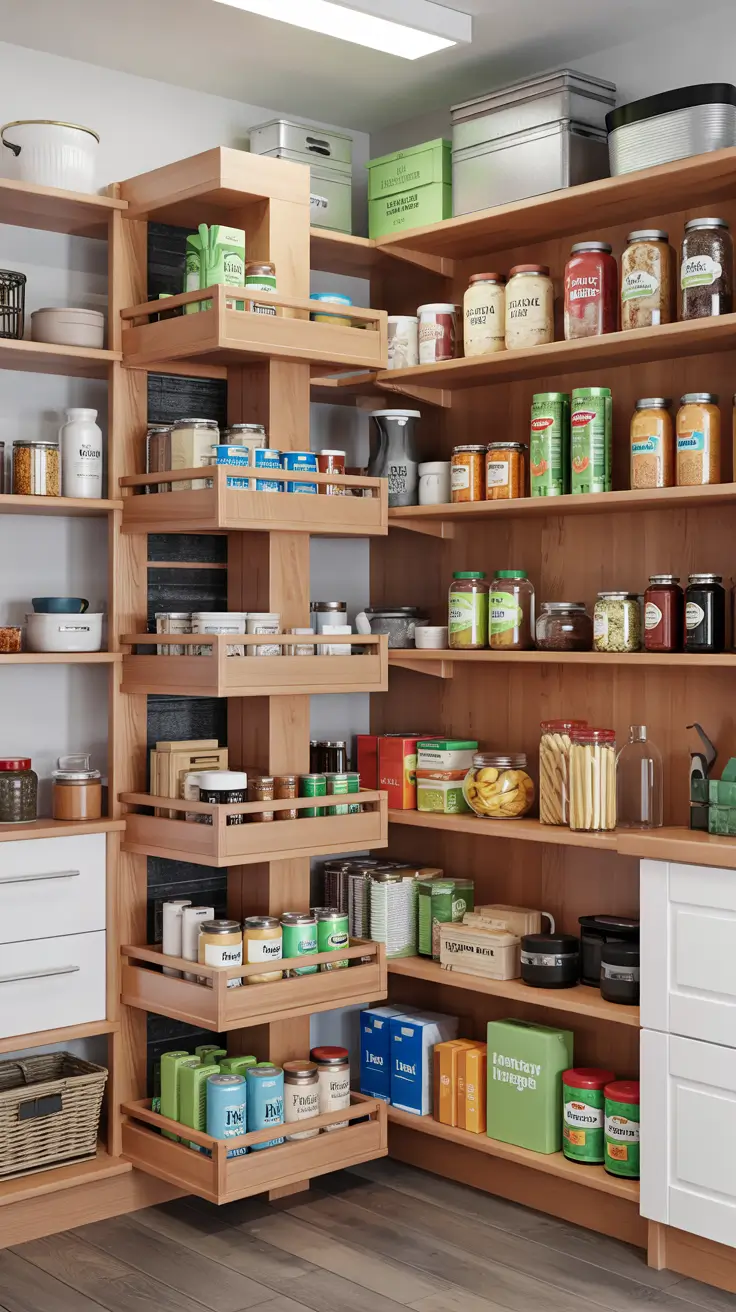
I often use pull-out corner systems, lazy Susan platforms, or diagonal shelving that reduces dead space. I like tiered shelves for cans and jars because they improve visibility without taking more footprint. If the pantry is behind a door, I add battery or wired lighting so the space does not become a shadow box. Narrow bins and turntables help group items, especially snacks, sauces, and baking supplies. If the opening is tight, I consider switching to a wider door or removing the door and using a finished trim opening. The goal is to make the corner feel easy, not hidden.
In my experience, the most practical corner pantries are the ones that accept their shape and plan around it. I do not try to force oversized shelves into a corner if it will create a black hole at the back. Instead, I use the back zone for backup items and the front zone for daily essentials, with a clear rule for what belongs where. Many organizing experts recommend grouping by category and using bins that can be lifted out, which is perfect for corners. When you can pull a whole bin, you eliminate the messy rummaging that ruins corners. That is the difference between a pantry that looks good once and a pantry that works every day.
To enhance this section, I would add a small measurement guide for choosing turntables and pull-outs, because sizing is where corner systems succeed or fail. I would also include a short list of best corner categories, like snacks, canned goods, and baking, to avoid storing fragile items in hard-to-reach spots. If the corner pantry is near a sink or dishwasher, I would add advice on moisture protection for packaging. Finally, I would add a suggestion for using consistent bins to keep the corner visually calm.
5. Pantry Closet Renovation Ideas For Compact Homes
Pantry closet renovation ideas work best when the closet stops acting like a random shelf stack and starts acting like a designed system. I begin by treating the closet like a mini pantry wall, with zones that match daily routines. For 2026, I like pantry closets that look sleek when the door opens, with simple lines, light colors, and storage that is customized to real groceries. Because the space is compact, every inch needs to earn its keep. I also think about how the door is used, because a tight door swing can ruin access. A small pantry can feel premium when it is planned well.
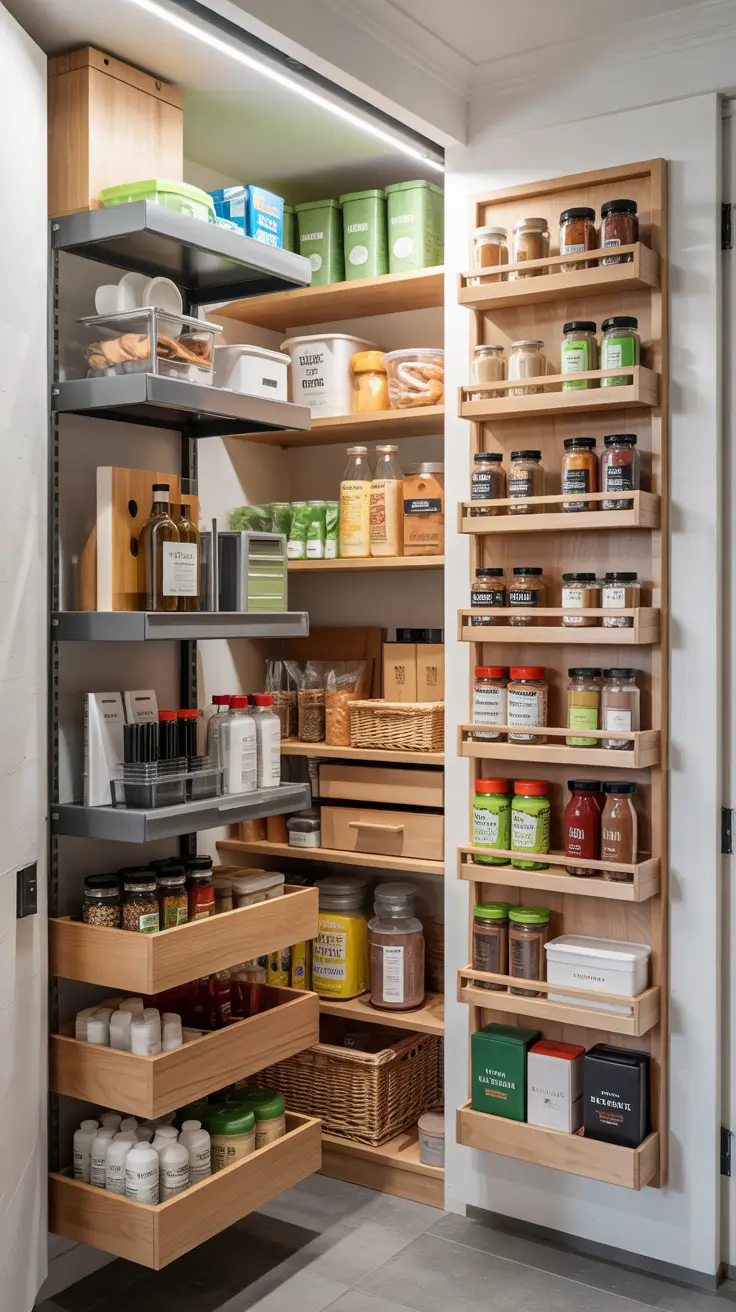
Inside the pantry closet, I typically include adjustable shelves, pull-out baskets, and a few shallow drawers if the width allows. I like adding a middle shelf height that matches your most common items, so you are not constantly rearranging. Door organizers are a strong option here, especially for spices, wraps, and small jars, but I keep weight limits in mind. Clear containers help you see inventory at a glance, and they keep packaging from tearing and spilling. A slim step stool stored vertically can help reach top shelves without cluttering the floor. These upgrades are especially useful in pantry closet renovation ideas for smaller kitchens.
From my own work, pantry closets stay neat when you commit to a reset routine that takes only minutes. I recommend a small weekly check, like wiping shelves, tossing empties, and moving older items forward. I also like using a simple rule for backups, such as no more than one extra of each staple, unless you have a specific storage plan. Many designers emphasize that shallow shelf depth prevents overbuying because you can see what you already have. When the closet is visible and tidy, it becomes a tool that supports cooking, not a stress point. That is what I aim for in every renovation in the pantry.
To improve this section, I would add guidance on shelf depth for closet pantries, because too deep is the most common problem. I would also include suggestions for lighting upgrades, like a motion sensor light, so the closet is bright the moment it opens. If the pantry is near the kitchen entry, I would add a small shelf for keys or mail to prevent clutter on counters. Finally, I would add a short note about airflow, especially if the closet is tight and holds onions or potatoes.
6. Diy Pantry Renovation Ideas On A Budget
Diy pantry renovation ideas can look modern and polished in 2026 without requiring a full remodel. I start by focusing on changes that improve daily use, like better shelf spacing, improved lighting, and clearer categories. Paint and lighting can transform the space quickly, especially when you choose a bright neutral that reflects light. I also prioritize durability, because budget updates still need to handle constant use. The best budget pantry is the one that is easy to maintain, not the one with the most decor. Practical upgrades always read as more expensive than they are.
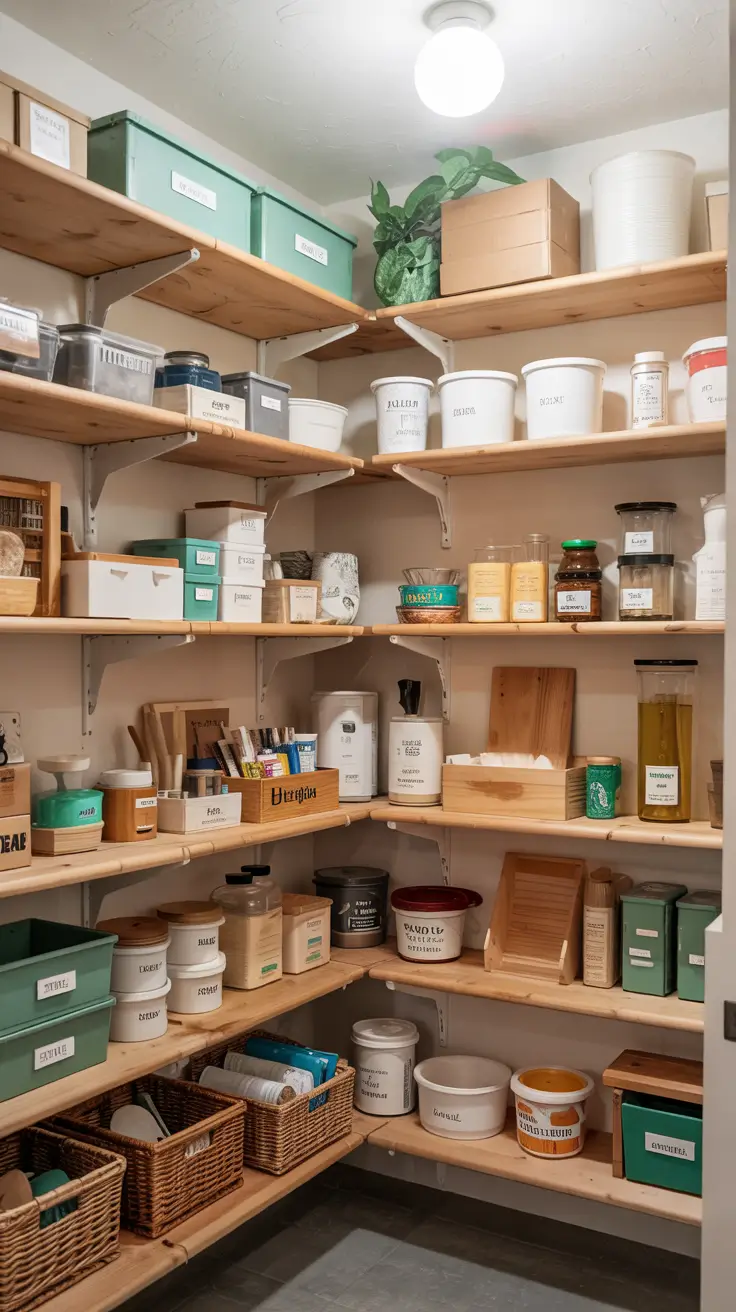
For budget-friendly details, I like adding simple wooden shelves, shelf risers, and labeled bins that create structure. Peel-and-stick wallpaper on the back wall can add personality, but I keep it subtle so it does not fight the food packaging. I often use affordable clear containers for flour, pasta, and snacks, and I store them on the most accessible shelves. Upgrading hardware, like adding matching knobs or pulls, also makes the pantry feel intentional. If the pantry is dark, a motion sensor light is one of the highest-impact DIY changes you can make. These steps are the core of diy pantry renovation ideas that look clean and modern.
In my experience, the smartest budget move is editing what you store and how you store it before you buy organizers. I recommend sorting everything first, then measuring shelves, then buying only what solves a specific problem. If you buy baskets too early, you often end up with mismatched sizes and wasted space. Many home organization pros suggest starting with zones and labels, then adding containers gradually as you learn what your household actually uses. That advice saves money and prevents clutter from returning. A budget pantry that functions well feels like a luxury because it reduces friction every day.
To round out this section, I would add a simple DIY plan, like paint, lighting, shelf adjustment, containers, and labels, in that order. I would also include tips for choosing shelf brackets and shelf thickness so shelves do not sag. If renters will read this, I would add renter-friendly options, like tension rods, removable bins, and stick-on lighting. Finally, I would add a note about maintaining a donation box for pantry overflow so you do not overfill the shelves again.
7. Luxury Walk In Pantry Designs With Custom Cabinetry
Luxury walk in pantry designs feel effortless when custom cabinetry is built around how you actually cook and shop. I begin by mapping categories and deciding where each zone lives, then I design cabinetry that supports those zones. For 2026, custom pantries are moving toward a boutique kitchen look, with a refined mix of drawers, shelves, and tall cabinets. I like adding integrated lighting under shelves and inside cabinets because it makes the space feel high-end and easier to use. I also think about acoustics and softness, like using wood tones and warm light to avoid a sterile feel. This is where the pantry becomes a design feature, not just storage.
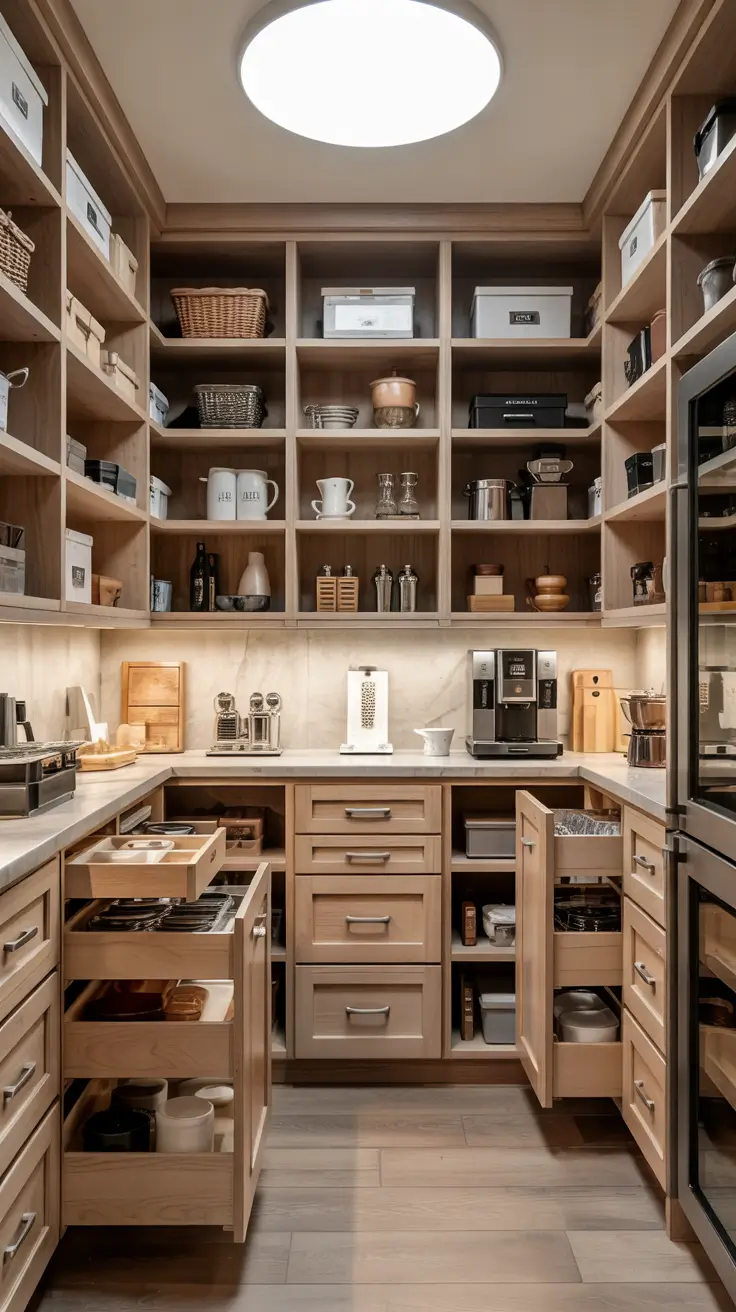
In custom cabinetry, I prefer full-extension drawers, pull-out trays, and built-in dividers that keep categories separated. I often include a counter zone with outlets, so small appliances can live in the pantry without cluttering the main kitchen. Appliance garages or pocket doors can hide a coffee setup or mixer station while still keeping it accessible. I also like a tall section for trays, cutting boards, and serving pieces, since these items are awkward in standard cabinets. If the pantry is large enough, a small island with drawers can hold snacks, linens, or baking supplies. These decisions are why Luxury and Walk in projects feel so tailored.
From what I have seen, the most successful custom pantries use a consistent system, not a collection of fancy features. I recommend choosing a few premium elements, like lighting and drawers, then keeping the rest simple and durable. I also suggest planning a clear home for packaging, containers, and overflow, so the pantry does not turn into a storage dumping ground. Many kitchen designers recommend mixing closed storage for messy items with open shelving for a curated section, which keeps the space looking calm even when life gets busy. When the pantry is both beautiful and logical, it supports better habits naturally. That balance is what makes custom cabinetry worth it.
To complete this section, I would add guidance on planning drawer sizes for real items, like cereal, snacks, and baking supplies, because drawer design is where custom projects shine. I would also include advice on selecting cabinet finishes that match the kitchen, so the pantry feels like one continuous design. If the pantry includes an island, I would add a note about clearance for two people moving around it. Finally, I would add a reminder to plan lighting controls, like motion sensors or dimmers, so the luxury look is also convenient.
8. Smart Corner Pantry Layout Ideas For Better Organization
A smart Corner pantry layout starts with visibility, because the biggest issue is usually dead space and hidden items. I like to treat the corner as a set of reachable layers rather than one deep cave. In 2026, the most practical renovation approach is a hybrid of shallow shelves, angled access, and clear categories that stop overbuying. When I design this, I focus on keeping daily items at eye level and heavy items between waist and chest height. The goal is not to cram more in, but to make what you already have easy to find in seconds.
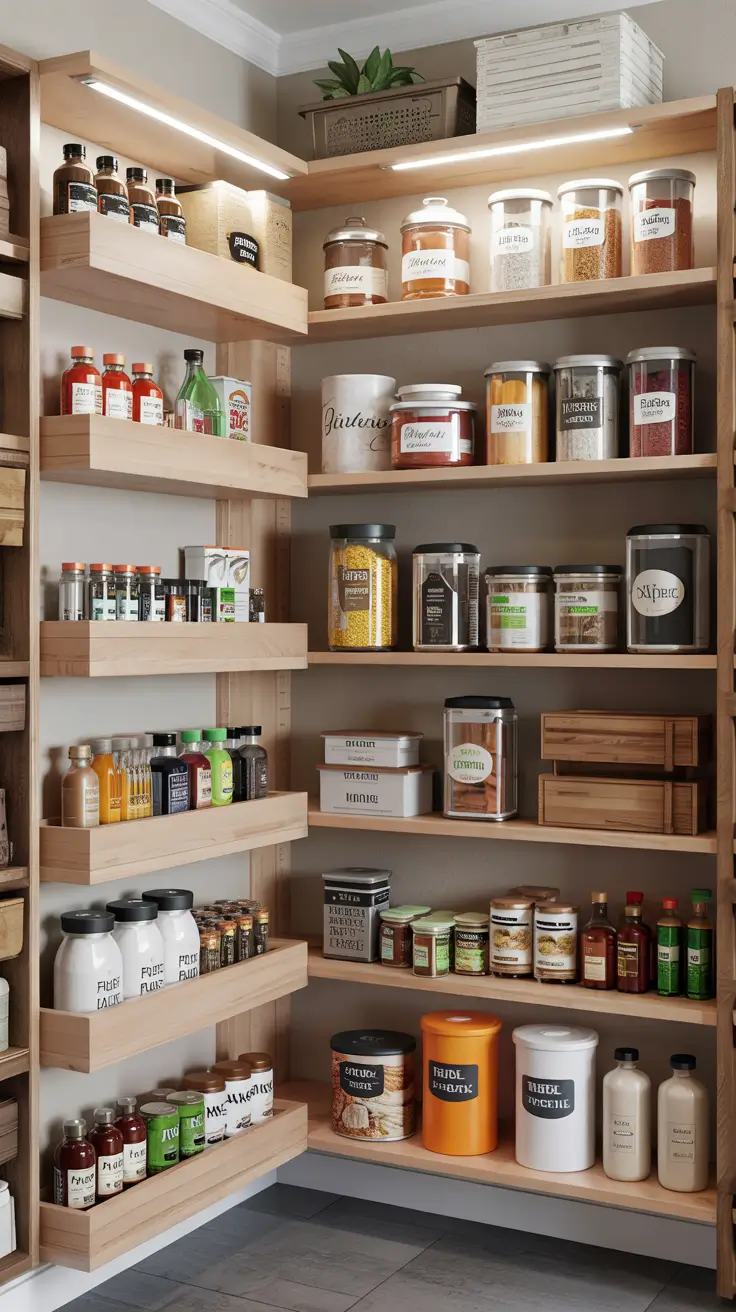
For shelving, I prefer a mix of 10 to 12 inch deep shelves along the angled wall and slightly deeper shelves on the side walls. I include a turntable or two for oils, sauces, and spices, because rotation solves the corner problem better than overbuilt carpentry. I also add labeled, uniform containers for flour, rice, cereal, and snacks, since consistent shapes stack and line up cleanly. A slim pull-out bin for potatoes and onions helps keep produce ventilated and out of sight, while staying reachable. If the Corner pantry has a door, I use the inside for a narrow rack that holds wraps, snack bars, and small packets without stealing shelf space.
In my experience, the corner pantry becomes easier the moment you stop thinking of it as one big shelf wall. I plan zones like baking, breakfast, weeknight cooking, and backstock, then I assign each zone a shelf range so everything has a home. I also keep a small step stool tucked into a side corner, because safety and reach matter when shelves go high. When friends ask why their pantry never stays tidy, the answer is usually that the layout never matched their routines. Once the zones match real habits, organization stops feeling like a constant reset.
9. Walk In Pantry Renovation Ideas With Open Shelving
Walk in pantry renovation ideas work best when the room feels open, bright, and easy to scan at a glance. Open shelving is popular in 2026 because it makes inventory visible, and visibility is what prevents clutter. I design open shelves to feel airy, but still structured, so the pantry looks calm instead of chaotic. The renovation in this case is less about decoration and more about the rhythm of shelf heights and walking clearance. When you can see everything, you naturally put things back where they belong.
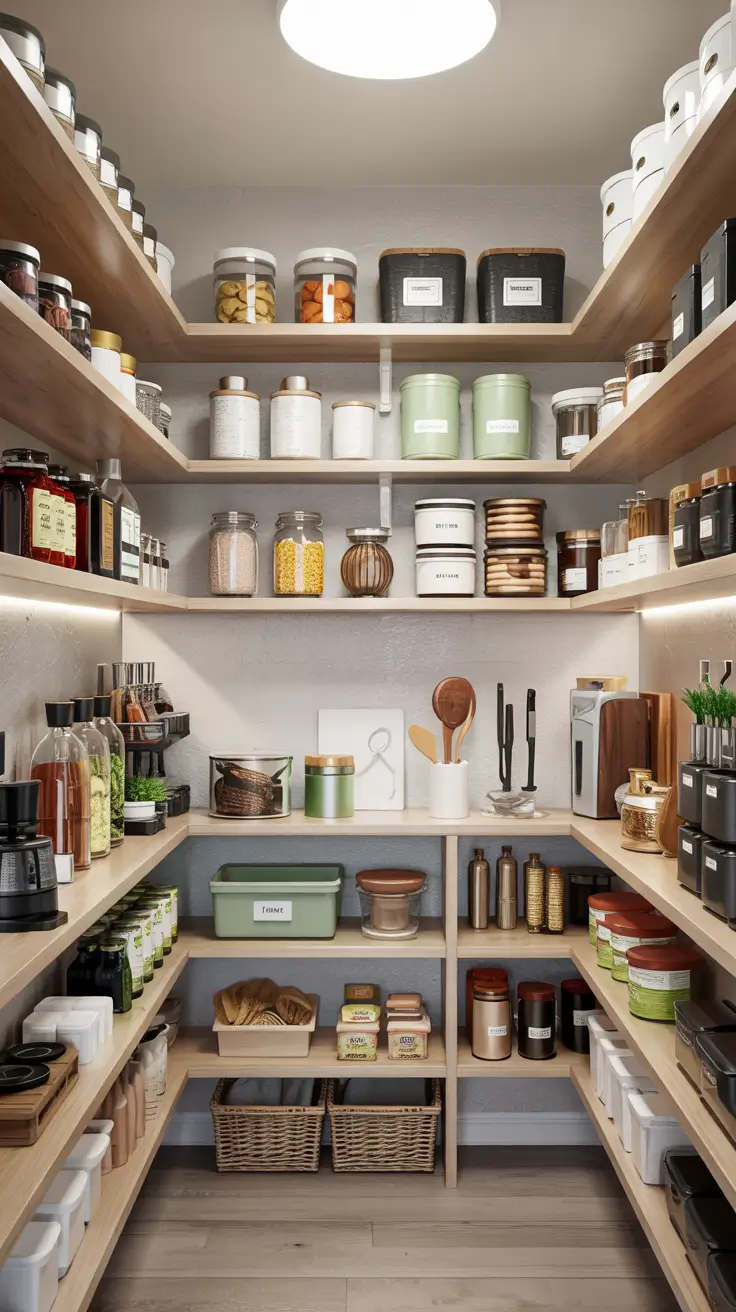
I like shelves that are 12 inches deep for most foods, with a few 16 inch shelves for bulk items like paper towels or small appliances. I add a mix of glass jars and matte containers so staples look neat without being fussy. Lighting matters here, so I include bright, even LED strips under shelves to remove shadows and make labels readable. If the pantry has space, I add a narrow countertop for unloading groceries and staging meal prep items. Open shelving also benefits from a simple color palette, because neutral walls and consistent containers make the whole room feel intentional.
I have found that open shelves only stay pretty when they are paired with clear rules. I keep the top shelves for backstock, the middle shelves for daily use, and the bottom shelves for heavy items and bins. I also recommend leaving 10 to 15 percent of shelf space empty so the pantry can breathe, because full shelves encourage messy stacking. The best open-shelf pantries look Luxury, but the real win is that you stop losing food to the back. When the system is visible, it becomes self-correcting over time.
10. Pantry Closet Renovation Ideas With Built In Storage
Pantry closet renovation ideas are perfect when you need serious function in a small footprint. I approach a pantry closet like a compact storage wall, where every inch earns its place. Built in storage helps because it removes wasted gaps, especially in narrow closets that tend to turn into unstable piles. In 2026, the most effective closet pantry renovations use a mix of adjustable shelves, pull-out trays, and door storage. The result is a pantry that feels custom even in a standard hallway or kitchen closet.
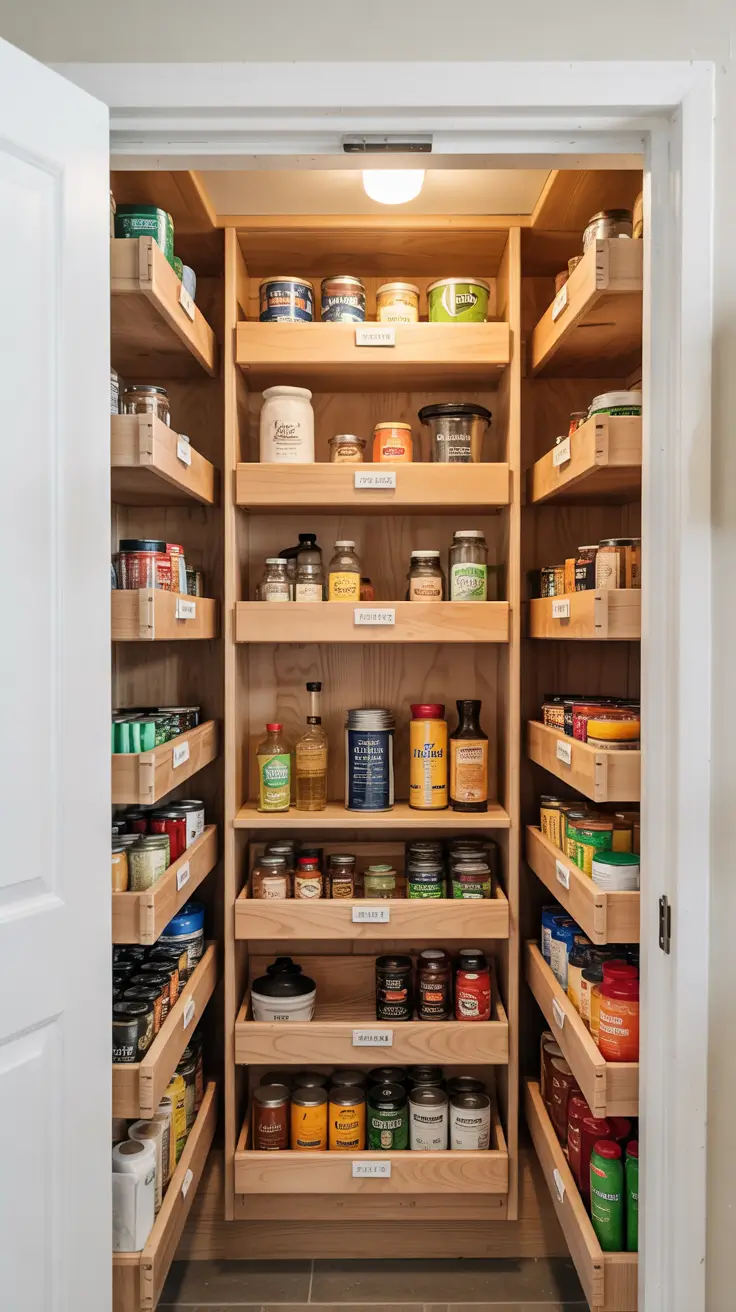
I start with adjustable shelves so the layout can change as your needs change, because rigid shelving becomes outdated fast. Then I add pull-out drawers or roll-out trays at the bottom for cans, snacks, and heavier items, since sliding access is easier than crouching and digging. Door-mounted racks are a must for spices, condiments, and small snacks, and I keep them shallow so the door still closes comfortably. If the closet is deep, I install tiered risers for cans and jars so labels face forward and nothing gets forgotten. For a clean finish, I use simple trim and a painted backing, which gives the built-in look without making it overly ornate.
Personally, I think a closet pantry is where good design makes the biggest daily difference. When the storage is built around reach and sightlines, even a tiny pantry feels organized and calm. I also like to add one small section for a household drop zone, like lunch boxes or reusable bags, because it prevents pantry overflow into other cabinets. If you are planning diy pantry renovation ideas, you can still get this built-in feel with modular components and careful measuring. The key is to plan access first, then add storage features that match how you actually use the closet.
11. Modern Pantry Renovation Ideas With Minimalist Design
Modern pantry renovation ideas in 2026 lean minimalist, but not sterile. I think of modern design as clean lines, fewer visual distractions, and smart storage that hides clutter without hiding the things you need. A minimalist pantry feels larger, even when it is not, because the surfaces look consistent and the layout is easy to read. I use this approach when a home already has modern cabinetry, or when the kitchen needs a calmer backdrop. The renovation is about reducing noise while increasing function.
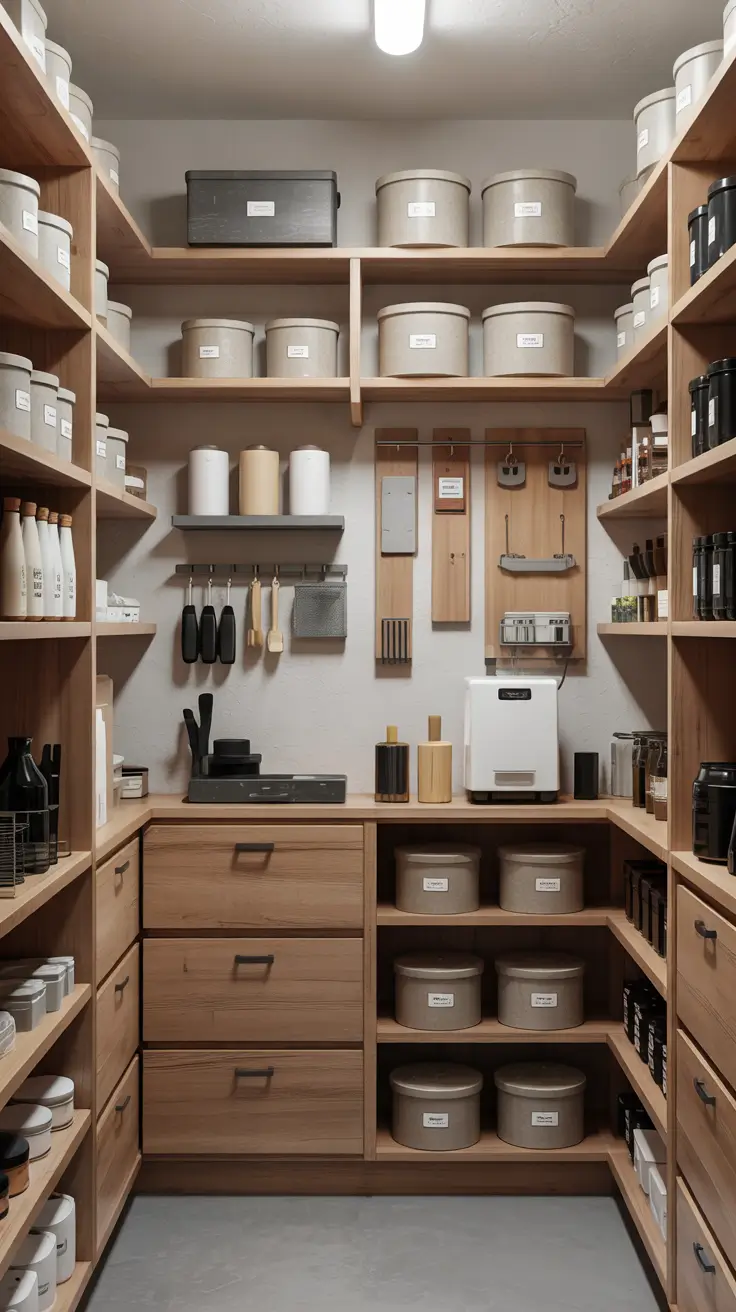
I choose flat-front doors or simple slab cabinetry when the pantry is visible from the kitchen. For open areas, I keep shelving straightforward and use matching containers so packaging does not dominate the view. I include a small integrated rail or peg system for lightweight tools like clips, labels, or measuring scoops, which keeps the counter clear. For appliances, I prefer a dedicated shelf with outlets so items like mixers or air fryers can live in the pantry but still be usable. I also like a matte finish for hardware and fixtures, because it reads modern and resists fingerprints better than high-gloss.
In my own projects, minimalist pantries are the easiest to maintain because the design encourages habits that stay tidy. When you only keep what fits the system, the pantry naturally stays organized. I also recommend a quick weekly reset, just five minutes to pull items forward and check categories, because modern design looks best when it is intentional. Modern does not mean empty, it means purposeful. If you want the pantry to feel current in 2026, this approach makes the whole kitchen feel more refined.
12. Luxury Pantry Design Ideas With High End Finishes
Luxury pantry renovation ideas are not just about spending more, they are about choosing finishes that feel cohesive and durable. I like a Luxury pantry to feel like a boutique space, with warm lighting, thoughtful materials, and a layout that makes you want to keep it organized. In 2026, high-end pantries often borrow design cues from custom closets, like integrated lighting, glass doors, and tailored storage zones. The room should look elevated, but it still needs to function like a hardworking pantry. When the finishes are premium, the pantry becomes part of the home’s design story instead of a hidden utility space.
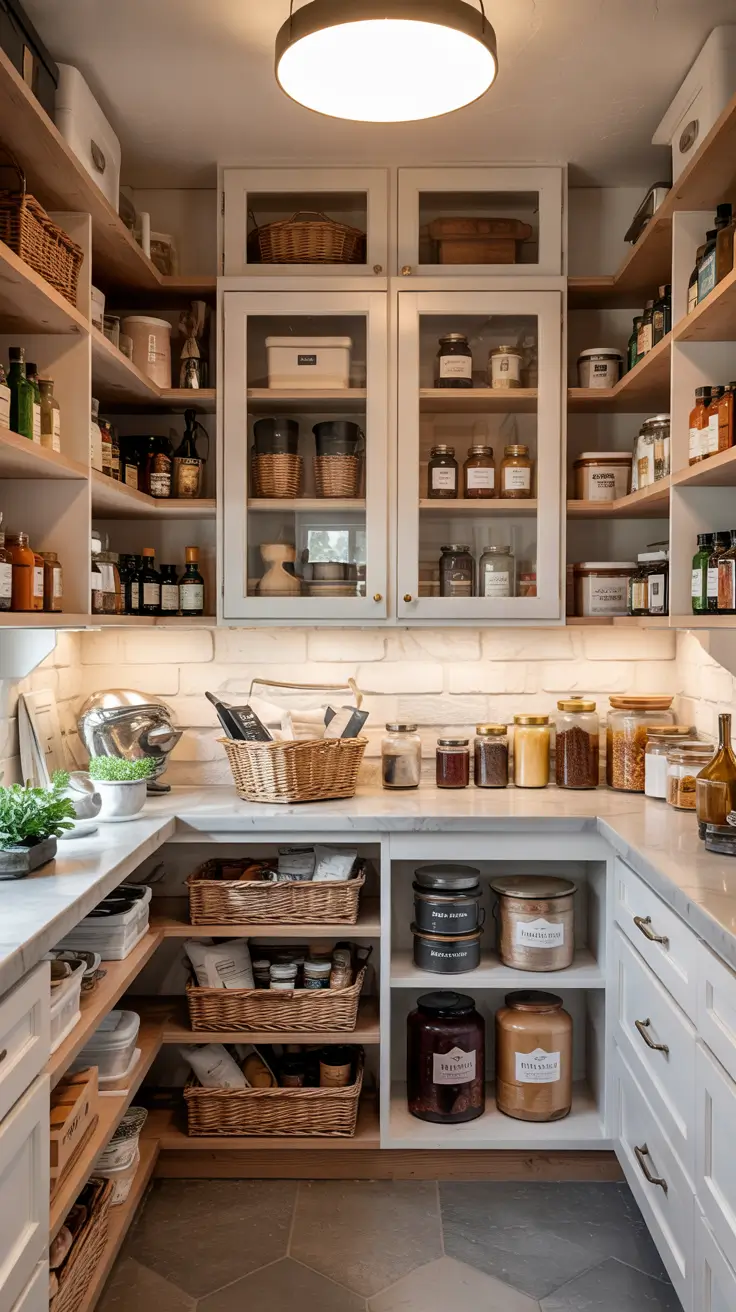
I often use wood shelving with a sealed finish, or painted cabinetry with clean trim details, depending on the style of the kitchen. Glass-front cabinet doors work well for display zones like baking jars or serving pieces, while closed cabinetry hides bulk items and keeps the look calm. I add layered lighting, usually a warm ceiling fixture plus LED strips under shelves, because lighting is what makes a pantry feel high-end instantly. Hardware matters, so I pick solid pulls with a comfortable grip and a finish that matches the kitchen. A small countertop in stone or quartz gives you a staging space and adds the same premium material language as the rest of the kitchen.
From my perspective, the best Luxury pantry is the one that still feels easy on a busy weekday. I keep a dedicated zone for snacks and breakfast so kids or guests can find what they need without disturbing the whole system. I also like to include one open shelf for a few attractive baskets, because texture makes the space feel designed instead of purely functional. A high-end pantry should not require perfection, it should support real life. If you choose just two upgrades, I would prioritize lighting and custom storage, because those create the biggest daily impact.
What I would add next in this section is a clear plan for protecting the finishes over time, like washable paint, sealed wood, and a simple labeling system that matches the elevated look. I would also include a small checklist of Luxury details that are worth it, such as soft-close hinges, integrated outlets, and a pull-out trash and recycling solution. Finally, I would add a note about balancing display and storage, so the pantry feels curated without becoming impractical. That balance is what keeps luxury from turning into clutter.
13. Diy Pantry Renovation Ideas Using Simple Materials
Diy pantry renovation ideas are a strong fit for 2026 because you can get a big transformation with basic materials and smart planning. I focus on changes that improve access, lighting, and durability without requiring specialized tools. A Diy approach works best when the layout is simple and the goal is to create a system, not a showpiece. Even a small refresh can make the pantry feel new if the storage is planned well. The key is to keep the design clean and realistic for your skill level.
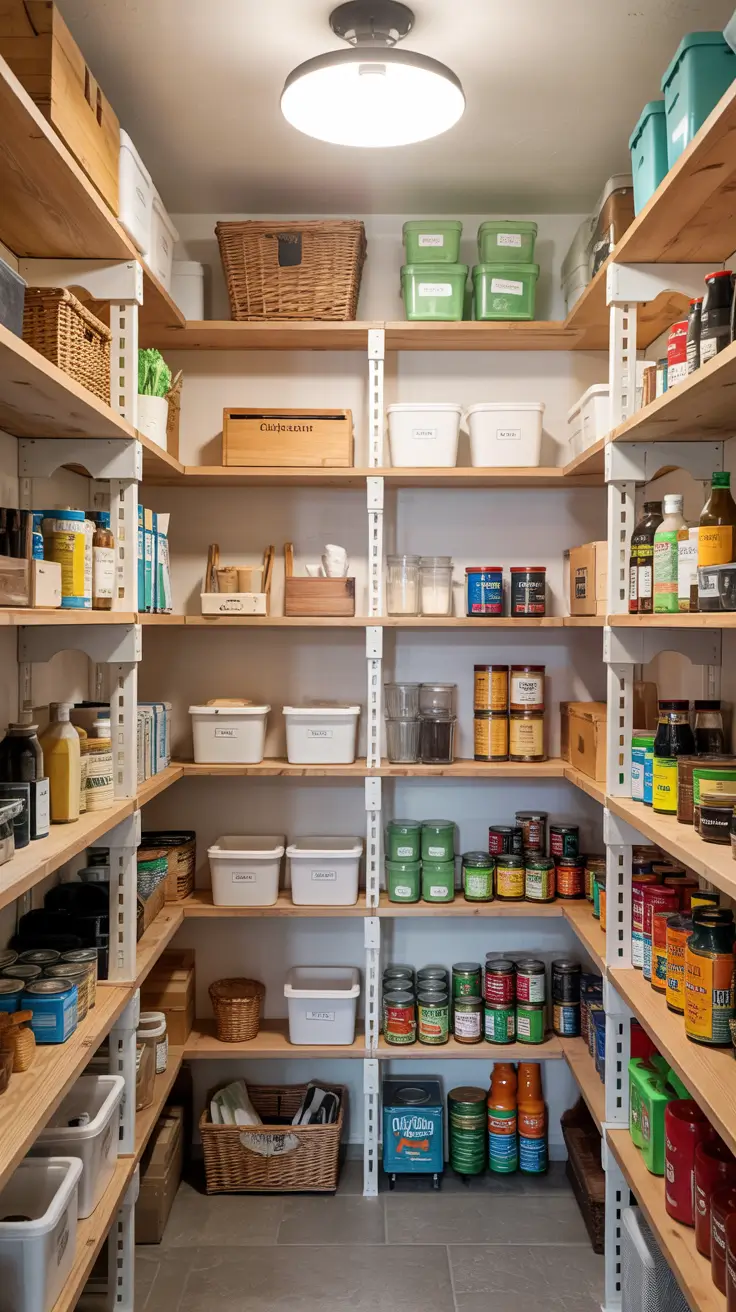
I often use pre-cut shelving boards, shelf brackets, and peel-and-stick wall protection behind high-use areas. For storage, I like inexpensive clear bins, stackable can organizers, and a few turntables that instantly improve reach. Painting the pantry a light neutral color helps it feel brighter, and swapping in a stronger light fixture makes a surprising difference. I also add basic trim or edge banding to shelves so they look finished and resist chipping. If you want a more custom look, I use consistent container styles and simple printed labels, which create order without expensive cabinetry.
I have done enough pantry makeovers to know that Diy succeeds when you measure twice and design for how you live. I always map the categories first and decide what needs to be reachable daily, then I build the shelves around that plan. I also recommend choosing materials that can handle scrapes and spills, because pantries are high-contact spaces. A Diy pantry can still look Luxury if the lines are straight and the storage is consistent. When the system works, the pantry stays organized longer, which is the real payoff.
14. Walk In Pantry Ideas With Zones For Food And Appliances
Walk in pantry renovation ideas become far more practical when you create zones, especially if you store both food and appliances. I treat zoning like a small workflow plan, so you can unload groceries, prep meals, and grab snacks without crossing the room repeatedly. In 2026, the best walk in pantries feel like a mini back kitchen, with clear areas for dry goods, beverages, small appliances, and backstock. This approach also reduces visual clutter, because each category lives in a defined space. When zones are clear, the pantry stays tidy with less effort.
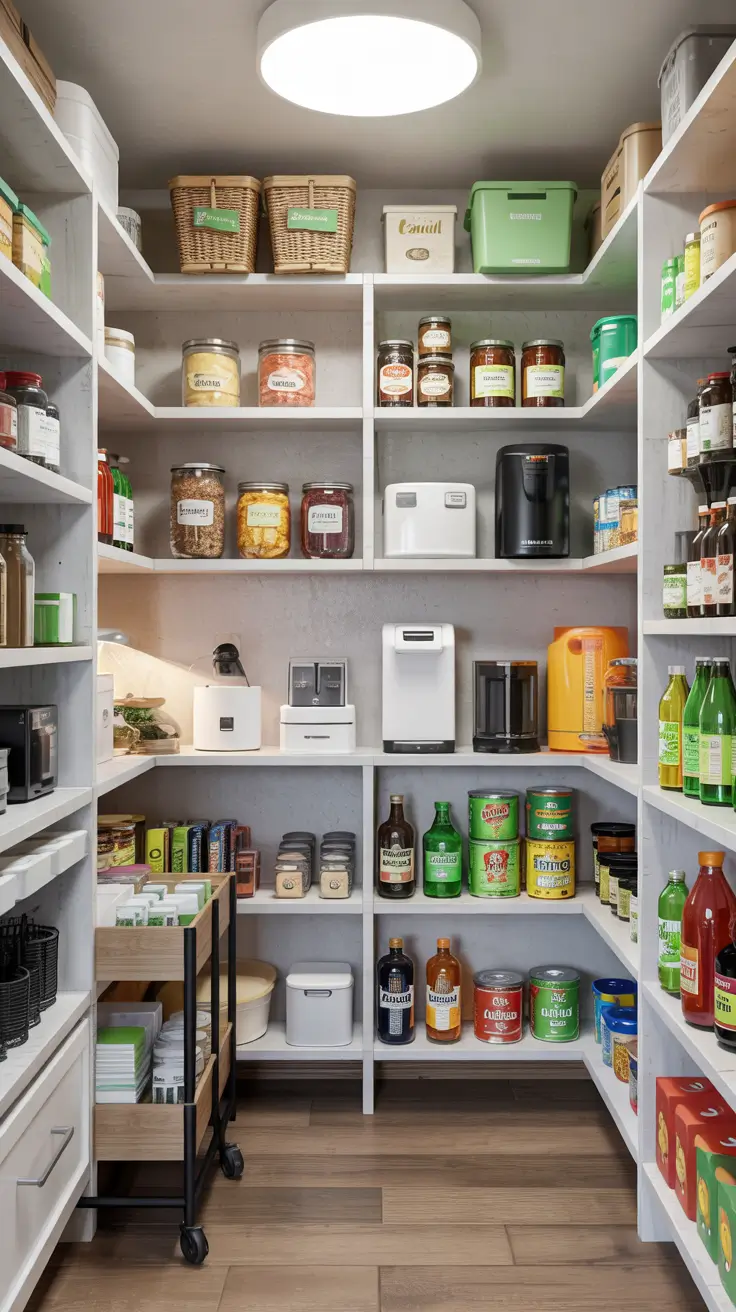
I set up a dry goods zone with medium-depth shelves for grains, cans, and jars, and I keep the labels facing forward for quick scanning. For appliances, I dedicate a shelf or counter run with outlets, so items like a blender, toaster, or mixer can be plugged in and used without moving them far. I add a beverage zone with sturdy shelves that can handle weight, plus bins for coffee and tea supplies to keep it contained. A backstock zone near the top is where I place extra paper goods and bulk buys, since those are accessed less often. If space allows, I include a small cart or rolling shelf so you can move items to the kitchen when you are cooking.
In my opinion, zoning is the easiest way to make a walk in pantry feel calm and Luxury without expensive materials. I like to keep a simple rule that nothing crosses zones, so snacks do not drift into baking and appliances do not get shoved onto food shelves. I also find that a small note on the inside of the door listing zones helps everyone in the household maintain the system. A well-zoned pantry supports real routines, which is why it feels so much more functional than a single wall of shelves. If you want one upgrade that makes everything smoother, zoning is it.
What I would add next in this section is a short example zone map with suggested shelf heights, plus guidance on ventilation for appliances that generate heat. I would also include a safety note about not overloading shelves and using dedicated circuits if you plan to run multiple appliances. Finally, I would add a suggestion for managing overflow, like one labeled bin for items that do not have a home yet, so clutter does not spread. Those details help the zoning plan stay practical long-term.
15. Corner Pantry Renovation Ideas With Lazy Susan Storage
When I renovate a corner pantry, I treat the deepest area as the main problem to solve, because that is where items disappear. A Lazy Susan system turns that hard-to-reach corner into active storage, so the space works like a display instead of a cave. I like using two-tier or three-tier round turntables that match the shelf depth, and I plan clear zones for oils, sauces, and snacks. The design feels clean when the shelves are consistent and the containers are grouped by use, not by brand. For a modern 2026 look, I keep the finishes simple, usually light wood or matte painted shelving with a calm, neutral wall color.
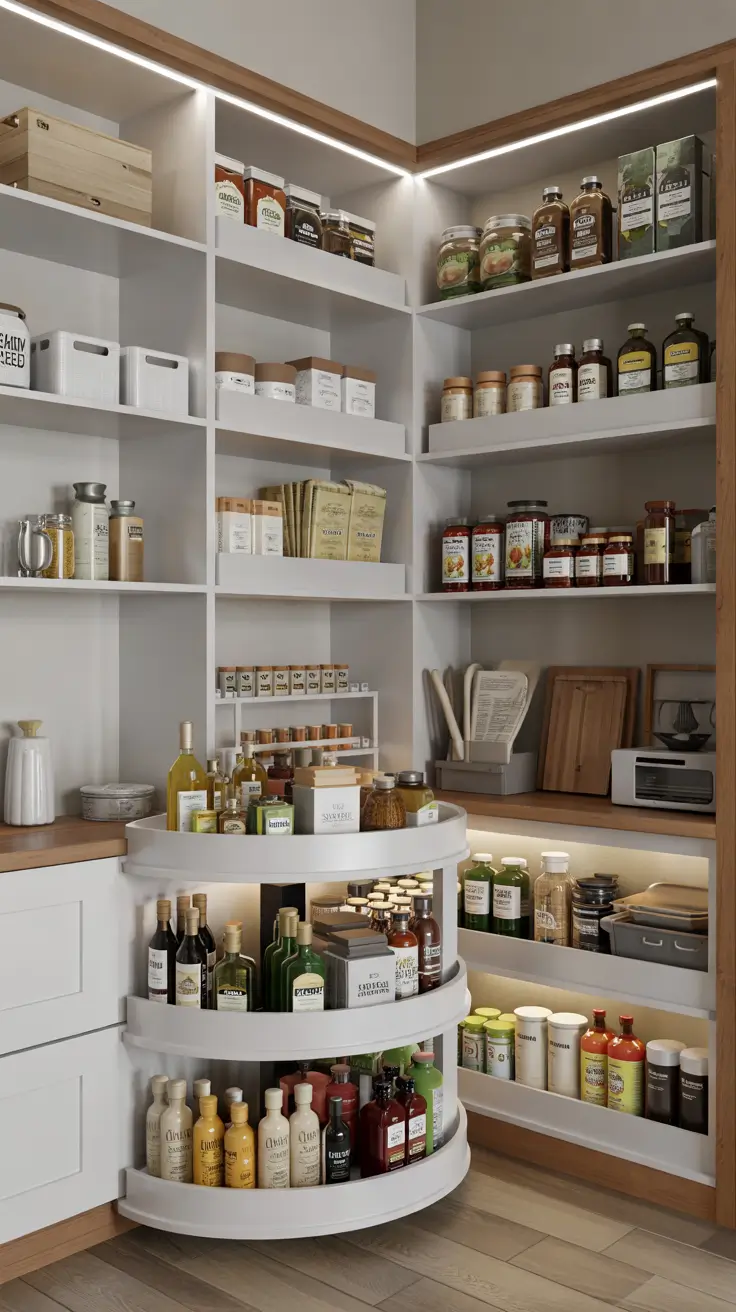
The key pieces are the Lazy Susan units, sturdy adjustable shelves, and a few vertical dividers for trays and cutting boards. I include shallow bins for packets and small jars because they stop the turntable from turning into a jumble. I also add a narrow pull-out rack near the corner for spices or wraps, since it uses the last few inches that most corners waste. If the pantry is open to the kitchen, I prefer matching hardware and shelf material to the kitchen cabinetry so the corner pantry looks planned, not added later. A small lip on the shelf edge is worth it, because it prevents bottles from tipping when the turntable spins.
In my own projects, the biggest improvement is the reduction in duplicate buying, because you can finally see what you already own. I also find that families keep the pantry organized longer when the corner is easy, because no one has to unload half the shelf to reach one item. I follow a simple rule that many organizers repeat in major home design media: store everyday items between waist and eye level, and keep backstock higher or lower so the prime zone stays usable. When I apply that rule to a corner pantry, the Lazy Susan becomes the everyday zone, and it stays tidy with minimal effort. The end result feels like a small upgrade, but it changes how the whole kitchen runs.
To complete this section, I would add labeled containers that fit the turntables, plus one clear inventory zone for backstock. I would also add a small LED puck light or slim bar light above the corner shelves so the depth never looks dark. If the corner pantry has a door, I would include a door-mounted rack for lightweight items to free shelf space. Finally, I would add a simple measuring step during planning, because Lazy Susan sizing mistakes are the most common reason corners still feel awkward.
16. Pantry Closet Ideas With Sliding Doors And Hidden Storage
A pantry closet can look sleek in 2026 when the doors do more than just close the mess, and sliding doors are one of the cleanest ways to modernize it. I like sliding doors because they do not swing into tight kitchens, and they make the pantry feel like part of the wall instead of a separate room. The hidden storage concept works best when the interior is planned like a small retail aisle, with consistent spacing and clear zones. I aim for a calm, modern feel with warm neutrals, soft wood tones, and a few glass or acrylic containers that keep visual noise low. If you want pantry closet renovation ideas that feel high-end without changing the floorplan, this is one of my favorite directions.
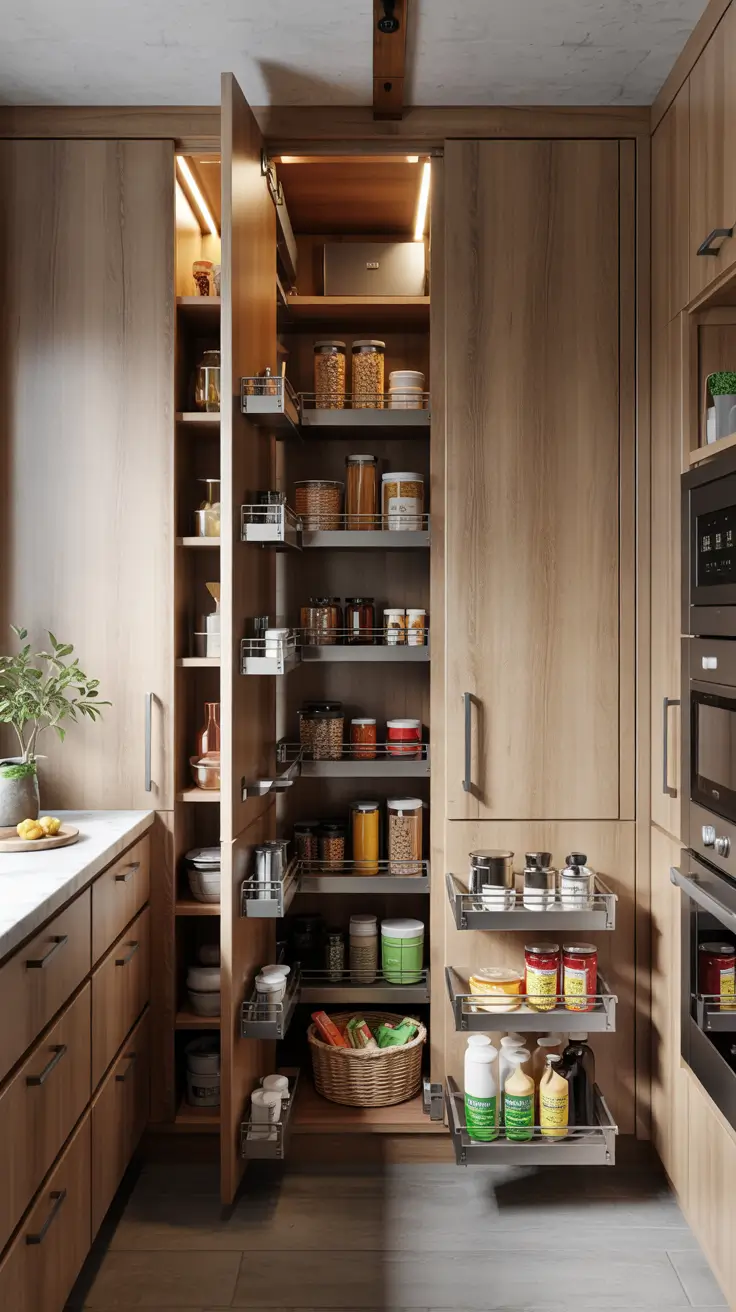
Inside the closet, I use a mix of adjustable shelves, pull-out drawers, and narrow vertical storage for baking sheets and small appliances. Sliding doors look best when the track hardware is minimal, and the door finish matches the kitchen cabinetry or wall color. I often include hidden storage by building shallow shelves on one side for small items, then deeper shelves on the other side for appliances and bulk goods. If the closet is narrow, I add a full-height pull-out pantry unit to keep everything reachable without stepping inside. Soft-close drawer slides and simple matte handles are small details, but they make the pantry feel intentionally designed.
From experience, the biggest win is that sliding doors encourage people to actually use the pantry space daily, because it feels effortless to open. I also like that this approach supports a more minimal kitchen countertop, since appliances can live in the pantry closet without cluttering the kitchen. A practical tip I follow is to keep the most-used items in pull-outs rather than fixed shelves, because pull-outs reduce the need to bend and search. That small ergonomic change matters in real life, especially in busy family kitchens. When the interior is organized and the doors glide smoothly, the pantry closet stops feeling like storage and starts feeling like a functional extension of the kitchen.
To strengthen this section, I would add a clear plan for door style selection, like flat panel for modern or lightly detailed paneling for transitional homes. I would also add motion-sensor lighting inside the closet so the space feels bright the moment you open it. If sound is a concern, I would include soft bumpers and a quality track system to prevent rattling. Finally, I would add a small section for charging devices if you store a cordless vacuum or rechargeable appliances inside.
17. Luxury Pantry Renovation Ideas With Lighting And Glass Details
Luxury pantry renovation ideas in 2026 are less about showing off and more about making the pantry feel like a boutique space you enjoy using. I design luxury pantries with layered lighting, refined finishes, and a few glass details that make storage look curated instead of chaotic. Glass-front cabinets or glass pantry doors can make the space feel airy, especially when paired with warm LED lighting. I also like adding a small counter inside the pantry if space allows, because it creates a working zone for decanting, coffee prep, or sorting groceries. The overall look is modern and polished, but still practical for everyday use.
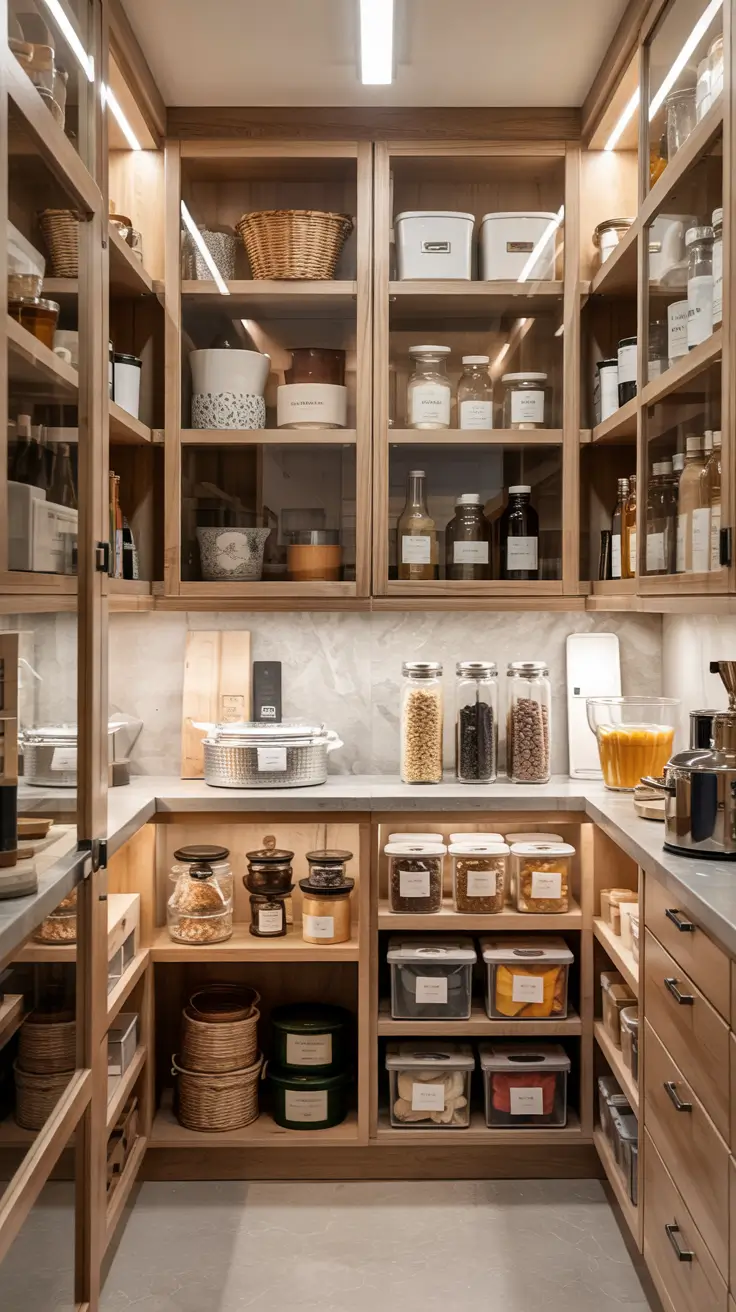
Lighting is the first luxury element I plan, and I use a combination of overhead lighting and shelf lighting for depth. Under-shelf LED strips make containers easy to see and add a soft glow that elevates the whole room. Glass details work best when the interior is organized with consistent containers, like clear canisters for pasta and grains, and matching labels. I include a mix of closed storage for bulky items and glass-front storage for the items that look neat, like jars, cups, and serving pieces. Finishing touches like a stone or quartz counter, a framed mirror, or a small piece of art can make the pantry feel like a designed room rather than a utility closet.
In practice, the luxury features that matter most are the ones that reduce friction, like excellent lighting and easy access to storage zones. I have seen pantries that look stunning but fail because the shelves are too deep, the lighting is harsh, or there is no clear place for backstock. My personal standard is that luxury should support routines, like weekly grocery unloading and quick meal prep, not fight them. Many designers emphasize that good lighting is foundational to a room feeling high quality, and I agree because it changes both function and mood. When a pantry is bright, calm, and visually consistent, it is easier to keep it organized without constant effort.
To round out this section, I would add a mini beverage zone concept, like a coffee station shelf with mug storage and space for beans and filters. I would also add a ventilation note if you store small appliances, because heat buildup can become a real issue. If the pantry has enough width, I would include a narrow runner rug for comfort and sound control, chosen in a washable material. Finally, I would add guidance on selecting LED color temperature so the pantry lighting matches the kitchen and looks natural.
18. Functional Pantry Renovation And Design Ideas For Families
Pantry renovation and design ideas for families have one main goal in my mind – reduce daily stress by making storage obvious and easy for everyone. In a family pantry, I focus on zones that match real habits, like snacks, breakfast, lunch packing, baking, and backstock. I design with visibility and reach in mind, so kids can access kid-friendly items while adults keep bulk and sharp items higher. The most functional pantries feel almost like a small grocery aisle, with clear categories and enough space to put things back quickly. In 2026, I also see more families wanting flexible layouts that can adapt as kids grow and routines change.
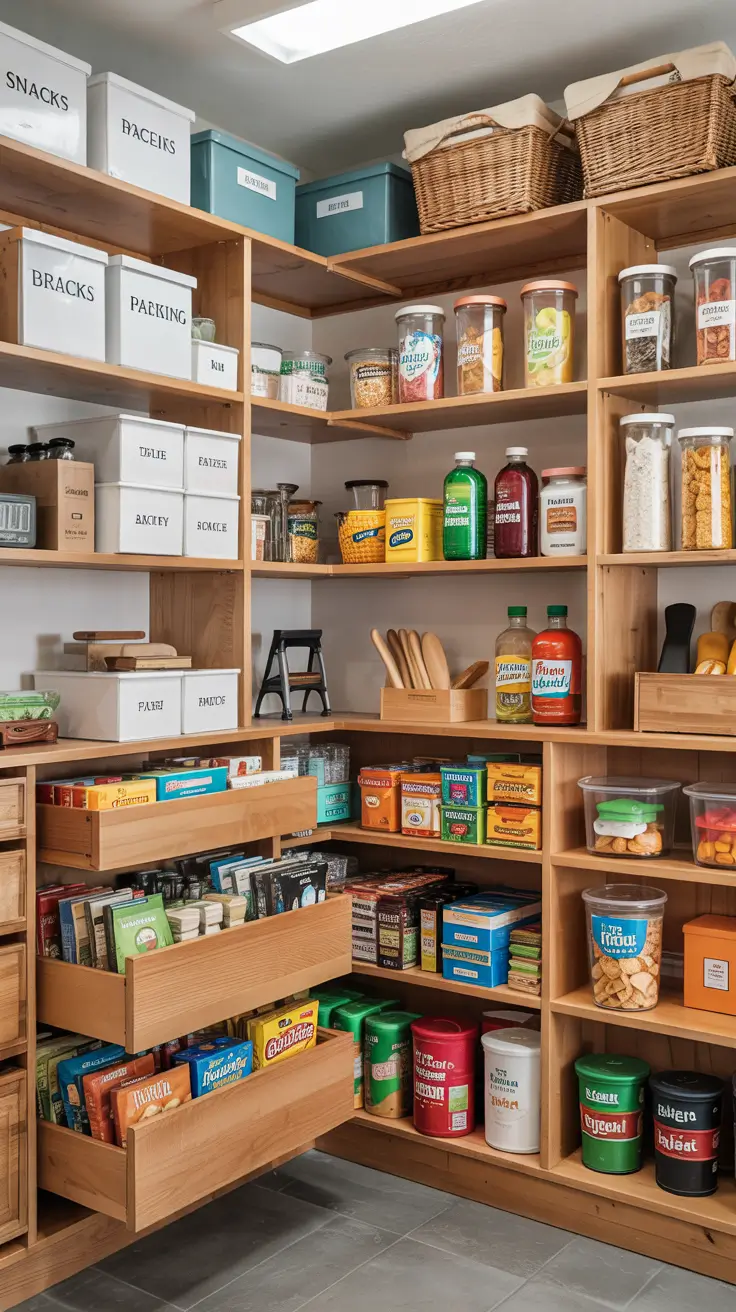
The furniture and storage pieces that matter most are pull-out drawers, labeled bins, and adjustable shelving. I include deep drawers for chips and snacks, because they prevent crushed bags and messy stacks. For lunches, I add a dedicated shelf with baskets for bars, applesauce pouches, and reusable bags, so the morning routine stays fast. I also like using clear containers for cereal and staples, because they help you see what is running low without opening boxes. A small step stool stored neatly in a corner is a practical addition that supports independence and keeps the pantry safer.
From my experience, the best family pantry is not perfect, it is forgiving. I plan for mess by using bins that can be pulled out and wiped down, and I keep a small empty zone for overflow after shopping trips. One of the most useful habits I recommend is a quick weekly reset, where you move older items forward and check expiration dates, because it prevents waste without taking much time. Many professional organizers talk about keeping like items together and using clear categories, and that advice works especially well for families where multiple people shop and cook. When everyone can see the system, the pantry stays organized longer and the kitchen runs smoother.
To improve this section further, I would add a simple family labeling strategy, like big category labels plus smaller labels only where needed. I would also add a plan for allergy-safe or special diet zones if your household needs them. If space allows, I would include a small message board or checklist inside the pantry for staples and shopping notes. Finally, I would add a container sizing tip so baskets and bins fit shelves without awkward gaps.
19. Diy Pantry Renovation Ideas For Renters And Small Kitchens
Diy pantry renovation ideas can work beautifully in 2026 without permanent changes, especially for renters and small kitchens. I approach renter-friendly pantry upgrades with a simple rule – improve storage and visibility while keeping everything removable. This can mean tension rods, peel-and-stick labels, freestanding shelving, and over-the-door organizers that do not damage walls. The goal is to make a tiny pantry feel intentional and modern, even if you cannot replace cabinetry or add built-ins. When done well, Diy upgrades can look clean and designed, not temporary.
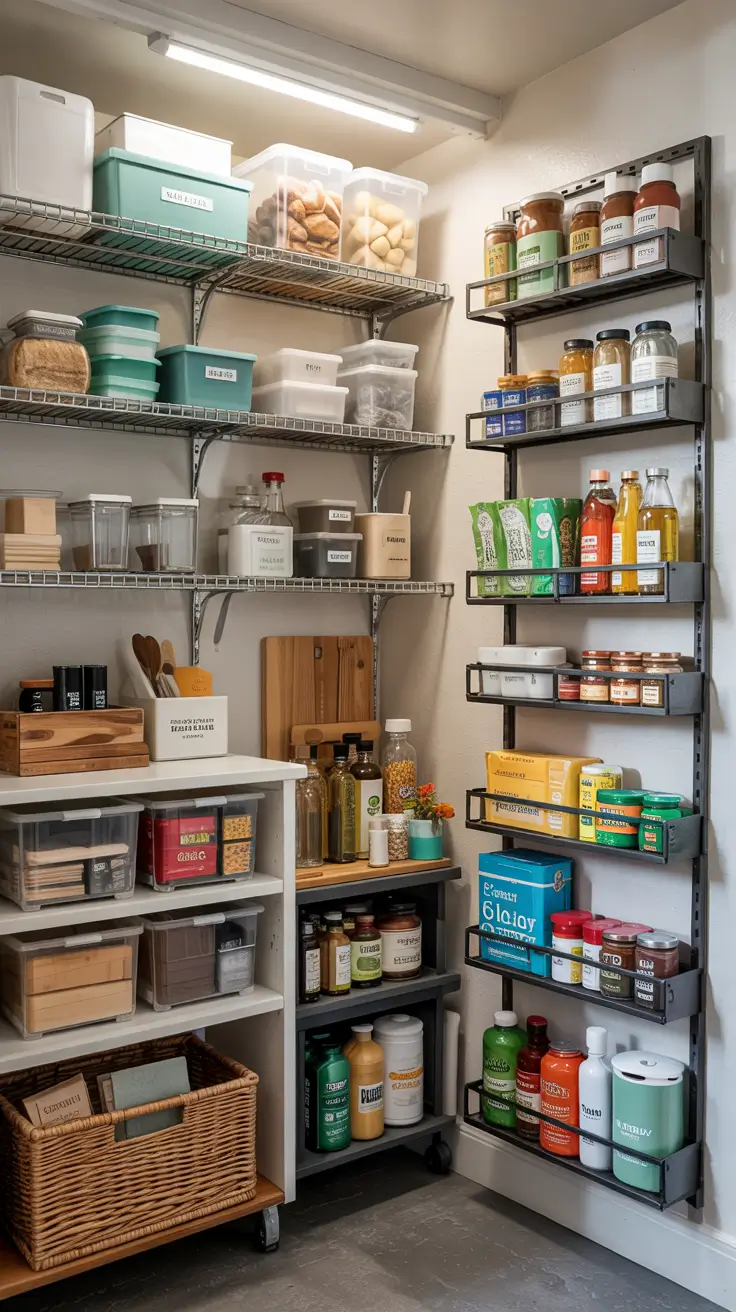
The best renter-friendly items include adjustable wire shelving, stackable clear bins, and slim rolling carts that tuck into narrow gaps. I often use command-style hooks for lightweight organizers and a door-mounted rack for wraps, spices, or snacks. If the pantry is a small cabinet, I add shelf risers and turntables to create layers, which instantly increases usable space. Matching containers and a consistent label style help the pantry look modern even when the storage solutions are budget-friendly. I also like adding a small battery-powered light inside a dark cabinet, because it changes the experience immediately without wiring.
In my experience, the biggest mistake with Diy pantry upgrades is buying random organizers before measuring shelves and planning zones. I recommend starting with a quick inventory and deciding what categories you need, then choosing storage pieces that fit those categories. A practical tip I rely on is to keep heavy items low and use lighter items higher, because renter-friendly shelving can shift if overloaded. This approach keeps things safe and prevents frustration when the pantry gets used daily. When the plan is simple and the tools are basic, renters can create a pantry that feels calm and functional without breaking lease rules.
To make this section even stronger, I would add a mini checklist for measuring shelf depth, door clearance, and the widest item you store. I would also add a suggestion for removable shelf liner to protect surfaces and make cleaning easier. If the kitchen is very small, I would include a note about using matching storage in nearby cabinets to extend the pantry zone beyond one closet. Finally, I would add advice on choosing containers that nest or stack so the system can move with you.
20. Walk In Pantry Renovation Ideas With Farmhouse And Modern Mix
Walk in pantry renovation ideas are evolving in 2026, and I see a strong trend toward mixing farmhouse warmth with modern simplicity. The farmhouse element adds comfort through wood tones, classic textures, and a welcoming feel, while modern design keeps lines clean and storage efficient. I like this mix because it fits many home styles and prevents the pantry from feeling too sterile or too themed. A well-planned Walk in pantry can include a small counter, open shelving, and space for appliances while still feeling airy. The full-room view matters, so I design the layout to look balanced from the doorway, not just functional on paper.
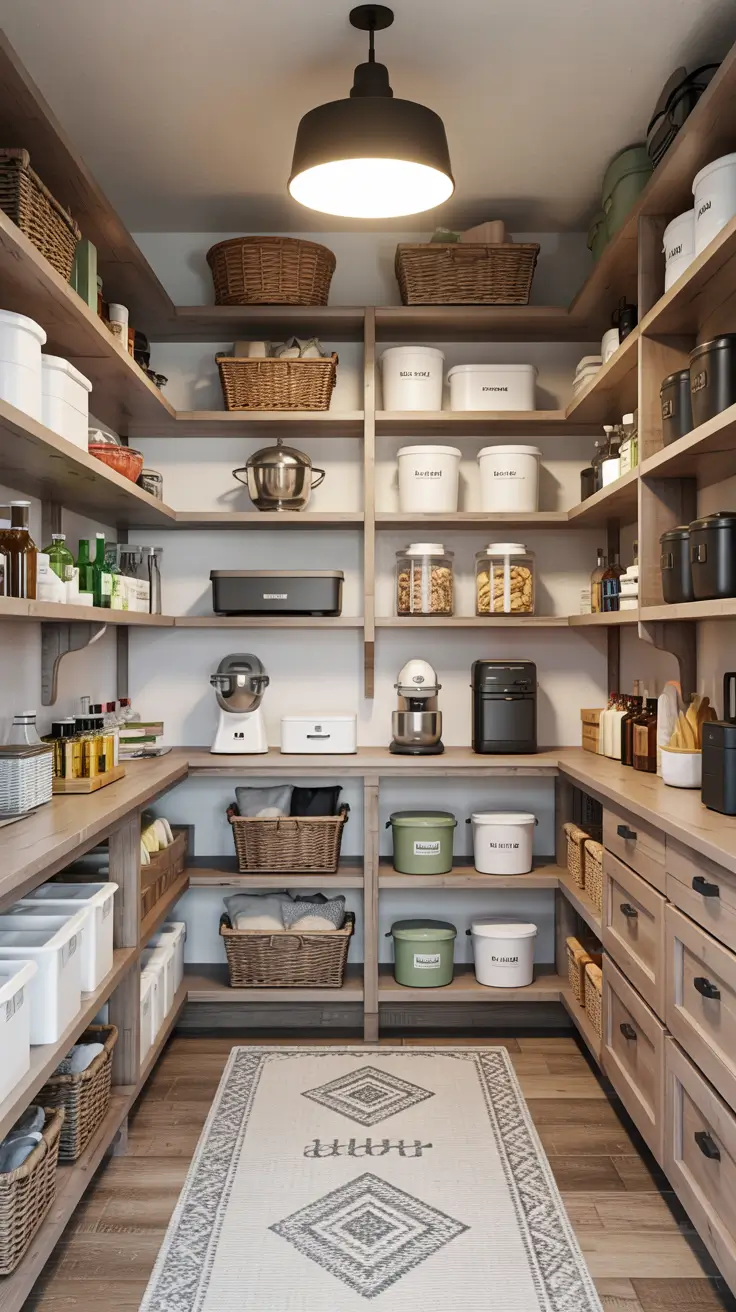
For furniture and design elements, I often use shaker-style cabinetry or simple open shelves paired with matte black or brushed metal hardware. A butcher-block or light stone counter works well as a bridge between farmhouse and modern. I include woven baskets for warmth, but I balance them with clear containers and straight-edged bins for a clean look. If space allows, I add a small appliance garage or dedicated shelves for mixers and air fryers, so the pantry supports daily cooking without cluttering the kitchen. A classic patterned runner and warm lighting can add farmhouse charm while keeping the overall space modern.
I have found that this style mix stays popular because it feels timeless, and that matters when you are renovating for the long haul. The modern side of the design helps the pantry stay organized, while the farmhouse touches make it feel like a room you enjoy entering. A practical tip I use is to keep decorative items minimal and focus on a few durable textures, because pantries get touched constantly and need easy cleaning. Designers often emphasize that cohesion comes from repeating materials and finishes, and I follow that by matching wood tones and metals across shelves, lighting, and hardware. When those details align, the pantry looks curated even with everyday groceries on display.
To enhance this section, I would add a layout note about aisle width so two people can move comfortably inside the pantry. I would also include guidance on choosing a washable rug and sealed wood finishes to handle spills. If the pantry has a window, I would add a simple Roman shade to soften the room without blocking light. Finally, I would add a plan for hiding less attractive packaging using matching bins so the modern side of the design stays clean.
21. Future Ready Pantry Renovation Ideas For 2026 Homes
Future-ready pantry design in 2026 is about flexibility, smarter storage, and small upgrades that support changing routines. I plan these pantries with adjustable systems, strong lighting, and zones that can shift as your household needs evolve. This is where I blend pantry renovation and design ideas with modern convenience, like charging space for devices, appliance storage that is easy to access, and durable finishes that handle heavy use. A future-ready pantry can be a closet or a Walk in room, but it should always feel adaptable. The goal is to avoid a renovation that looks great now but feels outdated in a few years.
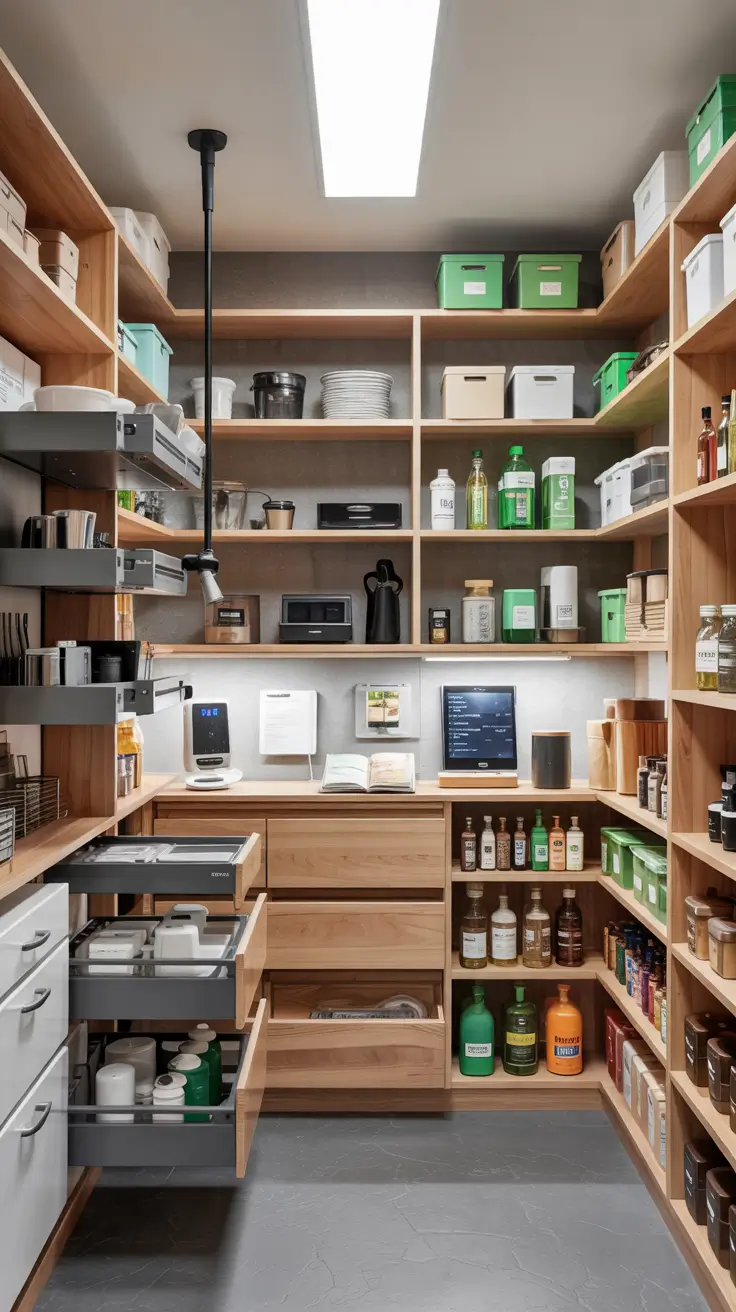
The core elements are adjustable shelves, modular drawers, and a clear backstock strategy that prevents overbuying. I include pull-out trays for small appliances, because they keep countertops clear and reduce lifting. For lighting, I prefer efficient LED solutions with a motion sensor so the pantry turns on instantly and saves energy. I also like adding a small planning zone, such as a narrow shelf for a tablet, a notebook, or a grocery list station, because it supports weekly routines. Durable materials matter here, so I choose easy-clean paint, wipeable surfaces, and hardware that holds up to constant opening and closing.
In my own planning, the most future-proof choice is an organizational system that can be reconfigured without replacing everything. I also recommend leaving a little breathing room on shelves, because a packed pantry is harder to maintain and less flexible. A practical approach I use is to create one flexible shelf per zone, so you can adjust for seasonal items, bulk purchases, or new appliances without disrupting the whole layout. Many design pros emphasize that a home should support how you live, and I think that is especially true in storage spaces where habits change. When the pantry is built for change, it stays useful, and the renovation feels worth it year after year.
To expand this section, I would add a suggestion for a simple home inventory system, like consistent labels and a monthly quick check of staples. I would also include a note about child safety, such as keeping heavy items low and securing tall units if needed. If your pantry includes appliances, I would add guidance on outlet placement and cord management for a cleaner look. Finally, I would add an optional cooling and ventilation note for homes that store bulk goods or use the pantry as a beverage zone.