Every time I prepare open kitchen remodel ideas 2026, I will always begin with a single question: how do we make this space feel lighter, more connected and a place that we can live in day by day. The other question I put across is how to convert the conventional designs into actual open concept kitchen remodel concepts that would flow with ease in cooking, eating and relaxing in the same space. In my case, humans desire the visual drama of kitchen remodel concept before and after design open concept, yet they also require practical solutions that would fit their budget, family lifestyle, and existing walls. I believe that it is possible to transform any kitchen into a much bigger and efficient space without adding a single square foot by simply changing the layout floor plan and traffic flow. This article will take us through seven unique paths that demonstrate how to make a kitchen open with light, materials, smart planning and family friendly options.
1. Transform Your Home With Open Kitchen Remodel Ideas 2026
I visualize open kitchen remodel ideas 2026 as the homes that are spacious, open, and easily accessible. I begin by questioning how an open concept kitchen remodel ideas approach could enhance everyday activities, such as mornings coffee and evening snacks. I am particularly concerned with the transition of the kitchen into the dining living room remodelling, to effectively make the space look like a single experience rather than rooms. Within my projects, I am able to observe that even slight open kitchen remodelling ideas can radically alter the degree to which a home is experienced without involving square footage. I always imagine how layout floor plans can facilitate gathering, cooking, and relaxing in a single fluid.
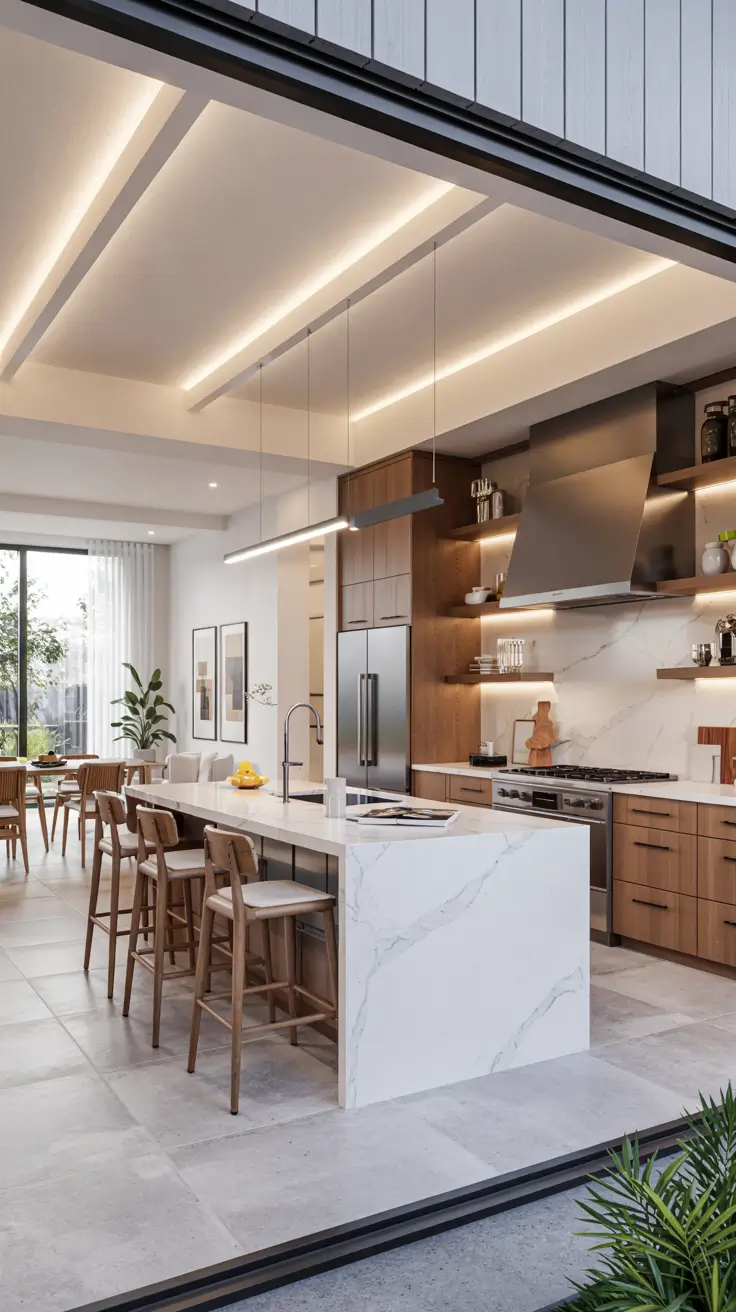
When doing this kind of remodel, I prefer to incorporate spacious Floor islands as the center of the room, bar stools, storage closets, and embedded power outlets. I mix base cabinets and limited kitchen remodel designs with open shelf to ensure that the room is visually light and still usable. My combination would be a blend of warm wood, soft white cabinets and a hardy quartz top that will sustain the day to day activity. In the case of flooring, I would use a continuous floor, such as wide plank wood or luxury vinyl that extends into the kitchen, dining and living areas to enhance the open concept. I would also put emphasis on layered lighting where recessed ceiling lights, pendants above the island and a few wall sconces would keep the open kitchen space comfortable during the day and night.
As per my experience, the most effective open kitchen remodel ideas 2026 are focused on a combination of beauty and functionality instead of pursuing trends in isolation. I have witnessed homeowners falling in love with fancy finishes that appear great on photos but are difficult to maintain and, thus, I always discuss cleaning and durability. Quality task lighting and good ventilation in large open kitchens are emphasized by many American designers, and I completely agree with them. I can see that once we get the fundamentals right, in terms of layout, storage and lighting, people will cook more and experience a greater sense of attachment to family and friends. It is at this stage that open concept kitchen remodel ideas really make a difference in not only the space, but also the style of living that people have.
Additional focus on acoustics and sound control in open formats would be added in this section as well since cooking sounds can spread easily into nearby areas. I also recommend soft furnishing in the dining and living room such as curtains, upholstered seating and flooring that absorb sound without interfering with the style. I also believe that it is helpful to add how intelligent appliances and concealed charging points can make the open kitchen look neat. Lastly, I would elaborate on the planning of outlets, switches, and under cabinet lighting early in the process to ensure that the end product is what was originally proposed.
2. Embracing The Open Concept Kitchen Revolution
As I internalize the open concept kitchen revolution in a project, I begin by reading the whole main floor as a single volume other than as discrete rooms. I also consider the way people travel in and out of the kitchen, and between the dining and living rooms and the walls that could be targeted with a Remove wall approach. I have noticed that a single strategic structural shift can open the door to the possibility of an open concept that is not forced. I ensure that every new opening lines follows up with windows, sightlines, and loops to make the composition purposeful. I would also like to make the kitchen a part of the social space, rather than a workspace in an open concept.
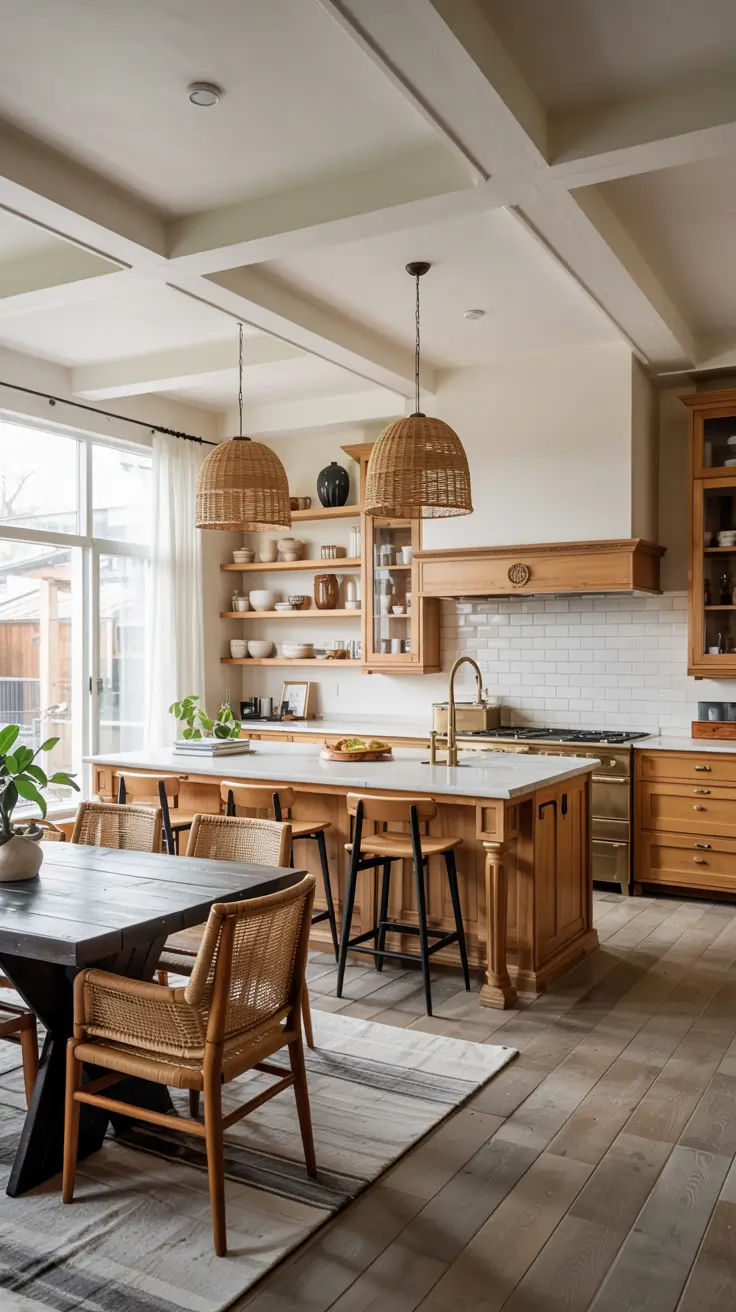
In the case of furniture and fixtures, I prefer a central peninsula or island which clearly defines the kitchen yet does not enclose it. I have fitted out cabinetry that blends with the colors in the living and dining rooms, hence the changing is smooth. I like to combine closed cabinets with bulk storage and open shelves with curated displays to avoid visual clutter. To support the flow I prefer to select a dining table that matches to the island and match the dining chairs with bar stools to provide a cohesive appearance. Even with the appliances, I would attempt to keep the refrigerator and pantry storage a little out of view of the direct line of sight to make the open concept seem more of a fashionable living room than a workspace.
According to me, the greatest benefit of open concept kitchen remodel ideas has to do with their promotion of togetherness and flexibility. I have observed families preparing meals with children doing their homework on the dining table and friends sitting around the island without the feeling of being sidelined. American lifestyle magazine interior editors tend to emphasize this social feature as the primary advantage of open plans, and I observe it in practice in the real houses. Meanwhile, I never fail to mention the possible negative aspects such as the spread of noise and smells, in order to be able to discuss the appropriate ventilation and considerate layouts. Once these problems are resolved, the open concept can be a daily luxury as opposed to a tradeoff.
I would also include that this section can refer to zoning strategies that would ensure that the open space remained functional and serene. I prefer to alternate various rug groups, minor ceiling variations, or lighting variations to establish the areas of cooking, eating, and relaxation. The advice can be made practical by adding information about traffic flow, including ensuring that there is a comfortable walkway between the island and the perimeter cabinets. How open concept designs may facilitate aging in place is also worth mentioning, as often fewer walls translates into easier mobility and better sight throughout the house.
3. Stunning Open Concept 1970s Kitchen Remodel Ideas
I imagine when I check open concept 1970s kitchen remodel ideas, I will have a chance to renovate old layouts and preserve a certain amount of the old charm. Homes constructed in the 1970s had smaller boxed kitchens that were not connected to the dining and living rooms, and therefore, they are the best place to do open concept changes. I tend to begin by evaluating what walls are safe to pull off and where there will be a need to provide structural support or beams. On certain projects, I use the new support beam as a decorative element, covering it with wood or painting it to blend in with the ceiling. I also gravitate towards the vintage architectural feature, be it brick, arches, or antique hardwood floor, to the new open plan.
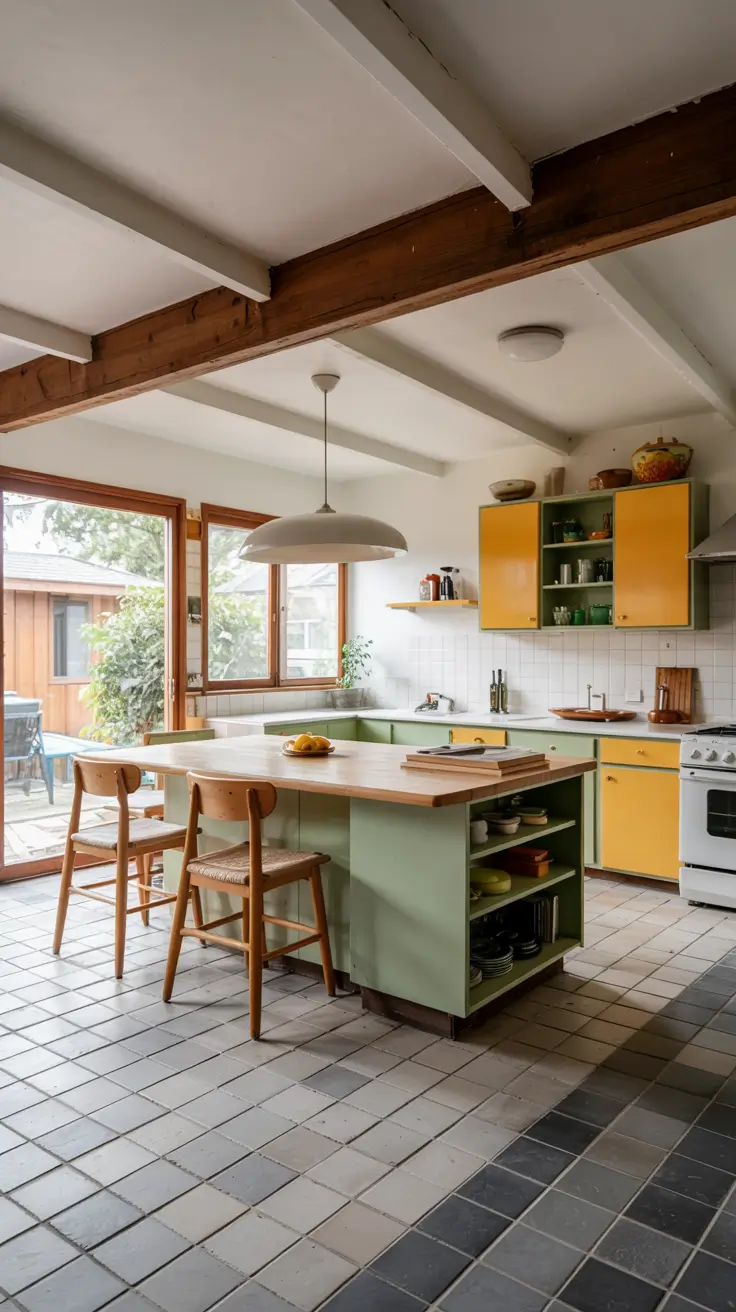
In these remodels, my default choice is modern cabinets with clean lines which I combine with vintage features. I would also combine flat panel cabinets with a slightly mid century inspired color such as a dull green or warm off white to revert the 1970s legacy in a new dimension. I strictly select appliances that comply with the new design and frequently I will move the ranges or sink to facilitate the working flow after taking the walls off. Where necessary, particularly long and narrow rooms, I employ galley kitchen remodel concepts eliminate wall open concept remedies to establish superior sightlines and traffic movement. I prefer to incorporate new lighting with small recessed lights and era inspired pendants that do not make the house look dated.
In my experience, when a closed-up 1970s kitchen is opened up into the heart of the house, it amazes the homeowners of the effect that a before and after transformation has taken place. I have observed how easily a wall could be knocked down between the kitchen and dining room to turn a gloomy unused space into a sunny inviting social space. Designers posing much with mid century houses tend to emphasize the need to respect original proportions and materials, and I concur with that strategy. I will attempt to preserve the character of the house, but redesign it, so that it can fit a modern lifestyle. The most beautiful effect is often produced by a wise combination of the old and new.
In this part, I would also include more information on how to match finishes between new and old spaces. I would love to talk of refinishing original hardwood floors so that the kitchen and other rooms adjoining the kitchen have a similar appearance, and the appearance is similar after the wall is destroyed. I believe that it would be useful to describe the process of selecting backsplash and countertop materials that would not conflict but would rather be complementary to mid century elements. A comment on the need to upgrade mechanical systems, including electrical and ventilation, is also a practical suggestion to make about the 1970s homes.
4. Designing The Perfect Open Concept Kitchen Layout
In my ideal open concept kitchen design I will begin with functionality rather than finish. I examine the way in which the space will be utilized during the day and draw various kitchen remodel ideas layout floor plans open concept to experiment with flow and ergonomics. I pay close attention to the location of the sink, the range and the refrigerator to create an efficient work triangle even in an open room of large size. I consider how people will navigate through islands, doorways and into other living and dining spaces. I aspire to a design that will have no cramped areas, and each area will have a definite purpose.
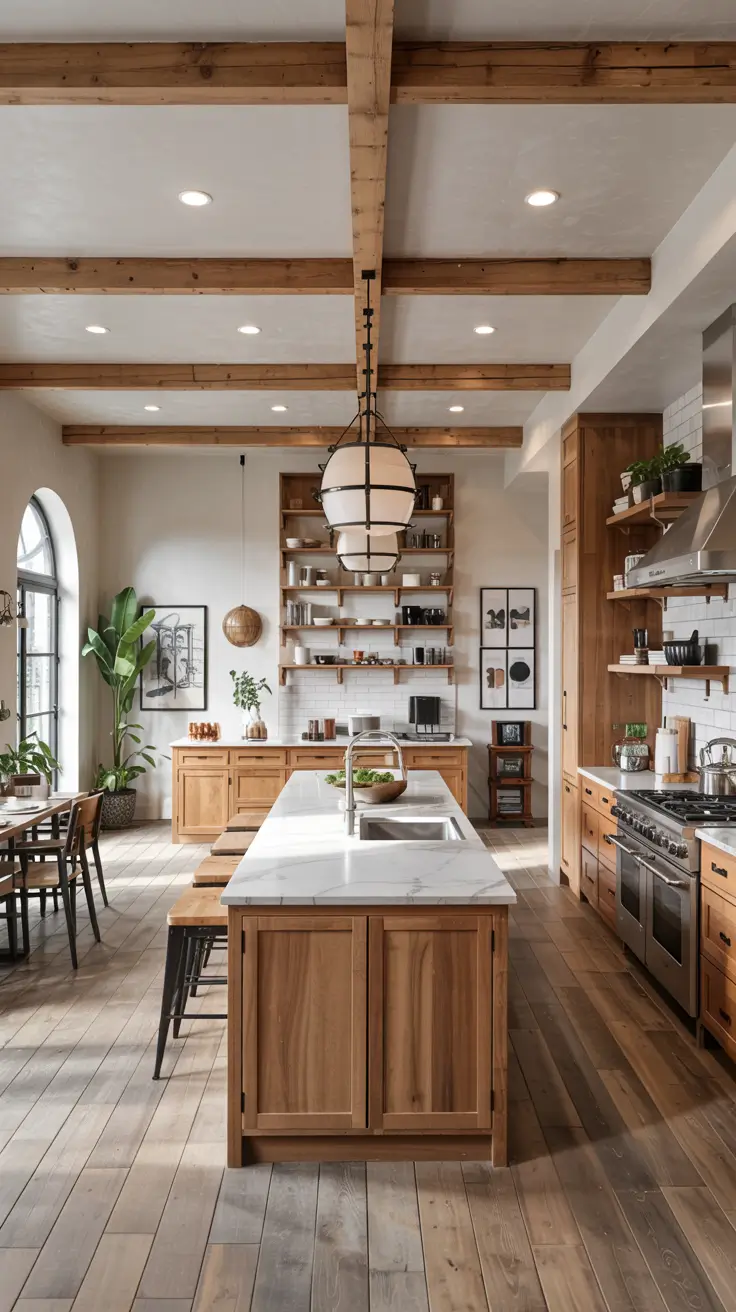
In such plans, I prefer to include Floor islands to arrange the kitchen and bring natural divisions. I usually place the sink or cooktop on the island when it is logical to the workflow and sightlines and the person who cooks will be able to face the room. I combine the island with a back wall of high storage where pantry, small appliances are stored and in some cases a built in fridge. I consider clearances and ensure that there is sufficient space between cabinets and island and people walk comfortably even when doors are open. I also will design particular spots where trash, recycling, and frequently used utensils will be situated in order to keep the open kitchen clean and aesthetically tranquil.
To me, layout floor plans open concept of some of the best kitchen remodel ideas are those that look into how life is expected to evolve as time goes by. I make questions regarding children who may be born in the future, pets, or parents who may live or visit the house (ageing), and I change the plan. Most designers emphasize the need to plan flexible seating and multiple work areas and that strategy proves to be worthwhile in busy households. I observe the entrance of natural light into the space throughout the day, and attempt to locate significant prep or seating places where the light seems the most comfortable to me. Effective design must ensure that the kitchen is friendly at any time.
I would also include more details regarding how to combine the kitchen design with the furnishings given in the surrounding areas. I also prefer to say that I match the island with the dining table or sofa so that I make very powerful visual axes and an impression of order. Reminding the readers to consider the placement of a television, fireplace or an inbuilt storage, in relation to the kitchen is handy. It is also important to include use of guidance in scaling up the island to the size of the room because a big island may dominate a small open space.
5. Inspiring Kitchen Remodel Ideas With Open Shelving
I am conscious of the balance between beauty and functionality when planning remodel ideas of the kitchen with open shelves in an open concept space. I interpret open shelves as an opportunity to bring the kitchen closer to a more designed living room, particularly when it can be viewed completely, which is the case when it opens both to the dining and the living room. To avoid over crowding the wall, I will usually place open shelves where they form a frame around a window, range or sink to form a focal point. I also consider what is actually going to be on those shelves on a daily basis, not just to be on to shoot a photo. Well thought out, open shelving can help make a small open kitchen look larger and more intimate.
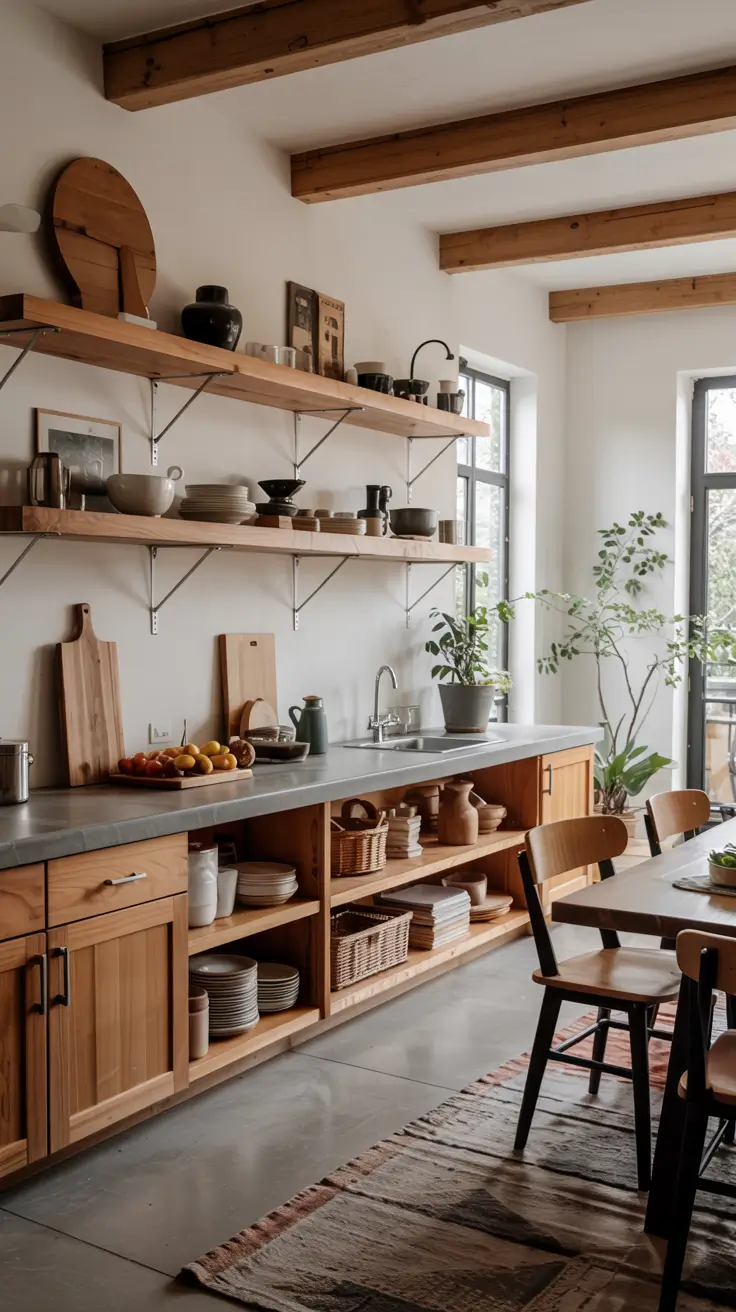
In the case of materials and furnishings, I would use open metal or wood shelves and solid lower cabinets to store things not in sight. I put shelf depths that are deep enough to accommodate plates and bowls but not too deep such that there is a possibility of losing the item or making the wall appear heavy. I frequently place small wall lights or under shelf lights to emphasize on favorite dishes, glassware, or decor. I also organize the completion of shelf brackets and hardware as well as lighting in such a way that the entire composition becomes purposeful. Under the shelves, I normally have the continuous countertop runs that would make the workspace convenient in day-to-day cooking.
As a practice, open shelving is only effective when edited and curated rather than overwhelmed. I will recommend that homeowners store the everyday items that they use frequently on the lower shelves and use higher shelves to store display objects or seasonal products. Most design authors observe that open shelving makes individuals more conscious of their possessions and, as I have observed, made people tend towards more straightforward, and more thoughtful kitchen arrangements. My first recommendation is usually a combination of closed cabinets and a small open shelving unit since many people are not certain about dust or visual clutter. With time, the individuals tend to get used to the pace of using and decorating their shelves.
In this part, I would include more practical advice concerning maintenance and organization. I believe that it is also useful to indicate wiping shelves frequently and selecting the objects that would not be affected by cooking steam or light. I also prefer to highlight the use of matching or coordinated dishwares to ensure that the shelves do not appear cluttered. It is possible to add a comment on how open shelving can be integrated into small open kitchen remodel ideas to demonstrate how the even the smallest areas should be benefited by the well-considered airy storage.
6. Open Concept Kitchen Remodel Before And After Transformations
As I prepare the plan of open concept kitchen remodeling before and after concepts, I always strive to take note of the current space, in detail. I browse the rooms, snap pictures, and observe the way the existing design facilitates or hinders everyday activities. My question is to which walls seem unnecessary or trap-like and where the natural light is going to waste. I then draw a sequence of ideas of remodeling the kitchen before and after layout open concept to juxtapose scenarios. The process allows me to visualize the dramatic changes that can be achieved before construction begins.
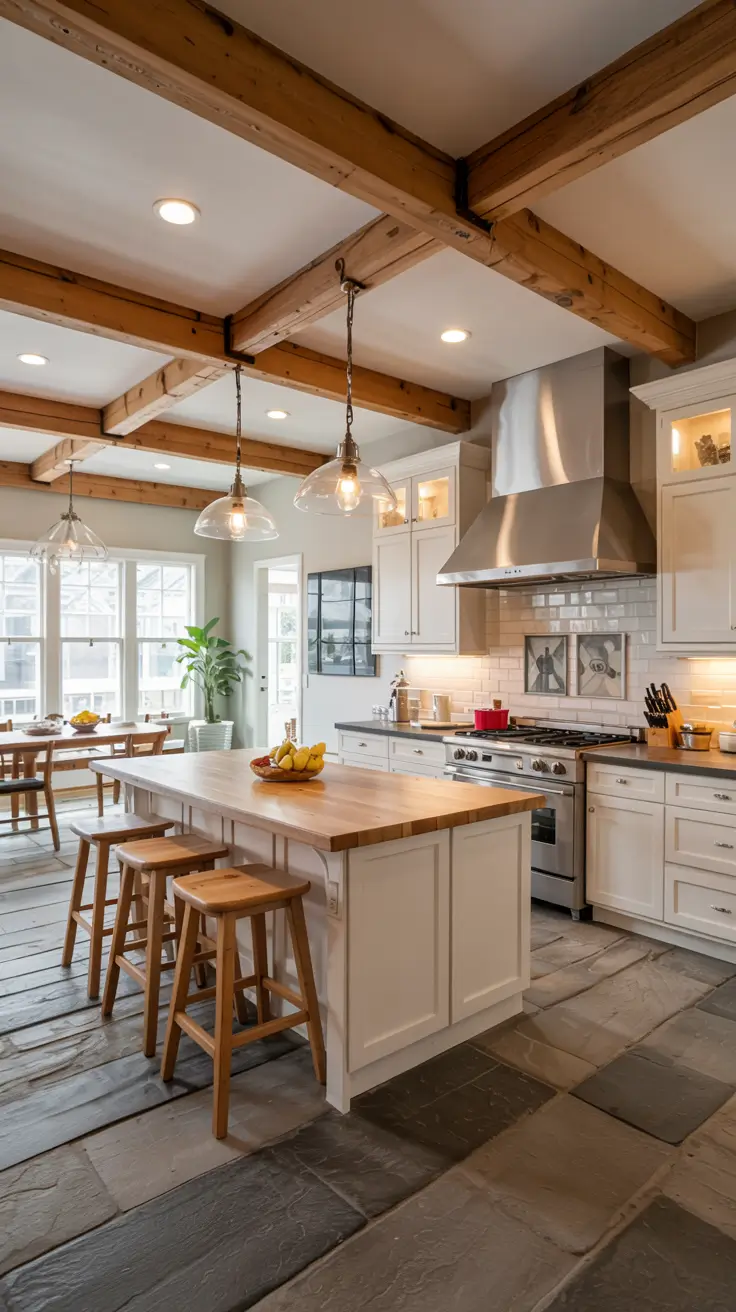
When I do such transformations, I usually showcase some of the critical design moves, which will be easily noticed in before and after shots. The most common effect is the removal of a wall dividing the kitchen and dining room, or making a hole bigger into the living space. Usually, I modernize the cabinets, counter tops, and lighting to fit the new open space to create the effect of a unified space. I watch flooring transitions, which typically continue the same material across the spaces, to enhance the openness. I even add new Floor islands or peninsulas sometimes as a center of attention that very evidently makes the difference between the after and the before.
Personally, the presentation of open concept of a kitchen remodel visually before and after layout assists the homeowner to realize the worth in having an open plan. They will be able to visualize the way how a dark and crammed kitchen is changed into a sunnier and more connected space. I also find that before and after comparison, which is a key part of the design decisions, makes me focus on the design decisions will age well, as they compel me to think outside of trends. The significance of classical decisions regarding such significant investments as kitchens is discussed by many design specialists, and I attempt to adhere to that notion in these remodels. The good before and after tale is one that contains not only better functionality, but also a better-integrated conceptualization in general.
I would also mention that it is helpful to illustrate at least one example of a small, economical change as well as more grand-scale remodels. I would like the readers to understand that not all open concept projects involve a total gut renovation. It is possible to discuss the changes, such as opening a pass through, new lighting, or the redistribution of the existing furniture, which will make the article more relatable. Also worthy of mention would be how to be able to plan in the event of temporary disruption in the building, so that people know what to expect as they transition between pre- and post-building.
7. Smart Kitchen Remodel Ideas Layout And Floor Plans Open Concept
Considering the idea of smart kitchen remodel, layout, and floor plan open concept, I use the kitchen as the center of the entire main floor. I draw straight lines between the kitchen, dining area and living space and ensure no ugly bottlenecks or dead ends. I equally place significant components such as the island, dining table, and sofa in such a way that they facilitate easy movement and discussion. I also arrange sight lines so that key points of view, like those toward windows or a fireplace, are not blocked out of the kitchen. This way of coming close to the open concept as a single plan helps me to escape the impression that they were incorporating parts without a clear idea.
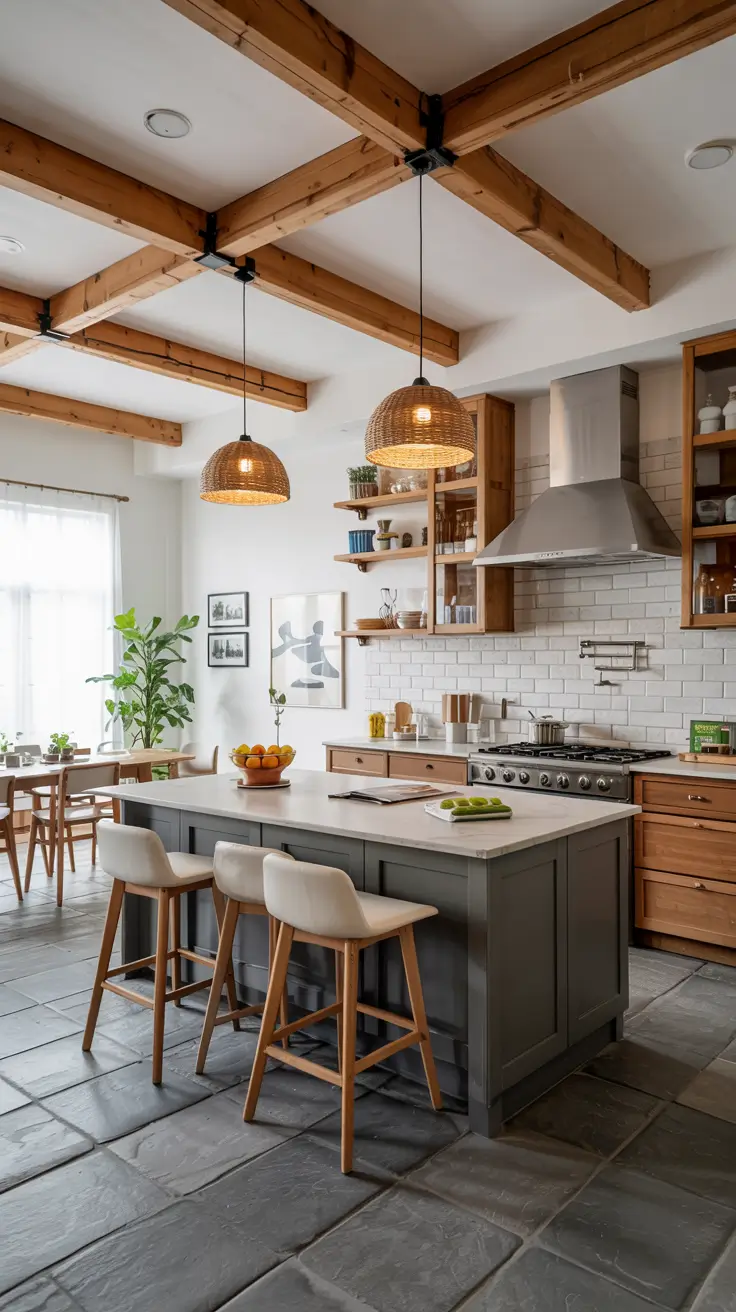
In such intelligent plans, I tend to make boundaries functional by use of Floor islands and peninsula. I designate areas on the island where you can have a quick bite or socialize, and align them with the dining table where possible. I also make sure that appliances and storage are well organised and hence preppings, cooking and clean up are in a natural sequence. In some cases where I have to deal with narrow or galley spaces, I can use galley kitchen remodel ideas eliminate wall open concept solutions to make the footprint appear wider. I also incorporate storage in half walls, columns or the backside of islands to make every inch work hard within the free layout design.
In my case, smart planning is the best fit to the small open kitchen remodel ideas, as there is not much room to make mistakes. I notice such details as the swing of doors, the position of stools and the manner in which chairs slide out at the table. Most planners and architects emphasize the fact that it is not important to incorporate any major circulation paths through the cooking area, and I understand why this is important in high-traffic houses. I would like to maintain primary aisles a few steps outside the main prep zone, to allow the cook to work safely as people navigate around the space. An intelligent design is relaxed, even during times when the household is in motion.
Another thing I would include in this section is a reminder to check Layout floor plans at full scale, I may need to use the tape on the floor. I find that a visit to a mocked up version of the proposed plan frequently can show improvements which would not be apparent on paper. I also believe that it is useful to relate to technology, e.g., to visualize the layout in 3D with the help of simple design apps. Lastly, I would mention how intelligent planning assists Dining living room remodeling, and furnishing can be easily updated after some time without altering the kitchen layout.
8. Galley Kitchen Remodel Ideas To Remove Walls And Open Up Space
My initial objective when remodeling a galley kitchen is to determine whether it is possible to remove a section of the wall so as to physically and visually open up the room. Conventional galley designs are claustrophobic in the sense that you get two solid walls running side by side with minimal natural light passing through the area. On one side of the galley you can open out into a dining or living space, making a narrow passageways one of an open concept kitchen where you can view the entire floor. This style is particularly effective in homes of 1970s style where tight service kitchens were detached to living rooms. When wall thinking is eliminated, with the help of galley kitchen remodel ideas, a bright, linear cooking area becomes a result, yet seemingly efficient, yet no longer boxed.
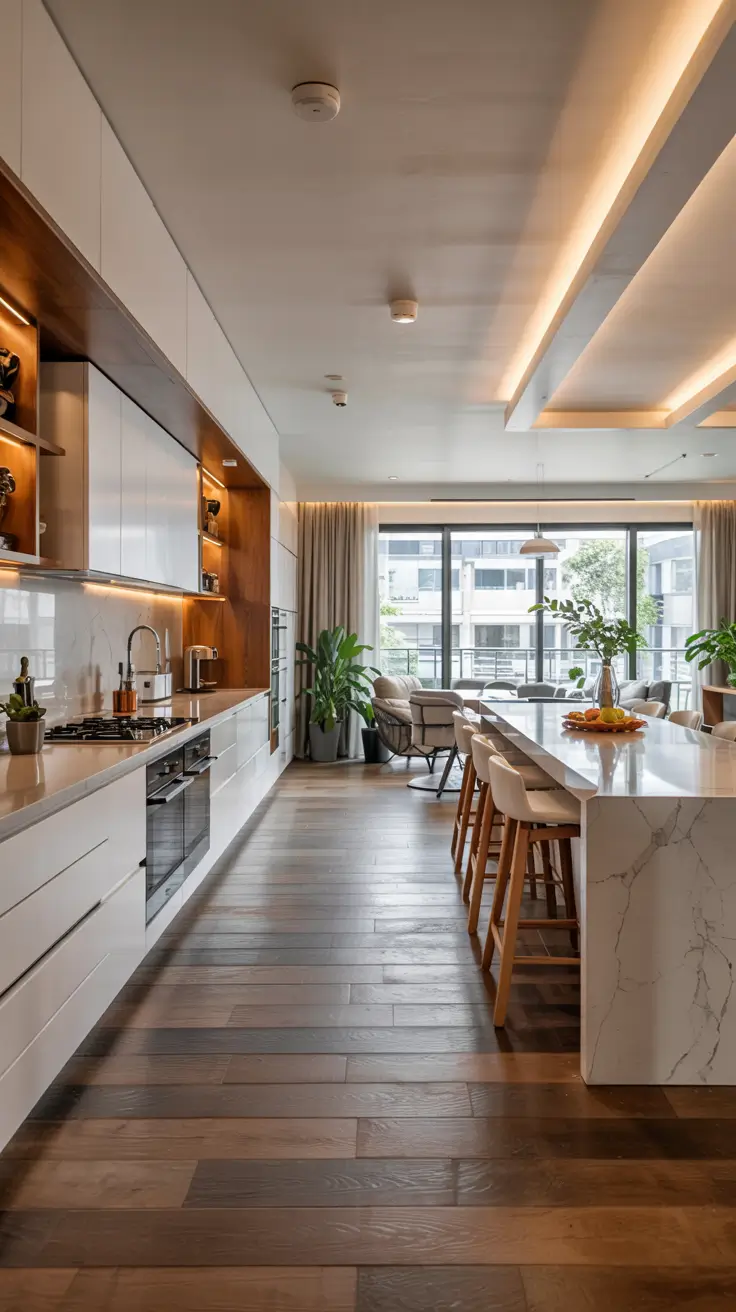
Concerning particular details, I prefer storing and appliances in one complete wall of cabinets and replacing the other wall with a peninsula or a slim floor island. The constant flow of base cabinets on the remaining wall ensures the galley is busy at work and the open side that has been created is possible to seat bars and provide clear sight lines. Finished light cabinetry, pull-out and an uncomplicated backsplash design are the features that I frequently use to ensure that the kitchen does not stand out like a sore thumb in the adjoining room. The space is designed to be perceived as a single open space because of cabinet lighting, a low profile hood and a flush transition in the flooring. In cases where we are not able to have a full Remove wall, I can employ a large pass through or widened cased opening to achieve the same effect.
In my opinion, the greatest benefit of the method is that it alters the experience of communication with guests and family during cooking. You do not need to look at an empty wall but can speak to the people sitting at the dining or living area and feel involved in the conversation. According to many American designers, there should be a fit between the new peninsula or island and the structural beams of the existing structure to ensure that it appears to have been meant to be rather than an add-on. I discovered that even the open door of a galley can radically enhance the light and air intake, which is particularly beneficial in houses whereby only one side of the home has windows.
In order to further refine this form of remodel, I would discuss the addition of shallow open shelves to the remaining solid wall to show display items and daily dishes. This allows the kitchen to be less of a storage tunnel and more of a designed section of the open space. I can also recommend a slightly higher backspash or a slight alteration of the ceiling treatment above the cooking run to ensure a visual grounding of the galley area without sealing it. Lastly, I would seek out instances to match lighting like the installation of pendants over the peninsula in line with in-room fixtures to enforce the new open concept.
9. Small Open Kitchen Remodel Ideas For Compact Homes
When I am working on small homes, my thoughts on the small open kitchen remodel are on how to use the centimeter wisely and yet provide a generous feeling. I prefer to have the footprint plain, and frequently with L shaped or single wall kitchen that opens straight into a dining nook or living area. I do not put full height partitions around my kitchen area but rather use flooring, ceiling lines or furniture to establish areas within a single room. These little open kitchen remodel concepts are used to make a feeling of flow so that you can prepare the food, invite your friends and watch a movie without feeling crowded. The trick is to consider the relationship the kitchen has to the circulation routes and not merely to look at cabinets on paper.
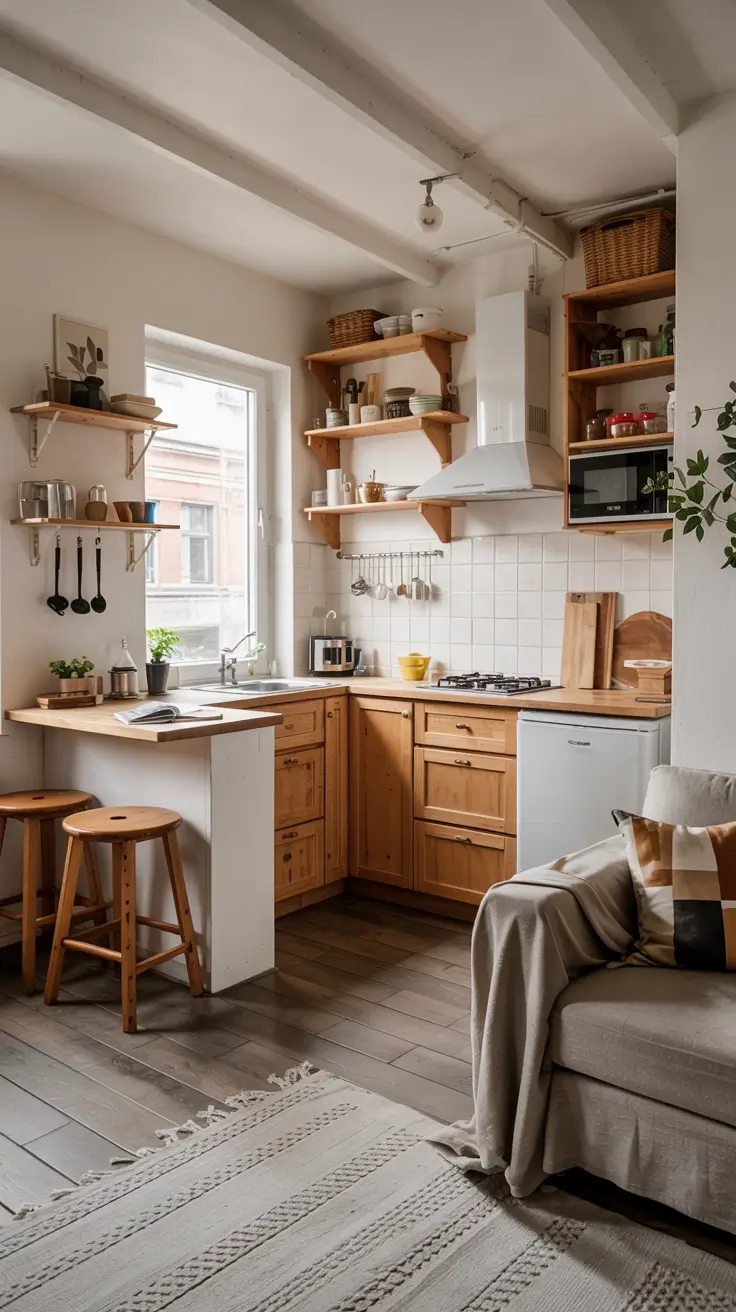
In the real-life objects, I tend to specify the slim base cabinets, small appliances and tall up cabinets or open shelves that extend close to ceiling heights to harvest the vertical space. Even in small spaces, the kitchen remodel concepts using open shelves prove to be very strong as they maintain the room visually lighter and enable the decorative objects to connect the kitchen to the living space. I prefer working with a narrow peninsula or small floor island with two or three stools in a way that the seating is not obtrusive and still allows flow. Flooring is important and I tend to use light colored cabinets, reflective back splashes and flooring throughout the open room, not dividing the rooms into small islands.
In my experience, small kitchens have, on display, carefully-selected items instead of a dense array of gadgets. I want to persuade individuals to have open shelves with their favorite pieces and use closed storage with others. Many magazines in the US regularly remind people who are buying homes about the importance of the negative space in any home as important as storage is, something I completely concur with in small homes. The whole open concept is more relaxed and open when there is a view of clean wall and countertop.
In case I had to reinforce this section further, I would provide even more tips on lighting and color psychology in compact open kitchens. I could, e.g. propose a blend of recessed lights, a small central light, and under cabinet lights to overlay the effect without consuming visual space. I would also share about how such a small color scheme that passes through kitchen, dining, and living sections can turn a small open space into a unified and purposeful one. Lastly, I would elaborate on some of the practical suggestions that offer ways of concealing clutter, like built-in trash, narrow pantry drawers, and hidden garage appliances, that are needed in small houses.
10. How To Remove Walls For A Seamless Open Kitchen Design
When I strategize on how I am going to demolish walls in order to achieve a smooth open kitchen, I begin by defining which partitions are structural and which are not. Older houses and most of the houses with 1970s designs are supported by interior walls and I always wonder how the beams, posts or hidden framework may have to be altered prior to any demolition. I consider the functionality of the new open view both in the kitchen and the surrounding areas by ensuring that the traffic routes are not crowded and that the availability of the windows is not blocked. That is where the kitchen remodel ideas before and after layout open concept comparisons come in, as it makes the decisions seem less dangerous, as the paper shows the change. Fluid design implies that the completed room must appear to have been permanently open.

When thinking about the aspects of the new design, I determine where to locate the major appliances, whether I should use an island or peninsula, and how to conceal the structural supports that I need in the most appealing manner. In some cases I make what was once a wall into half height partition with a counter, or I encircle a support post necessary locally within a floor island to make it look more like a design choice. I am extra attentive to flooring transitions, since when you patch old floors with poor workmanship the entire pre and post feel is compromised. Setting open concept kitchen remodel before and after ideas to shine by matching cabinets, Layout floor plans, and lighting with the new circulation, I make it possible to avoid the appearance of a mess or improvised environment.
To my thinking, the art of wall removal has more to do with restraint than demolition. I have witnessed projects where individuals took down all the possible walls and were left with a room that echoed and made the room appear chilly and exposed. Most US experts recommend keeping part divisions e.g. a short retaining wall or tall cabinet furniture to conceal the less presentable chores in the kitchen. I tend to abide by such a suggestion and strive to achieve a balance of connection/privacy particularly in cases where the kitchen leads directly to a front door or central seating space.
In order to make this approach even more effective, I would include more information concerning collaboration with such professionals as structural engineers or experienced contractors at the initial planning phase. Although you may be doing much of the work yourself, loads and spans could be a problem that is easily and avoidably solved by an expert. I would also recommend sketching or drawing digital sketches of the furniture, even after the walls have been brought down, as opposed to merely having the cabinet plan. In such a manner the open concept will look very natural and you will not be left with an ugly sofa or dining table after the dust has settled.
11. Innovative Layout Floor Plans For Open Concept Kitchens
When I create an innovative layout floor plan of an open concept kitchen, I do not pursue odd shape with an aim of being different. Instead, I learn the movements of people between cooking, serving and sitting and experiment with layouts that facilitate those movements in the most straightforward manner. I tend to investigate the different forms of L shaped kitchens with a large floor island, single wall kitchens with a super sized island in the front or U shape ones that partially surround the dining space. These ideas of the kitchen remodelling place floor plans open concept plans enable you to ground the working area in the room but leave the room open to the eye. This is aimed at ensuring that the kitchen is the center of the house but not a cramming stage.
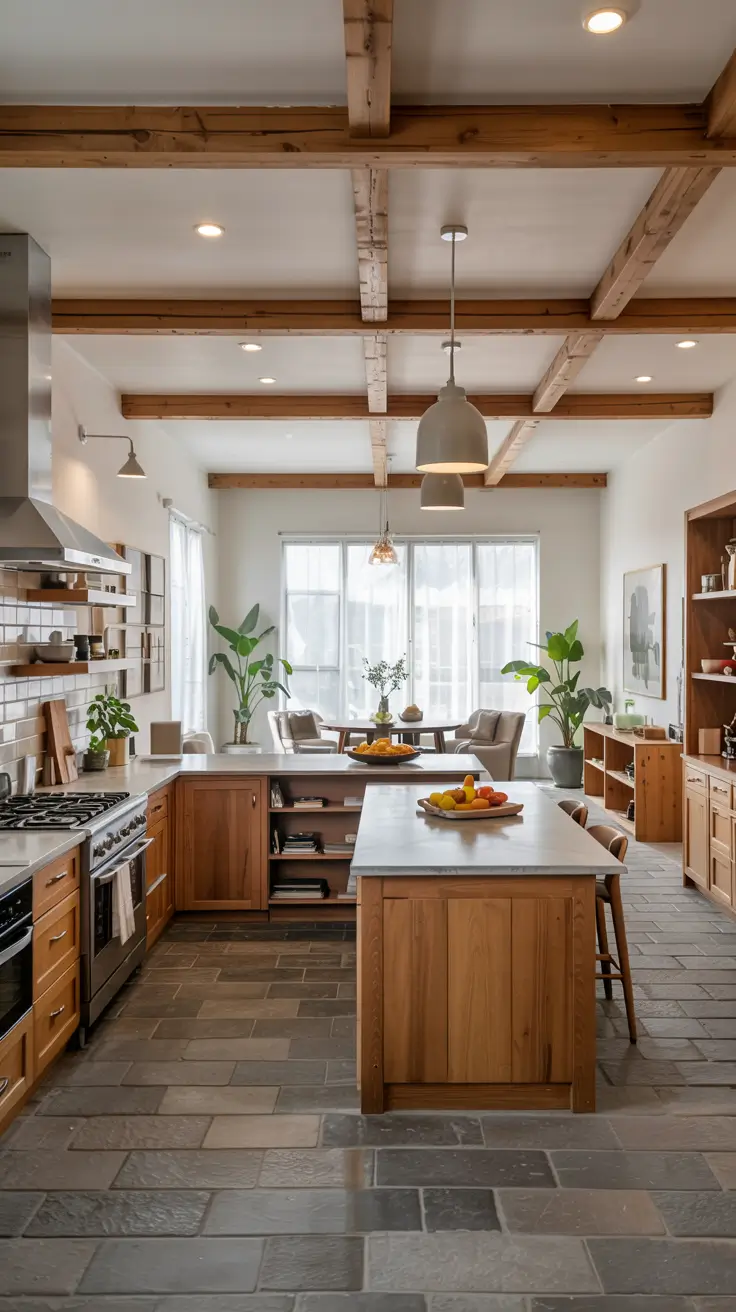
Regarding elements, every layout requires a clear work triangle or work zones that are sensible: prep should be by the sink, cooking by the cooktop and oven, and storage place where it is most convenient. I would put the fridge at the periphery of the design in order to make sure that individuals do not have to pass through the cooking area to get beverages. Floor islands can be the point at the center of the room where prep, seating, and storage are integrated in addition to delineating the transition between the kitchen and the dining or living area. Whenever I consider the Layout floor plans I ensure that the layouts of the floors have at least a comfortable space of two persons to move around in, and that the chairs can be moved back without scraping against walls or cabinets. The right plan must almost be intuitive as you walk through it.
In my view, the simplest ideas of open concept kitchen re-modeling are frequently those that seem the easiest to look at with a very deliberate planning behind. Seeing a project with all walls covered with cabinets and an oversized island, I understand that even in a large room every day life can be rather densely felt. That is what is emphasized in numerous publications on design in the US, and I always remember that. I have also got to know how aligning significant structures such as sink, range or hood with architectural structures such as windows or beams can make an open plan grounded.
To fill this section out further, I would insert visual planning tips like placing painter tape on various walkways on the current floor prior to committing to a layout. This assists you in experiencing the clearances and flow in real-time but not on paper alone. I would also explain how these layouts can be modified to suit various types of homes, be it long narrow condos or wide in the suburban great room so that readers can identify what they see with their own environment. Lastly, I would include the mention of how to future proof a layout by leaving room to accommodate any new appliances or lifestyle choice like a coffee bar or homework area in the future.
12. Dining Living Room Remodeling With Open Kitchen Flow
When I would reach Dining living room remodeling coupled with open kitchen, I consider the three areas as a single experience. I begin by determining the location of the kitchen boundaries and the location of the dining and living space boundaries, by placing furniture and lighting where they come together. To illustrate this, I could position the cooking table in parallel with the island forming a natural extension of the cooking activities to the dining area, which will be slightly further. This design is applied in both contemporary households and open concept 1970s kitchen remodeling concept whereby a wall between formal dining rooms and kitchen are eliminated. The outcome is a place where individuals can not feel that they are leaving one activity and entering another room as they move naturally between the activities.
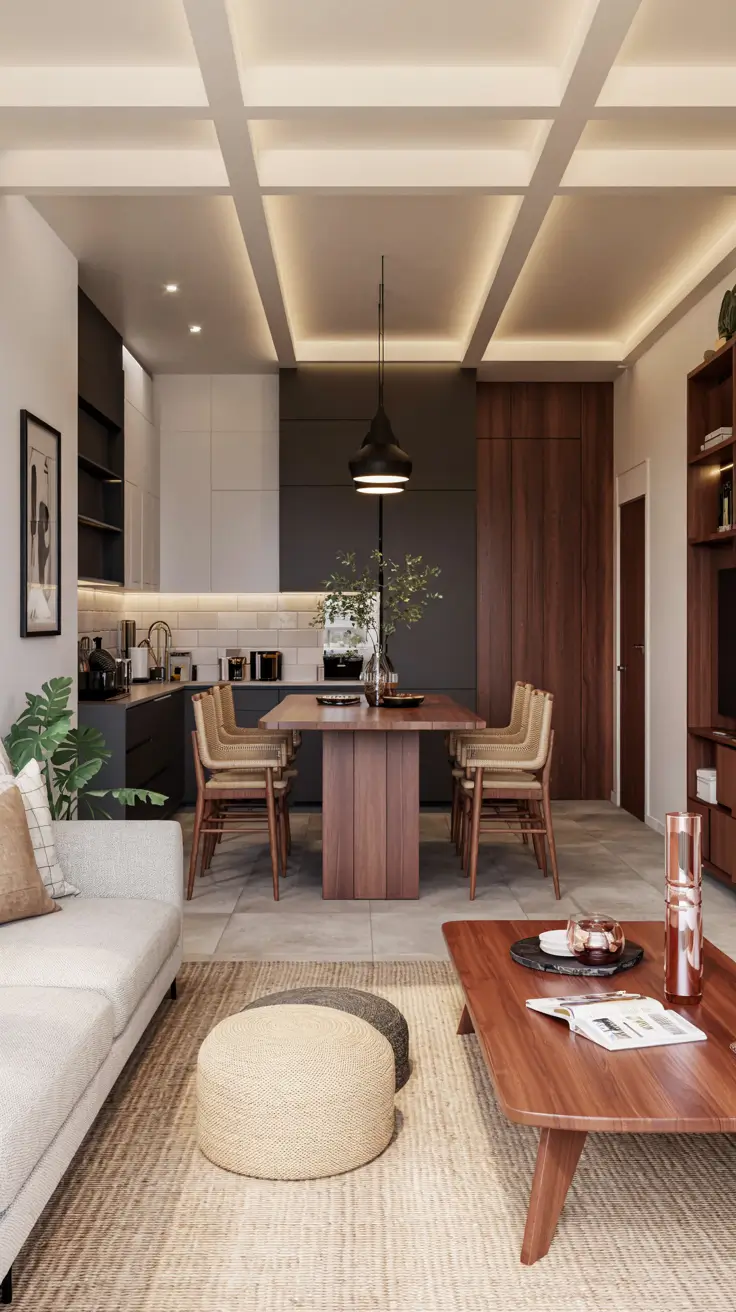
Furniture-wise, I prefer to take a dining table that reflects the same materials or colors of the kitchen cabinetry to make the two spaces seem connected. The metal finish of the kitchen hardware or the color of the countertop may be picked by the chairs. The sofa in the living area that I choose is either in front of the kitchen or in a comfortable position where cooks and guests can talk easily. The sitting area can be demarcated with the help of a rug and the side tables and lamps are comfortable and do not obstruct viewlines. Once these elements are designed in unity, the open space does not appear scattered around.
In my case, the greatest error in this type of remodeling is the focus on the kitchen as the center of the stage and neglect of the manner of sitting and relaxation of people. I remind the homeowners that once the new cabinets wear out their welcome you are going to spend as much time sitting on the sofa or at the dining table as you will at the island. The American designers stress the need to have comfortable seating and acoustic control in open layout and I support this idea. Walls of bookshelves, as well as the soft furnishings and curtains, can also be used to dampen sound and make a large open space seem smaller.
To build further on this concept I would include recommendations regarding coordinated lighting connecting kitchen, dining and living area. An example would be a statement pendant sitting over the dining table may take up the finish of the kitchen pendants, and recessed lighting will give a uniform background of illumination. I would also talk about how the art and the decor can be transferred between the three areas, like using the same color as the backsplash in pillows or the wall art in the living room. Lastly, I would consider how to locate media equipment in ways that do not take up the sight lines in the kitchen area, and through which the space is dedicated to facilitation and not distraction.
13. Creating Harmony Between Kitchen And Living Areas
Considering the creation of harmony between the kitchen and the living room, my thoughts revolve first around the similarity of colors, materials, and ratios. A kitchen with open kitchen may have hard surfaces and smooth cabinets whereas the living room should be smoother in terms of its textures but they are supposed to be part of a single concept. When I design the two spaces I frequently select some dominant colors both present in the room, like a warm wood and soft white and I use the accent colors in a sparse manner. This makes the eye work in a comfortable manner between the countertops and sofas as well as backsplashes and artwork. The more orchestrated the coordination the less violent the entire room is.
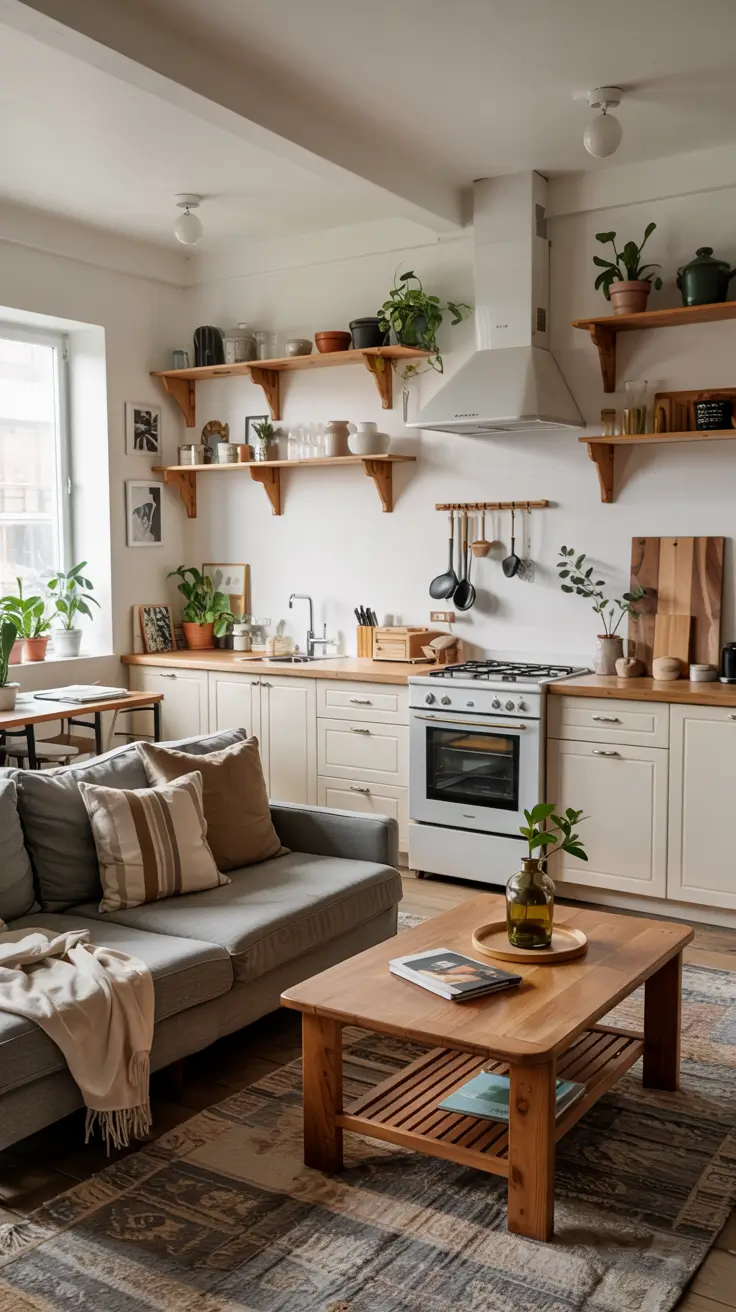
In certain aspects, I tend to reuse some finishes, like with the same wood in the kitchen floor and the living room coffee table or shelving. The metal finishes may also be passed through, and cabinet pulls and light fixtures as well as small decor items may have a similar appearance. I also in some of my projects use the idea of having a kitchen remodel with open shelves where the dishes, plants or books can be seen visually connecting to the styling on the shelves of the living room. Rugs, pillows and throws also contribute a lot to the Concept softening, particularly where the kitchen contains a high number of smooth, reflective surface. Repeating the patterns and textures, I make slightly more rhythm in the overall open space.
Harmony is also in my opinion the control of clutters and visual noise, particularly in the situation where the living room faces directly to the kitchen. I advise individuals to invest in closed storage on those that are not attractive and maintain as clean counters as practically feasible. The most vociferous design voices in the US are insisting that an open kitchen requires greater discipline since mess can be seen everywhere and I believe that is sound advice. Even a few simple everyday routines such as clearing out the surfaces at the end of the day can significantly improve the amount of serenity in the open living space.
I would include additional instructions on transitions, which could be the manner of handling variations in ceiling height or available architecture, to complete this section. Indicatively, when the kitchen portion has a bulkhead or a soffit, I would recommend that it should be balanced by a strong horizontal feature in the family portion such as a long shelf or low-lying media console. I would also talk about the use of plants, curtains, and textured treatments on the wall to blur the line between the activity of the kitchen and relaxed living. These facts contribute to the fact that the spaces are not only harmonized in terms of color, material but also in terms of mood and atmosphere.
14. Open Kitchen Remodel Ideas With Functional Floor Islands
When I am searching the open kitchen remodel ideas with functional floor islands, I consider the islands as mini command centers as opposed to blocks in the middle of the room ornaments. An effective island can be used to offer prepped areas, storage, seating, and even cooking or cleaning facilities, and in doing so aid in delimiting the boundary between the kitchen and living areas. I am keen on the size and position of the floor islands in such a way that they facilitate movement rather than obstruct it. The island in most open designs becomes the center that makes the kitchen visually structured in a spacious area.
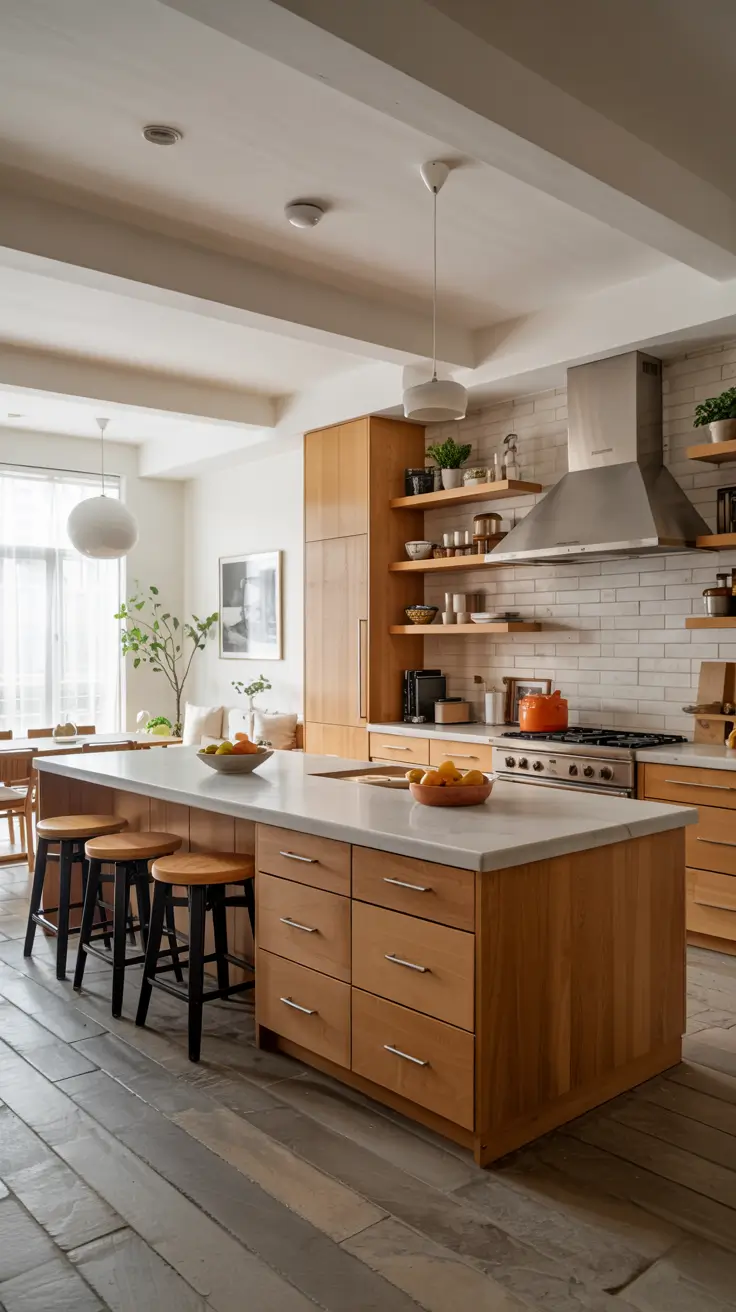
In certain features, I tend to make islands featuring both deep drawers and cabinets and possibly built in microwave or beverage fridge on the living room side. This will enable people to get drinks or snacks without stepping into the main cooking area. The issue of seating is a factor and in such a case I would prefer to incorporate overhang to have 2-4 stools to neatly fit under the counter. The island could have a sink, cooktop, or it could be a plain, very large surface to prepare and serve, depending on the Layout floor plans. Floor islands are hard working in everyday life because of materials such as hardy stone tops and easy to clean cabinetry finishes.
Personally, I like the way islands promote interaction, as individuals tend to congregate around the islands when they are cooking, doing homework or having informal meals. In numerous before and after cases, an open kitchen is completed by the addition of a well planned island. Designers in the US usually ensure that there is ample space around a center island on all sides so that more than one person can move freely and I adhere strictly to this fact. When proportions are correct, the island will be generous yet not crushy such that it adds functionality without giving a sense of congesting the room.
To further refine this section, I would include the ideas on incorporating power outlets, recycling bins, and hidden charging drawers into floor islands to keep up with the latest technology and practices. I would also briefly mention the selection of the appropriate counter top edge profile and the stool style to harmonize with various design themes, such as making it sleek and modern or cozy with transitional design. Lastly, I would discuss the coordination of the island lighting, like a proper selection of pendants that are scaled accordingly and are harmonized with the rest of the fixtures within the open space, in order to make the island really seem the center of the kitchen.
15. Maximizing Light And Space In Open Kitchen Designs
In designing with the maximum amount of light and space I begin by observing the way daylight passes through the home. I make calculations on how much of the wall I can safely remove in order to unite the kitchen with the other areas of the building dining or living, and make the entire area a real open concept. In most open kitchen remodel ideas 2026, this involves the establishment of wide openings or full-height cased openings as opposed to allowing narrow door openings that divide the view. The ceiling heights and the sightlines that I give special attention to are so that as you stand at the sink or at the island, you are not looking into a blank wall. The strategy is particularly effective in small houses where small open kitchen remodel concepts can turn a dark space into the brightest part of the house.

To enforce that feeling of openness I tend to dictate light toned cabinets, pale flooring and glossy or satin finishings that reflect light throughout the room. I prefer adding kitchen remodel concepts with open shelfs on at least one wall, as open shelves are aesthetically less visible and do not make the upper half of the space look heavy. In cases where the building can accommodate it, I prepare layout floor plans where a central island is positioned parallel to the main window wall, such that the workstation enjoys the natural light as well as direct access to the dining or living area. This is combined with a layered lighting – recessed lights, under cabinet lights, and a couple of pendants over the island – to ensure that the kitchen feels bright even after sunset. In a simple remodel, a solid door can be replaced with a glass door or a pass through can be enlarged and the difference in size impression can be immense.
To me, the most effective open concept kitchen remodel before and after concepts tend to display two things simultaneously: increased natural lighting and improved traffic flow. Most US designers who have been featured in large shelter magazines stress that the most important aspect of creating an airy atmosphere has little to do with physical barriers but rather with visual ones which is something I fully support. Projects that I have viewed have shown that reflective backsplashes, light stone countertops, and low profile vent hoods can just as much contribute to the removal of a wall. I prefer to have the upper third of the room open as much as possible as well, with floating shelves or a plain range shelf rather than tall cabinets in each corner. This maintains a flow of your eyes across the entire space which always makes it look larger and more appealing.
In this kind of remodel, I tend to believe that the effect of window and door renovations are underestimated and that is what I would include in this section. Depending on the budget, I would investigate an expanded window above the sink, a transom or replacing a small windowed door with a full glass one to look out at the yard or balcony. Coupled with tactical wall elimination and lighter finishes, these modifications finish the image of a truly open and bright kitchen that is the right look in 2026.
16. Blending Materials And Textures In Open Concept Kitchens
When I design open concept kitchen remodel ideas, I consider the aspects of connecting the kitchen with the dining and living area much. The finishes in an open space should not be three different stories that are inconsistent with each other, and therefore I build a palette that makes the transfer of wood, metals, and fabrics throughout the zone. I have a tendency to take minor inspirations taken or drawn out of open concept 1970s kitchen remodel thoughts, such as warm woods and textural surfaces, and then to rebrand it in a contemporary and subdued manner. To illustrate this, a pairing of flat panel oak cabinets with a softly veined quartz counter (and matte ceramic backsplash) might be used that all have similar undertones. This forms a peaceful and integrated notion that functions island to sofa.
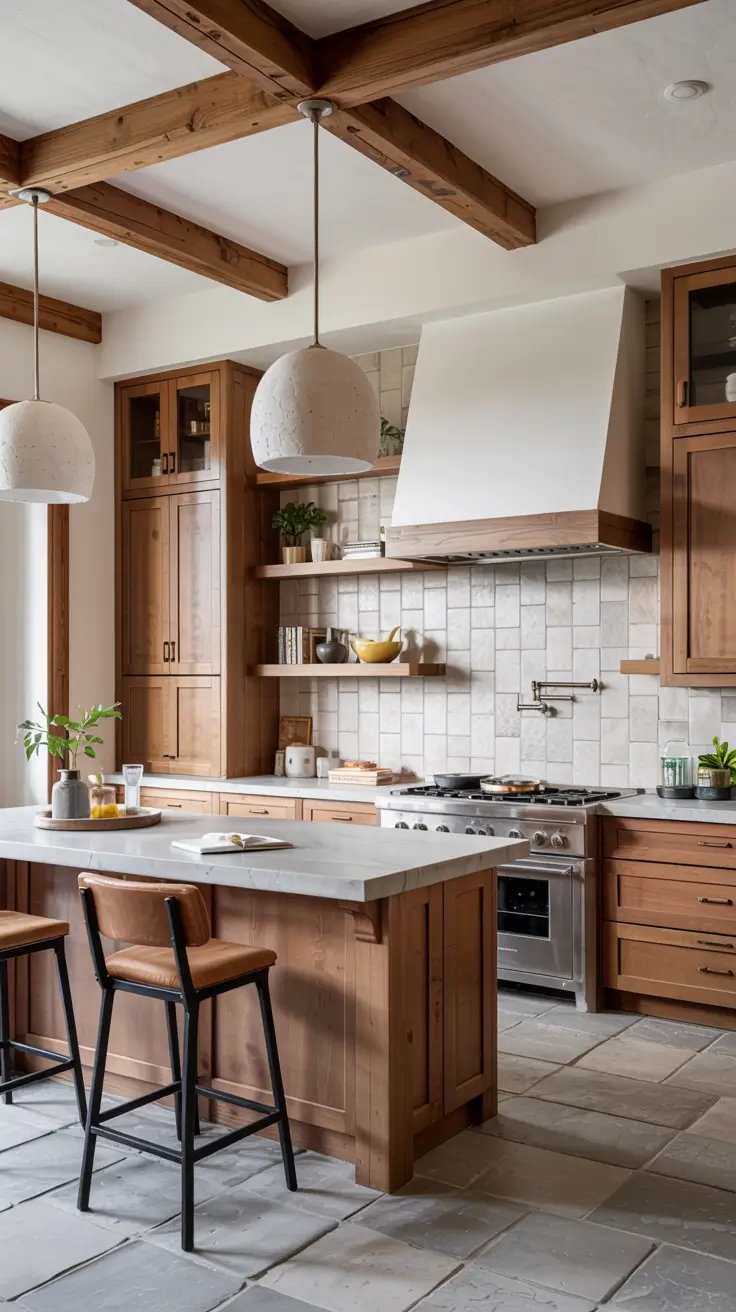
Particularly, I prefer to mix at least three textures in any open kitchen: a smooth one, a warm, and a somewhat patterned one. The flat surface could be a solid countertop or smooth integrated appliances, and the detail that could be considered warm could be an island base made of wood or a beam feature in the ceiling. Pattern may be tile, ribbed glass, or even fluted paneling on a peninsula or floor islands that give the kitchen visual stability in the larger room. I often reuse the same metal finish on the cabinets hardware used on the lighting fixtures and, where possible, on table base or coffee table legs of the dining table. This repetition will make the kitchen a part of the same narrative as the rest of the living environment.
In my view, combining materials with success is restraint and not putting all the gorgeous finishes you find in it. Advice on most popular US interior designers suggests using three or four primary finishes to restrict your primary palette and thus making the room look clean but not cluttered, and that is what I observe in actual projects. I have seen people become in love with busy backsplash and a countertop that is just as bold just to become overwhelmed after everything is in place. This is the reason I always construct the scheme of material upon one star-piece, a stone, a wood, or a tile, and then make everything turn to it. The kitchen is visible in an open plan, and thus a serene foundation of materials is more significant than one in a closed room.
What I would highlight more in this section is that there is a relation between the kitchen and soft furnishings around. I would suggest that the same tone of the kitchen be reused in the dining chairs, bar stools, or even in a simple open shelf in the living space. Another method of connecting the materials is to add a rug that resembles the backsplash or cabinet color that is close to the sofa. All these touches help to make sure that you look over the entire space and feel like the textures are intentionally placed, and the concept is complete.
17. Budget-Friendly Open Kitchen Remodel Inspiration
When making budget-saving modifications, I do remind them that a good idea does not require costlier materials. I usually start by reconsidering the layout floor plans and inquiring where a partial remove wall step would open up the kitchen without any significant structural effort. In some cases, a pass through can be enlarged or simply the upper half of a wall can be removed that provides the visual openness you desire at a fraction of the cost. I also seek how to preserve the current plumbing and appliance locations in such a way that the main part of the system remains. This is a strategy that assists in producing true kitchen remodel ideas prior to and following layout open concept renovations without the cost outlay of an entire gut reconstruction.
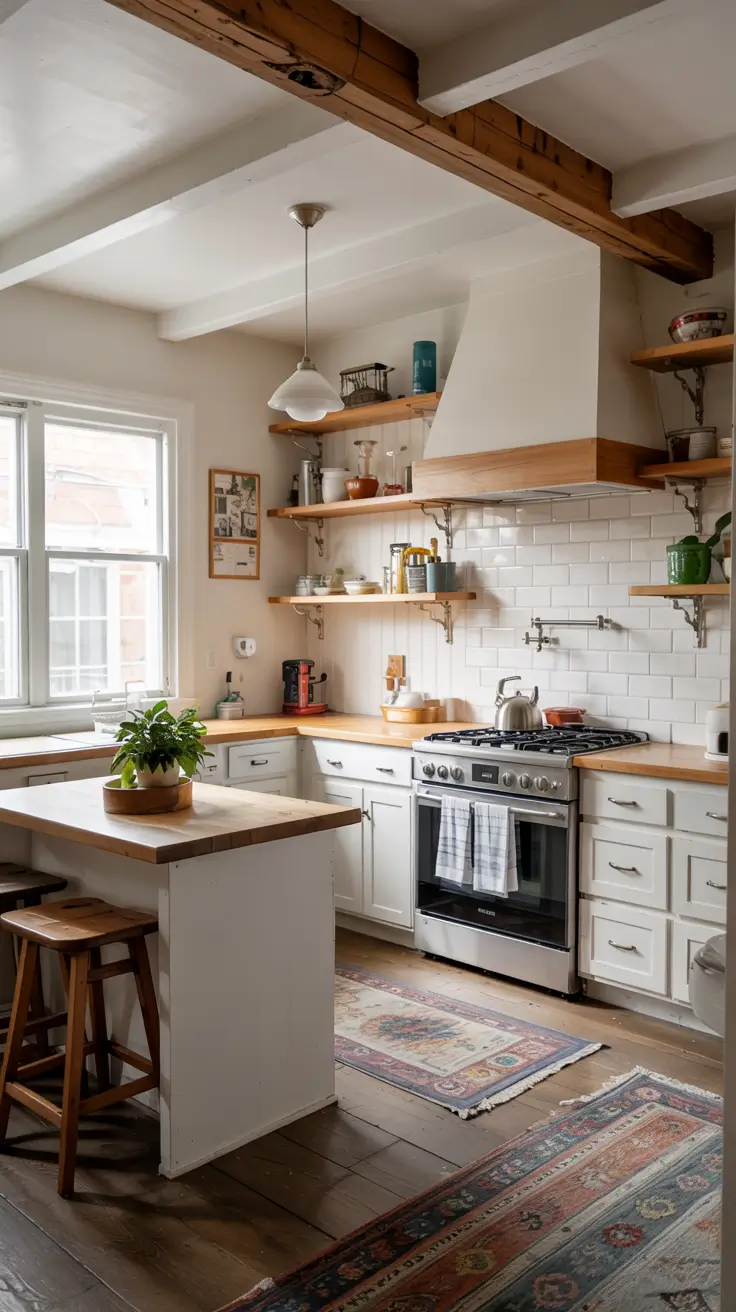
On the surfaces side, I tend to call upon paint, replacement hardware, and selective replacement of high impact objects. The kitchen can be dramatically updated by simply painting old cabinets, replacing them with new laminate or mid range quartz countertops, and replacing an old backsplash. Another thing I usually do when I introduce the ideas of kitchen remodel with open shelves is to take off some cabinet doors and finish the inside properly, rather than ordering a whole new unit. Another economical means of suggesting ideas of a kitchen remodel layout floor plans open concept without complete reconstruction is to replace a bulky peninsula with a straight forward, freestanding island. The outdated fluorescents can also be substituted by simple track lighting or simple recessed fixtures and it will make the space look much more modern.
In my experience, the most successful ideas on how to remodel an open concept kitchen before and after on budget are those that employ effective editing instead of continuous additions. The influence of decluttering and reorganization is the focus of several design publications in the US, and I can observe the same impact on actual houses. By emptying counters, unloading unnecessary cabinets and bringing a few properly selected open shelves, we suddenly make the kitchen look twice as open and friendly. I also realize that it is possible to paint adjacent walls in similar neutral color scheme that makes the entire piece seem whole without necessarily having to buy new furniture. One of the cheapest tools you possess is a consistent color story.
I would further note that open remodels that are budget friendly have the advantage of planning purchases in stages. I would urge the individuals to invest in light and paint first, and then in hardware, smaller appliances, as well as decor, such as stools and carpets. You can change counters or appliances later, if these are within your budget, without disturbing the overall concept. This step-by-step method allows you to experience the visible progress at the same time as the costs remain affordable and within the scope of your priorities.
18. Modern And Minimalist Open Kitchen Concepts For 2026
When creating modern and minimalistic kitchens, I pay attention to the clean lines, soft colors, and good geometry of the whole idea. In most open kitchen remodel ideas 2026, this becomes flat panel cabinetry, handle-less doors and built-in appliances that become integrated into the wall. I usually maintain the palette with one accent shade of soft grays or natural woods. The design itself is usually minimalistic, and the straight lines of cabinetry are mixed with the island, which delineates the cooking and social areas. This sparseness makes the kitchen seem part of the living room as opposed to a utilitarian room.
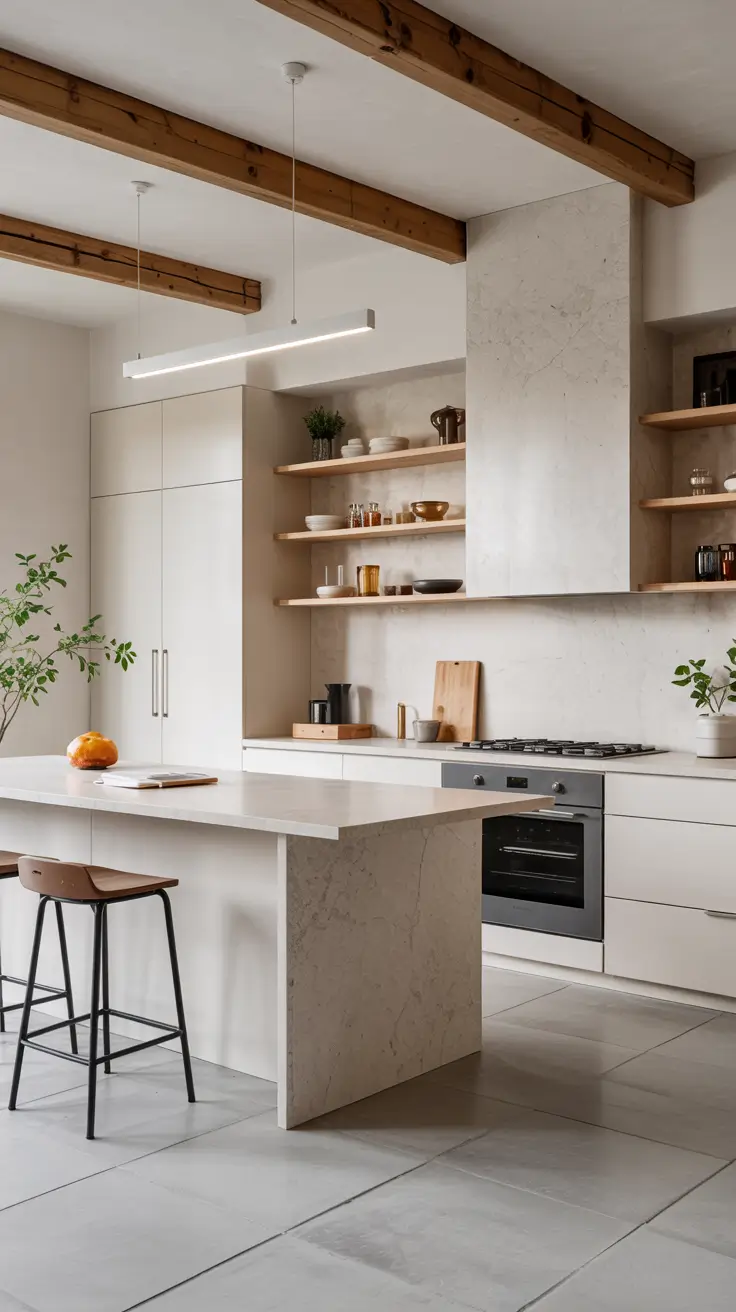
Regarding furnishings and details, I prefer to describe slim profile islands and small floor islands which almost look as furniture. The slender metal legs, low backrests and neutral upholstered bar stools support the sleek appearance. I normally have full height slabback espousals that can be in stone or porcelain to have the continuation between counter and upper cabinet or shelf. The idea of remodeling a kitchen with open shelves sparingly is implemented with limited items styled in a nodding way without creating an obstructed view. Lighting typically has simple pendant shapes or line lights that reflect the simple cabinetry lines.
Minimalist designs to my mind are best done when there is proper planning in place regarding the storage areas so that day-to-day living does not ruin the neat appearance. The principle of maximum hidden storage of little appliances and pantry located in a modern kitchen is often suggested by well known designers, and I adhere to the rule. Integrated trash, deep drawers and tall pantry cabinets maintain low visual noise that is important in open spaces. I do not use decorative accessories as well, only some sculptural elements, a ceramic bowl, or one plant as they give an opportunity to the architecture and materials speak. This reserved style does not wear out easily and most importantly, it is worth the money when you spend on better quality finishes.
The thing that I would add to this section is the significance of technology in contemporary 2026 ideas. I prefer to incorporate embedded charging areas, hidden outlets in islands and where feasible smart lighting components that will enable you to faint or alter the setups to cook, eat, and relax. These touches are complementary to the minimalistic appearance as the visible cords and switches are minimized, and day-to-day routines are simplified. I believe that the combination of clean design and considered technology is what will be making a modern open kitchen over the next few years what it is.
19. Open Kitchen Remodel Ideas For Family-Friendly Living
When creating open kitchens in families, I begin by mapping the day-to-day use of the room by all. Breakfast-rush, homework time, casual dinners, weekend cooking all have varied needs and therefore the layout needs to be flexible and forgiving. I tend to suggest a central island or peninsula with chairs on the living or dining side so children can sit close to one of the parents who is cooking. At a lot of homes, it is the remodeling of Dining living room, which means the transformation of three individual areas into one bigger, family oriented area without any doubt about the functionality. Good concept in this case implies that the traffic paths remain free, and no bottlenecks are present around the refrigerator or sink.
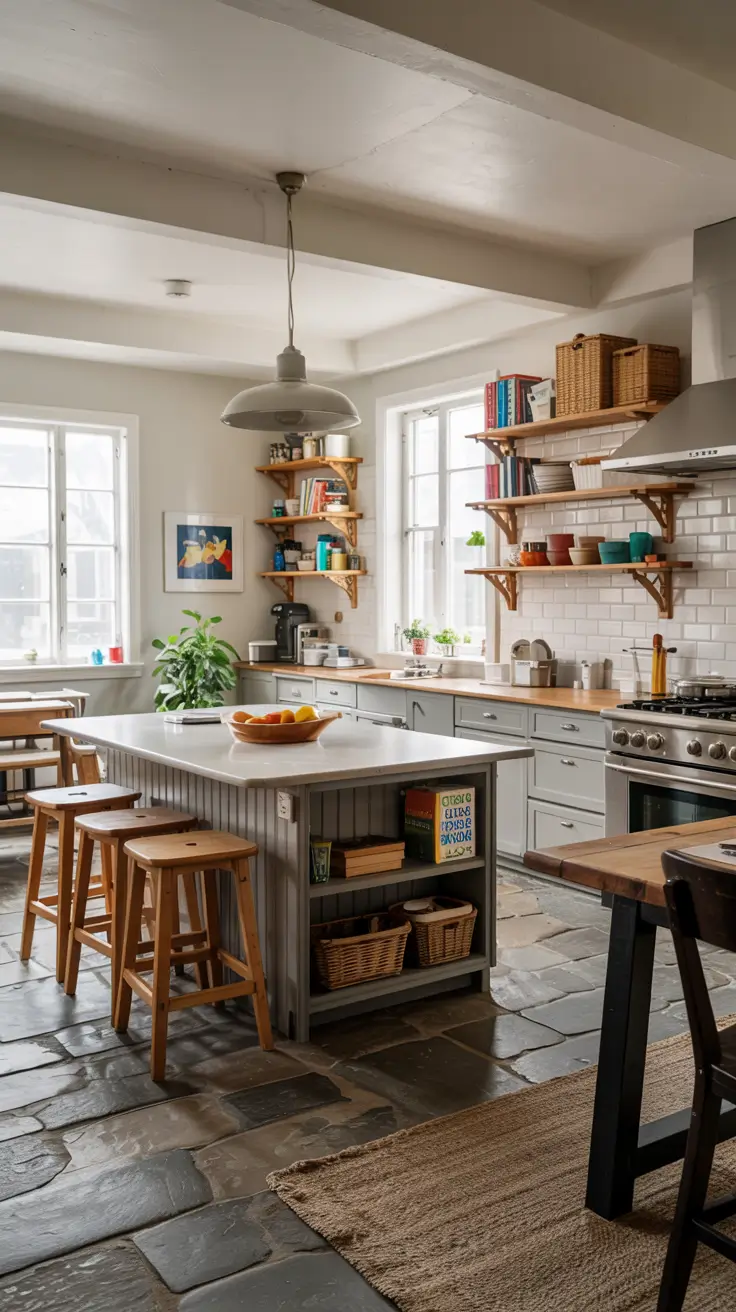
In the case of furniture and fixtures, I would focus on long-lasting materials and surfaces that can be cleaned easily. I prefer to identify quartz or other tough countertops, matte cabinet finishes that conceal fingerprints, and family-friendly flooring, such as luxury vinyl or engineered wood. Islands can also contain storage of school supplies, board games or craft materials and the kitchen therefore is a real multi use center. I occasionally apply kitchen remodel concepts that have open shelves close to a dining table to put daily dishes or artworks of kids in plain frames. This will be accompanied by a comfortable dining bench or banquette, this arrangement will promote people to lounge in the same common place.
In my view sightlines and supervision are important in family oriented open kitchens. According to many American designers who deal with families, the ability to see kids in the living room to the kitchen is one of the largest reasons why people opt to have open layouts, which is what I experience in reality, as well. This is the reason I place such seating, play spaces, or media areas in areas in which I can see them through the primary prep space. I also prefer providing a landing area close to the entrance to prevent spilling of the backpacks and sports gears in the actual kitchen. With everything in place, the open kitchen will remain nice even on the busiest days.
Acoustic comfort is another point that I would highlight. Open areas become rather noisy, that is why I would recommend to include some soft furniture items such as rugs, upholster chairs, fabric Roman shades, and art-ish acoustic panels into the other living room. These details will absorb sound and make a conversation in the area of the island more comfortable. The end result will be a family friendly open kitchen that is not overly loud.
20. Eco-Friendly Open Kitchen Remodel Trends To Try
When I consider the eco friendly open kitchen remodels, I consider both materials and the long term performances. Sustainability to many open kitchen remodel ideas 2026 would entail the use of low VOC finishes on cabinets, hardened and sustainably sourced countertops, and low-energy consuming lighting. Having the kitchen open to the larger windows, balconies or patios available also enable improved natural ventilation, a silent yet significant aspect in comfort. I prefer to position the major prep area and seating area towards daylight to maximize the use of daylight instead of artificial lighting. These decisions enhance the atmosphere of the overall shared area in an open plan.
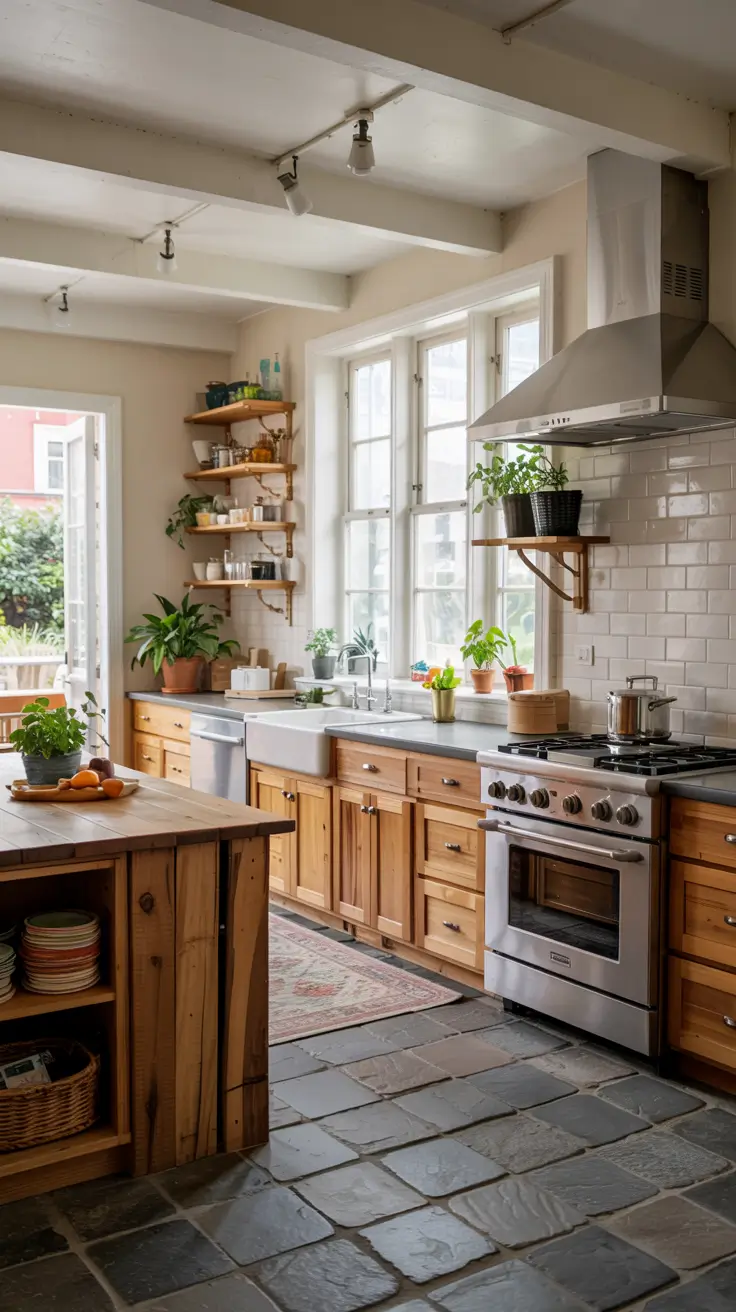
On the product side, I would focus on Energy Star rated appliances, induction cooktops where possible, and LED lighting in the kitchen and the adjacent dining or living room. I also seek the possibilities of reusing the elements of the current structure, like retaining solid cabinet boxes and incorporating new doors, or refinishing hardwood floors rather than changing them. Such close conceptual planning saves waste and frequently saves money. I use reclaimed wood on a feature wall, shelf, or island when it fits the style to make more use of existing resources. An eco minded lifestyle is also assisted by water saving faucets and considerate recycling stations.
In my observation, sustainable remodels that are most successful are where the aesthetic and the green decisions are consistent with each other. Several authoritative sources on US design are currently pointing out kitchens that blend warm and natural materials with efficient systems and I believe that this is the way to go concerning open layouts. The shared space is cozy and relaxed by using natural textures such as wood, stone, and linen textiles. Bigger interior plants or herb gardens in the kitchen window also help to improve the air quality and have a feeling of bond with nature. These touches make a comfortable background which matches with eco friendly technology.
What I would include here is the need to prepare in advance to be able to adapt and avoid the necessity of a complete renovation of the kitchen. I enjoy creating layout floor plans in a way that would be easy to change over time, changing appliances, or even rearranging storage, without completely demolishing the space. You can also update the look with smaller pieces such as lighting, stools and textiles later because the major surfaces have neutral, timeless finishes. To my mind, this long term thinking is one of the most sustainable options you can ever have when you are remodeling an open kitchen.
21. Final Thoughts On Designing The Ultimate Open Kitchen In 2026
When I envision the final open kitchen in 2026, I visualize one, which is harmonized in terms of beauty, practicality, and flexibility. It is not merely a dramatic open concept kitchen remodel before and after concepts, but rather how the space contributes to the actual everyday practices. The top designs that I have experienced and designed upon do not ignore the original nature of the home, and yet they are also able to adopt the simplicity of the modern open plans. The initial location may be a closed off room or an outdated semi open plan but the idea is to make it easier to walk around in, more comfortable to sit and have greater access to light and views. That is what makes a remodel a permanent upgrade.
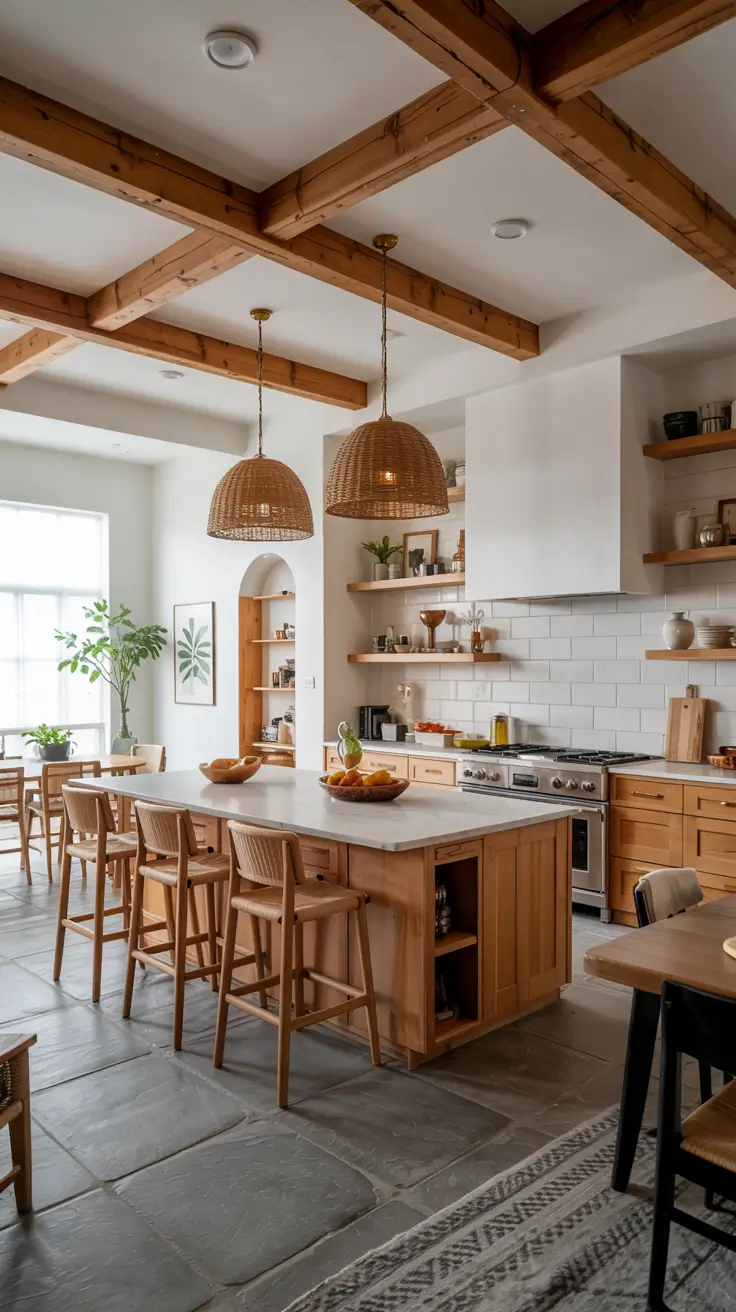
When it comes to laying out in particular, I come back to the fundamentals of good layout floor plans. Cooking and collection are made easier by clear triangles of work, ample circulation routes and location of floors islands. In the case of certain houses, this involves galley kitchen remodel concept eliminating the wall open concept ideas to open up one side of a small kitchen to the dining area. In others, it is a reshaping of half an island into a complete one, which you will walk round on all sides. Storage in any case must be thought through so that the things needed every day are nearby without obstructing the free view lines.
Another thing I hold on is that each open kitchen must have the personality of the people, who make use of it. Others will be tempted to lean in to the small open kitchen remodel ideas that seem warm and layered, others might see themselves drawn to crisp minimalism or a more relaxed appearance inspired by the vintage details and open concept 1970s kitchen remodel ideas. Most designers note that it is personal touches that bring soul to a space: artwork, something tasty on the shelf, or a unique light fixture and I totally support this. These details are seen in many angles in an open plan hence they are even more important. The combination of functionality and personality is what makes the kitchen seem to be home.
The main thing that I would highlight in this part is the importance of remodelling planning as an extension of the entire house and not an isolated project. I can suggest to consider the interaction between the open kitchen and the hallway, entries, and access to the exterior and Dining living room remodeling simultaneously. And with finishes, lighting and furniture selections all coordinated in all these zones, you have a coherent serene atmosphere rather than a mish mash of unrelated additions. In that way, open kitchen turns into the center of the home in 2026 and further on.