Tiny spaces can still feel generous when storage is planned with intention, and that is exactly what tiny pantry design ideas are about in 2026. Have you been wondering which tiny pantry designs actually work in real life, how a tiny kitchen design with pantry can stay clutter free, and what details make a pantry feel built in rather than improvised? In this article, I walk through seven practical directions that fit today’s small homes, rentals, and remodels. I will focus on layout choices, shelving strategies, lighting, and materials so you can picture the whole space before you commit. You will also see how options like a tiny pantry closet design or a tiny walk in pantry design can scale up or down depending on your plan.
1. Tiny Pantry Design Ideas For Modern Small Spaces
When I design for a small footprint, I start by treating the pantry as part of the room, not an afterthought. A modern tiny pantry works best when it has clean lines, consistent finishes, and a clear visual rhythm that matches the Kitchen around it. I like full height storage because it uses vertical volume without stealing walking space, and it keeps the floor easy to clean. For a 2026 look, I lean toward flat front cabinetry, slim pulls, and a calm palette that blends into surrounding walls. The goal is to make the pantry feel like a built in feature that improves flow instead of adding visual noise.
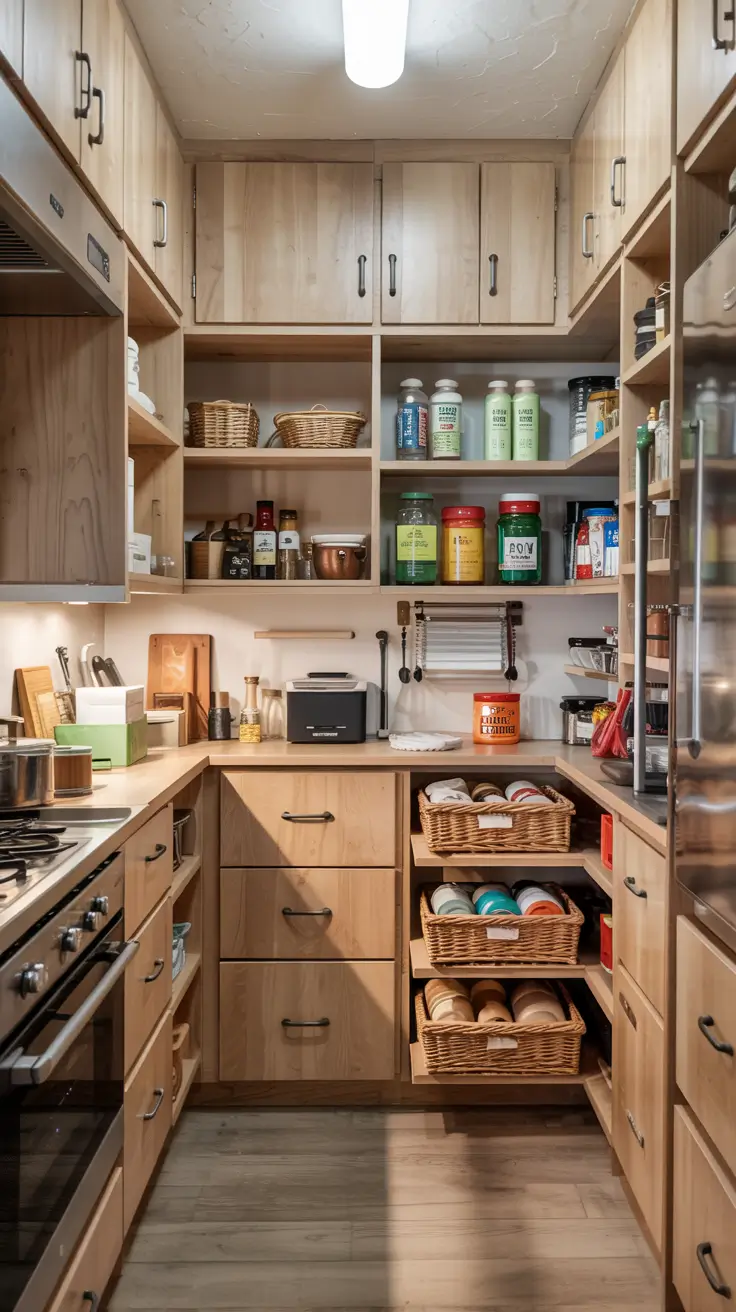
Inside, I rely on a mix of fixed shelves and adjustable shelves so the storage can evolve with your habits. I typically include one deeper shelf for bulky items, several medium shelves for staples, and a narrow top shelf for backstock. Pull out baskets are useful when the pantry is shallow, because you can see everything without unloading the front row. If the door swing is tight, I prefer a pocket door or a shallow hinged door with interior racks so nothing blocks the entry. I also like a simple counter height landing spot if there is room, since it turns pantry restocking into a smoother routine.
From my experience, the best tiny pantry design ideas are the ones that reduce decision fatigue. When the most used items sit at eye level and categories are consistent, you spend less time searching and more time cooking. I keep lighting bright but warm, because a pantry that feels pleasant is a pantry you maintain. I also avoid overpacking a tiny pantry on day one, since a little breathing room prevents items from toppling. A small space feels larger when every zone has a purpose and the finishes stay quiet.
If I were adding anything extra to this type of pantry design tiny setup, it would be a slim labeling plan and a single dedicated zone for awkward items. I often reserve one shelf for small appliances so they do not invade counters, and I set aside a bin for snacks so they do not spill across multiple shelves. If the pantry shares a wall with a fridge or oven, I also like adding a heat safe buffer panel so packaging stays cool. Finally, I would add a door stop or soft close hardware to keep the space calm and durable in daily use.
2. Tiny Pantry Designs That Maximize Storage In Minimal Layouts
When I am aiming for maximum capacity, I design tiny pantry designs around the idea of density without mess. That means every shelf depth is chosen on purpose, and nothing is so deep that it becomes a black hole. I focus on making the wall area do most of the work, so the pantry stays slim and the walkway stays comfortable. Minimal layouts benefit from symmetry because it is easier to scan and restock. In 2026, this approach looks best when the storage reads as a clean grid rather than a patchwork of mismatched organizers.
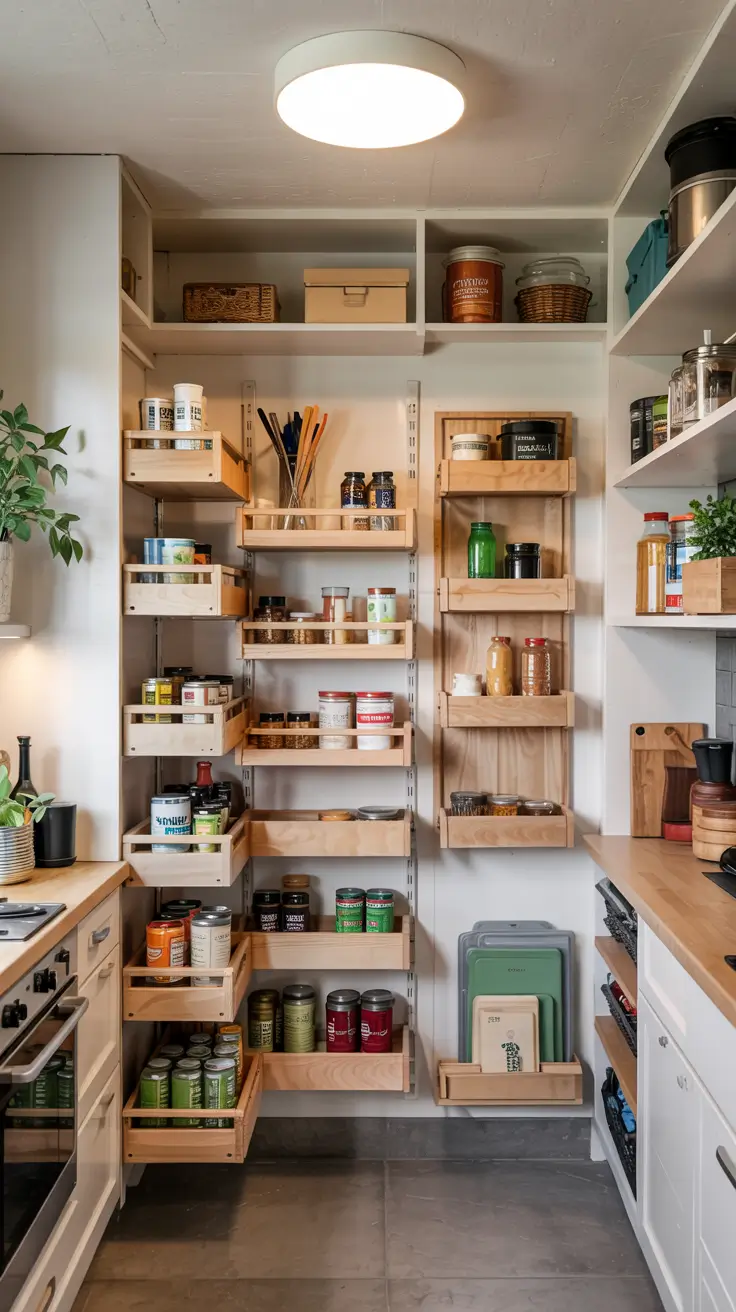
To get real storage gains, I combine adjustable shelving with pull out trays and vertical dividers. Trays are ideal for cans and jars because you can pull the whole group forward and see the back row instantly. Dividers keep baking sheets, trays, and cutting boards upright so they do not collapse into a leaning pile. I also like adding a narrow spice column or shallow door racks, but only if they do not interfere with closing. If the pantry has a corner, a lazy Susan or curved corner shelves prevent dead space and protect your hands from awkward reaching.
In my own projects, I have found that maximizing storage is less about adding more containers and more about limiting categories. If you assign a single shelf to breakfast, another to dinner staples, and one to baking, the system stays stable. I also keep heavier items between knee and shoulder height, because that is where you interact with the pantry most. The most effective layouts feel almost boring, in a good way, because they eliminate surprises. A predictable pantry is the one that stays organized.
What I would add to strengthen this setup is a measuring step before buying bins and a plan for airflow. I like to leave a little space behind certain items, especially onions or potatoes if you store them, so they do not trap moisture. If you have kids, a low shelf for snacks helps keep higher shelves tidy. I also recommend a small clipboard or note card area inside the door for a running list, because it reduces duplicate purchases. Those small habits make a high density pantry feel effortless.
3. Tiny Kitchen Design With Pantry For Smart Everyday Use
A tiny kitchen design with pantry works best when the pantry supports the way you move through the kitchen each day. I usually map the “grab and go” path from fridge to counter to stove, and then I place pantry storage so it sits near the prep zone. In a small Kitchen, steps matter, so a pantry that is two moves away from the cutting board feels more usable than one that is technically larger but poorly placed. I also like to keep the pantry visually connected to the cabinetry so the whole room feels intentional. This design direction is less about a separate room and more about a smart wall of storage.
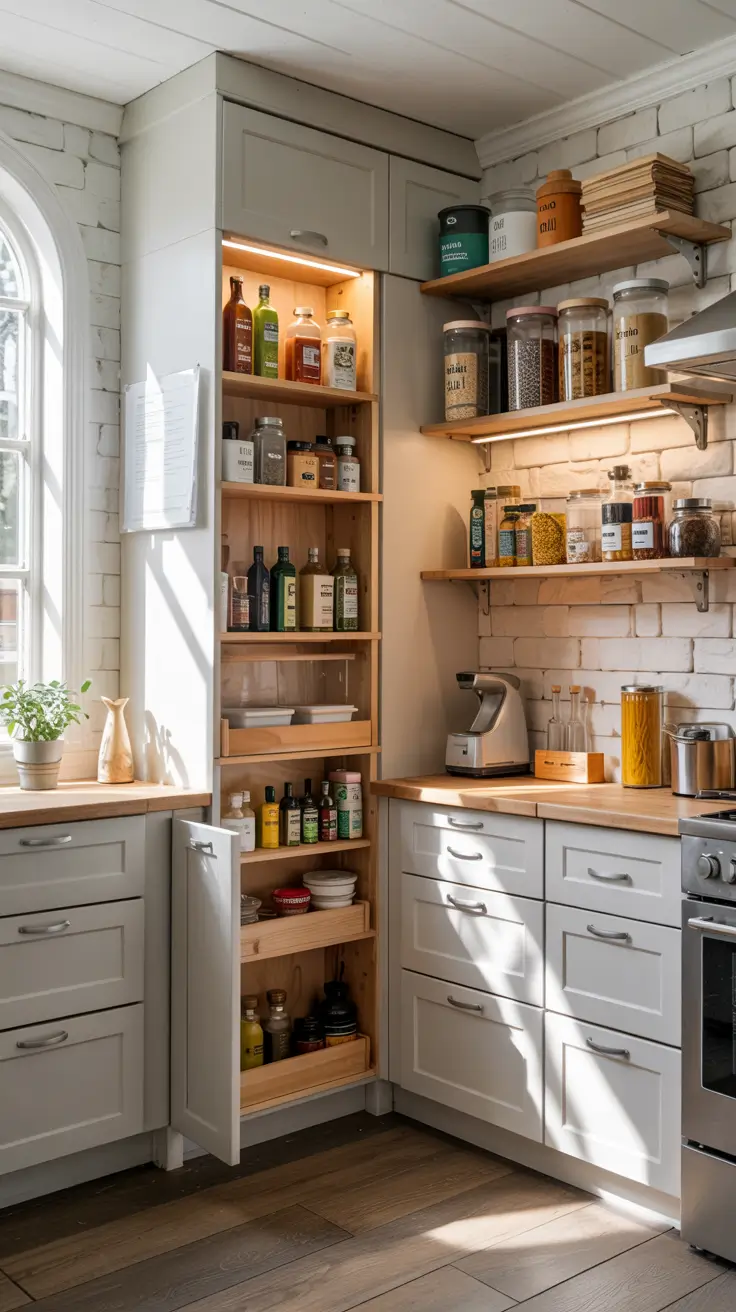
For the interior, I include at least one narrow pull out unit for oils, vinegars, and sauces since those support daily cooking. I like a mid height shelf for bowls, grains, and quick meals, and a lower zone for heavier items like flour and bulk containers. If there is room, a shallow counter inside the pantry niche becomes a landing spot for small appliances like a blender or toaster. Under shelf lighting is worth it in a tiny space because it reduces shadows and helps you keep things clean. For doors, I choose a style that matches the cabinet fronts so the pantry reads as part of the furniture, not a utility closet.
In practice, I have seen that a pantry in a tiny kitchen pantry design succeeds when it prevents countertop sprawl. When people have a clear home for snacks, coffee supplies, and cooking basics, counters stay open and the kitchen feels bigger. I keep the most used items in the easiest reach zone, even if that means the pantry holds slightly less overall. A small kitchen rewards comfort and speed more than maximum capacity. If your pantry makes cooking calmer, it is doing its job.
What I would add to this section is a simple plan for waste and recycling near the pantry. If you keep paper goods and backstock close by, you also generate packaging nearby, so a slim pull out bin can help. I would also add a designated shelf for meal prep containers to prevent them from drifting into random cabinets. If your pantry is near the entry, a small drop zone shelf can handle groceries before they are sorted. Those details make everyday use smoother.
4. Tiny Pantry Closet Design For Hidden And Organized Storage
A tiny pantry closet design is perfect when you want storage that disappears behind a clean door line. I often use this approach in open plan homes where the kitchen is visible from the living space and you want the background to look calm. The closet format can sit in a hallway nook, at the end of a cabinet run, or even beside a laundry area, as long as it stays convenient. The design goal is to keep the front simple while the interior does the heavy lifting. In 2026, I like this with a seamless door, subtle hardware, and interior organization that feels tailored.
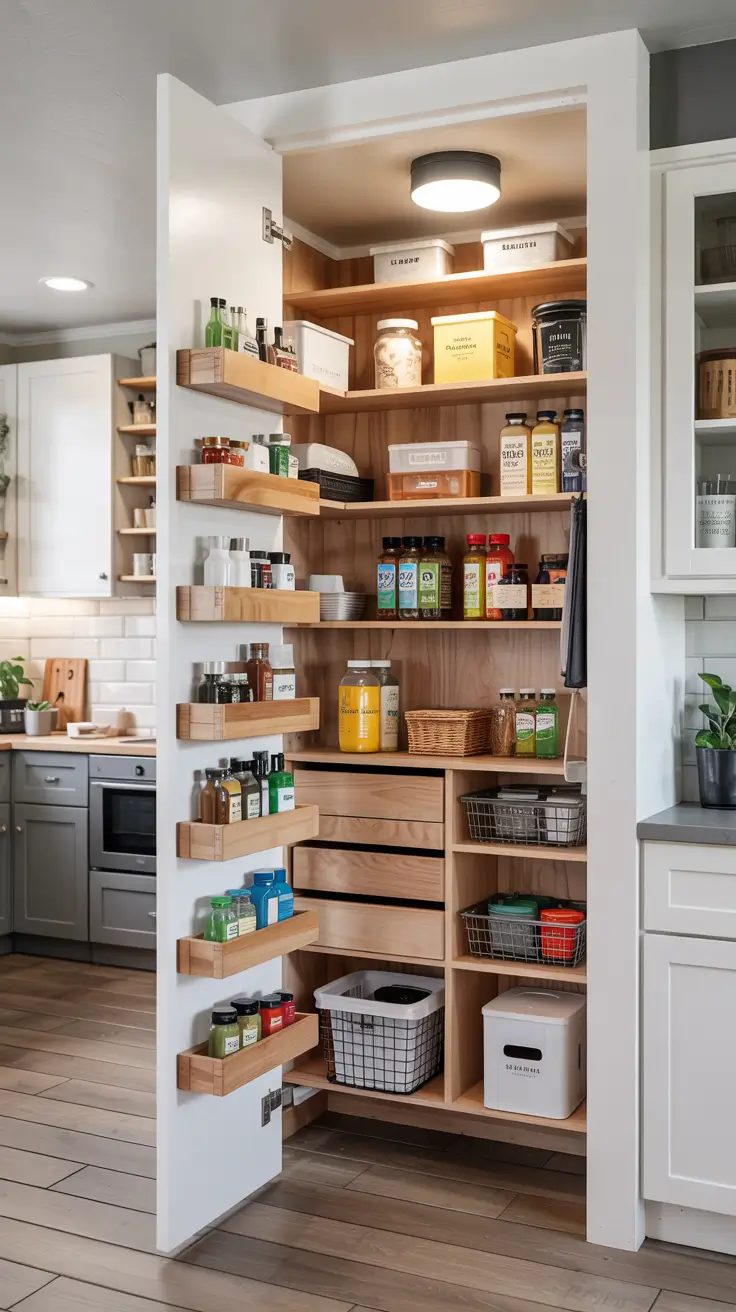
Inside the closet, I rely on shallow shelving so everything stays visible and accessible. I usually specify adjustable shelves with sturdy brackets because pantry loads change over time. Wire baskets or wood drawers help contain packets and snacks, and they keep small items from migrating. If the closet is narrow, I add door mounted racks for spices and small jars, but I keep them slim so the door closes cleanly. I also like a bright ceiling light or motion sensor light because a closet pantry can feel dark without it.
From my perspective, hidden storage is most successful when it has a consistent internal layout. If each shelf has a role, you never have to guess where something belongs, which keeps the closet tidy. I also prefer fewer container types rather than a mix of random sizes, because it creates visual calm and makes restocking easier. When I design a closet pantry, I try to avoid dead corners and overly deep shelves that swallow items. The closet should feel like a miniature store aisle you can scan in seconds.
If I were improving this concept further, I would add a small ventilation gap and a simple inventory habit. A tiny closet can trap odors if it is tightly sealed, so I like a small undercut at the door or a discreet vent if possible. I would also add one dedicated overflow bin for party supplies or seasonal items so they do not disrupt daily categories. If the closet is near the entry, hooks or a small shelf outside can help with grocery bags. Those additions keep the closet pantry functional without changing its clean exterior.
5. Tiny Walk In Pantry Design For Compact Homes
A tiny walk in pantry design can exist even in compact homes when the footprint is planned carefully. I treat it like a small room with a clear center aisle and shelving on one or two walls, depending on width. The key is keeping the entry wide enough and the shelves shallow enough so you can turn and reach comfortably. This style feels premium because it gives you a destination for storage, even if it is small. In 2026, the best versions feel bright, airy, and highly organized rather than stuffed.
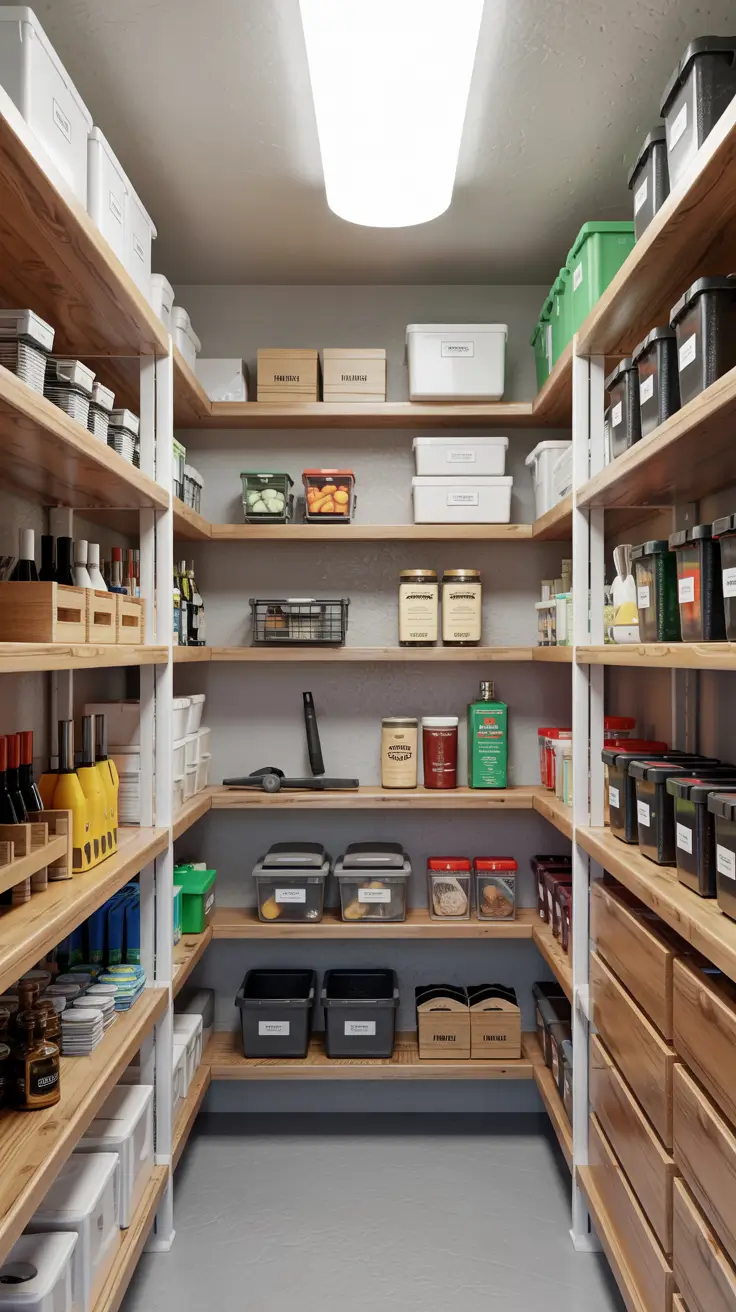
For furniture and built ins, I prefer floor to ceiling shelving with a few closed cabinets at the bottom for visual calm. If space allows, I like a small counter ledge for sorting groceries or setting a coffee station. Clear bins help you see what you have, while solid bins work well for snacks and packets that look messy. I also recommend at least one drawer for small items like clips, labels, and spare measuring tools. Lighting matters a lot here, so I like a ceiling fixture plus a simple strip light under the top shelf for even coverage.
In my experience, the most common mistake is making shelves too deep in a tiny walk in pantry design. Deep shelves encourage stacking, and stacking hides items, which leads to waste. I keep shelf depth around what your hand can comfortably reach, and I reserve one deeper area only for paper goods. When the space is small, a consistent shelf spacing gives you a better overview. A tidy walk in pantry makes a compact House feel more capable, because it supports bulk shopping and weeknight cooking.
What I would add to round out this idea is a door strategy and a sound plan for zones. A pocket door or outward swing door keeps the aisle clear, and it reduces bottlenecks. I would also add a clear plan for categories like breakfast, baking, snacks, and dinner staples so the room stays predictable. If the pantry is near a laundry area, I would include a separate shelf for household items to prevent mixing. Those small choices keep the walk in pantry feeling calm and safe.
6. Pantry Design Tiny Solutions For Efficient Organization
When the footprint is very limited, pantry design tiny solutions depend on smart constraints. I focus on accessibility, visibility, and repeatable routines, because organization only works if it is easy to maintain. A tiny pantry can feel larger when the layout creates clear lanes and nothing blocks sightlines. I also aim for a consistent material palette so the pantry looks intentional, even if it is just a narrow niche. This approach is about making a small storage area behave like a bigger one through structure.

To build that structure, I use shelf risers for cans, turntables for condiments, and narrow bins for categories like snacks or baking. I include one “drop zone” bin for items that do not have a home yet, because that prevents clutter from spreading. If there is a door, I add a slim rack for wraps, foil, and small jars, since these are light and easy to grab. I like clear containers for staples like rice, pasta, and cereal so you can check levels fast. These pieces act like furniture inside the pantry, creating order without needing more square footage.
I have found that efficient organization is more about removing friction than chasing perfection. If you can see everything in one glance, you naturally keep it tidy. I also encourage people to design around their real cooking habits instead of copying a picture. Some households need more snacks, others need more baking, and the pantry should reflect that. A pantry that matches your routine stays organized longer.
If I were adding anything, it would be a quick reset routine and a plan for labeling without clutter. A five minute weekly reset, where you pull forward items and group categories, keeps the system stable. I also like minimalist labels on the front edge of bins rather than labels on every jar, since that can feel busy. If you store a mix of food and household items, I would add a divider shelf or separate bin colors to avoid confusion. These additions keep the system practical and easy to maintain.
7. Tiny Office Pantry Design For Work From Home Comfort
A tiny office pantry design is one of my favorite upgrades for work from home life because it supports comfort without turning the office into a Kitchen. I design it to feel like a tidy hospitality nook, with a small footprint and clean storage. The idea is to keep coffee, tea, water, and snacks close so breaks are easy and focused. For 2026, I like this as a built in cabinet wall or a compact niche with shelving and a small counter. It should look like part of the Office furniture, not a random kitchen cart.
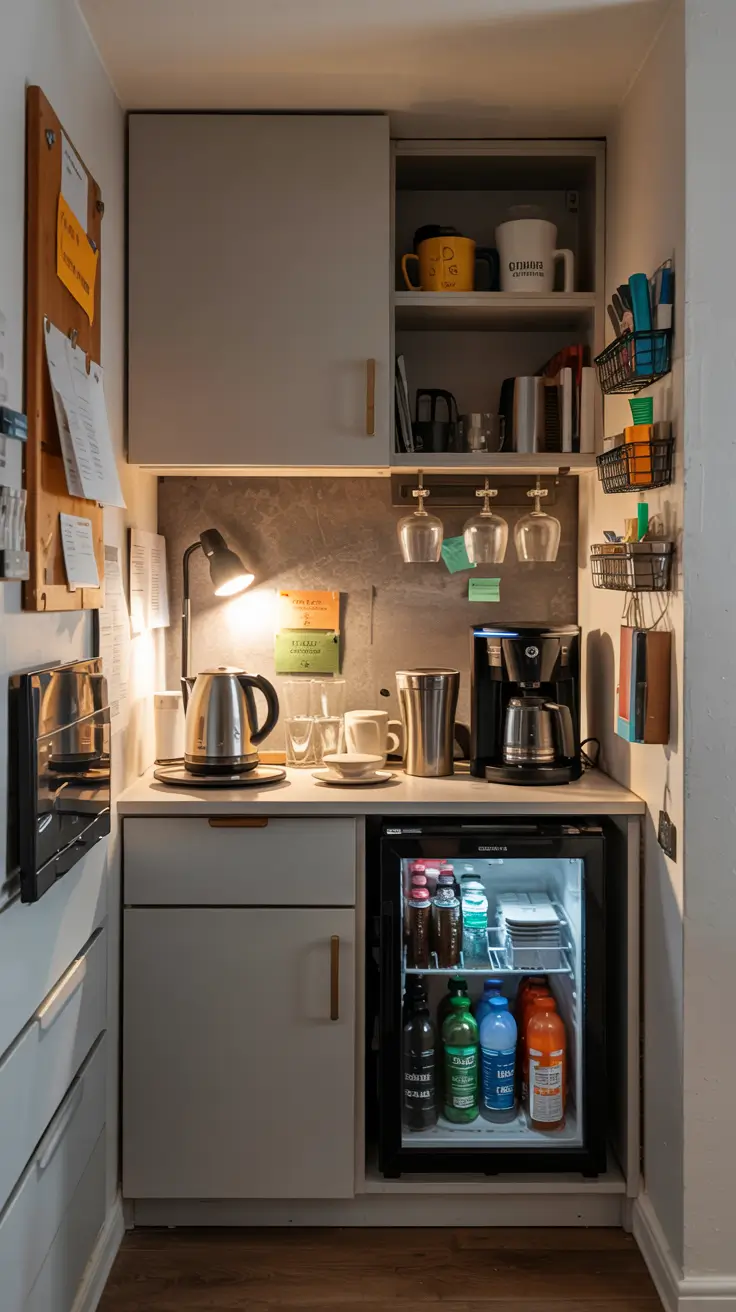
For the setup, I include a small counter surface for a kettle or compact coffee machine, plus closed storage for supplies to keep visual clutter away. A mini fridge drawer or under counter fridge can fit if the space allows, but I keep ventilation in mind. I add one or two shelves for mugs and glasses, and a drawer for stirrers, filters, and small snacks. Good lighting is essential, so I use a warm under shelf light to make the nook inviting. Finishes matter too, and I like durable surfaces that resist stains and wipe clean easily.
In my experience, this kind of pantry makes workdays smoother because it reduces micro interruptions. If you can refill water or grab a snack without leaving your workspace area, you protect your focus. I also like that it creates a gentle boundary between work and kitchen activity, especially in small homes. A tidy refreshment nook encourages healthier habits because it makes hydration and planned snacks more convenient. It is a small change that can make a House feel more supportive for daily routines.
What I would add to complete this idea is a sound plan for cables, noise, and storage limits. If you use a coffee machine, I route cords neatly and keep a small tray to catch drips. I also suggest choosing quiet appliances so the Office stays calm during calls. I would add a small lidded bin for packets and wrappers to keep the area tidy. These details keep the office pantry practical and polished.
8. Tiny Kitchen Pantry Design That Saves Space And Time
When I design a tiny kitchen pantry design for speed, I treat it like a workstation, not a closet you visit once a day. I like a tall, shallow pantry wall near the fridge and prep zone so ingredients are within one or two steps. In 2026 interiors, this looks cleanest with flat-front cabinetry, a slim vertical pull handle, and warm neutral finishes that match the kitchen. I plan the interior with zones so breakfast, baking, and weeknight cooking each have a dedicated area. The goal is to reduce back-and-forth movement and keep counters clear.
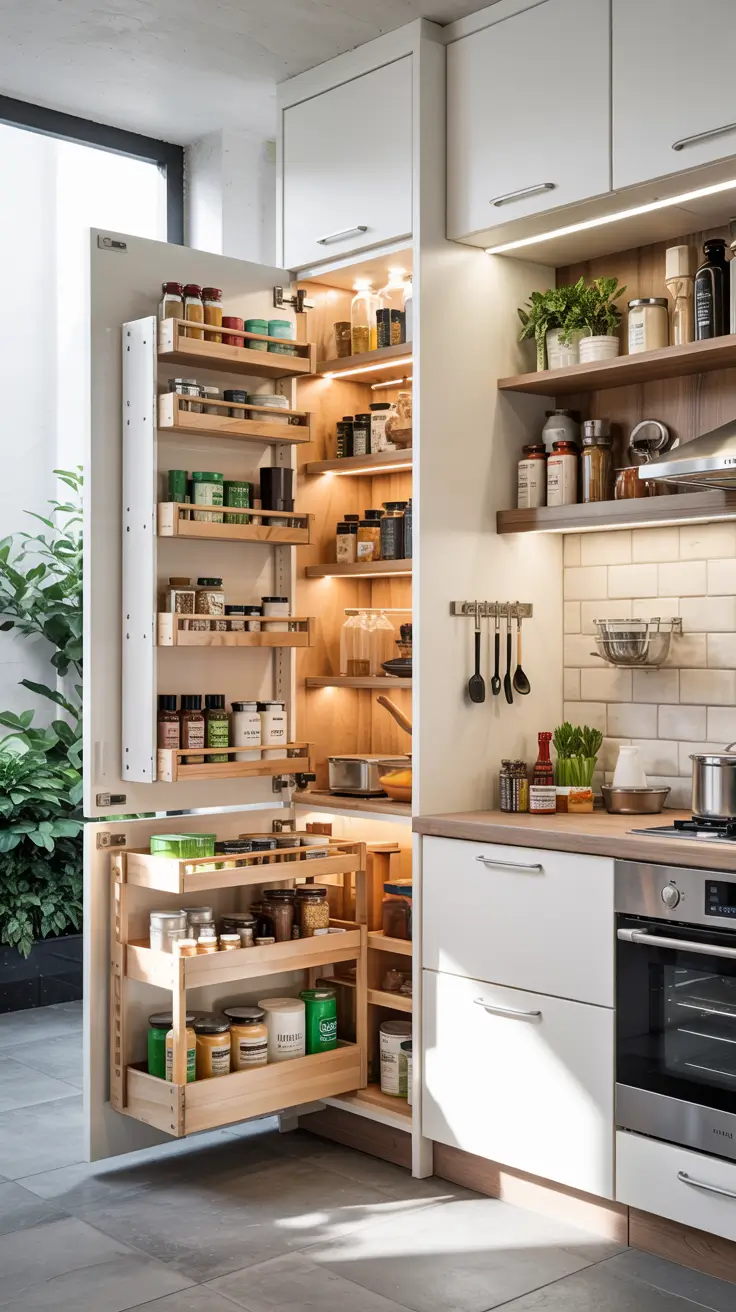
Inside, I rely on pull-out trays for cans and jars because you can see everything without digging. I include narrow adjustable shelves for spices and small bottles, plus a mid-height section sized for cereal containers and meal prep bins. A shallow drawer for wraps, bags, and labels keeps the pantry from becoming a paper pile. I also add a small countertop niche or appliance garage for a blender or toaster if the kitchen is truly compact. Good lighting is essential, so I use an LED strip inside the cabinet and a door-activated sensor for hands-free use.
In my experience, the time saver is not one special organizer, it is consistent shelf depth and a clear labeling rhythm. I keep daily staples at chest level and reserve high shelves for backups, which prevents overbuying and expired food. I also recommend leaving a small empty buffer zone for new groceries, because a pantry that is packed tight never stays organized. If you want it to feel calm, choose matching containers for grains and snacks, and keep packaging in a single bin instead of across multiple shelves. This is the most realistic way to make a tiny kitchen design with pantry feel effortless.
What I would add to complete this section is a simple measurement rule for shelf spacing and container sizing. I usually plan 10 to 12 inches for most pantry shelves, then include one taller bay for bottles and paper towel storage. A quick inventory note on the inside of the door can also help, especially in a shared House where multiple people shop. If you have room, include one pull-out trash and recycling solution nearby so packaging leaves the kitchen quickly. This final step supports the “save space and time” promise.
9. Tiny House Pantry Design Ideas For Sustainable Living
A tiny house pantry design has to work harder because storage is limited and shopping habits change. I often see tiny houses succeed when the pantry is designed around refills, bulk staples, and fewer single-use packages. For 2026, I like a warm modern look – light wood tones, matte hardware, and simple open shelving paired with one closed cabinet area. I plan a compact pantry near the entry or kitchen so groceries can be put away immediately. Sustainability is easier when storage is obvious, accessible, and designed for routines.
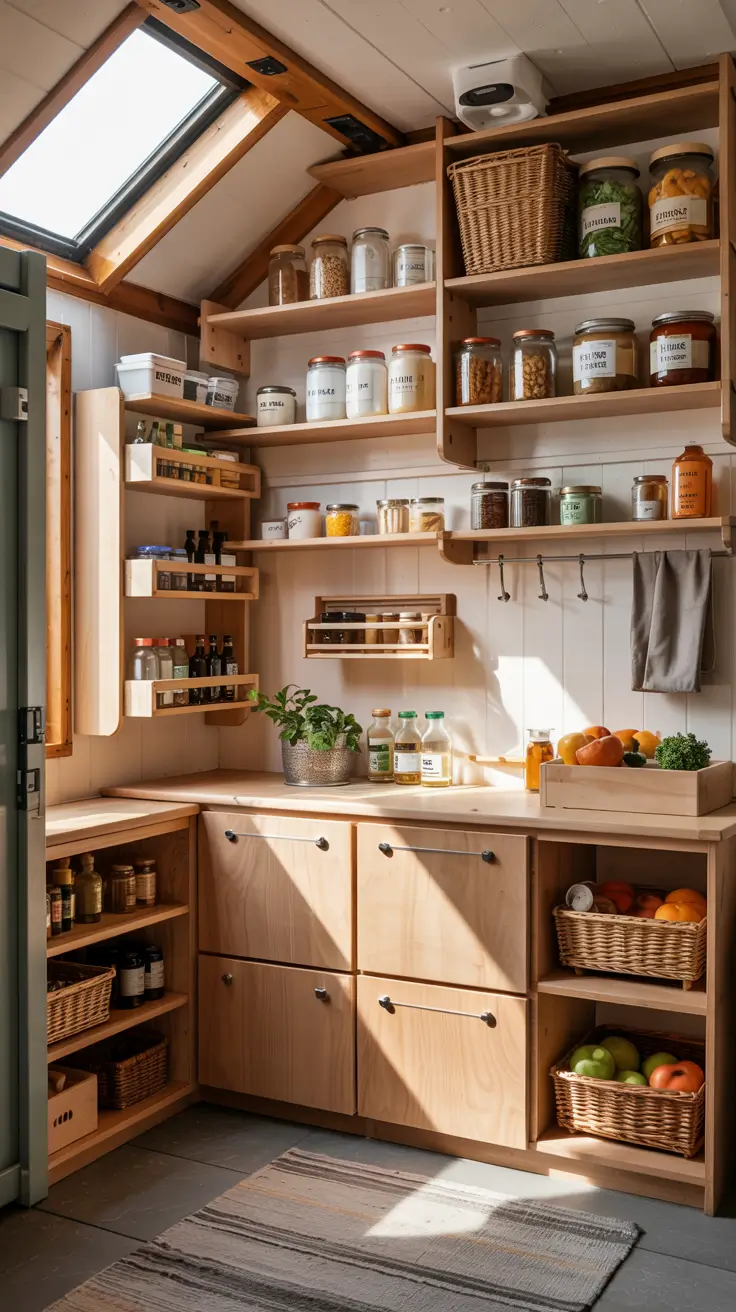
Furniture and built-ins matter here, even in a small footprint. I include a narrow open shelf column for jars, plus a closed lower cabinet to hide visual clutter like compost liners or reusable bags. A wall-mounted rail can hold small baskets for onions, garlic, and pantry cloths without taking shelf space. I also like a slim pull-out for glass bottles and cooking oils, because it reduces spills and prevents forgotten items. If the tiny house includes stairs, the under-stair volume is prime real estate for a pantry wall with doors that match the interior.
My personal rule is to make “refill first” the easiest choice, which means clear labeled jars at eye level. I keep a small bin for empty containers so the refill cycle stays convenient. I also recommend choosing containers that stack well and are easy to wash, because sticky lids are the fastest way to abandon the system. In a tiny house, a little humidity control helps too, so I include a breathable basket for potatoes and a sealed bin for flour. This is how tiny house pantry design stays functional, not just aesthetic.
What I would add here is a small planning zone, even if it is only a narrow clipboard shelf. A tiny note area for pantry inventory and meal ideas reduces waste and stops duplicate purchases. I also like to add a compact step stool or toe-kick pull-out if vertical storage is used, because safety matters in a tiny space. If you store bulk grains, include one airtight backup bin low down so you can refill jars without lifting heavy bags overhead. These details support sustainable living without making the pantry feel complicated.
10. Tiny Pantry Ideas Using Vertical And Corner Spaces
Vertical and corner storage is where tiny pantry design ideas become truly creative, because unused height is often the biggest missed opportunity. I like designs that go to the ceiling with clean lines so the pantry reads as part of the architecture, not an add-on. In 2026 interiors, this looks especially modern when corner solutions are integrated behind matching cabinet fronts. I plan vertical zones with a realistic reach range, so daily items are not stored in places that require a climb. The result is a pantry that feels taller and calmer without increasing floor area.
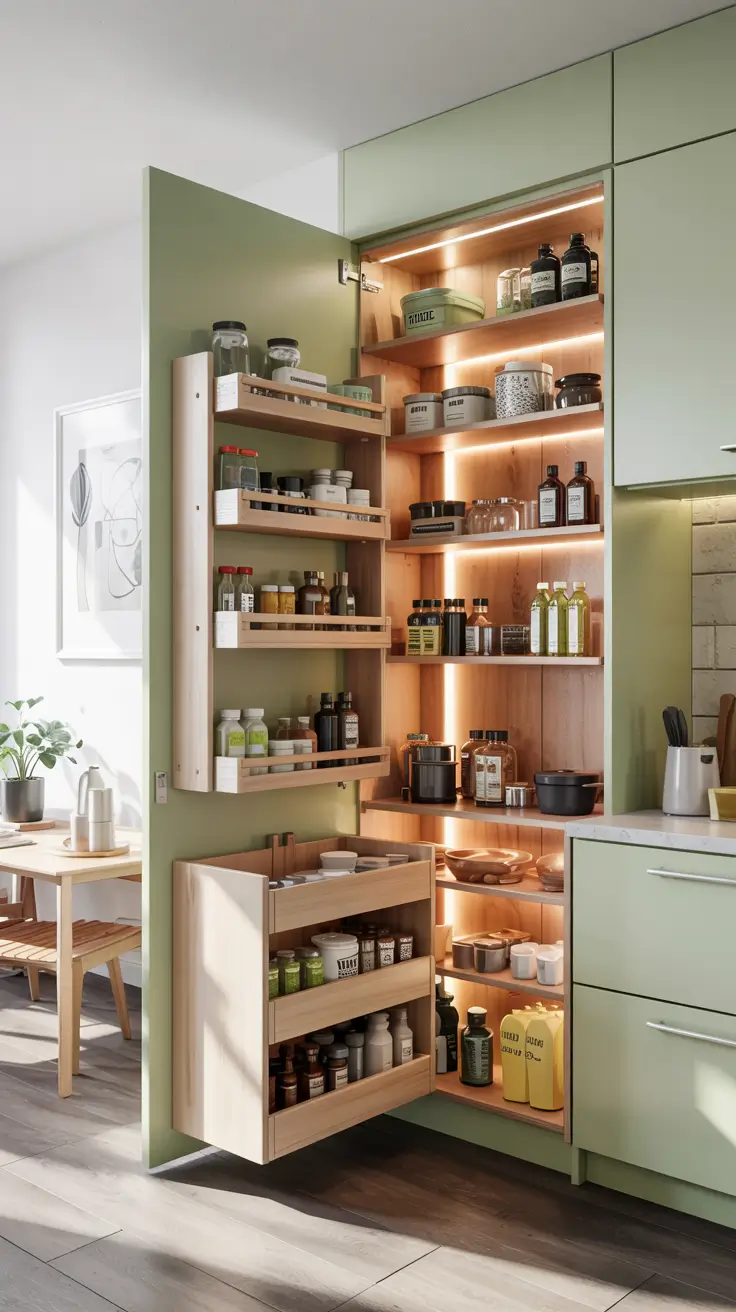
For the corner, I use a lazy Susan or a kidney-shaped pull-out that brings items forward smoothly. I prefer pull-outs when possible because they keep labels facing you and reduce forgotten food. For vertical walls, I add slim door racks for spices, packets, and small snacks, but I keep them shallow so the door closes cleanly. A tall section with adjustable shelf pins is important because food packaging changes and families change. If the pantry sits near the Kitchen, I also add a narrow broom and vacuum slot so cleaning tools do not compete with food storage.
I have found that vertical storage only works when the categories are strict and easy to reset. I keep heavy items low, medium items at chest height, and light backups at the top. I also like to use uniform bins on the highest shelf so you can pull down one bin and access several items at once. If you hate visual clutter, use a mix of closed bins and clear bins, clear for daily staples and closed for messy packaging. This approach fits pantry design tiny constraints while still feeling polished.
What I would add to make this section stronger is a quick checklist for corner measurements and hardware clearance. Corner pull-outs need room to swing and extend, and that is where many DIY plans fail. I also recommend adding one vertical “miscellaneous” bin, because every pantry needs a place for odd items like candles or party supplies. If you want the pantry to stay organized, build in a 2-minute reset habit at the end of the week. That habit is the hidden advantage of vertical and corner systems.
11. Tiny Pantry Closet Ideas For Apartments And Studios
In apartments and studios, a pantry often has to live inside a Closet-like volume, and the design needs to look intentional when the door opens. I approach this as a tiny pantry closet design project with a strong visual plan – consistent containers, aligned shelves, and a door that matches the room. A modern 2026 look can be achieved with a slim shaker door or flat slab door, soft interior lighting, and a neutral palette. I also plan for noise and movement, since studio living means everything is close to everything. The pantry should be quiet to use and easy to keep tidy.

Inside this pantry closet, I like a three-part layout: upper backups, middle daily food, and lower heavy storage. I add wire or wood shelves depending on the budget, but I always choose shelves that allow light to reach the back. A narrow rolling cart can be a perfect “mini pantry” inside the closet if there is enough depth, because it slides out and shows everything at once. Door racks hold spices and small jars, while a deeper shelf holds snack bins. If the closet is near the entry, I include a small section for grocery bags and a hook rail for keys so the routine stays smooth.
From what I see in real homes, the most important part is keeping packaging under control. I recommend using two or three larger bins for grouped categories like snacks, baking, and breakfast, rather than dozens of tiny containers that require constant maintenance. If you use clear containers, choose one shape family so stacking is predictable. I also like adding a small tray for oils and vinegar to catch drips, which prevents the closet from smelling like pantry spills. This is how tiny pantry designs stay livable in compact apartments.
What I would add here is guidance on ventilation and moisture, since closets can trap odors. If the closet is fully enclosed, consider a louvered door or a small airflow gap. I would also add a simple lighting recommendation, like battery LED puck lights with a motion sensor if wiring is not an option. A small step stool stored flat against the wall can make top shelves usable without cluttering the floor. These details help a studio pantry feel like a purposeful space, not a compromise.
12. Tiny Kitchen Pantry Ideas For Modern 2026 Interiors
Modern 2026 interiors tend to favor calm surfaces, hidden storage, and warm minimal materials, and I use that same language for tiny kitchen pantry ideas. I like a pantry that blends into the kitchen wall with matching cabinet fronts and minimal seams. The interior can still be highly functional, but the exterior should read as clean and architectural. I often design this pantry as a tall cabinet pair: one side for food, the other for appliances and serving pieces. This approach keeps the kitchen looking uncluttered, even in a small layout.
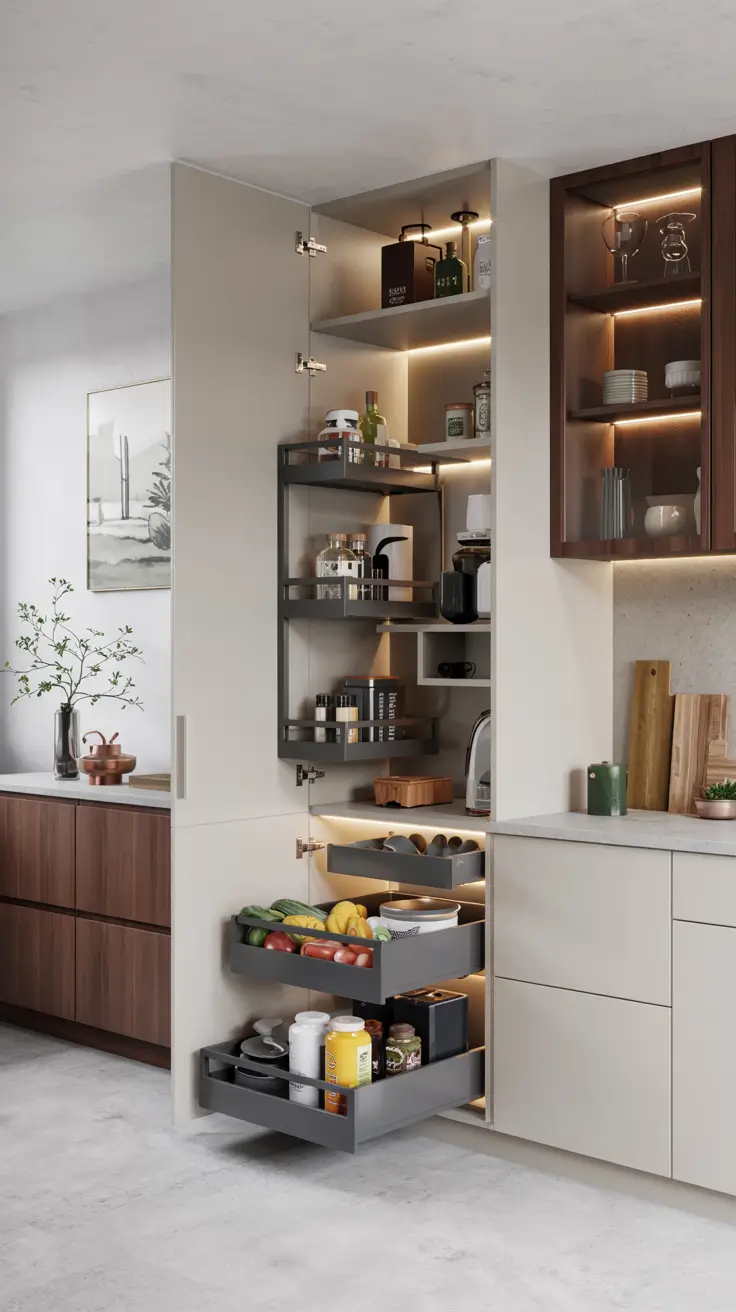
For the interior build-out, I combine fixed shelves with pull-outs so the pantry feels custom without becoming expensive. I include a lower drawer for root vegetables, a mid-level pull-out for cans, and an upper shelf for lightweight backups. A narrow vertical area for trays and cutting boards is surprisingly valuable, because it frees up base cabinets. If space allows, I add an integrated counter shelf inside the pantry for a coffee setup, which creates a dedicated routine zone without taking over the main counter. Lighting is part of the design language now, so I include warm LEDs that make the pantry look premium when opened.
I have learned that modern style fails quickly if the inside looks messy, so the organization system needs to be simple. I recommend a small set of matching bins and containers, and I keep labels consistent so anyone can reset the space. I also like to leave one shelf partially open for daily grab items, because forcing everything into containers can feel rigid. In tiny kitchen pantry design, the best modern look is the one that supports real cooking habits. If you cook often, keep spices and oils closer to prep, and keep backups higher.
What I would add is a short note about finishes that hide wear, since pantries get touched constantly. Matte laminates and easy-clean paints can outperform delicate high-gloss surfaces in daily life. I would also add one section for a charging drawer or small electronics, because modern kitchens often need a home for rechargeable devices. If your Kitchen is open-plan, consider a sound-softening liner under baskets so the pantry is quieter. These small choices keep the modern look intact over time.
13. Tiny Office Pantry Ideas With Minimal Footprint
A tiny office pantry design is most successful when it feels like a clean hospitality corner, not a breakroom squeezed into a hallway. I usually design it as a compact wall unit with a small counter, a beverage zone, and closed storage that hides supplies. The 2026 look is streamlined: flat-front doors, a simple backsplash, and a calm color palette that matches the Office style. I keep the footprint minimal by using vertical storage and shallow-depth cabinets. The goal is a space that supports short breaks without spreading clutter across desks.
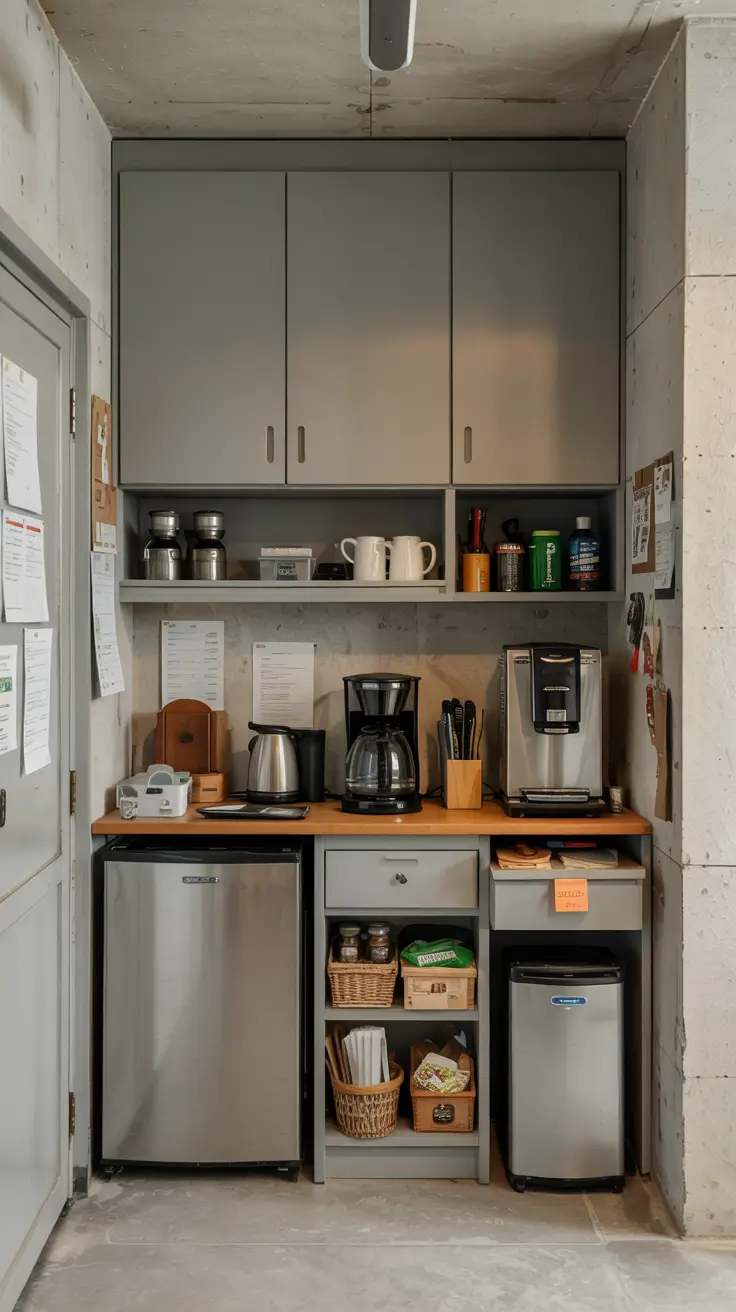
For furniture and features, I include a narrow counter for a coffee machine and an electric kettle, plus a small under-counter fridge if possible. A slim pull-out drawer for tea, coffee pods, and sweeteners keeps the counter clear. I add one shelf for mugs and one closed cabinet for paper goods, napkins, and cleaning wipes. If plumbing is available, a compact sink is helpful, but if not, I design a dedicated dish bin system so the area still stays tidy. A small trash and recycling pull-out is essential so wrappers do not travel back to the workspace.
In my experience, the best office pantry is the one with rules that are built into the design. I keep daily items visible and everything else behind doors, which reduces visual noise and makes the office feel more professional. I also recommend limiting the number of mug styles and container types, because mismatched clutter accumulates fast. If the pantry is shared, I prefer labeled bins by category rather than by person, because it is easier to maintain. This is how tiny office pantry design stays calm even with frequent use.
What I would add here is a quick plan for sound and smell control, especially in small offices. A quiet appliance choice and a simple odor-absorbing solution help the space feel fresh. I would also add a small wall hook rail for towels and a dedicated spot for a handheld vacuum, because crumbs are inevitable. If the Office has clients visiting, consider a closed coffee station cabinet that can hide everything in seconds. That feature makes a minimal footprint pantry feel intentionally designed.
14. Tiny Walk In Pantry Ideas For Stylish Small Homes
A tiny walk in pantry design sounds like a luxury, but it can be achieved in small homes when the layout uses a shallow room or a widened corridor. I design these spaces with narrow shelving on both sides, a clear center walkway, and a door that matches the surrounding trim. The best tiny walk in pantry design is not deep, it is organized and evenly lit. In 2026, the style leans modern and warm, so I use light wood shelves, soft white walls, and simple black or brushed metal accents. The space should feel like a small boutique room, not a storage cave.
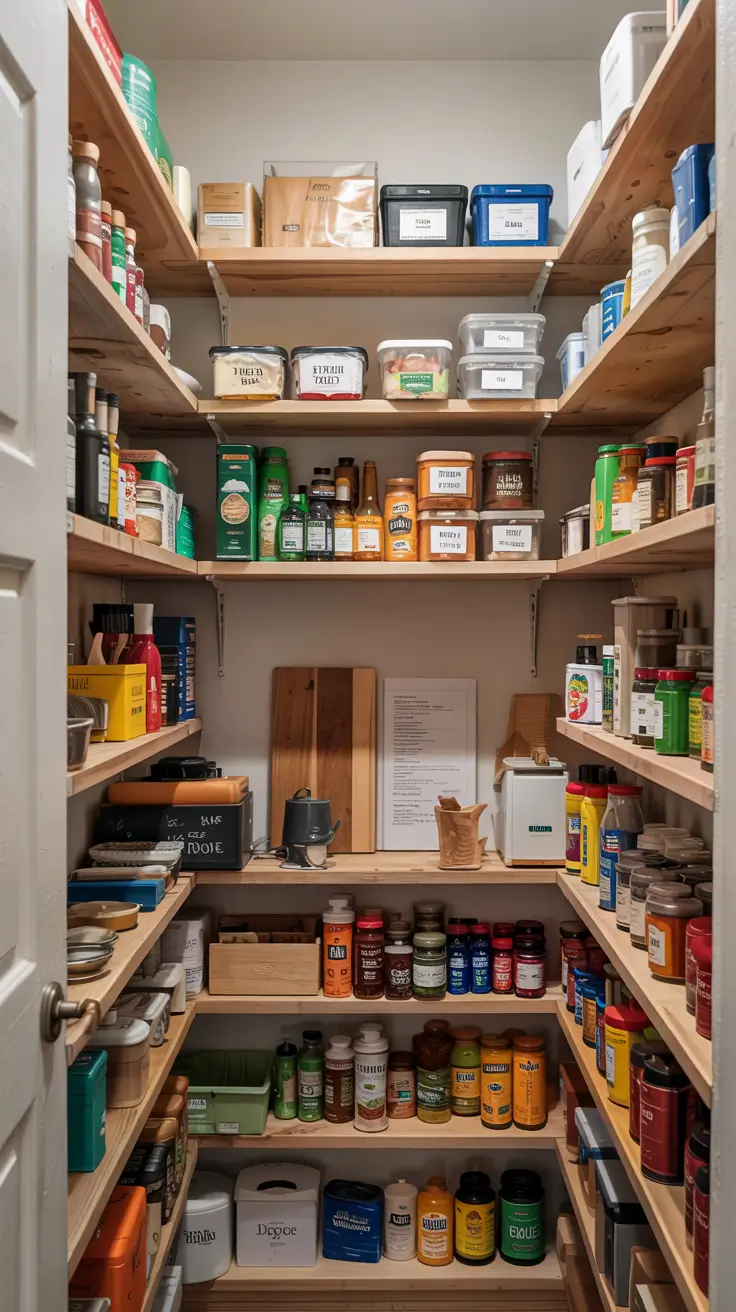
For storage, I plan shelves at multiple depths: shallow for spices and jars, medium for boxes and bins, and a few deep shelves low down for bulk items. I add clear labeled bins for snacks and baking, and I include a dedicated shelf for small appliances if the kitchen is tight. A narrow rolling ladder is usually unnecessary in a tiny walk-in, so I focus on reachable height and an easy step stool instead. I also like one small counter ledge for sorting groceries and decanting staples, plus a wall-mounted peg rail for baskets. The lighting should be layered: ceiling light plus shelf lighting so every label is visible.
I have seen small homes feel bigger when the pantry is well planned, because it reduces overflow into the kitchen. I recommend treating the pantry like a mini inventory system, with backups grouped and a clear first-in-first-out habit. Keep the most-used categories at eye level, and keep seasonal items high so they do not crowd your daily view. If you want it to stay stylish, use a consistent bin palette and avoid mixing too many packaging colors on the front row. This is how tiny pantry designs can look curated while still being practical.
What I would add is a short note on door choice and airflow, because walk-in pantries can trap heat. A solid door looks clean, but you may want a subtle vent or a small gap for air circulation. I would also add guidance for shelf thickness and anchoring, since walk-in pantries tend to hold heavier loads. If you keep beverages or bulk items, reinforce the lowest shelves and keep weight close to the floor. These details make a tiny walk in pantry design safe, stylish, and durable.