Entryway renovations can feel overwhelming because the entryway is small, busy, and seen every day. Have you ever walked in and wished the space felt calmer, brighter, and easier to use? In this article, I will share entryway renovation ideas for 2026 that cover entryway renovation before and after thinking, storage upgrades, and practical layouts for every home type. I will also touch on small entryway renovation challenges, raised ranch entryway renovation ideas, and even before and after photos of split level entryway renovations as a planning mindset, so your results feel intentional.
1. Entryway Renovation Ideas For Modern Homes 2026
In 2026, I see modern entryway renovation ideas leaning toward warm minimalism, durable finishes, and lighting that feels welcoming from the Front door. I design these spaces to look clean but not empty, with a clear landing zone that stops clutter before it spreads into the house. A modern entryway works best when the walkway is open, the storage is hidden or neatly organized, and the materials can handle wet shoes and daily traffic. I like to use wide-plank flooring or large-format tile for fewer seams and easier cleaning, then soften it with a textured runner. If the entry is connected to Stairs, I keep the palette consistent so the transition looks seamless and intentional. This approach makes entryway renovations feel like a true upgrade, not just a cosmetic refresh.
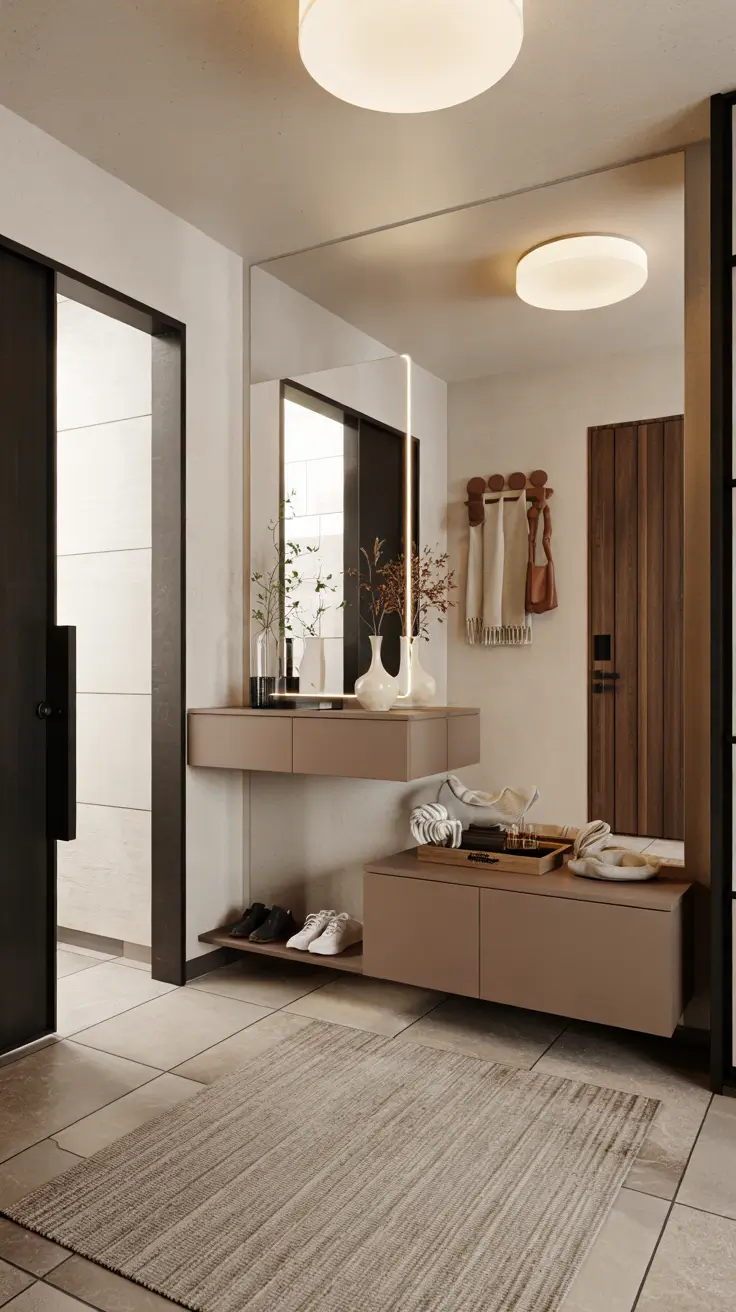
For furniture and decor, I start with a slim console or floating shelf because it provides function without stealing floor space. I add a large mirror to bounce light and make the entry feel bigger, especially in homes with a narrow hallway or limited windows. A closed shoe cabinet or built-in bench with drawers keeps the Closet and daily essentials controlled, which is a key part of most entryway renovations I plan. I include wall hooks or a rail system for coats and bags, but I limit the number so the wall does not become visual noise. Layered lighting matters here, so I combine a ceiling fixture with a sconce or picture light near the mirror for a polished look. If I want a more elevated feel, I add one standout element like fluted wood panels, microcement, or a modern slat wall behind the bench.
From my experience, the most modern-looking entryways are the ones that feel easy to maintain. I avoid fussy decor and instead focus on repeatable habits, like having one tray for keys and one bin for mail. I also plan finishes around real life, like choosing matte paint that hides scuffs and adding a washable runner that can handle snowy boots. When I review entryway renovation before and after results, the biggest change is usually not the furniture, but the clarity of the layout. I keep the eye line clean by storing seasonal items higher up and keeping only everyday items within reach. That simple discipline is what makes modern design feel calm instead of cold.
To make this section even stronger in your own project, I would add a quick measurement sketch of the entryway and note the door swing, walkway width, and any pinch points near the Front. I would also list what must live in the entryway, like shoes, bags, pet leashes, and umbrellas, so the storage is designed around reality. If there is a Closet nearby, I would define what belongs inside it versus what stays out on hooks, so the walls stay tidy. I would add a lighting plan that includes bulb temperature and dimming, because warm lighting changes the mood instantly. Finally, I would include one material upgrade that is visible right away, like new tile at the threshold or a modern flush-mount fixture. Those details help entryway renovation ideas turn into a plan that actually works day to day.
2. Entryway Renovation Before And After Transformations
When I plan an entryway renovation before and after transformation, I focus on what will look dramatically different the moment you step inside. Before, many entryways feel dark, cramped, and undefined, with coats and shoes scattered because there is no system. After, the best transformations usually have a clear drop zone, better lighting, and a sense of intentional order. I treat this like a mini design project where every inch matters, especially if the entry opens directly into a living room. The goal is not to overdecorate, but to make the space feel purposeful and welcoming. This is exactly how I think through entryway renovations when I want the after to feel worth the effort.
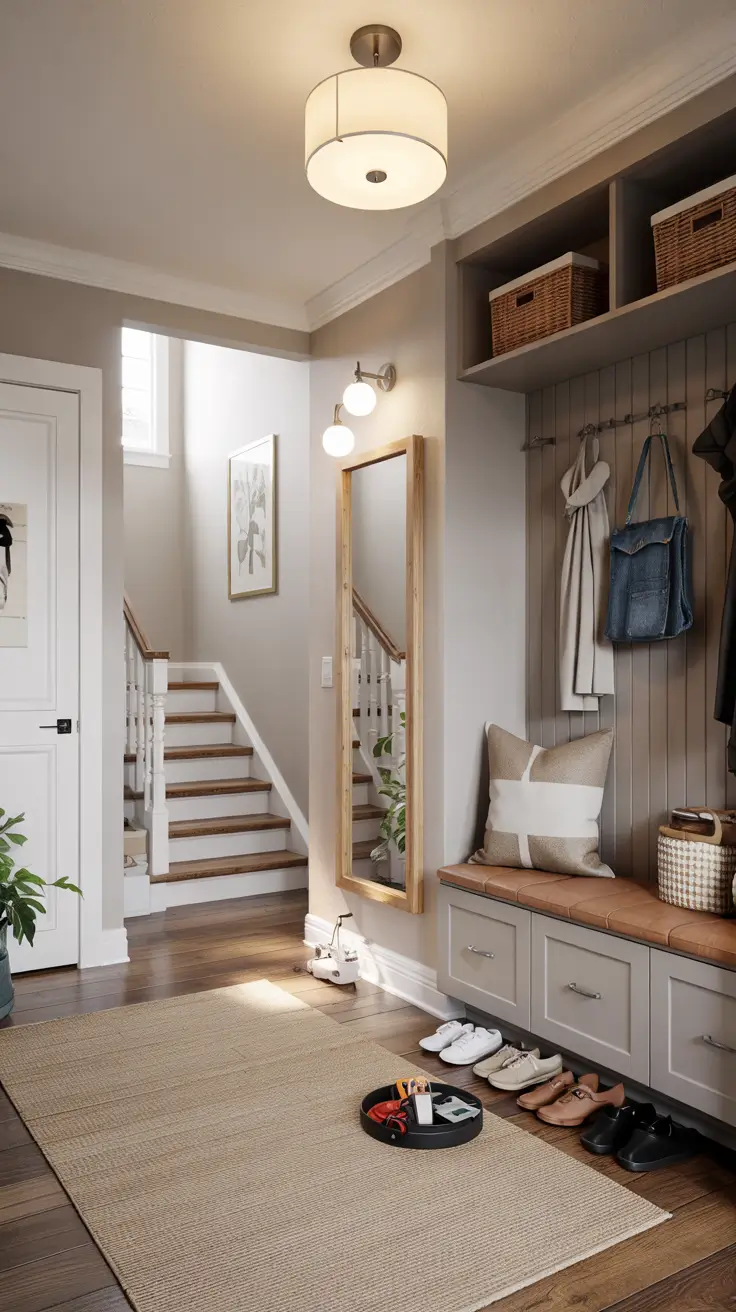
To get that before and after effect, I prioritize three visible upgrades: flooring durability, wall color, and storage. I often replace mismatched rugs with one long runner to visually stretch the space and guide people inward. If the walls are dingy, I repaint in a warm neutral and use a washable finish that handles fingerprints. I add a mirror or art at eye level, then anchor it with a bench or console that gives you a place to pause. For storage, I prefer closed compartments for shoes and seasonal accessories, paired with a few hooks for daily items. If there are Stairs nearby, I use the under-stair volume for drawers or a compact cabinet to hide clutter without sacrificing style.
Personally, I like to take a few quick photos of the entryway before I start, even if I never share them, because it helps me see what is truly bothering me. That habit mirrors how people use before and after photos of split level entryway renovations as motivation and as a checklist for what changed. The most satisfying transformations usually come from solving one major pain point, like nowhere to sit or no place for shoes. I also think about acoustics and comfort, so I add a soft runner and sometimes a fabric-upholstered bench that makes the space feel less echoey. When I compare entryway renovation before and after projects, the winners always feel brighter and more organized, not necessarily more expensive. A calm, functional entryway is the most convincing transformation.
To round out this section, I would add a simple before-and-after checklist you can use while planning, like lighting, storage, seating, and wall protection near the door. I would also add a quick note about entry door hardware, because swapping a handle set and adding a smart lock can enhance the after moment. If your entry is narrow, I would include guidance on minimum clear path width so the space stays comfortable. I would add a tip for protecting walls with wainscoting, beadboard, or durable paint to reduce scuffs. Finally, I would include one styling suggestion, like limiting decor to one tray, one vase, and one framed piece, so the after looks intentional instead of crowded. These details help entryway renovation ideas translate into a transformation you can feel every day.
3. Front Entryway Renovation Ideas That Boost Curb Appeal
Front entryway renovation ideas should connect the outside and inside so the arrival feels cohesive. I like to think of curb appeal as the first impression before the door opens, but the interior entryway should continue that same story. In 2026, I see a lot of homeowners choosing warmer exterior tones, modern lighting, and natural textures that carry into the entryway. Even small upgrades like a new door color, updated house numbers, and a cleaner porch layout can make the Front feel more inviting. Inside, I keep the entry uncluttered so the transition from porch to interior feels smooth. This is one of the simplest entryway renovations to make a home feel refreshed without changing the entire facade.
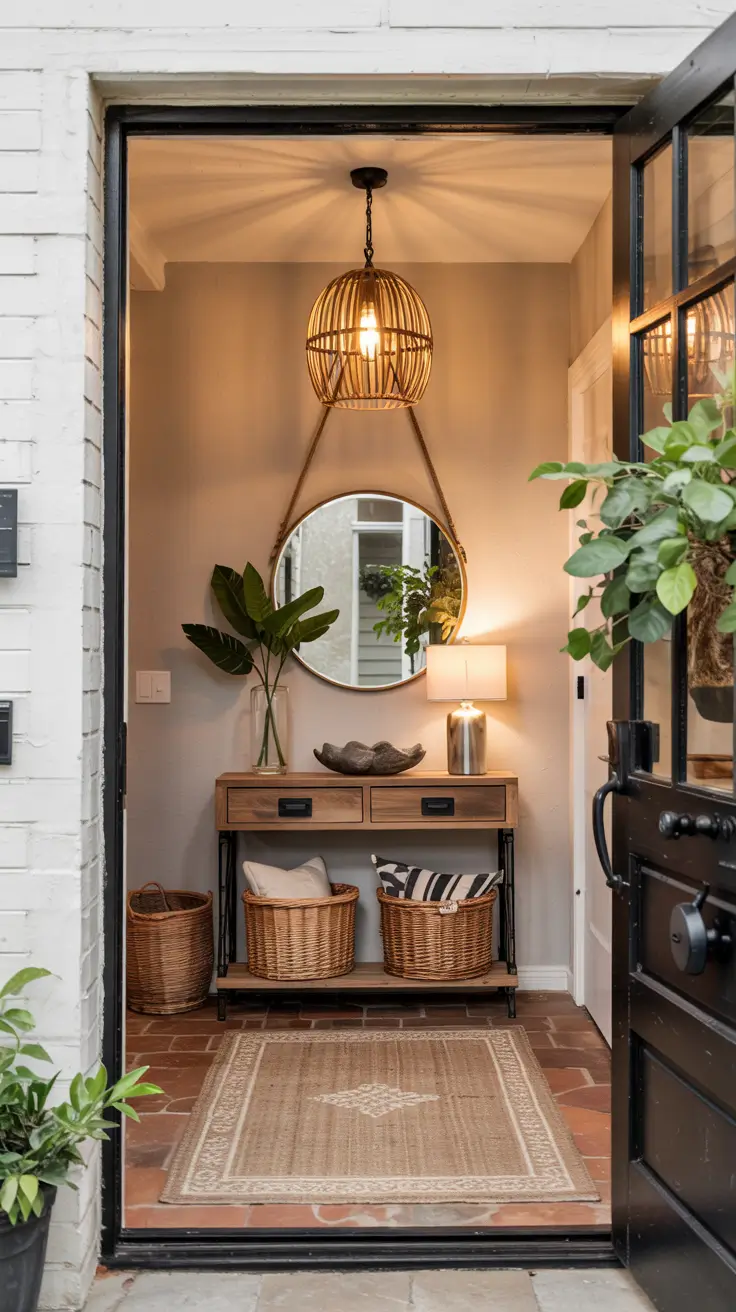
For the exterior side, I start with lighting and symmetry because those two elements deliver instant curb appeal. I use a pair of sconces or one statement fixture, then add a durable doormat and a planter pair that frames the door. If there is space, a small bench on the porch adds function and makes the Front entry feel designed rather than accidental. Inside, I echo the exterior materials with a wood console, a woven basket, or black metal accents that match the door hardware. I choose a runner that can handle dirt and moisture, and I prefer easy-clean paint near the threshold. If you have a Closet right by the door, I organize it so coats and shoes disappear quickly, which keeps the interior view crisp when the door opens.
In my experience, the best curb appeal upgrades are the ones that reduce visual noise. I avoid too many porch decorations and instead focus on one or two high-quality elements that look good year-round. I also pay attention to the sightline from the sidewalk to the interior, because if you can see clutter through sidelights or glass, it undermines the effort. A consistent color palette helps, so I keep the Front door, light fixtures, and interior entry accents in a coordinated family of tones. I like to test door paint samples in different lighting, because the same color can look dramatically different at noon and at night. When the entry feels composed, the whole home feels more cared for.
To strengthen this section further, I would add a small plan for porch zoning, like where packages land, where planters sit, and how guests approach the door. I would also add a recommendation for weather-resistant materials, especially if rain and snow are common in your climate. If your entry opens directly into living space, I would add a tip for adding a subtle visual divider like a rug change, a slim console, or a half wall. I would include one detail about sound and comfort, like a soft runner or a door sweep to reduce drafts. Finally, I would add a quick maintenance routine, like wiping down the door weekly and keeping the doormat clean, because curb appeal is as much upkeep as it is design. These additions make front entryway renovation ideas practical, not just pretty.
4. Small Entryway Renovation Ideas With Smart Layouts
Small entryway renovation is all about protecting the walkway and making the space feel bigger than it is. I start by identifying the main traffic path from the door to the next room, then I design everything around keeping that path clear. In tight spaces, too much furniture becomes a daily annoyance, so I use fewer pieces with better function. I also rely on visual tricks like mirrors, vertical storage, and consistent flooring to avoid choppy transitions. In 2026, small spaces benefit from built-ins and wall-mounted solutions that free up the floor. This is where entryway renovation ideas can make the biggest difference per square meter.
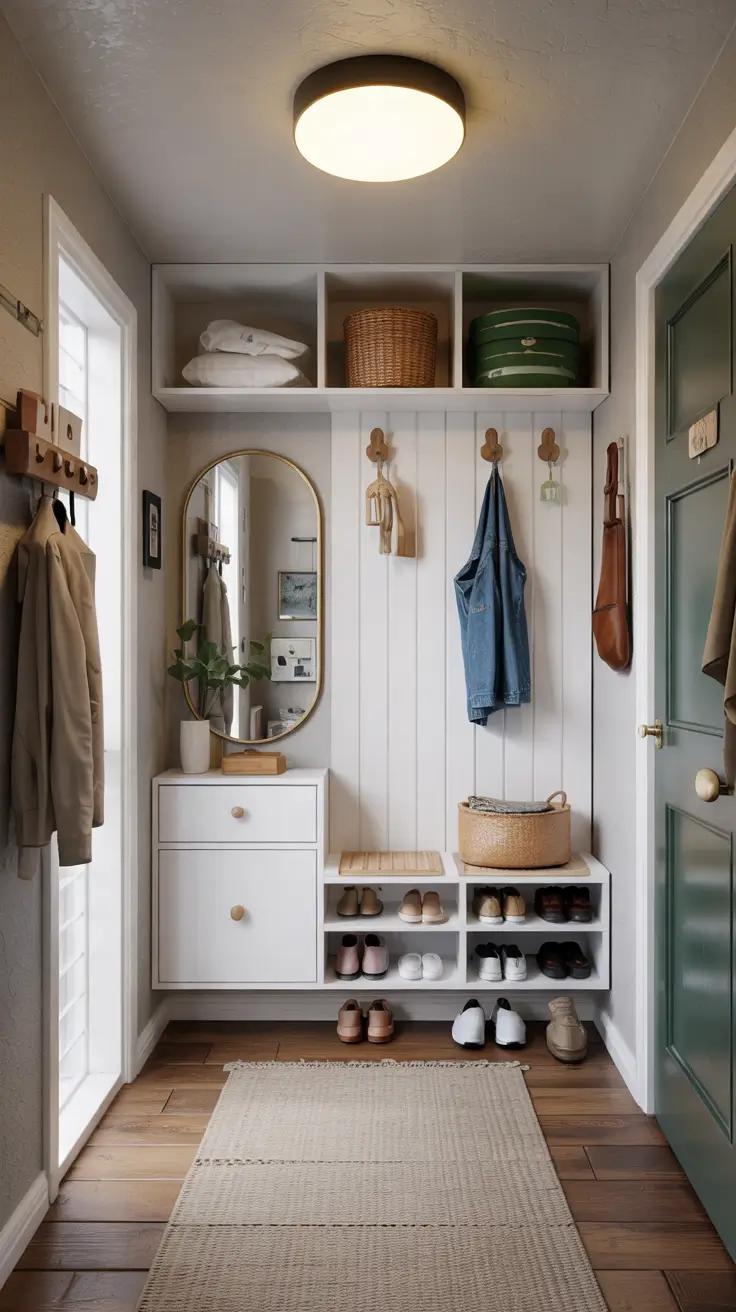
For layout, I often choose a wall-mounted shelf with a small drawer rather than a full console, and I pair it with a mirror to reflect light. A slim bench can work if it has hidden storage, but if the space is extremely tight, I skip seating and use a flip-down perch or a narrow stool that can tuck away. I like using a tall cabinet or a vertical set of cubbies because it stores a lot without expanding outward. Hooks are useful, but I place them at two heights so adults and kids can each reach what they need. For shoes, I prefer a closed shoe cabinet that is shallow, because it looks tidy and keeps odors contained. If the entry connects to Stairs, I use the wall along the stairs for hooks or art so the footprint stays open.
When I work on a small entryway renovation, I treat clutter as the real enemy, not the size of the room. I set a limit on how many coats and pairs of shoes can live there at one time, because no storage system works if it is overfilled. I also choose one durable runner and commit to it, because stacking small mats makes a small entry feel even smaller. Lighting makes a big difference, so I add a bright, warm ceiling fixture and, if possible, a secondary light near the mirror. I have seen tiny entries look high-end simply by upgrading the light and adding a well-sized mirror. The best small entryways feel simple, bright, and easy to reset in two minutes.
To make this section more complete, I would add a quick list of recommended dimensions, like how deep a shoe cabinet should be in a narrow entryway. I would also add tips for door swing conflicts, like choosing a shallow cabinet or changing the hinge side if a remodel allows. If there is no Closet, I would include a mini plan for seasonal rotation so bulky winter items do not overwhelm the space. I would add a suggestion for wall protection like washable paint or a narrow panel treatment behind hooks. Finally, I would add an organization rule, like one basket per person for hats and gloves, because that is how small entryway renovation stays functional long-term. These additions help smart layouts stay smart in real life.
5. Entryway Closet Renovation Ideas For Better Storage
Entryway closet renovation is one of the most practical upgrades because it removes clutter from sight and makes daily routines smoother. I approach it like a tiny mudroom, even if the Closet is shallow, because smart organization can double its usefulness. The best entryway renovations use vertical space, adjustable shelving, and zones for different item types. In 2026, I see more people adding lighting inside closets, using durable drawer boxes, and choosing hardware that feels intentional. If the entry is busy, this is often the difference between a calm home and a constant mess. That is why entryway closet renovation is a key part of so many entryway renovation ideas.
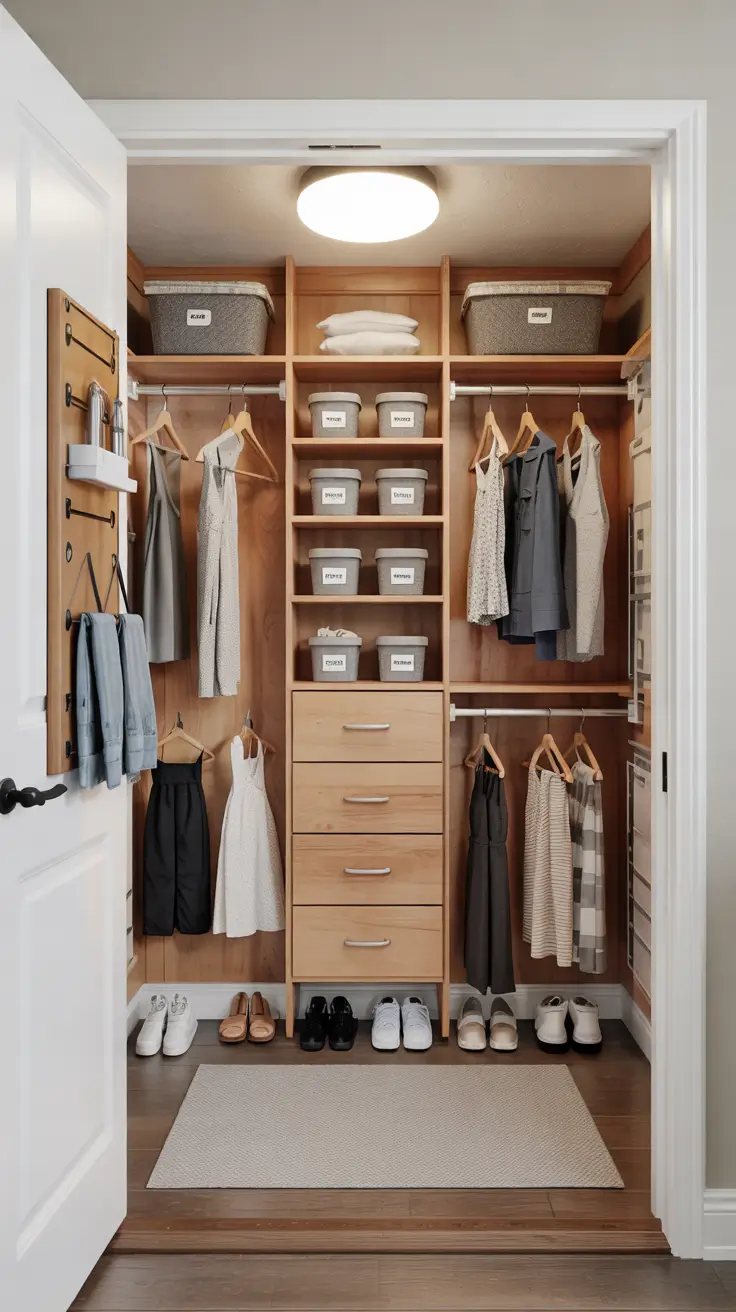
Inside the closet, I start by planning zones: shoes at the bottom, daily coats at arm height, and seasonal items higher up. I like adding a double-hang section for short jackets, plus a taller section for long coats so nothing drags on the floor. Drawers or pull-out bins are great for gloves, hats, and pet supplies because they keep small items contained. If space allows, I add a narrow pull-out hamper or a basket shelf for reusable bags. I also recommend door-mounted organizers for umbrellas and cleaning wipes, since these items often get lost otherwise. A small battery-powered or hardwired LED light inside the closet makes it easier to use and makes the renovation feel more premium.
From my experience, the biggest mistake is designing the closet around an ideal lifestyle rather than your actual habits. I measure what we truly store, like bulky winter coats, backpacks, and sports gear, then I build the layout around those realities. I also prefer adjustable systems because needs change over time, especially in families. For a stronger entryway renovation before and after impact, I like to add matching hangers and coordinated bins, because it instantly makes the Closet look orderly. Even a small closet can feel custom when the shelf spacing is thoughtful and the storage containers match. This is the kind of upgrade that makes entryway renovations feel like they keep paying you back.
To expand this section, I would add a quick sorting plan you can do before renovation, like keep, donate, relocate, and seasonal storage. I would also add guidance on ventilation and odor control, such as leaving a little airflow space and using washable mats for wet shoes. If the closet is very tight, I would include ideas like sliding doors or a curtain alternative, depending on the renovation scope. I would add a checklist for materials that hold up, like melamine shelving, metal rods, and sturdy drawer slides. Finally, I would add a small maintenance routine, like resetting the closet weekly and rotating seasonal items monthly, because entryway closet renovation works best when it is supported by simple habits. These additions make better storage realistic and sustainable.
6. Entryway Closet Renovation Inspiration For Stylish Homes
Entryway closet renovation inspiration often starts with a desire for a cleaner look, but I like to push it one step further into style. A closet can look like a design feature, not just a hidden storage box, especially when the door is open or when the entry is small. In stylish homes, I see closets treated like curated spaces with cohesive bins, warm wood tones, and lighting that feels intentional. This kind of Inspiration is especially helpful if you want entryway renovations to feel elevated without adding a lot of furniture. Even if your closet is behind a simple door, the inside can still look polished and calm. That is why entryway closet renovation inspiration matters as much as the layout.
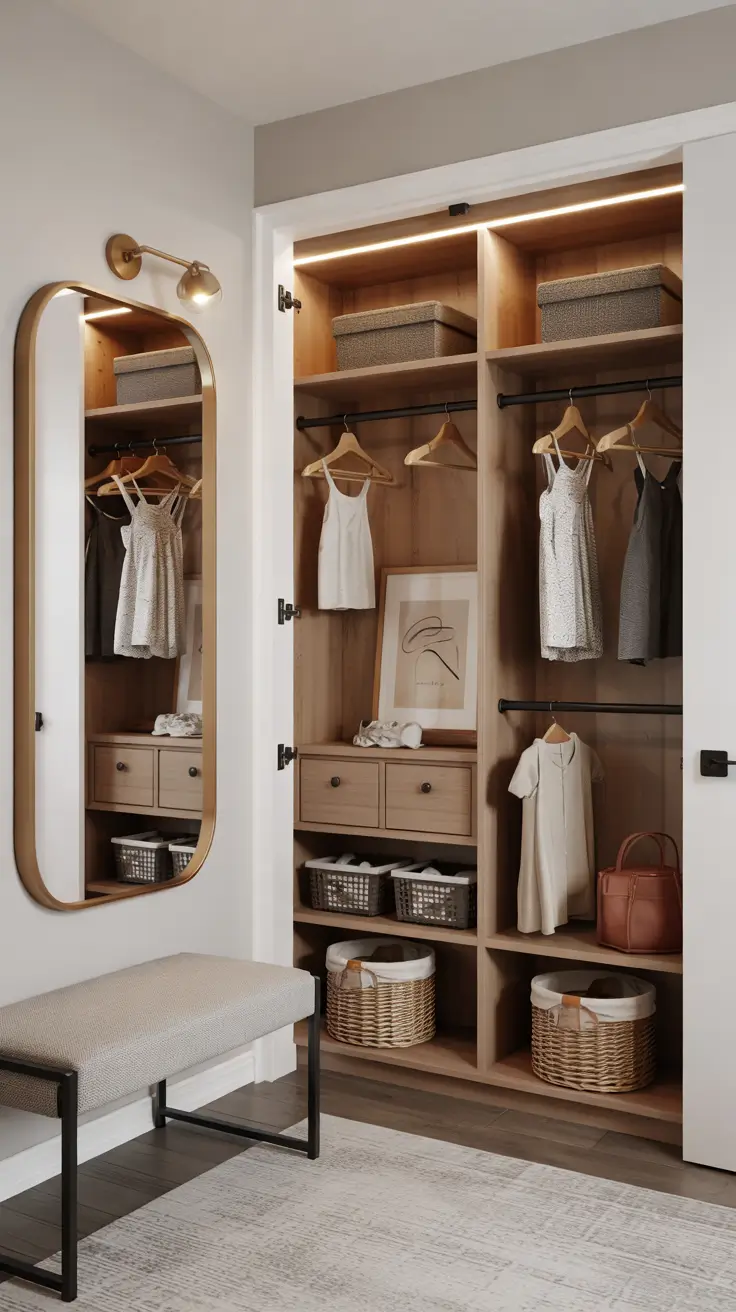
To make the closet stylish, I pick a simple palette and repeat it through hangers, bins, and labels. I like adding a wood-toned shelf with black hardware because it complements many modern entryways and feels current for 2026. A small framed print or a patterned liner on the back wall can add personality without creating clutter. If the closet has depth, I include pull-out drawers with clean fronts so the interior looks like built-in cabinetry. I also add a small tray for everyday items like sunglasses or keys, so they land in a consistent place. If you want a more boutique feel, a soft LED strip under a shelf makes the Closet look intentional and helps you find things quickly.
In my work, I have noticed that stylish storage is easier to maintain because people are more likely to put things back when the system looks good. I also like borrowing ideas from recognizable renovation styles, including three birds renovations entryway, where the focus is often on bright finishes, functional hooks, and clean lines. I keep the closet interior calm, then I let one detail stand out, like a textured basket set or a subtle wallpaper. When I think about entryway renovation before and after moments, a well-styled closet can be the hidden hero that makes the whole entry feel upgraded. It is a practical change that still delivers a design payoff.
To deepen this section, I would add a few style direction options, like warm modern, coastal clean, or minimal monochrome, so you can choose Inspiration that matches your home. I would also add a quick note on door style, because swapping to a modern panel door or adding updated hardware can elevate the look. If you have a mirror near the closet, I would recommend aligning finishes so the entry reads as one complete design. I would include tips for keeping the closet photo-ready, like limiting visible items and using matching containers. Finally, I would add a quick plan for lighting, including where to place a motion sensor light so the closet always feels welcoming when you open it. These additions help entryway closet renovation inspiration become a clear design plan.
7. DIY Entryway Closet Renovation Ideas On A Budget
DIY entryway closet renovation can deliver a big impact without a big spend if you focus on function first. I approach budget projects by improving the system, not chasing expensive materials, because that is what changes daily life. A few strategic upgrades like repainting, adding better shelving, and improving lighting can completely refresh a Closet. In 2026, budget DIY projects also benefit from peel-and-stick options and modular organizers that are easy to install. This is especially useful in a small entryway renovation where every improvement is noticeable. When you want entryway renovation ideas that are affordable, this is one of the smartest places to start.
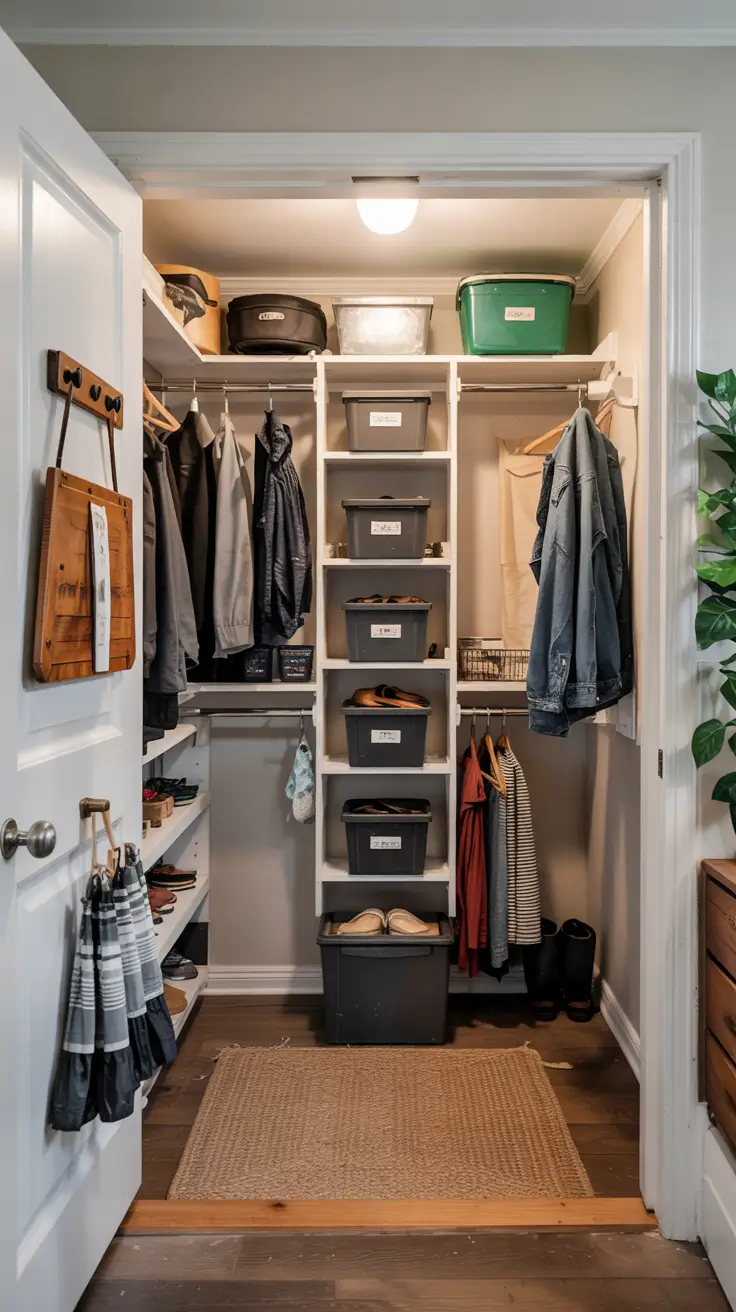
For a DIY plan, I begin with a deep clean and a simple paint refresh in a light, warm tone to brighten the space. Then I install a basic shelf-and-rod setup, or I upgrade to adjustable tracks so the system can evolve over time. I like adding sturdy hooks on the inside wall for bags, hats, and scarves, because it increases storage without adding depth. For shoes, I use stackable bins or a shallow rack, and I place a washable mat under it to protect the floor. If the closet doors are dated, I sometimes repaint them and swap the knobs for modern hardware to get a fast visual update. I also add an inexpensive motion-sensor light so the closet feels more premium and is easier to use.
From my experience, the key to a successful DIY entryway closet renovation is doing fewer things, but doing them neatly. I take careful measurements, keep shelf spacing practical, and use consistent hardware so it looks intentional. If your home is a Raised ranch, or if you are working with raised ranch entryway renovation ideas, I pay extra attention to traffic flow because split-level layouts can create bottlenecks near the Front. This is also where the mindset of And after photos of split level entryway renovations can help, because it encourages you to solve the functional problems first, like where shoes land and where coats go. A budget renovation looks more expensive when the closet is edited, with only what you truly use kept within reach. The result is calmer mornings and a cleaner entryway without overspending.
To make this section even more useful, I would add a short tool and supply list, like a level, stud finder, wall anchors, and a simple drill bit set. I would also include a safety note about securing shelving into studs when possible, especially if you plan to store heavy bags. If the closet is tiny, I would add a tip for using the door interior for extra storage without blocking door movement. I would include a plan for labeling bins in a clean, consistent way so the system is easy for everyone to follow. Finally, I would add a realistic weekend timeline, like prep and paint day one, install and organize day two, so the DIY entryway closet renovation feels approachable and doable. These additions help budget entryway renovations succeed the first time.
8. Entryway Stairs Renovation Ideas With Visual Impact
I like to use the stair wall as the main design moment, because it is often the first long surface you see in the entry. In 2026, I see more homeowners leaning into clean, architectural lines with warm materials like white oak treads or light-toned engineered wood. If the staircase is open, I keep the sightline airy with slim balusters and a simple handrail that matches the floor tone. If it is closed, I create impact with a controlled contrast, like a soft off-white on risers and a deeper neutral on the stringer. This approach also works well for entryway stairs renovation ideas in both compact and spacious homes.
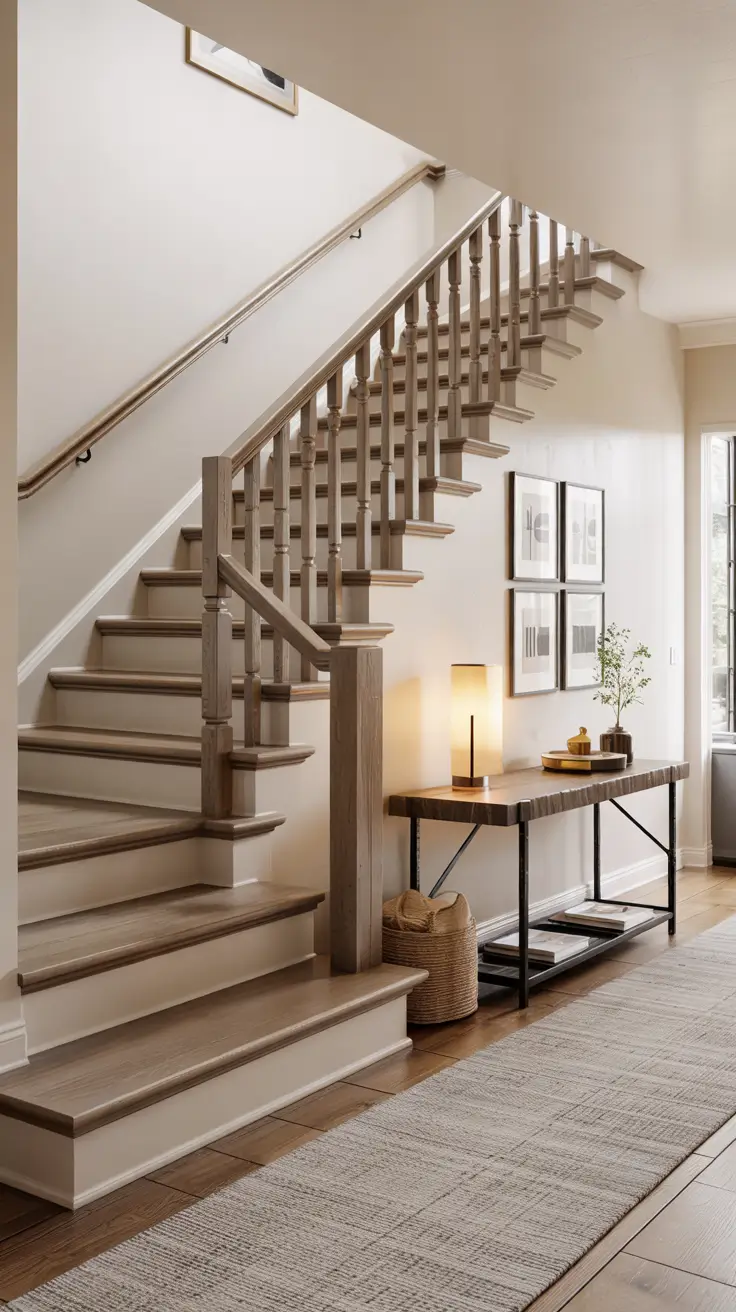
From a furniture and finishing standpoint, I build the area around the stairs so the view feels balanced rather than busy. I usually add a narrow console or a built-in ledge at the base of the stairs for keys and a small lamp, keeping the depth tight so the walkway stays clear. A stair runner is one of my favorite upgrades because it adds texture, helps with sound, and makes the climb feel safer. For lighting, I prefer layered options: a ceiling fixture at the entry, plus wall sconces or stair lights that guide you upward at night. I also pay attention to the stair newel and handrail finish, because mismatched metals and woods are what make a renovation look unfinished.
In my experience, the easiest way to make the stair renovation feel “designed” is to repeat one material detail somewhere nearby. If I choose black balusters, I echo that black in a mirror frame or the console hardware. If I choose warm wood, I repeat it in a bench or a set of hooks. I also keep artwork on the stair wall cohesive, either a single oversized piece or a clean grid, because random frames can make the whole entry feel cluttered. When people ask about entryway renovation before and after transformations, the stair wall is usually the part that looks most dramatic once it is edited and intentional.
What I would add to complete this section is a clear plan for stair wall decor and proportions. I would include the ideal height range for hanging art along the incline, and I would add one safety note about lighting placement so shadows do not fall across the tread edges. I would also add a simple checklist for stair finishes that should match, like handrail, balusters, and door hardware, so the entry reads as one curated zone.
9. Raised Ranch Entryway Renovation Ideas For Split Levels
Raised ranch entryway renovation ideas work best when I treat the landing as the true “room” and the split stairs as the transition. Because split levels often have limited square footage at the door, I focus on visual calm and smart storage rather than bulky furniture. A modern approach I like is a light wall color, durable flooring that can handle wet boots, and a defined drop zone that does not block the stairs. I also try to reduce the feeling of being squeezed between levels by using brighter lighting and reflective surfaces. The goal is to make the entry feel welcoming even when it is technically a small platform between up and down.
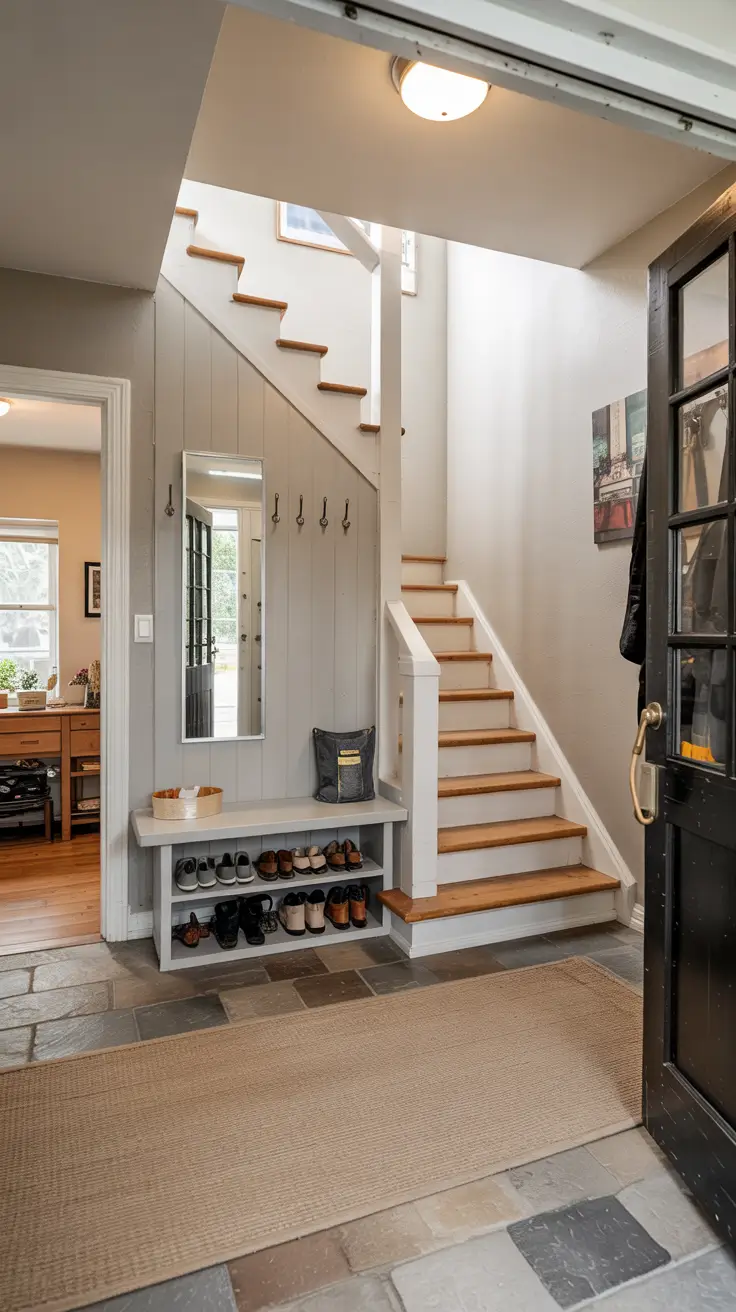
For furniture, I often choose a slim bench with closed storage, or a built-in that wraps one side of the landing. Closed storage matters here because raised ranch entries collect clutter fast, and open shelving can look messy from multiple angles. If there is room, I add a tall, shallow cabinet for shoes and seasonal items, which can function like an entryway closet renovation without changing walls. Hooks are essential, but I keep them aligned and limited so coats do not become a visual wall. I also like to add a durable runner that starts at the door and visually leads you either up or down, which helps the space feel longer and more intentional.
I have seen the biggest improvements when homeowners stop trying to make the landing do everything and instead assign zones. One zone is the arrival spot for keys, bags, and shoes, and the other is the movement path to the stairs. If the landing feels dark, I prefer upgrading the fixture and adding a mirror before I do anything decorative, because brightness changes the whole mood. For a raised ranch, I also think it is worth choosing one strong material story, like warm wood plus matte black, and repeating it consistently. That consistency is what makes split levels feel modern rather than dated.
What I would add to complete this section is a clear layout suggestion for different landing sizes. I would include a “tight landing” version with only hooks and a shallow cabinet, and a “medium landing” version with a bench and a mirror. I would also add a short note about door swing clearance and stair clearance, because raised ranch entries can become unsafe if furniture encroaches on the step line.
10. Before And After Photos Of Split Level Entryway Renovations
When I evaluate before and after photos of split level entryway renovations, I look for the same three upgrades almost every time: lighting, flooring, and a defined storage moment. Split levels can look chaotic because you see multiple directions at once, so the “after” needs a stronger visual anchor. In 2026, that anchor is often a built-in bench wall, a consistent wood tone, or a modern statement light that draws your eye upward. I also notice that the best transformations simplify contrasts, replacing busy tile patterns and heavy trim with calmer neutrals and cleaner profiles. A good “after” feels brighter, clearer, and easier to live with.
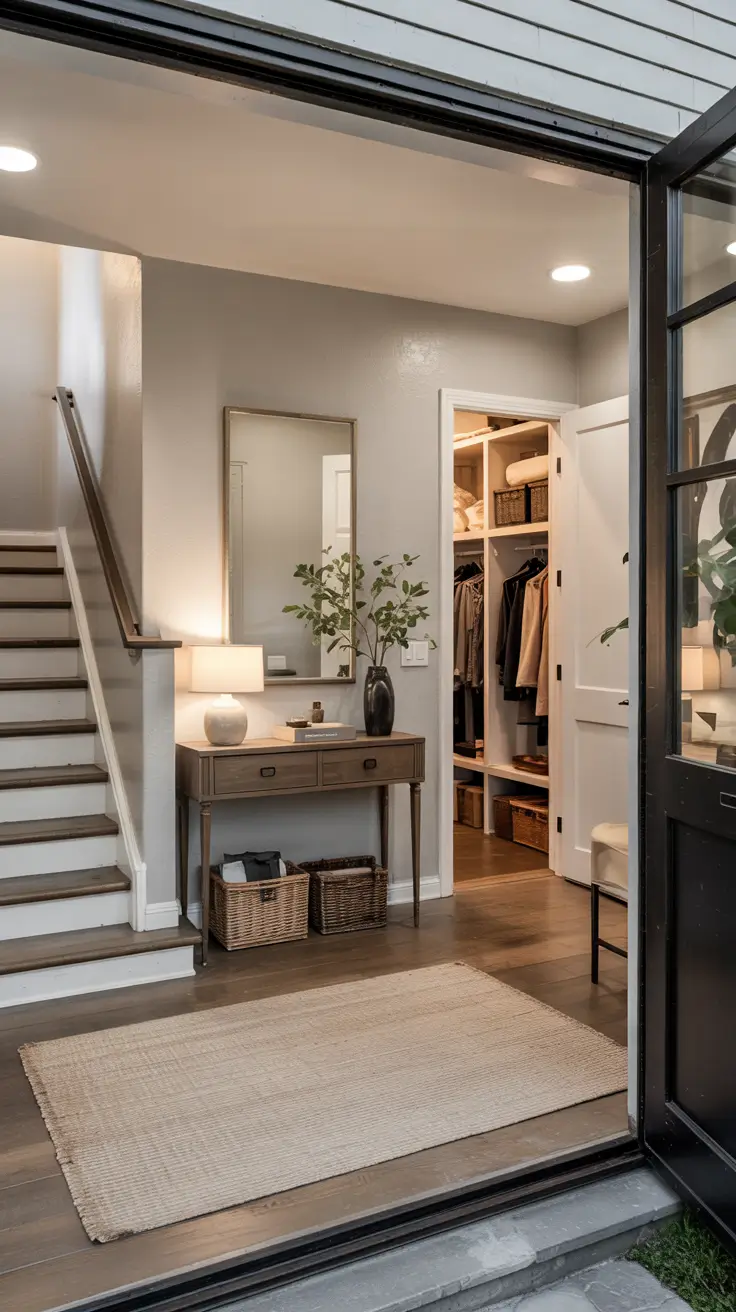
To create a photo-ready result that still functions, I choose pieces that read well from multiple angles. A bench with concealed storage is ideal, and I pair it with a large mirror to bounce light and make the landing feel larger. If the home needs an entryway closet renovation, I either upgrade the closet doors to a flush style or I rework the interior with shelves and hooks so it acts like a real system. I also like a narrow console with one tray and one lamp, because it looks tidy without requiring constant styling. For walls, vertical slat detailing or a simple panel treatment can add texture without fighting the lines of the stairs.
Personally, I think the most honest “before and after” is one where the homeowner reduces friction in daily routines. If shoes always pile up, the “after” should include a specific shoe solution rather than just prettier paint. If jackets end up on dining chairs, the “after” needs hooks or a closet plan that is easier than the bad habit. I also like to photograph the entry in daylight and at night, because lighting choices are part of the transformation even if people forget to document them. When the practical problems are solved, the styling becomes effortless.
What I would add to complete this section is guidance on how to plan your own “before and after” comparison. I would include a short checklist for measuring the landing, counting storage needs, and identifying the main sightline from the door. I would also add a suggestion to document the space from the same angles before and after, because consistent camera placement makes the transformation clearer.
11. And After Photos Of Split Level Entryway Renovations Explained
If you have ever wondered why some “before and after” images look dramatic while others look subtle, I usually find the answer is contrast management and camera sightlines. In a split level, you see stairs, railings, and multiple rooms at once, so “after” success comes from simplifying what the eye has to process. In 2026 styling, I notice the best entries use fewer materials, fewer color breaks, and cleaner transitions between the floor and the first stair. This makes the entry feel larger even when the dimensions do not change. The explanation is not magic, it is visual editing.
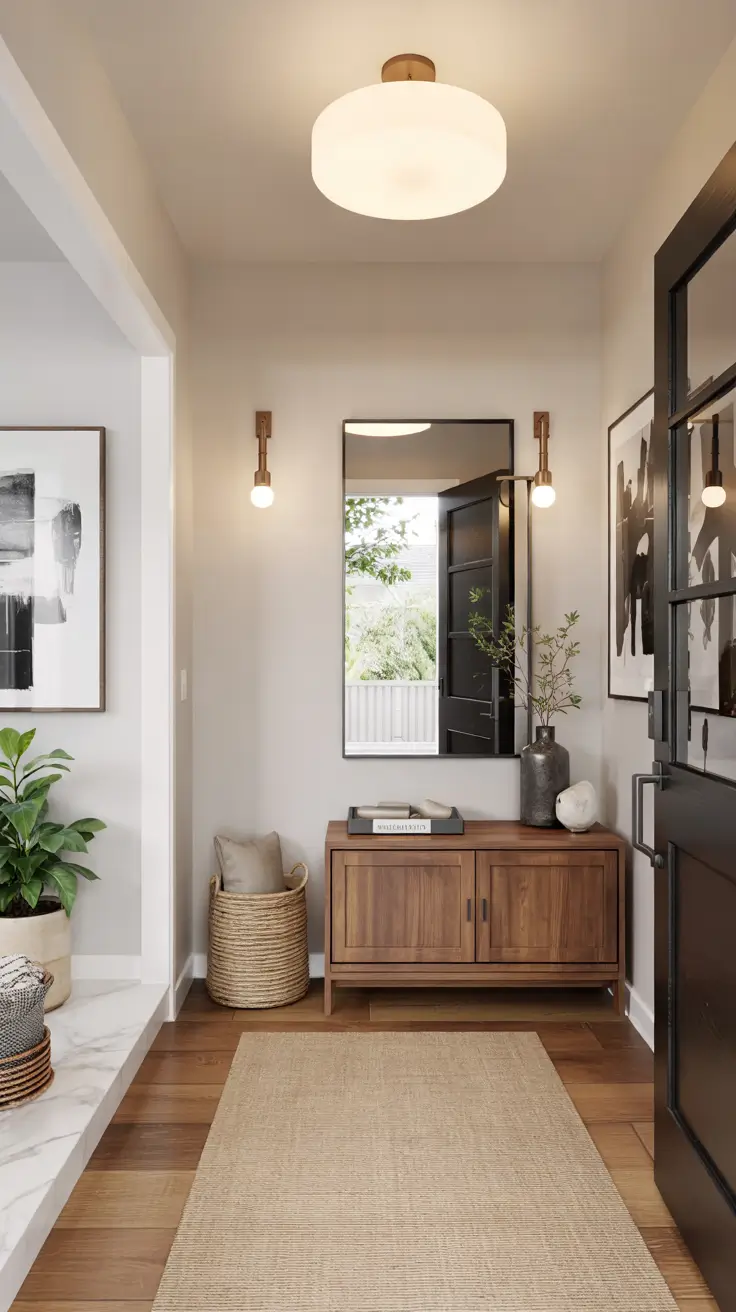
Design-wise, I break it down into a few reliable changes. First, a unified flooring choice across the landing and the nearby hall reduces the chopped-up look. Second, updated lighting, including a brighter ceiling fixture and warm bulbs, removes the shadowy “before” feeling. Third, a defined drop zone, like a built-in bench wall or a compact cabinet, creates a clear purpose for the landing. Finally, matching hardware finishes across the door, closet, and stair rail details gives the space a modern, cohesive identity.
From my own projects, I have learned that small entryway renovation improvements are often more about what you remove than what you add. Taking away oversized furniture, too many hooks, or busy wall decor can instantly calm the space. I also like to keep one decorative focus, like a single large mirror or a piece of art, rather than several competing elements. If you want a transformation that reads well in photos, I suggest choosing a limited palette and repeating it in at least three places, such as wood tone, metal finish, and textile. That repetition is what makes the “after” feel intentional.
What I would add to complete this section is a mini framework readers can use to critique an “after” image. I would include questions like: Where does your eye land first, is there a clear storage zone, and do the finishes repeat. I would also add a short note on bulb color temperature and brightness, because lighting is often the hidden reason an entry looks more expensive after a renovation.
12. Three Birds Renovations Entryway Design Inspiration
When people mention three birds renovations entryway inspiration, they are usually responding to a bright, friendly, highly functional style that still feels relaxed. The look I associate with that inspiration in 2026 is warm whites, light woods, and simple black accents, with a strong emphasis on family-friendly storage. I like this approach because it balances clean lines with everyday comfort, which is exactly what an entry should do. It also photographs beautifully because the palette is calm and the contrast is controlled. The key is to keep it modern by choosing streamlined shapes rather than overly traditional details.
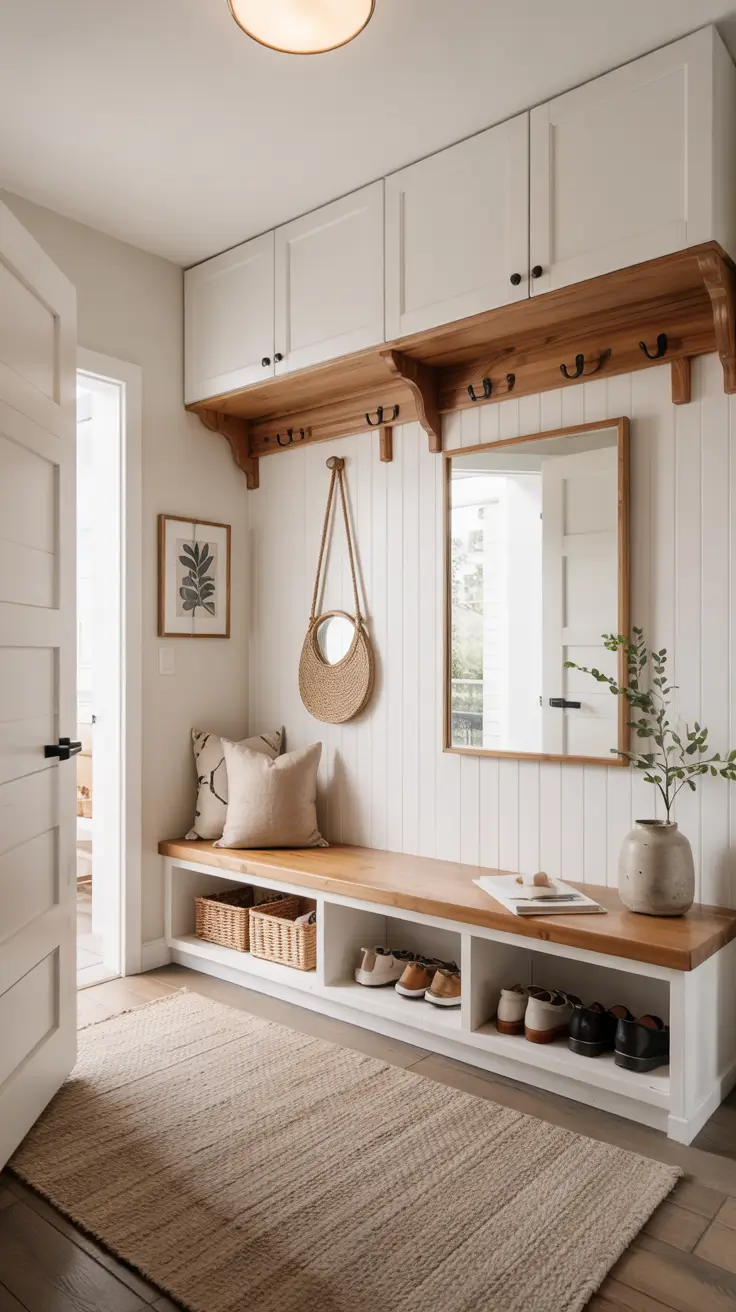
To build that feeling, I focus on a few core pieces: a built-in bench or a solid freestanding bench, a row of evenly spaced hooks, and closed storage below for shoes. I also like a large mirror with a simple frame, because it adds light and helps the entry feel more open. If there is an entryway closet renovation opportunity, I add an organized interior with baskets or labeled bins so the closet supports the same tidy vibe as the visible area. Texture matters here, so I often include a woven runner, a cushion, and a small plant or ceramic vase for warmth. Everything should have a purpose, and the styling should stay minimal.
In my opinion, the best takeaway from this style is that “pretty” comes from function done well. When storage is designed for real life, you naturally get cleaner surfaces, fewer piles, and a calmer first impression. I also like to avoid over-decorating, because the entry has a job to do and too many accessories become obstacles. If you are renovating for a household with kids or pets, I recommend choosing wipeable paint, durable rugs, and hooks at multiple heights. Those details make the space feel thoughtfully designed rather than fragile.
What I would add to complete this section is a practical storage formula for different household sizes. I would include an estimate for how many hooks and how much shoe storage most homes need, and I would add a short note on bench height and cushion thickness for comfort. I would also add a tip on keeping the palette cohesive by matching the wood tone to nearby flooring or stair treads.
13. Front Entryway Renovations That Define First Impressions
A front entryway renovation sets the tone for the entire home, and I treat it like a preview of the design story inside. In 2026, I see more entries that feel like a small room rather than a hallway, with a clear focal point and a deliberate mix of lighting, texture, and storage. If the front door opens directly into living space, the entry still needs boundaries, so I use a rug, a console, or a small partition to define it. I also pay attention to sightlines from the door outward, because the best first impression is both welcoming and uncluttered. This is where entryway renovation ideas become less about trends and more about thoughtful composition.
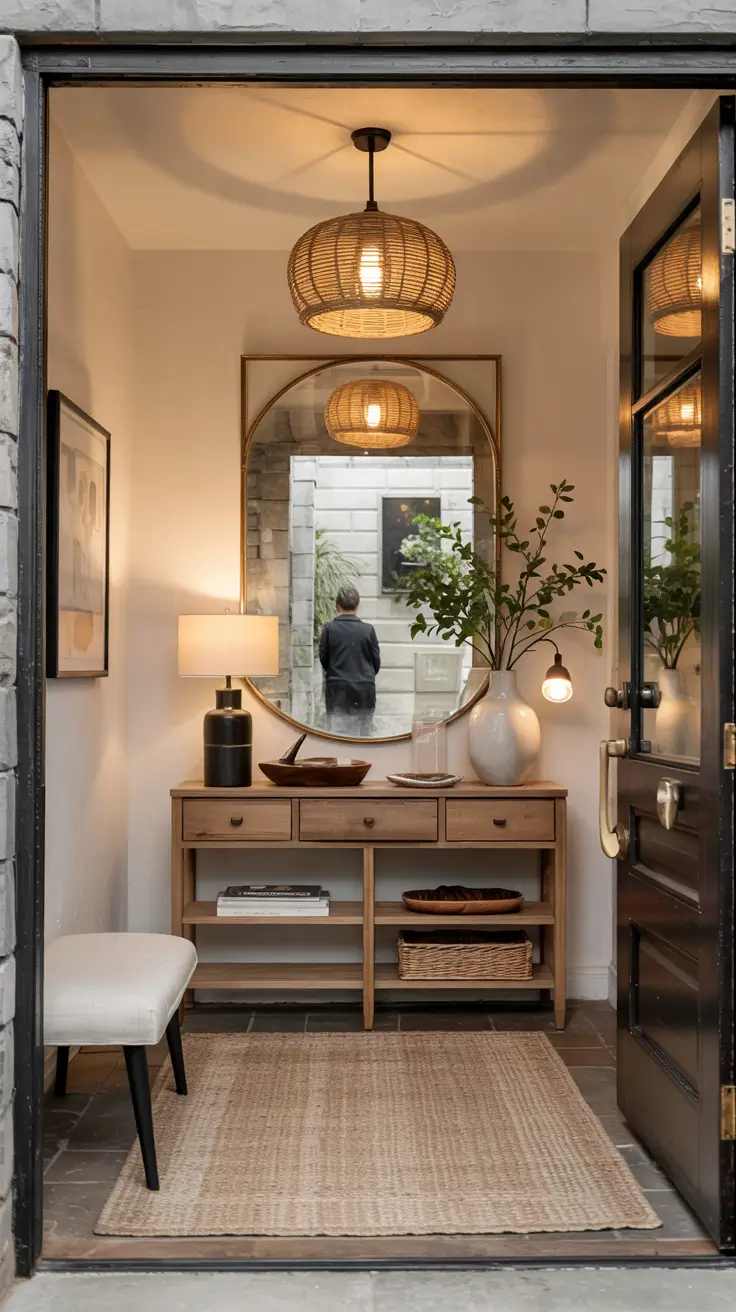
Furniture choices should support quick routines, so I prioritize a console or cabinet with drawers, a catchall tray, and a lamp or sconce for soft light. If space allows, I like a small bench or stool so people can take off shoes comfortably. Wall decor should be simple and confident, like one large mirror or a single art piece, because it makes the entry feel curated without being fussy. I also make sure there is a place for outerwear, either an entryway closet renovation plan or a hook wall that is sized for the household. Materials should be durable, especially near the door, so I choose finishes that handle water, grit, and daily contact.
From experience, I think the quickest upgrade that changes first impressions is lighting. A modern fixture with warm, even light immediately makes the entry feel more expensive and more comfortable. I also recommend choosing a door color and hardware finish that relate to the interior palette, because that connection makes the whole renovation feel intentional. If you are comparing entryway renovation before and after, the “after” usually looks better because the space feels brighter and more organized, not because it is filled with decor. When the entry is calm and clear, the rest of the home feels calmer too.
What I would add to complete this section is a short guide for choosing entry lighting based on ceiling height and natural light. I would include advice on rug sizing for common entry dimensions, because a too-small rug makes the entry feel awkward. I would also add one suggestion for scent and sound, like a subtle diffuser and a soft runner, because first impressions are sensory as well as visual.
14. Entryway Renovations Inspiration For Functional And Stylish Spaces
When I gather entryway renovations inspiration, I look for solutions that solve daily problems while still feeling modern and personal. In 2026, the strongest ideas combine storage with clean styling, such as hidden shoe cabinets, integrated charging drawers, and wall-mounted hooks that do not crowd the floor. I also notice more “soft minimalism” – warm neutrals, natural textures, and fewer but better pieces. This approach works especially well for a small entryway renovation where every inch matters. A functional entry should feel easy to use even when you are rushing out the door.
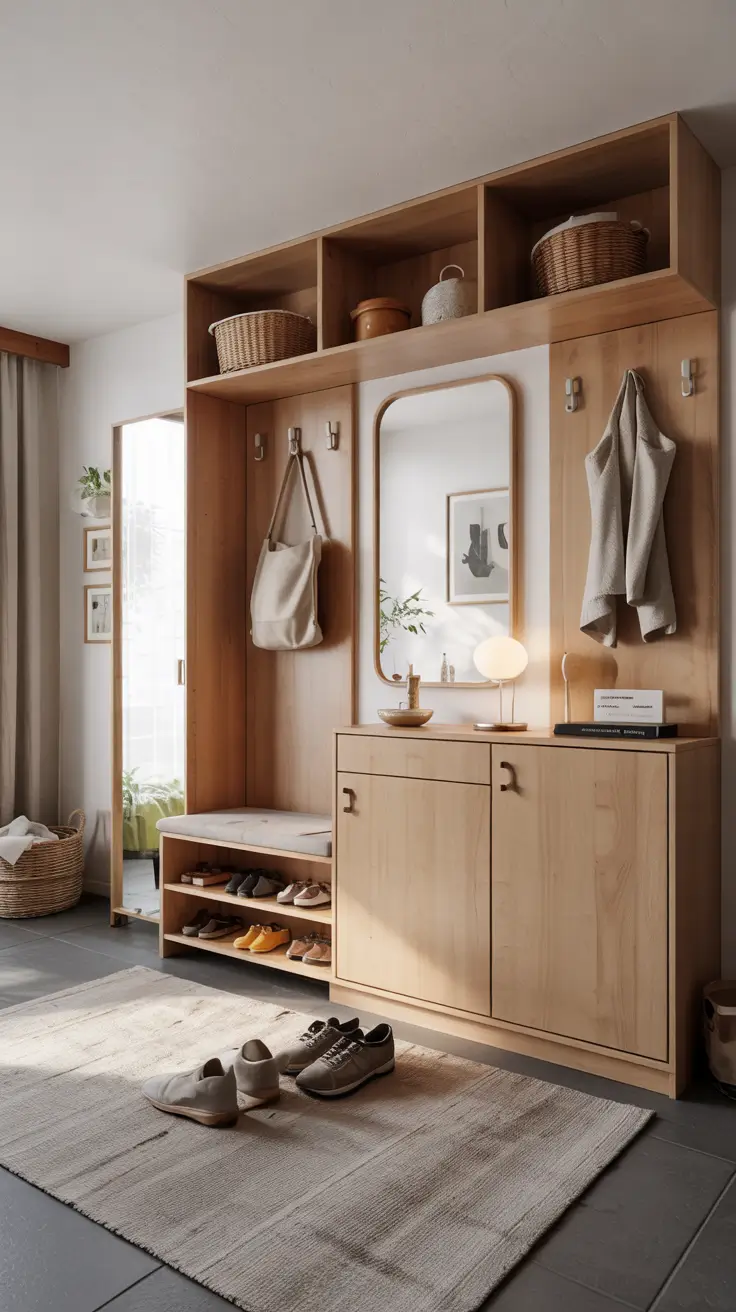
I like to build the space around a simple kit of parts. A closed cabinet or console keeps clutter out of sight, while a mirror adds light and makes quick outfit checks effortless. A bench is worth it when space allows, but I keep it slim and I prefer one with storage underneath. For walls, I use a cohesive set of hooks or a rail system, and I keep the spacing consistent so the wall reads orderly. If I want extra style without extra mess, I add one textured rug, one lamp, and one piece of art, and I stop there.
My personal rule is that entry storage should be easier than the habit you are trying to replace. If the shoe cabinet is too far away or the hooks are too high, people will default to dropping items wherever they land. I also think it helps to plan for seasons, with an upper shelf for hats and gloves and a lower zone for wet shoes. If you want the entry to stay photo-ready, I recommend choosing a “reset routine,” like clearing the console nightly and keeping one basket for items that need to go upstairs. That is how a functional entry stays stylish without constant effort.
What I would add to complete this section is a quick planning template that helps readers match inspiration to their own layout. I would include a measurement list, a storage needs list, and a decision on whether the main solution is a closet system, a bench wall, or a cabinet. I would also add a note about traffic flow, because the best-looking entry fails if it blocks the path from door to stairs or hallway.